
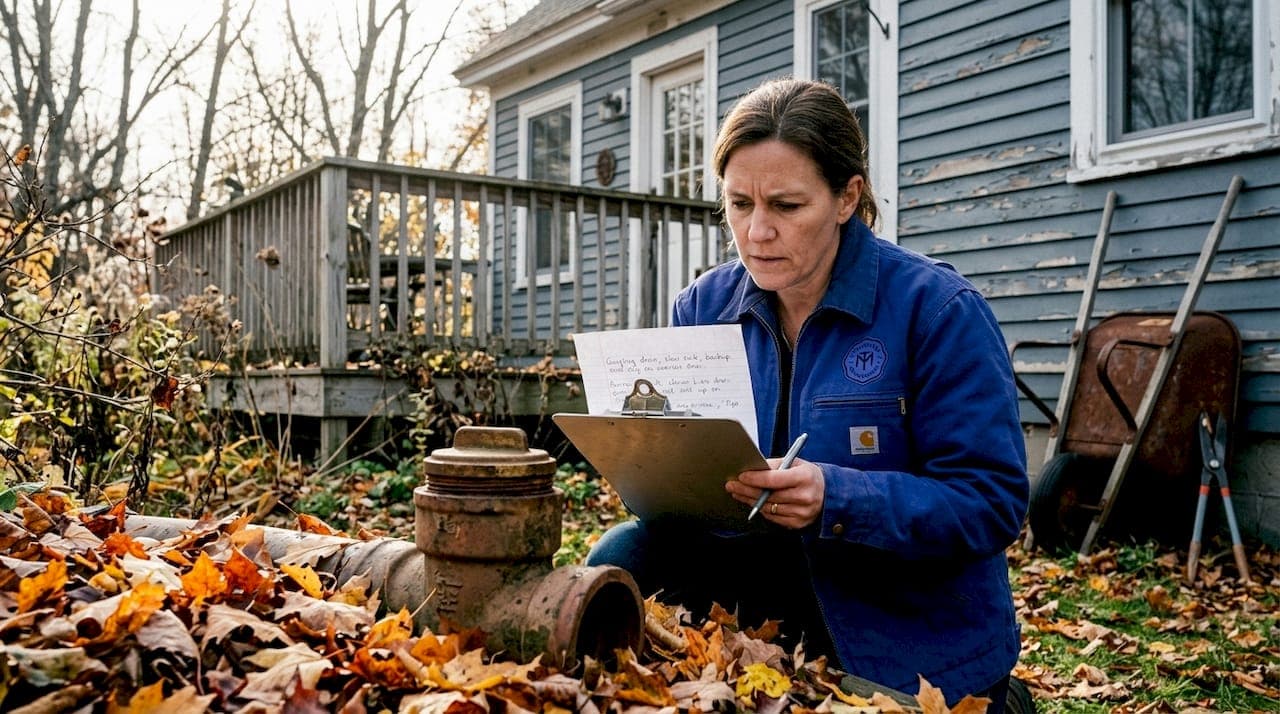
When multiple drains in your home slow to a crawl on the same afternoon, or wastewater backs up into your tub while you flush the toilet, the situation shifts from inconvenient to urgent fast. For Maine homeowners, that panic is especially real given our freeze-thaw winters, aging housing stock, and abundant tree root systems that can attack sewer laterals (the pipes connecting your home to the municipal main). Knowing how to tell the difference between a minor isolated clog and a genuine main sewer line failure can save you thousands of dollars and protect your yard, foundation, and daily routine.
Table of Contents
- Recognizing sewer line problems: Key warning signs
- Preparation: What you need to check (tools, environment, and safety)
- Step-by-step: Diagnosing your sewer line issue
- How professionals confirm and repair sewer line problems efficiently
- Our take: Why smart diagnosis always beats guesswork in Maine
- Ready to solve your sewer line issue without the mess?
- Frequently asked questions
Key Takeaways
| Point | Details |
|---|---|
| Detect patterns early | Noticing slow drains or backups across multiple fixtures signals a likely main sewer line problem. |
| Maine weather impacts risk | Winter freeze-thaw and aging pipes make Maine homes vulnerable to sewer line damage. |
| Use camera inspection | Sewer cameras allow quick, non-invasive confirmation of blockages or pipe defects before digging. |
| Trenchless fixes save hassle | Modern no-dig repairs minimize cost and property disruption when a line needs repair. |
| Professional diagnosis matters | Calling experts early avoids guesswork, misdiagnosis, and unnecessary excavation. |
Recognizing sewer line problems: Key warning signs
With the problem clearly outlined, you'll want to know exactly what symptoms point toward a main sewer line issue rather than an isolated clog.
The single most reliable clue is how many fixtures are affected. A clogged bathroom sink affects only that sink. A main sewer line problem, however, shows up across multiple fixtures at the same time. Watching the warning signs you need sewer repair early keeps the repair cost manageable before a full backup occurs.
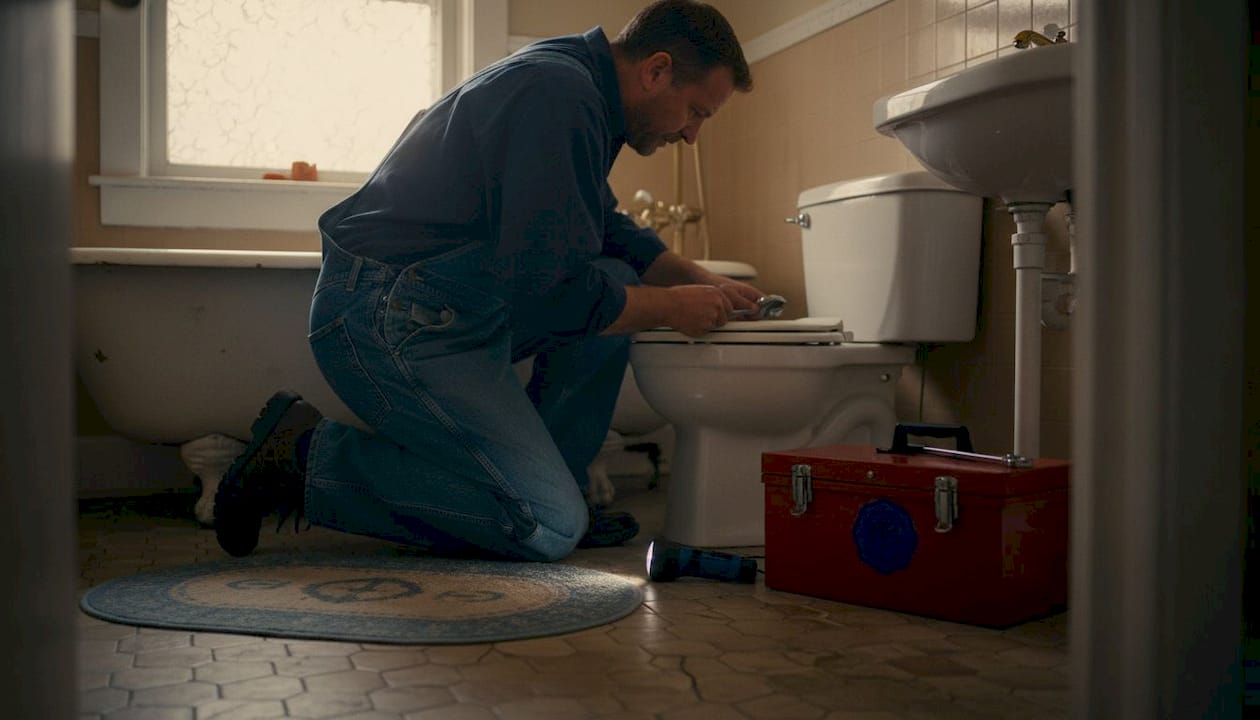
Multiple fixtures draining slowly often point to a main sewer line issue rather than a single blocked drain. If your toilet gurgles when you run the washing machine, or your shower backs up when someone flushes the toilet upstairs, those interactions confirm the problem is downstream in the main line, not in an individual branch.
Here are the most common warning signs to watch for:
- Multiple slow drains across bathrooms, kitchen, or laundry at the same time
- Sewage odors inside the house or near your outdoor cleanout access point
- Water backing up into bathtubs, floor drains, or toilets when other fixtures are used
- Gurgling noises from drains even when no one is running water nearby
- A strip of unusually green, lush grass running across your yard above the sewer line path, which acts as an effective fertilizer when a pipe leaks
- Wet patches or soft ground in your yard without recent rainfall
Gurgling deserves special attention. Odd gurgling noises indicate trapped air caused by a restriction or partial blockage in the pipe. It is not random noise; it is the pipe telling you something is restricting flow downstream.
Maine adds specific risk factors to this picture. Older homes in towns like Bath, Rockland, or Augusta commonly use clay or cast-iron sewer laterals installed decades ago. Those materials crack under the stress of winter sewer problems in Maine, especially during hard freeze-thaw cycles that shift the ground and put mechanical stress on already fragile joints. Tree root intrusion is also widespread, as roots from maples, oaks, and birch trees seek the moisture inside aging pipe joints.
Pro Tip: Pay attention to patterns, not just individual events. One slow drain once may mean nothing. The same drain backing up every few days, combined with toilet gurgling, is a clear pattern that points to the main line and should trigger a professional call.
"When symptoms appear in more than one fixture, especially combinations like toilet and shower or sink and tub, you are almost certainly looking at a main sewer line restriction, not a branch clog."
If you notice any combination of the signs above persisting for more than a few days, do not wait. Escalating a main line backup can flood your basement with raw sewage, which turns a few-hundred-dollar repair into a tens-of-thousands-dollar remediation project.
Preparation: What you need to check (tools, environment, and safety)
Now that you know what to look for, efficient preparation ensures that your checks are safe and effective.
Before calling a professional, you can document key facts that speed up diagnosis and save you time on the service call. The more precise information you provide, the faster a technician can move from assessment to action.
Here is a quick reference table of what to monitor before help arrives:
| What to check | Why it matters | How to document it |
|---|---|---|
| Which fixtures are slow or backing up | Identifies if it's main line or branch | List each affected fixture and when it started |
| Outdoor cleanout access point | Allows camera and jetting access | Locate the cap in your yard or near the foundation |
| Recent weather history | Freeze-thaw cycles crack pipes | Note hard freezes or rapid warmups in past 2 weeks |
| Approximate pipe age and material | Older clay or cast iron fails faster | Check home inspection records or ask previous owners |
| Tree locations relative to sewer path | Root intrusion is very common | Sketch a rough map of large trees near the sewer line path |
| Sewage odors inside or outside | Indicates active leak or break | Note where odors are strongest and at what time of day |
Winter freeze-thaw and old materials are major contributing factors in Maine sewer line failures, which is why knowing your pipe age and the recent weather history gives professionals a critical head start.
Understanding what to check also means knowing what to skip. Here is a short list of what not to do while you wait for professional help:
- Do NOT use chemical drain cleaners. They rarely solve main line problems and can damage aging pipe materials.
- Do NOT run large amounts of water through the system. This risks accelerating a backup and flooding your basement.
- Do NOT attempt to remove the outdoor cleanout cap yourself unless you are prepared for sewage to discharge under pressure.
- Do NOT dig near the sewer line path. You can damage the pipe or sewer lateral further.
- Do NOT ignore the problem and hope it resolves. Main sewer line issues do not self-correct.
Pro Tip: Locate your outdoor cleanout access point before a professional arrives. It is usually a white or black plastic or metal cap, roughly 4 inches in diameter, flush with or slightly above the ground near your foundation or in your yard along the sewer path. Pointing it out immediately saves the technician 10 to 20 minutes of searching, especially under snow cover in winter. Review information on frozen pipes and sewer damage to better understand what conditions increase your risk each season.
You should also check your home inspection report if you have one. It may identify pipe material, approximate age, and prior issues. That information feeds directly into the sewer repair methods for Maine homes that a technician will recommend.
Step-by-step: Diagnosing your sewer line issue
After prepping your home and knowing what to watch for, you're ready to systematically test and interpret your findings.
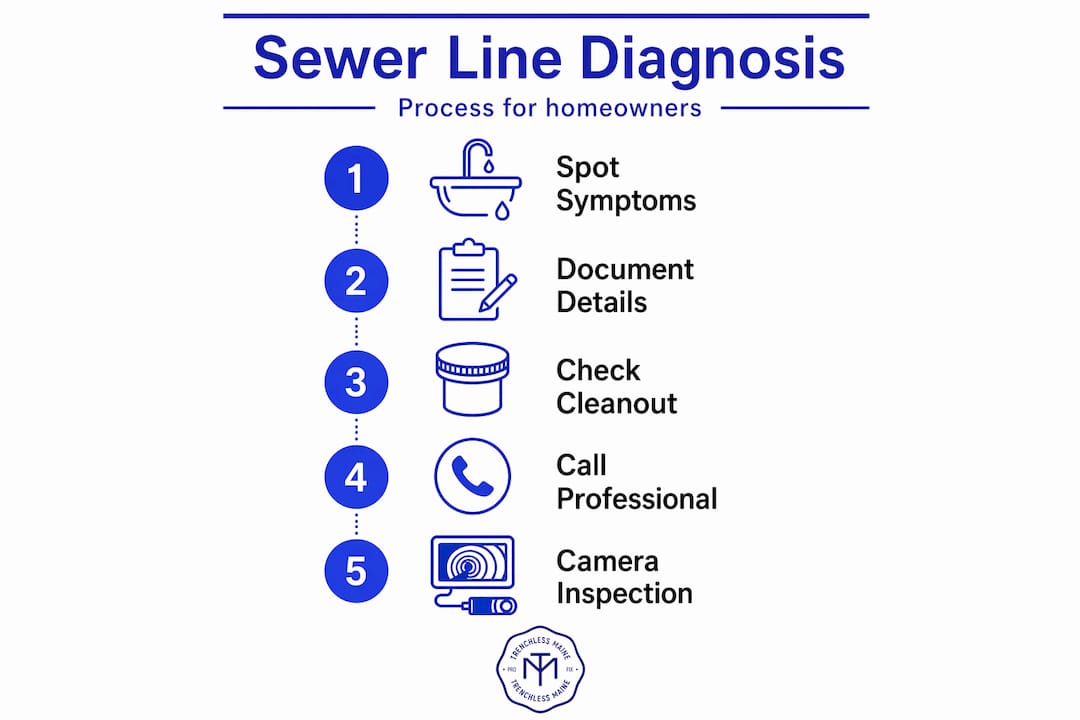
Follow these steps in order. Each one builds on the last and helps you either confirm a main line issue or narrow it down to a specific section of pipe.
-
Check symptom patterns across all fixtures. Run each fixture individually: kitchen sink, bathroom sink, tub, shower, and toilet. Note which ones drain slowly and which seem normal. Main line problems typically affect lowest fixtures (basement floor drains, first-floor toilets) first.
-
Test multiple fixtures simultaneously. Flush a toilet while someone runs the shower on the same floor. If the shower backs up or gurgles when the toilet flushes, this interaction confirms the restriction is in the shared main line downstream of both fixtures.
-
Monitor for gurgling sounds. After flushing or running water, stand quietly near other drains. Persistent gurgling indicates trapped air from a downstream restriction.
-
Inspect the outdoor cleanout (if accessible and safe). Remove the cap carefully and look for standing water or sewage at or near the top of the pipe. Standing sewage in the cleanout means the main line is blocked downstream of that point.
-
Call a professional for a sewer camera inspection (CCTV). This is the definitive step. Sewer camera inspection visually confirms underground defects without excavation, pinpointing root intrusion, cracks, offset joints, or collapsed sections to the exact location.
A symptom pattern involving multiple fixtures, like toilet and shower interactions, strongly predicts a main sewer line problem and makes the camera inspection both urgent and highly targeted. Review the Maine homeowner's sewer camera guide to understand exactly what a camera inspection involves before you schedule one.
Here is a side-by-side comparison of what you can check yourself versus what a professional camera inspection provides:
| Diagnostic method | What you can learn | Limitations |
|---|---|---|
| DIY symptom testing | Whether main line or branch is affected; rough severity | Cannot locate the defect or identify the cause |
| Visual cleanout check | Whether a blockage is downstream of the cleanout | Risky without training; limited visibility |
| Sewer camera (CCTV) | Exact defect location, type (roots, crack, offset, belly), pipe condition | Requires professional equipment and expertise |
| Hydro jetting without camera | Clears blockage temporarily | Does not diagnose underlying pipe damage |
The key takeaway from this comparison: DIY checks tell you that something is wrong. A camera inspection tells you exactly what and where, which directly determines the repair method and cost. Skipping the camera and guessing at repairs is how homeowners end up paying for work that does not solve the problem. Check signs you need sewer repair to see where your symptoms fall on the severity scale.
How professionals confirm and repair sewer line problems efficiently
Once a professional is on site, the process advances from symptom-based checks to targeted, non-invasive solutions that minimize digging.
The first step a qualified technician takes is inserting a flexible camera into the sewer lateral through your cleanout access point. This camera transmits real-time video to a monitor above ground. The technician watches for specific defects as the camera travels the length of the pipe. Root intrusion appears as fibrous strands growing through joints. Offset joints show up as visible ledges where one pipe section has shifted relative to the next. A belly (a sagging section that holds standing water) appears as a low spot where water pools instead of flowing. Cracks and fractures are visible as breaks in the pipe wall.
Professional sewer repair typically begins with a video inspection to confirm the exact location and cause, followed by selecting the least invasive repair method appropriate to the defect type. Understanding how to read a camera inspection report helps you ask smarter questions and understand the repair recommendation you receive.
Once the camera confirms the defect, your technician will recommend one or more of these repair approaches:
- Hydro jetting: High-pressure water clears root intrusion, grease buildup, and debris. Best for partial blockages where the pipe structure is still intact.
- CIPP pipe lining (Cured-In-Place Pipe lining): A resin-saturated liner is inserted into the existing pipe and cured in place, creating a new pipe within the old one. No excavation required in most cases, and the result carries warranties up to 50 years.
- Pipe bursting: A new pipe is pulled through the old one, which fractures outward. Minimally invasive and effective for full replacements.
- Traditional dig and replace: Reserved for severely collapsed pipes or sections where trenchless access is physically impossible.
"Camera-based diagnosis is the gold standard for efficient, targeted sewer repair. Without it, you're estimating. With it, you're solving."
The benefits of trenchless sewer repair are significant for Maine homeowners. Avoiding excavation means preserving your landscaping, driveway, and foundation plantings. It also means the job is typically completed within 24 hours rather than days. Learn more about no-dig sewer repair and how it applies to your home's specific conditions, and review the full pipe lining process to understand what that repair looks like from start to finish.
When you receive the camera report, ask your technician to walk you through the footage. Confirm the defect type, its location relative to your home's foundation, and how far the damage extends. That conversation directly determines whether a partial liner, full liner, or more invasive repair is needed.
Our take: Why smart diagnosis always beats guesswork in Maine
Here is something we see regularly: homeowners who wait two or three weeks after the first warning sign, hoping the slow drain will just clear on its own. By the time they call, what would have been a straightforward CIPP lining job has progressed to a full backup with sewage in the basement. The repair cost is three to five times higher, and the disruption to daily life is far worse.
The other costly mistake is skipping the camera and agreeing to excavation based on a symptom description alone. Digging to find a defect that turns out to be 15 feet further down the line is expensive, avoidable, and leaves a trench across your yard that takes a season to recover.
Maine's conditions make this even more pressing. When the ground freezes in November and thaws hard in March, stress fractures in clay and cast-iron laterals can open up quickly. A pipe that was marginal in October can become a full failure by February. That is exactly why trenchless repair project timelines matter so much here: a same-day diagnosis and next-day liner repair beats waiting through a frozen ground period for traditional excavation to become feasible.
Our strongest advice is to document your symptoms in writing before calling anyone. Date and time of first occurrence, which fixtures are affected, what triggers the problem, any odors, and weather conditions around the onset. This information lets a technician walk in with a working hypothesis rather than starting from scratch. You get faster answers, a more precise repair recommendation, and ultimately a lower total cost.
Pro Tip: Before calling a professional, spend five minutes writing down every symptom, when it first appeared, and which fixtures are involved. That documentation can cut 30 minutes off your initial service call and help the technician skip straight to the most likely cause.
Ready to solve your sewer line issue without the mess?
If the symptoms in this guide sound familiar, you do not have to dig up your yard to get answers or fix the problem. Trenchless Maine specializes in fast, accurate camera inspections and no-dig repair options that get your household back to normal, often within a single day.

Our team brings over 50 years of combined expertise to every job across Maine, from Portland to Presque Isle. We use no-dig sewer repair technology that protects your lawn, landscaping, and driveway while delivering repairs backed by warranties up to 50 years. Whether you need a sewer camera inspection to confirm what is happening underground or a full trenchless repair, scheduling is straightforward and service is fast. Explore our full range of trenchless sewer services and take the first step toward a permanent solution without the excavation.
Frequently asked questions
How do I know if my sewer line is the issue and not just a single drain?
If multiple fixtures drain slowly or back up at the same time, particularly combinations like toilet and tub or toilet and shower, the problem is almost certainly in the main sewer line, not an isolated branch clog.
What's the fastest way to confirm a sewer line blockage in Maine?
A sewer camera inspection visually confirms underground defects without any excavation, giving you a precise location and cause within a single service visit.
Can freezing winter weather really damage my sewer pipes?
Yes. Maine's freeze-thaw cycles put significant stress on older pipe materials like clay and cast iron, causing cracks, shifted joints, and blockages that worsen rapidly through the winter season.
Are there non-invasive repair options after camera inspection?
Absolutely. Minimally invasive methods like CIPP pipe lining and hydro jetting allow repairs without major excavation when the pipe's structural condition makes them viable, which is the case for the majority of Maine sewer lateral problems.