
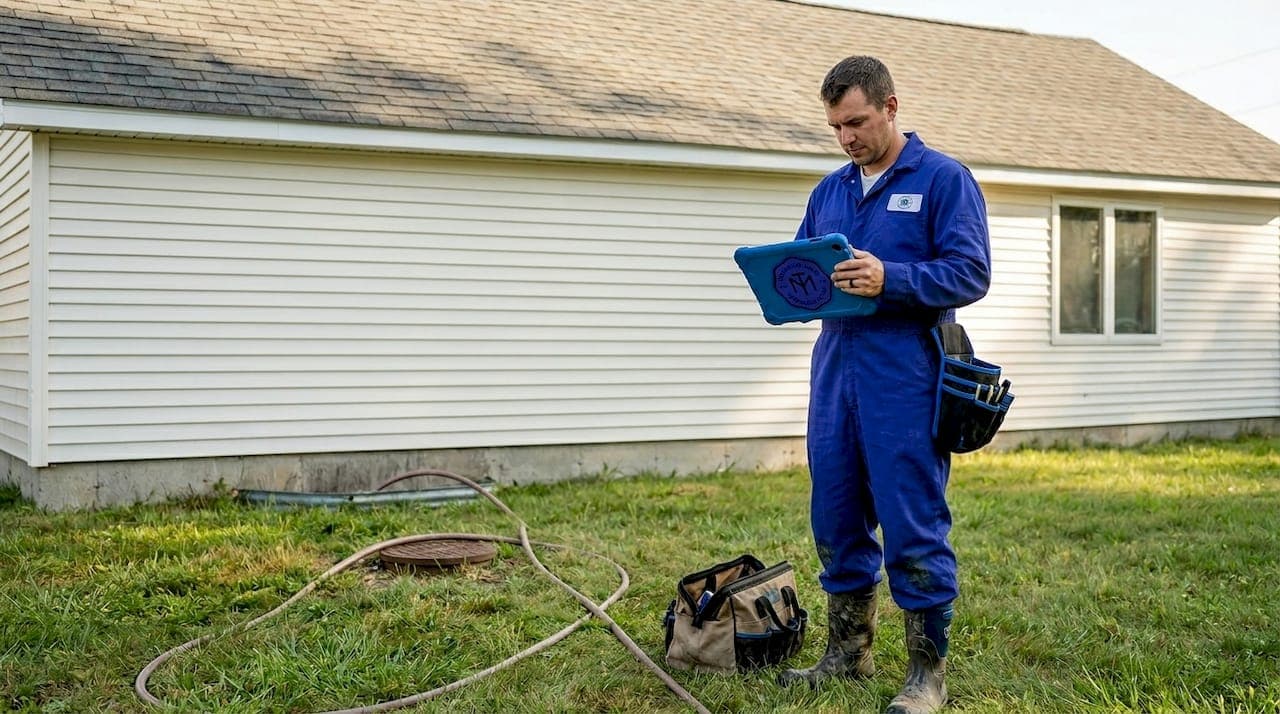
Sewer line problems have a way of announcing themselves at the worst possible time. Maybe you notice a slow drain in the kitchen, then a gurgling toilet, then a faint but unmistakable sewage smell drifting through the house. The fear that follows is real: will this turn into a backed-up basement, a torn-up yard, and a five-figure repair bill? The good news is that Maine homeowners now have access to modern, minimally invasive repair methods that can resolve most sewer line failures quickly, affordably, and without destroying your property. This guide walks you through every step, from spotting the first warning signs to closing out a permit after a successful repair.
Table of Contents
- Recognizing sewer line trouble: Common signs and first steps
- What you need: Permits, tools, and the right help
- Step-by-step: Modern, non-invasive sewer line repair methods
- Ensuring results: Inspection, compliance, and maintenance after repair
- Expert insights: Why Maine's approach to sewer repair beats old-school digging
- Ready for non-invasive sewer repair? See what Trenchless Maine offers
- Frequently asked questions
Key Takeaways
| Point | Details |
|---|---|
| Early detection | Spotting warning signs quickly can prevent major property damage and extensive repairs. |
| Permit required | Sewer repairs in Maine always require local permits and licensed professionals. |
| Trenchless benefits | Modern, no-dig methods are faster, cheaper, and protect your landscaping. |
| Mandatory inspection | A CCTV inspection after repairs is required to confirm the job is done and close your permit. |
| Proper maintenance | Simple maintenance steps after repair keep your sewer line trouble-free for years. |
Recognizing sewer line trouble: Common signs and first steps
Catching a sewer line problem early is the single best thing you can do for your wallet and your property. Small symptoms, if ignored, can escalate into raw sewage backups, foundation damage, or widespread pipe collapse. Maine's older housing stock and freeze-thaw climate put extra stress on underground pipes, which makes early detection even more important here than in warmer states.
Warning signs you should never ignore:
- Slow drains throughout the house, not just one fixture. A single slow drain is usually a localized clog. Multiple slow drains point to a problem deeper in the sewer lateral, the pipe that connects your home to the municipal sewer main.
- Gurgling or bubbling sounds from toilets or drains after water runs elsewhere in the house. This signals air trapped by a partial blockage or compromised pipe.
- Sewage smells indoors or in the yard. Healthy sewer systems are sealed. Any odor escaping means a breach somewhere in the line.
- Water pooling in the yard, particularly along a straight path from your foundation toward the street. This often indicates a cracked or separated pipe leaking underground.
- A strip of unusually green, lush grass running across your yard. Leaking sewage acts as an effective fertilizer, and that bright-green patch is frequently the first visible clue of a slow leak below ground.
- Recurring clogs that keep coming back despite professional clearing. Repeated blockages often trace back to root intrusion, pipe deformation, or pipe offset (a section of pipe that has shifted out of alignment).
Once you notice two or more of these signs together, treat it as an urgent situation. Limit water use in the home immediately to reduce the chance of a full backup. Avoid flushing or running dishwashers until the issue is assessed. Document everything with photos or short video clips, this record helps your plumber diagnose the problem faster and supports any insurance or permit paperwork.
It's also important to understand your local regulatory environment right away. Permits and inspections are required for work on municipal or residential sewer lines in Maine. That means calling a licensed professional is not optional; it's legally required.
Safety reminder: Never open a sewer cleanout or attempt to enter or inspect a sewer line yourself. Sewer gases including hydrogen sulfide and methane are deadly in confined spaces. Leave access, inspection, and repair to licensed professionals with proper safety equipment.
Pro Tip: Before you call a plumber, use your phone to shoot a short video of every affected drain or fixture. A 30-second clip showing the gurgling sound or water backup gives your contractor valuable pre-visit information and can cut diagnostic time significantly.
For more background on your options before the contractor arrives, reviewing the available sewer repair methods helps you arrive at that first conversation with the right questions already prepared.
What you need: Permits, tools, and the right help
Once you've confirmed there's a sewer line problem, the next step is understanding what's legally required before any work begins. This is an area where many homeowners get tripped up. Maine has clear rules, and skipping them can result in fines, failed inspections, or voided warranties.
Maine permit requirements at a glance:
Sewer repairs on municipal systems require permits from your local sewer district before any work begins. Even repairs on the private sewer lateral on your own property often require a permit and inspector sign-off, depending on your municipality. The good news is that there is typically no fee for repair or maintenance permits, only for new connections.
| Permit type | Who issues it | Cost | Inspection required |
|---|---|---|---|
| Municipal sewer line repair | Local sewer district | No fee for repairs | Yes, including CCTV |
| Private sewer lateral repair | Local municipality or sewer district | No fee for repairs | Yes, final visual or CCTV |
| New sewer connection | Local sewer district | Fee applies | Yes, multiple stages |
| Emergency sewer repair | Local sewer district | No fee, expedited | Yes, post-repair CCTV |
Beyond permits, Maine law requires that all sewer repair work on permitted systems be performed by or under the direct supervision of a licensed Master Plumber. This is not a suggestion; it's a legal requirement. Hiring an unlicensed contractor can expose you to liability if something goes wrong and makes it nearly impossible to sell your home later without disclosing unpermitted work.
What you can do as a homeowner:
- Shut off non-essential water use to prevent a backup from worsening
- Clear the area around any outdoor cleanout access points
- Gather records of previous repairs, original construction, or pipe material if available
- Start the permit application online through your local sewer district to avoid delays
What requires a licensed professional:
- Camera inspection of the sewer lateral
- Any cutting, lining, bursting, or replacement of sewer pipe
- Hydro jetting to clear root intrusion or severe blockages
- Permit submission and final inspection coordination
Pro Tip: Start the permit process online as soon as you decide to move forward. Many Maine sewer districts accept online applications, and getting the permit in queue early prevents delays once your contractor is ready to work. Your licensed plumber can often handle this for you.
Understanding the trenchless sewer repair benefits before your contractor visit gives you a stronger foundation for evaluating the repair options they recommend.
Step-by-step: Modern, non-invasive sewer line repair methods
With permits underway and the right professional on board, you're ready to choose the repair approach. This is where modern technology makes a real difference for Maine homeowners. Traditional excavation, the old dig-and-replace method, requires opening a trench the full length of the damaged pipe, sometimes across driveways, landscaping, or even under concrete slabs. Trenchless methods eliminate most or all of that disruption.
The main trenchless repair options:
- CIPP lining (Cured-in-Place Pipe lining): A resin-saturated liner is inserted into the damaged pipe and cured in place, forming a new pipe inside the old one. No excavation needed beyond small access points.
- Pipe bursting: A bursting head is pulled through the old pipe, fracturing it outward while simultaneously pulling a new pipe into place. Works well when the existing pipe is too damaged for lining.
- Spot repair: A targeted fix for a single damaged section rather than the entire line. Useful when only one area shows cracking, offset, or root intrusion.
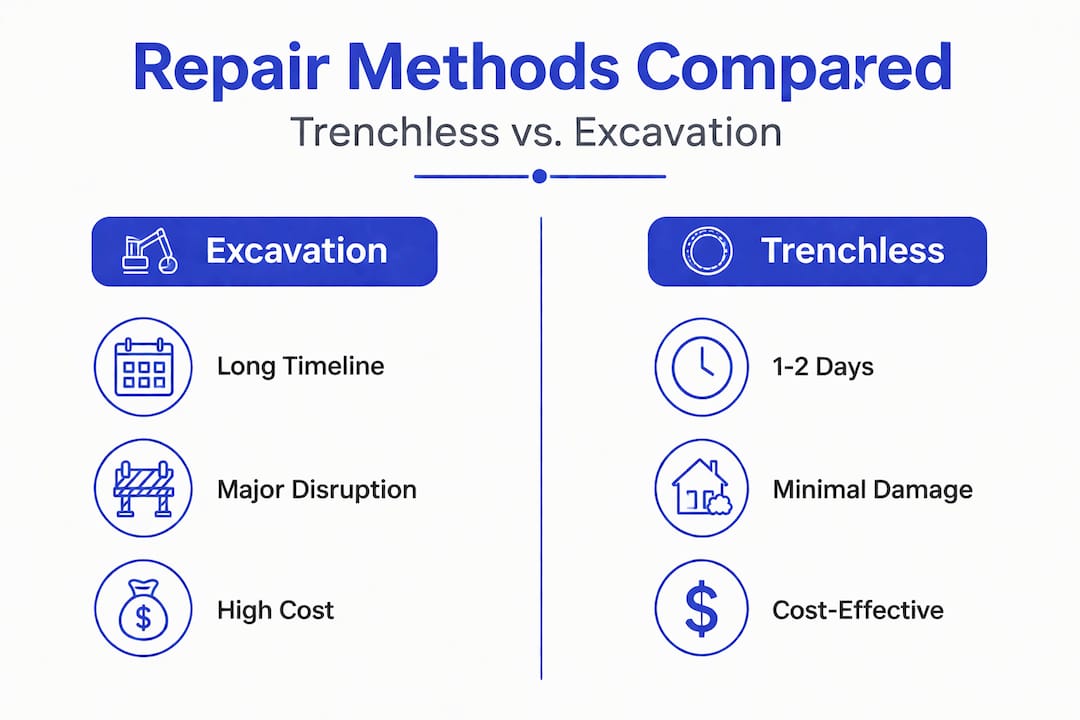
Trenchless vs. traditional excavation: side-by-side comparison
| Factor | Trenchless repair | Traditional excavation |
|---|---|---|
| Typical cost | Lower overall, 30-50% less | Higher, plus landscaping restoration |
| Time to complete | 1-2 days | 1-3 weeks or longer |
| Yard disruption | Minimal, small access points only | Full trench across yard or driveway |
| Pipe material result | New liner inside existing pipe | Full pipe replacement |
| Best for | Most residential sewer laterals | Severely collapsed or misaligned pipes |
How a typical trenchless repair works, step by step:
- Initial camera inspection. A licensed technician inserts a CCTV camera into the sewer lateral to locate and document damage, root intrusion, offset, or pipe deformation. This step drives every decision that follows.
- Hydro jetting and cleaning. Before any lining or bursting can happen, the pipe interior must be thoroughly cleaned. Hydro jetting uses high-pressure water to remove grease, roots, and debris without damaging the pipe wall.
- Repair method selection. Based on camera findings, your contractor recommends CIPP lining, pipe bursting, or spot repair. They should explain the reasoning clearly and confirm what warranty coverage applies.
- Liner installation or pipe bursting. The chosen method is executed, usually in a single day for most residential laterals. Access requires only small entry and exit points, not a full trench.
- Post-repair camera inspection. A second CCTV pass confirms the liner or new pipe is properly seated, fully cured, and free of defects before any permit closure is requested.
Pro Tip: Always ask your contractor about warranty length before signing anything. Quality trenchless work on a sewer lateral should come with a minimum 10-year warranty on materials and workmanship. Some providers, including those using premium CIPP liner materials, offer no-dig repair benefits backed by warranties up to 50 years.
If you're weighing the financial side carefully, a detailed breakdown of trenchless vs. excavation cost will help you compare total project costs, not just the repair invoice. Maine homeowners who want to protect their landscaping investment will also find it helpful to review how these methods specifically protect landscaping during and after repair.
Ensuring results: Inspection, compliance, and maintenance after repair
A completed repair is not a finished job until the required inspections are done and the permit is closed. Skipping this step is one of the most common mistakes homeowners make, often without realizing it. An open permit on your property can complicate a future home sale, trigger code violations, or leave you without recourse if the repair later fails.
Post-repair inspection process, step by step:
- Notify your local sewer district that work is complete and request a final inspection. Your contractor should handle this notification as part of their service.
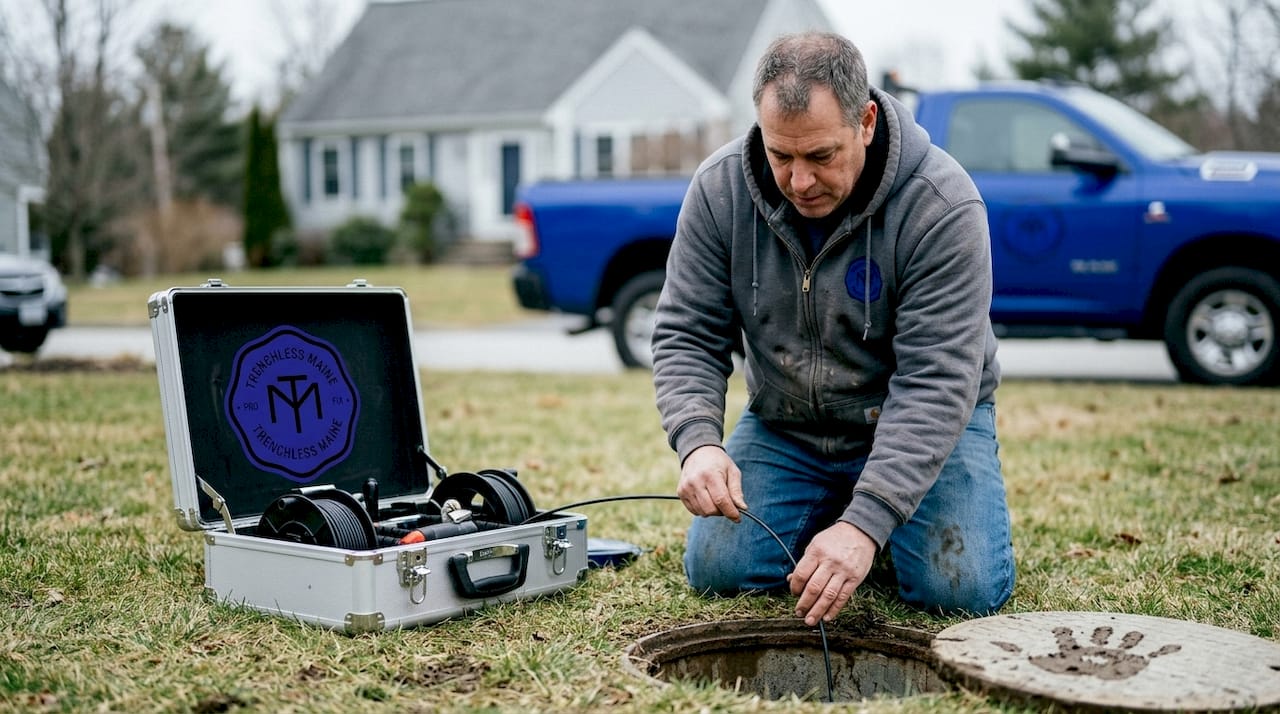
- Schedule the CCTV inspection. Post-repair CCTV is mandatory for verification in Maine. The inspector uses camera footage to confirm the repair meets specifications and that no defects, voids, or misalignments exist.
- Review the inspection report. You should receive a written copy of the CCTV inspection results. Keep this document permanently with your home records.
- Confirm permit closure. Once the inspector signs off, your permit is formally closed. Get written confirmation from your sewer district for your records.
- Update your home documentation. Add the repair records, permit closure notice, and warranty documents to your home maintenance file.
Ongoing maintenance habits that extend your sewer line's life:
- Avoid flushing wipes, paper towels, or hygiene products, even those labeled "flushable"
- Run hot water through drains weekly to prevent grease accumulation
- Schedule a professional CCTV inspection every 5-7 years, or sooner if you have mature trees near the sewer lateral
- Watch for recurring slow drains or odors, which can signal that root intrusion is returning
Keep your records. Your CCTV inspection report, permit closure letter, and repair warranty documents are worth their weight in gold when it comes time to sell your home or file an insurance claim. Store them digitally as well as in paper form.
For a complete checklist covering spring and annual sewer care in Maine, the sewer maintenance checklist covers what to inspect, clean, and monitor each season. You can also check repair warranty status directly if you need to confirm your coverage is active.
Expert insights: Why Maine's approach to sewer repair beats old-school digging
Here's the honest truth after years of working on sewer lines across Maine: traditional excavation is almost never the best option for a residential sewer lateral. Yet a surprising number of homeowners still default to it, either because they don't know trenchless exists or because they've been quoted on excavation without being offered an alternative.
The conventional wisdom used to be that you dig up what's broken and replace it. That made sense when CIPP lining and pipe bursting technology didn't exist. It makes much less sense today, when Maine's non-invasive options can handle the vast majority of residential sewer lateral failures at lower cost, with significantly less disruption, and often with longer warranty coverage than a newly installed traditional pipe.
Maine's climate adds another layer to this argument. Freeze-thaw cycles put enormous stress on freshly disturbed soil, and a trench backfilled in October may shift, settle, and crack over the following winter. Trenchless repairs leave the surrounding soil undisturbed, which means none of that settlement risk.
We've also seen that homeowners who insist on no-dig methods report significantly fewer follow-up issues. Part of that is the quality of modern liner materials. Part of it is that trenchless work, particularly CIPP lining, creates a seamless interior surface that resists root intrusion far better than pipe joints in a traditionally replaced line. The data backs this up: faster trenchless repairs are not a compromise on quality. They are the better outcome.
Local knowledge matters here too. Maine's soil conditions, pipe ages, and municipal requirements vary significantly between Portland, Bangor, Brunswick, and smaller towns. A contractor with deep local experience navigates those variables faster and avoids the surprises that drive costs up on unfamiliar jobs.
Ready for non-invasive sewer repair? See what Trenchless Maine offers
You now have a clear picture of the signs to watch for, the permits required, the repair options available, and the post-repair steps that protect your investment. The next step is connecting with a team that can handle every part of this process under one roof.

Trenchless Maine brings over 50 years of combined expertise to sewer line repair across the state, handling permitting coordination, CCTV inspection, hydro jetting, CIPP lining, pipe bursting, and post-repair compliance, all with warranties up to 50 years. Explore the full range of available trenchless services, see the technology behind the work at the see no-dig technology page, and browse real project outcomes in the before and after results gallery. When you're ready for a property-specific quote with no excavation surprises, reach out to the Trenchless Maine team today.
Frequently asked questions
Do I need a permit for sewer line repairs in Maine?
Yes, sewer repairs require permits from your local sewer district and must be performed by a licensed Master Plumber. Skipping the permit process can result in fines and complications when selling your home.
How long does trenchless sewer repair take compared to traditional digging?
Trenchless repair typically takes 1-2 days to complete, while traditional excavation often stretches to several weeks when you include backfilling, compaction, and landscaping restoration.
What kind of inspection is required after sewer line repair in Maine?
A post-repair CCTV inspection is mandatory to verify the repair meets code before the permit can be officially closed. You should receive a written copy of the inspection results.
Can I repair my sewer line in Maine without digging up my yard?
Yes. Trenchless methods minimize excavation and protect your landscaping, and they work for the majority of residential sewer lateral problems including root intrusion, cracking, and pipe offset.
Is there a fee for a sewer repair permit in Maine?
No. Repair and maintenance permits carry no fee on municipal sewer systems in Maine. Fees apply only to new connection permits.