

Most Maine homeowners assume that diagnosing a sewer problem means tearing up their yard, dealing with heavy equipment, and facing days of disruption to their property. That assumption is wrong, and it could be costing you money. Sewer camera inspections give you a clear, accurate picture of what's happening inside your underground pipes without any digging at all. This guide walks you through exactly what a sewer camera inspection is, how the process works from start to finish, what technicians look for, and why proper interpretation of results makes all the difference for your home in Maine.
Table of Contents
- What is a sewer camera inspection?
- How does a sewer camera inspection work? Step-by-step process
- What do inspectors look for? Common issues detected
- Interpreting inspection results: Why expert analysis matters
- A Maine expert's perspective: What most homeowners miss
- Next steps: Connect with Maine's trenchless sewer specialists
- Frequently asked questions
Key Takeaways
| Point | Details |
|---|---|
| Non-invasive diagnosis | Sewer camera inspections let you see pipe problems without digging up your yard. |
| Objective defect grading | Certified operators use national standards to rate the severity and urgency of sewer defects. |
| Professional analysis matters | Expert interpretation of inspection video is crucial for making the right repair choices. |
| Better maintenance decisions | Homeowners gain the evidence needed to prevent expensive future repairs and negotiate real estate or service costs. |
What is a sewer camera inspection?
A sewer camera inspection is a non-invasive diagnostic procedure that uses a specialized, waterproof camera mounted on a flexible rod to visually assess the inside of your underground sewer lines. Instead of digging trenches to find a problem, a technician feeds the camera directly into your pipe through an existing access point. You get real evidence of what's happening below ground without a single shovel being used.
The technology itself is straightforward. A high-resolution camera equipped with powerful LED lights travels through your sewer lateral (the pipe that connects your home to the municipal sewer main or septic system). A transmitter built into the camera head, called a sonde, sends a signal to a locating device at the surface so the technician can pinpoint exactly where problems exist. Every inch of the inspection is recorded as video footage.
This matters for a few important reasons:
- Targeted repairs: Because you know exactly where a defect is and what it looks like, repairs can be planned with precision instead of guesswork.
- Cost control: Knowing whether you have a small crack or a collapsed section changes your repair options dramatically. You avoid paying for unnecessary work.
- Permanent visual record: The video footage and defect report become documentation you can use for insurance claims, real estate transactions, or contractor bids.
- No property damage: Your landscaping, driveway, and foundation stay intact during diagnosis.
Understanding the benefits of sewer scope inspections is especially valuable if you're buying a home in Maine, where aging sewer infrastructure is common in older towns and neighborhoods.
The inspection process follows a consistent and documented workflow: locate the access point (either a cleanout fitting or by removing a toilet), insert the camera with LED lights and a transmitter, navigate through the pipe while recording live video, document defects with precise location data using the sonde, and generate a final report with footage and repair recommendations. This structured approach ensures nothing is missed and that you receive actionable information at the end of every inspection.
A sewer camera inspection isn't just a diagnostic tool. It's the difference between reacting to a sewer emergency and preventing one entirely.
Inspections are valuable for older Maine homes with clay or cast iron pipes, newer homes after heavy root growth seasons, and any property where slow drains or odors have become a recurring issue.
How does a sewer camera inspection work? Step-by-step process
Now that you know what a sewer camera inspection is, let's walk through what actually happens during the process. Knowing each step helps you prepare your home and understand exactly what you're getting for your money.
Step 1: Locate the access point The technician starts by finding the best entry point into your sewer line. Most homes have a cleanout fitting, which is a capped pipe near your foundation or in your yard that provides direct access. If no cleanout is available, the technician may remove a toilet to access the line from inside your home.
Step 2: Insert the camera A flexible fiberglass or steel rod with a waterproof camera head is fed into the pipe. The camera is equipped with high-intensity LED lights that illuminate the interior of the pipe, even in complete darkness underground.
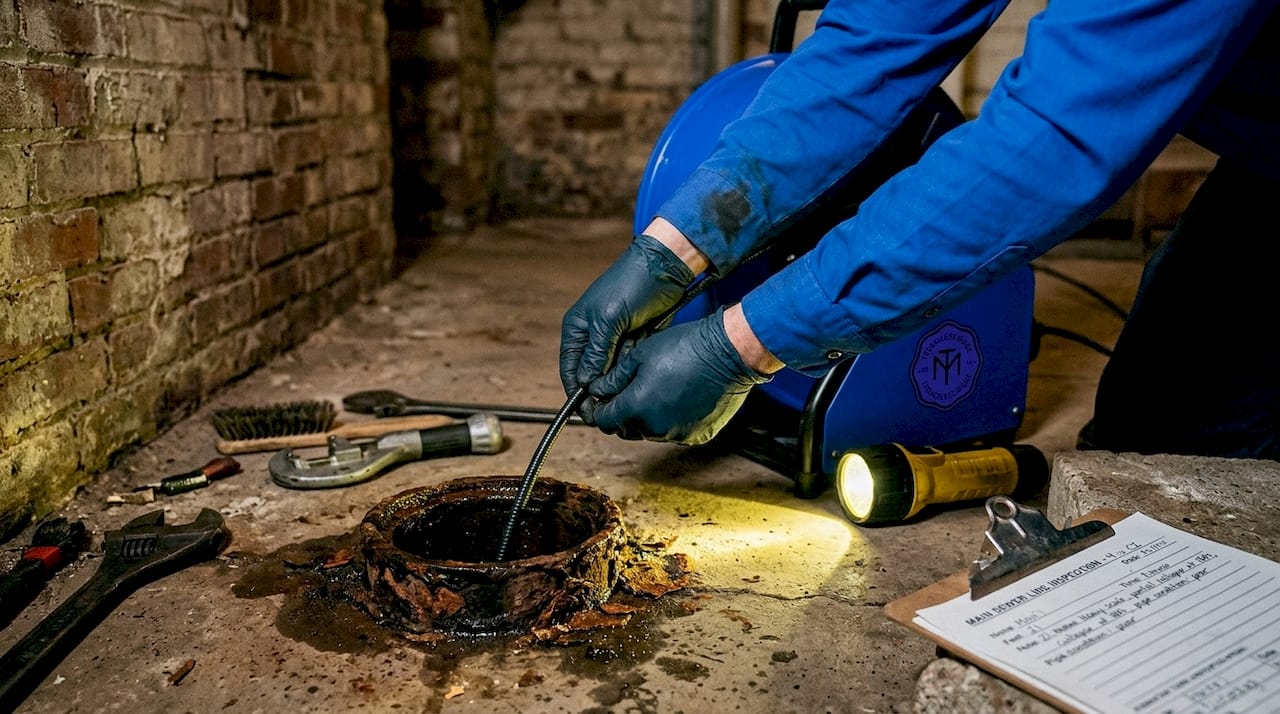
Step 3: Navigate and record live video As the rod advances through the pipe, the technician watches a live video feed on a monitor. They navigate slowly and deliberately, looking at every inch of the pipe wall. Everything is recorded in real time so there's a complete visual record of the inspection.
Step 4: Identify and document problems When the camera detects a defect, crack, root intrusion, or blockage, the technician marks it precisely using the sonde transmitter. A surface locator is held over the ground to identify the exact GPS location and depth of the problem. This eliminates any ambiguity about where repairs need to happen.
Step 5: Generate your inspection report After the camera is removed, the technician compiles the video footage with notes about each defect, its location, and recommended next steps. You walk away with a complete picture of your sewer system's condition.
Here's a quick reference for typical residential inspection details in Maine:
| Inspection factor | Typical range |
|---|---|
| Sewer lateral length | 40 to 150 feet |
| Inspection duration | 60 to 90 minutes |
| Camera rod diameter | 0.75 to 1.5 inches |
| Pipe size inspected | 3 to 6 inches (residential) |
| Report delivery | Same day or next day |
Maine homes present some unique inspection considerations. Properties in older communities like Bangor, Bath, or Portland often have clay tile or Orangeburg pipe (a compressed cardboard-like material used from the 1940s to 1970s), which deteriorate faster and require careful camera work. Rural homes connected to septic systems instead of municipal sewer lines have different lateral configurations as well. Understanding the difference between Maine septic vs. sewer systems helps you ask the right questions before scheduling your inspection.
If you're noticing slow drains, gurgling sounds, or sewage odors, those are signs you need sewer service and shouldn't be ignored. Sewer gas issues in particular can signal serious cracks or joint failures that a camera inspection will quickly confirm or rule out.
Pro Tip: Ask your technician to leave the camera running while they feed it out of the pipe at the end of the inspection. This second pass often catches details that are easier to see on the way back out, especially joint gaps and hairline cracks.
What do inspectors look for? Common issues detected
Understanding how inspections work leads to the next crucial question: What are technicians actually looking for inside your sewer line? The answer varies by pipe age, material, and location, but several problems show up most frequently in Maine residential sewer systems.
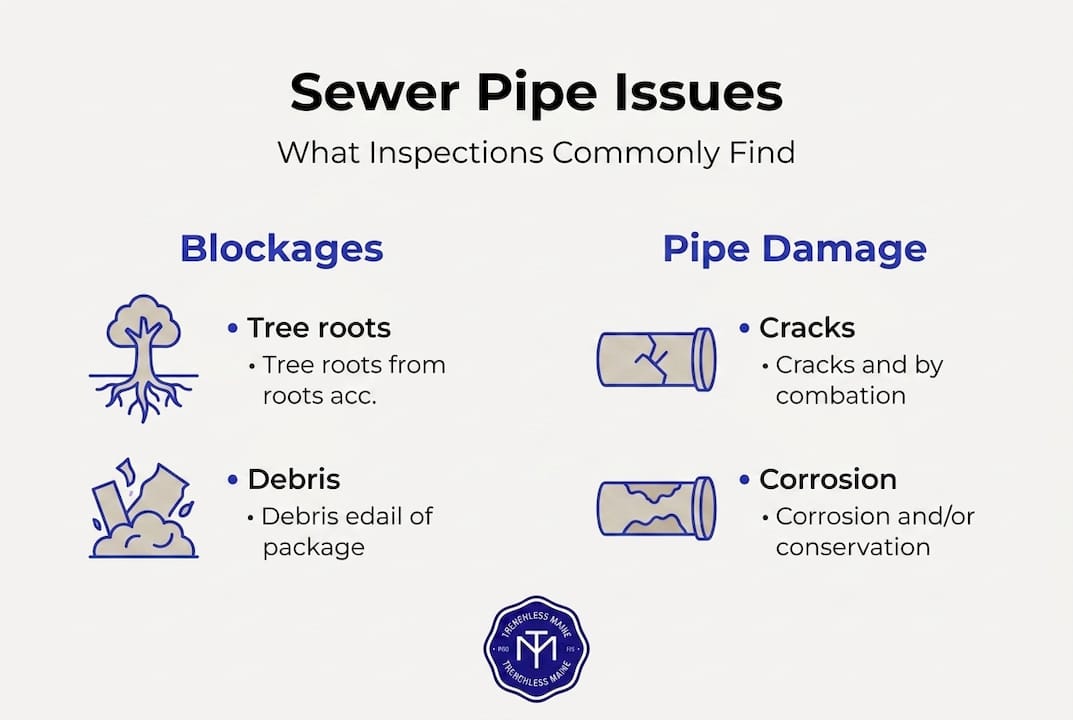
Root intrusion is one of the most common findings. Tree roots naturally seek moisture, and even small cracks in a pipe joint provide enough of an opening for roots to enter and grow. Once inside, roots expand over years and can completely block the pipe or cause it to fracture.
Grease and debris buildup is another frequent issue. Cooking fats, soap scum, and food particles accumulate on pipe walls over time, gradually narrowing the diameter of the line until flow is restricted or stopped entirely.
Pipe corrosion and cracking affects older cast iron and clay pipes, which were the standard in Maine homes built before the 1980s. These materials break down over time due to soil movement, freeze-thaw cycles common in Maine winters, and general aging.
Offset joints and pipe deformation occur when sections of pipe shift out of alignment. This creates ledges inside the pipe where debris catches, and it allows groundwater to infiltrate the sewer line, which can overwhelm your system during heavy rain.
Blockages and foreign objects round out the most common findings. Wipes, paper products, and accumulated debris create solid obstructions that prevent sewage from flowing properly.
Here's what the NASSCO PACP standards mean for your inspection results. NASSCO stands for the National Association of Sewer Service Companies, and PACP (Pipeline Assessment and Certification Program) is the industry standard for defect coding. Every defect observed during your inspection is assigned a grade on a scale from 1 to 5, where 1 indicates a minor defect and 5 indicates imminent failure. Grades 4 and 5 typically mean you need immediate repair or full pipe replacement.
Why PACP grading matters to you:
- It removes subjectivity. Two different certified technicians looking at the same pipe will assign the same grade.
- It determines whether you qualify for CIPP lining (pipe rehabilitation) or need full replacement.
- It gives you a documented baseline you can compare against future inspections.
- It's the language contractors and insurance adjusters use, so knowing your grade protects you in negotiations.
Minor defects graded at 1 or 2 can often be addressed with pipe lining solutions for old pipes in Maine, avoiding full excavation entirely. Catching these early is the whole point. If you're seeing warning signs of sewer issues like recurring backups or wet spots in your yard, don't assume the worst until you have a camera report in hand.
Interpreting inspection results: Why expert analysis matters
Once you have inspection video and a defect report, proper interpretation is the key to making smart decisions. The footage alone doesn't tell the full story. It takes a trained, certified eye to translate what the camera sees into an accurate repair recommendation.
Certified operators use PACP for consistent grading. A technician certified under the NASSCO PACP framework follows a standardized protocol for every defect observed, ensuring that the grades assigned are consistent and defensible. This matters because your repair options and their associated costs depend directly on those grades.
Camera inspections are highly effective for identifying internal pipe conditions, but they're not a complete picture on their own. Some problems, like small leaks at joints or groundwater infiltrating from outside the pipe, require additional diagnostic methods to confirm. Smoke testing (where non-toxic smoke is introduced into the line to find cracks and leaks) and pressure testing are two methods that complement camera work when the situation calls for it.
Here's how camera-only inspections compare to combined methods:
| Diagnostic method | Best for | Limitation |
|---|---|---|
| Camera inspection alone | Internal defects, blockages, root intrusion, pipe deformation | May miss external joint leaks |
| Camera + smoke test | Confirming leaks, locating illegal connections | Requires weather conditions |
| Camera + pressure test | Verifying joint integrity under load | More time-intensive setup |
Professional interpretation is crucial over DIY camera attempts. Consumer-grade sewer cameras are available for rental, but without PACP training and calibrated locating equipment, the footage you capture may be difficult to interpret accurately. A misread defect can lead to the wrong repair, which costs far more than the inspection itself.
Pro Tip: When reviewing your inspection report, ask the technician to walk you through the footage together. Point out the PACP grade assigned to each defect and ask specifically whether lining is viable or whether replacement is the only option. A transparent contractor will welcome that conversation.
Camera footage is evidence. Professional interpretation is the verdict. You need both to make the right decision for your home.
For most Maine homeowners, scheduling professional sewer camera inspections through a certified trenchless sewer company ensures you get both the technology and the expertise to act on your results confidently. Staying informed through updated sewer repair advice also helps you ask better questions and spot unreliable contractor recommendations.
A Maine expert's perspective: What most homeowners miss
After working on sewer systems across Maine for years, we've seen a consistent pattern. Homeowners call us after a backup floods their basement, not before. That reactive approach is understandable, but it consistently leads to bigger repair bills and far more disruption than necessary.
Here's the honest truth: the most valuable thing a sewer camera inspection gives you isn't the footage. It's the leverage. When you have a PACP-graded defect report from a certified inspection, you have documented evidence. That evidence is your strongest tool in three situations: negotiating the price of a home you're buying, comparing bids from multiple contractors, and making the case to your insurance provider.
Proactive inspections, done every five to ten years or before purchasing a property, consistently catch grade 2 and 3 defects that can be lined instead of replaced. That difference can mean saving thousands. We also recommend reviewing yearly sewer maintenance tips as part of a seasonal routine, especially before Maine's spring thaw when shifting soils put stress on older pipes. The peace of mind from knowing your sewer line is in good shape is worth far more than the cost of the inspection itself.
Next steps: Connect with Maine's trenchless sewer specialists
If this guide has helped you understand what a sewer camera inspection involves, the next step is putting that knowledge to work for your home. Trenchless Maine provides camera inspections, non-invasive pipe lining, hydro jetting, and drain clearing services across most of Maine's cities and towns.
You can explore the trenchless sewer technology we use, review our full list of services, and request a quote tailored to your specific situation. Our team brings over 50 years of combined experience to every inspection, and we back our work with industry-leading warranties. Whether you're a longtime Maine homeowner or just purchased a property, getting eyes inside your sewer line is one of the smartest investments you can make in your home's long-term health.
Frequently asked questions
How long does a sewer camera inspection take?
A typical sewer camera inspection for a residential Maine home takes about 60 to 90 minutes, depending on the length and condition of the sewer lateral being inspected.
What problems can a sewer camera inspection find?
Inspections can reveal cracks, blockages, root intrusion, pipe collapse, offset joints, and corrosion throughout your sewer line interior.
Is sewer camera inspection safe for all pipe materials?
Yes, inspections are safe for all typical residential pipe materials including PVC, cast iron, clay tile, and Orangeburg, as the camera is flexible and non-abrasive.
Do I get a recording or report after the inspection?
Yes, you'll receive a video and defect log with specific recommendations from the technician, giving you a permanent record of your sewer line's condition.