
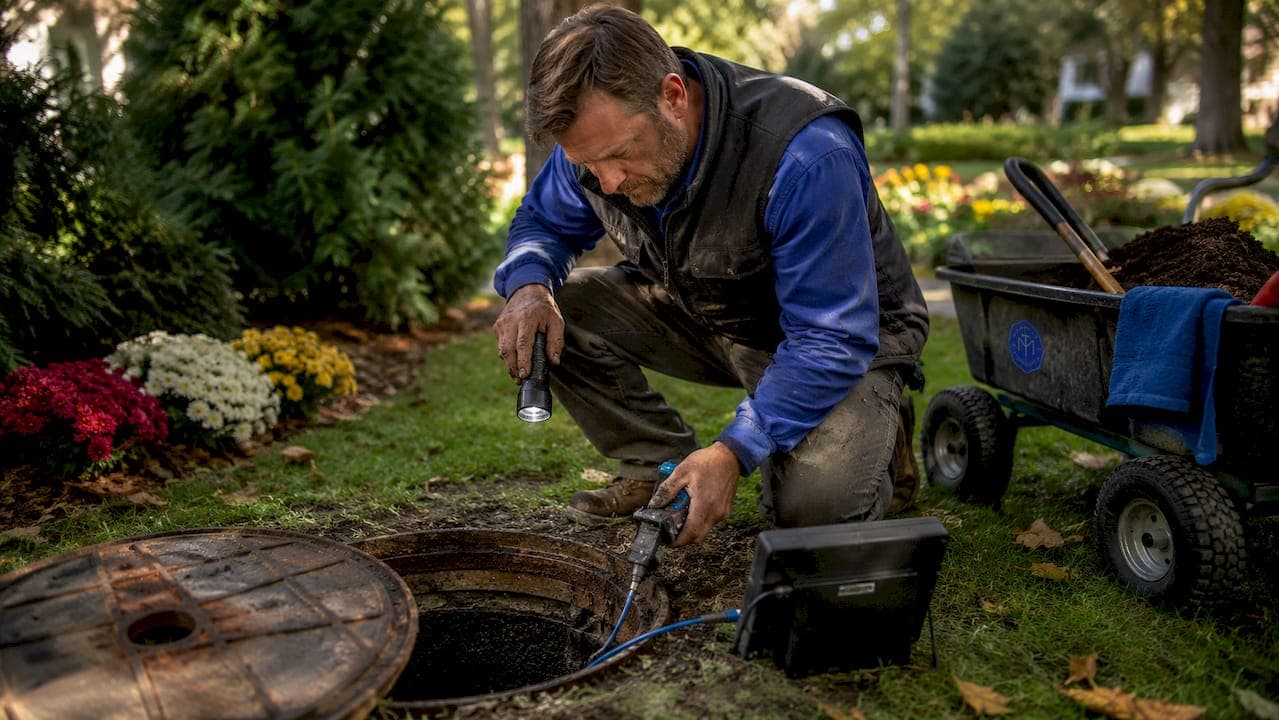
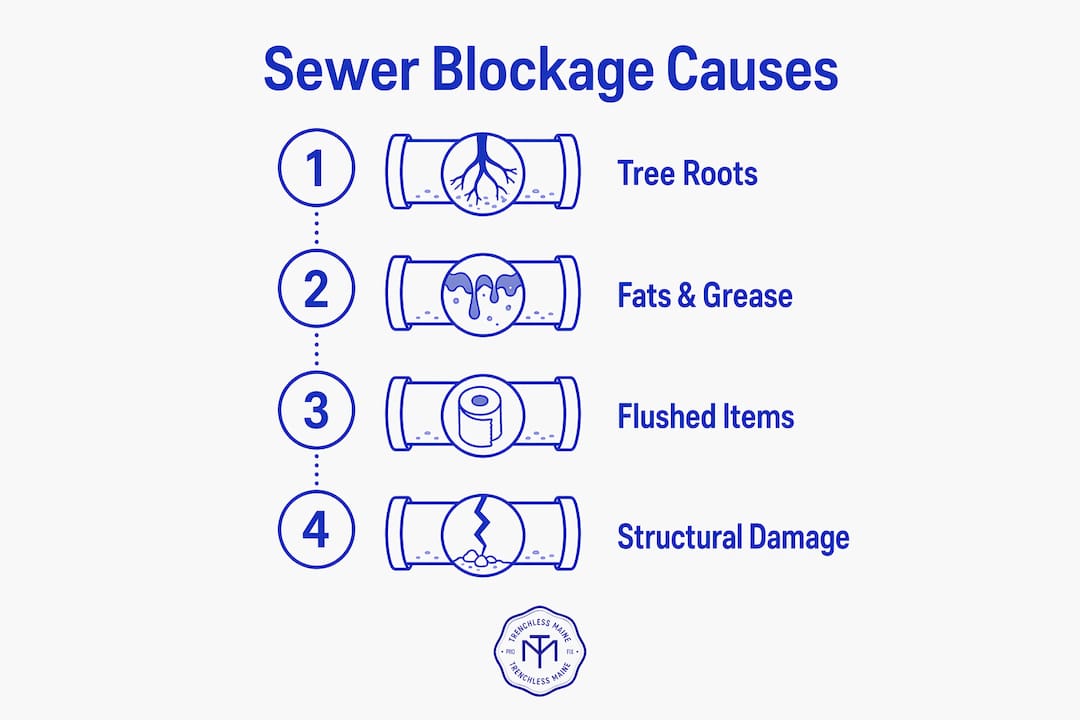
Sewer blockages are defined as obstructions inside drain pipes that prevent wastewater from flowing freely to the municipal sewer system. The most common sewer blockage causes are tree root intrusion, fats and grease buildup, and flushed foreign objects. Each of these creates a distinct type of obstruction, and each requires a different fix. Structural pipe problems and municipal system overloads add a second layer of complexity that many homeowners never consider. Knowing what causes sewer blockages puts you in control before a slow drain turns into a flooded basement.
What causes sewer blockages in residential pipes?
Tree root intrusion is the leading cause of sewer blockages in neighborhoods with mature trees. Roots grow toward moisture and nutrients, and your sewer lateral is the most reliable source of both. They enter through hairline cracks, loose joints, and aging pipe connections, then spread inside the pipe like a net.
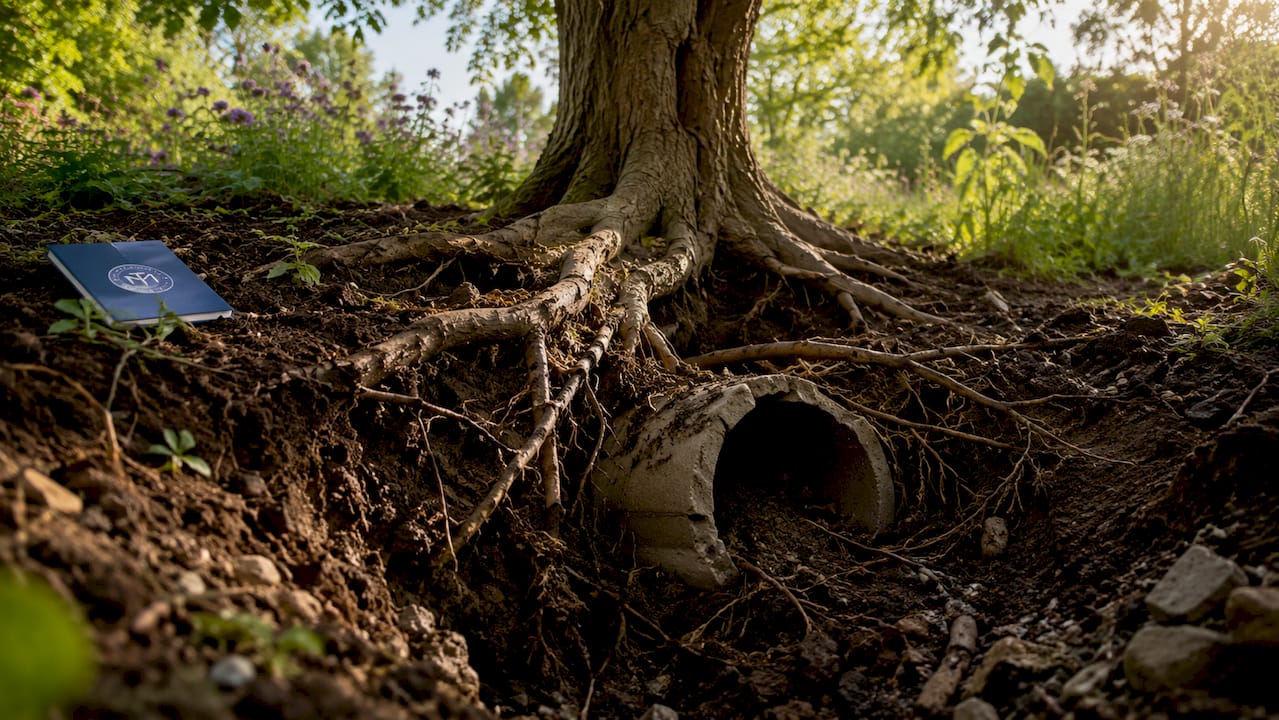
Once roots establish inside a pipe, they do not stop growing. A small root mat that slows flow in spring becomes a full blockage by fall. The problem is gradual, which is exactly why homeowners often miss it until a backup forces the issue.
Three conditions accelerate root intrusion in Maine homes:
- Older clay or cast-iron pipes with deteriorating joints give roots easy entry points.
- Large trees planted near the sewer lateral, including willows, maples, and oaks, are the most aggressive offenders.
- Drought conditions push roots deeper and farther in search of water, increasing the chance they reach your pipe.
A strip of unusually green, lush grass running across your yard above the sewer line is a reliable early warning sign. The leaking sewage acts as a fertilizer, feeding the grass directly above the breach.
Pro Tip: If you have mature trees within 20 feet of your sewer lateral, schedule a sewer camera inspection every two to three years. Catching root intrusion early costs far less than clearing a full blockage or repairing a collapsed pipe.
For Maine homeowners specifically, tree root intrusion is especially common given the density of mature hardwoods throughout the state's residential neighborhoods.
How do fats, oils, and grease clog sewer lines?
Fats, oils, and grease, collectively called FOG, are the most common cause of household sewer clogs. FOG enters drains as a liquid but cools and solidifies as it moves through your pipes. Once solid, it sticks to pipe walls and traps food particles, hair, and debris passing through.
The buildup is progressive. Each pour of cooking grease adds another thin layer to the pipe wall. Over months, the pipe's interior diameter narrows until flow slows to a trickle, then stops. The problem is especially severe in the horizontal sections of your drain system, where grease has time to cool and settle before reaching the main line.
Common household FOG sources include:
- Cooking oils and animal fats poured down the kitchen sink
- Food scraps rinsed off plates, especially meat drippings and dairy
- Soap residue from dish soap and hand soap, which bonds with grease already in the pipe
- Butter and shortening washed off pans during cleanup
The fix for a grease blockage is not a chemical drain cleaner. Those products thin the clog temporarily but leave residue behind. Hydro jetting is the professional standard for clearing FOG from main sewer lines. It uses high-pressure water to scour the pipe wall clean rather than just punching a hole through the clog.
The simplest prevention habit costs nothing: let cooking grease cool in the pan, pour it into a container, and throw it in the trash. Following preventive plumbing practices like this one eliminates the most common source of recurring kitchen drain problems.
What happens when you flush the wrong things?
Flushed wipes and hygiene products labeled "flushable" contribute significantly to stubborn sewer blockages. The label is misleading. Toilet paper is engineered to break apart in water within seconds. Wipes, even those marketed as flushable, hold their structure and travel through your pipes intact.
Once inside the pipe, wipes act as a mesh. They catch grease, hair, and food particles flowing past them. The mass grows larger with each flush until it forms a dense blockage that resists mechanical clearing. In municipal systems, these accumulations combine with FOG to create what engineers call fatbergs, which are solid masses that can weigh hundreds of pounds and require industrial removal.
Items that cause the most damage when flushed include:
- "Flushable" wipes of any brand
- Paper towels and facial tissues, which do not dissolve like toilet paper
- Sanitary products including tampons and pads
- Cotton balls and cotton swabs
- Kitty litter, even brands labeled flushable
- Dental floss, which wraps around other debris and binds clogs together
Pro Tip: Post a simple list of what not to flush near every toilet in your home. It takes 30 seconds and prevents the kind of blockage that requires a professional visit and a full day of disruption.
The rule is straightforward: only human waste and toilet paper belong in the toilet. Everything else goes in the trash. Following this one habit eliminates an entire category of top pipe blockage causes from your home's risk profile.
How do structural pipe problems cause recurring blockages?
Structural pipe issues like sagging, offsets, and corrosion lead to recurring blockages that clearing alone cannot permanently fix. This is the category most homeowners discover only after calling a plumber three times for the same drain. The blockage clears, returns in weeks, and the cycle repeats.
The underlying causes are physical defects in the pipe itself:
- Pipe bellies: A section of pipe sags below the normal grade, creating a low spot where solids settle and accumulate instead of flowing forward.
- Offset joints: Ground movement or soil settlement shifts pipe sections out of alignment, creating a ledge that catches debris.
- Corrosion and scale buildup: Cast-iron pipes develop internal rust and mineral deposits that narrow the pipe and create rough surfaces where grease and debris cling.
- Cracked or collapsed sections: Aging clay pipes crack under soil pressure, allowing root intrusion and causing partial collapses that restrict flow.
Municipal sewer system overload during heavy rains can force sewage back into private lines, causing backups that have nothing to do with your pipes. This matters because the fix is different. A backup caused by a public system overload requires coordination with your municipality, not a plumber.
| Structural issue | Primary cause | Recommended fix |
|---|---|---|
| Pipe belly | Soil settlement or poor installation | Trenchless pipe lining or targeted excavation |
| Offset joint | Ground movement over time | CIPP lining to bridge the gap |
| Corrosion and scale | Aging cast-iron or galvanized pipe | Pipe lining or full replacement |
| Root intrusion | Cracks and loose joints in older pipe | Root cutting followed by pipe lining |
Mechanical clearing of blockages is often a temporary fix for root or structural pipe problems. Trenchless repair methods address the defect itself rather than just clearing the symptom.
How can homeowners identify and prevent sewer blockages?
Early warning signs of a sewer blockage are consistent and recognizable. Slow drains in multiple fixtures at the same time signal a main line problem, not just a localized clog. Gurgling sounds from toilets when you run a sink, sewage odors near floor drains, and water backing up into a tub when you flush the toilet all point to a blockage downstream in the sewer lateral.
Sewer camera inspections help categorize blockages visually, improving diagnosis and repair prioritization. A camera shows whether you are dealing with roots, grease, a structural defect, or a combination. That distinction determines whether you need hydro jetting, mechanical cutting, pipe lining, or a call to your municipality. Skipping the inspection and guessing at the cause wastes money.
Prevention habits that protect your sewer lateral include:
- Dispose of FOG in the trash, never down the drain.
- Install a drain strainer in every sink and shower to catch hair and food particles.
- Flush only toilet paper, and switch to a thinner, faster-dissolving brand if you have older pipes.
- Schedule a professional sewer inspection every three to five years, or annually if you have mature trees near your lateral.
- Ask about root barriers if you are planting new trees near your sewer line.
Following essential sewer maintenance tips consistently reduces the likelihood of an emergency call by a significant margin. The cost of routine maintenance is always lower than the cost of emergency repair.
Key Takeaways
The three primary causes of sewer blockages are tree root intrusion, FOG buildup, and flushed foreign objects, and each requires a targeted fix rather than a generic drain cleaner.
| Point | Details |
|---|---|
| Tree roots are the top cause | Roots enter through cracks and joints in older pipes, forming mats that block flow. |
| FOG builds up progressively | Grease solidifies on pipe walls and narrows the pipe over months, not days. |
| Flushable wipes are not flushable | These products hold their structure and trap debris, accelerating blockage formation. |
| Structural defects cause recurrence | Pipe bellies, offsets, and corrosion create conditions that clearing alone cannot fix. |
| Camera inspection guides the right fix | Visual diagnosis prevents wasted spending on the wrong repair method. |
What I've learned after years of watching homeowners repeat the same mistakes
Homeowners almost always call for help too late. By the time there is a backup in the basement, the blockage has been building for months, sometimes years. The signs were there: a drain that ran a little slower each season, a faint odor near the floor drain, a toilet that took two flushes. Those are not minor annoyances. They are the pipe telling you something is wrong.
The mistake I see most often is treating a recurring blockage with a snake and calling it solved. Mechanical clearing punches through a clog, but it does not remove the root mat, fix the pipe belly, or clean the grease off the walls. The blockage returns, usually within a few months, and the homeowner calls again. After the third call, the repair bill is always larger than it would have been after the first.
A camera inspection before any repair is not an upsell. It is the only way to know what you are actually dealing with. Roots look different from grease on camera. A pipe belly looks different from an offset joint. The treatment for each is different. Guessing costs more than knowing.
The other misconception worth addressing: not every backup is your fault or your pipe. Heavy rain events in Maine can overwhelm municipal sewer capacity and push sewage back through private laterals. If your neighbors are all backing up on the same night during a storm, the problem is upstream. Call your municipality before you call a plumber.
My honest advice is to treat your sewer lateral the way you treat your roof. You do not wait for water to come through the ceiling before you check the shingles. Schedule an inspection, know what condition your pipes are in, and address small problems before they become expensive ones.
— John
Trenchlessmaine's sewer solutions for Maine homeowners
When a camera inspection reveals roots, grease, or structural damage in your sewer lateral, the repair does not have to mean torn-up landscaping or a week of disruption.
Trenchlessmaine specializes in trenchless pipe lining and hydro jetting across Maine, addressing the root causes of blockages without excavation. CIPP lining seals cracks and joints from the inside, eliminating root entry points and restoring full pipe diameter. Hydro jetting scours grease and debris from main lines using high-pressure water, delivering a clean pipe rather than just a cleared one. Most projects complete within 24 hours, and Trenchlessmaine backs its work with warranties up to 50 years. If you are dealing with a recurring blockage or want to know the true condition of your sewer lateral, a professional camera inspection is the right first step.
FAQ
What is the most common cause of sewer blockages?
Fats, oils, and grease are the most common cause of household sewer clogs, followed closely by tree root intrusion in areas with mature trees. Both causes are preventable with the right habits and routine maintenance.
Are flushable wipes actually safe to flush?
No. Flushable wipes do not break down like toilet paper and travel through pipes intact, where they trap grease and debris to form stubborn blockages. Only human waste and toilet paper should go down the toilet.
How do I know if my sewer line has a blockage?
Multiple slow drains at the same time, gurgling toilets, sewage odors near floor drains, and water backing up into a tub when you flush are all signs of a main sewer line blockage. A professional camera inspection confirms the cause and location.
Why does my sewer keep blocking after it's been cleared?
Recurring blockages after clearing usually indicate a structural pipe problem such as a belly, offset joint, or root intrusion that mechanical clearing cannot permanently fix. Camera-verified diagnostics before repair prevent this cycle from repeating.
Can heavy rain cause a sewer backup in my home?
Yes. Municipal sewer overload during heavy rain can force sewage back into private lines, causing backups that originate in the public system rather than your pipes. If neighbors experience the same issue simultaneously during a storm, contact your municipality first.