
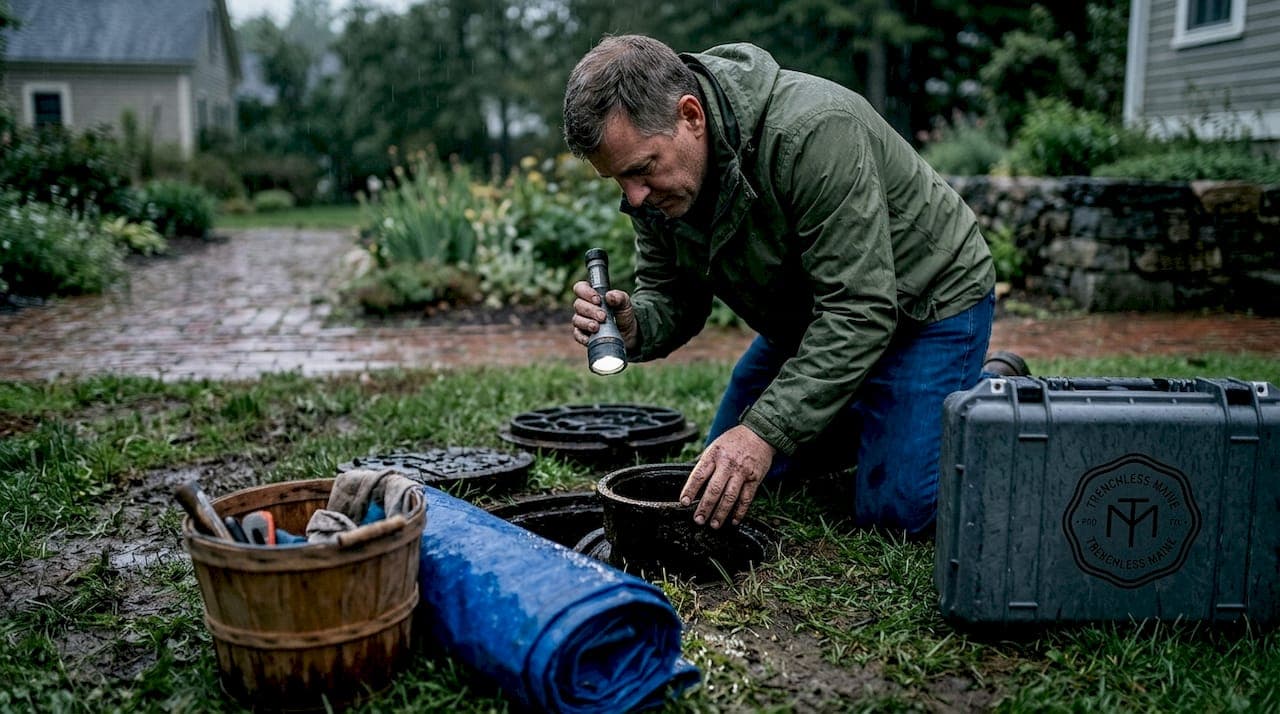
A failed sewer line is a pipe that can no longer move wastewater away from your home, either because of structural damage or a blockage severe enough to stop flow entirely. The industry term for this is sewer lateral failure, referring specifically to the pipe connecting your home to the municipal main. Understanding what causes these failures, how to spot them early, and what repair options exist can save you thousands of dollars and protect your property from serious damage. The EPA estimates between 23,000 and 75,000 sanitary sewer overflows occur in the U.S. every year, most of them preventable with timely inspection and action.
What causes sewer lines to fail?
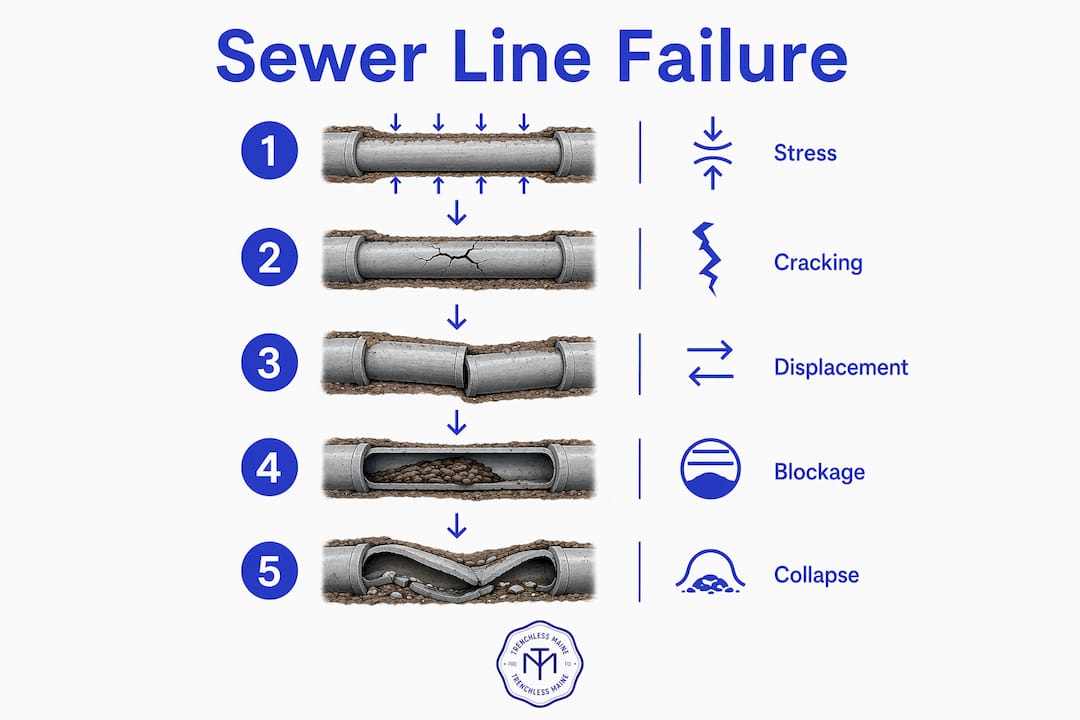
Sewer line failure rarely happens overnight. It follows a mechanical progression from stress to cracking, displacement, and eventually full obstruction, and understanding that progression helps you catch problems before they become emergencies.
Structural and environmental causes
Several physical forces work against your pipes from the outside:
- Soil loading and ground movement: Shifting soil, frost heave in cold climates like Maine, and ground settlement place uneven pressure on pipe walls. Over time, that stress causes cracks and joint displacement.
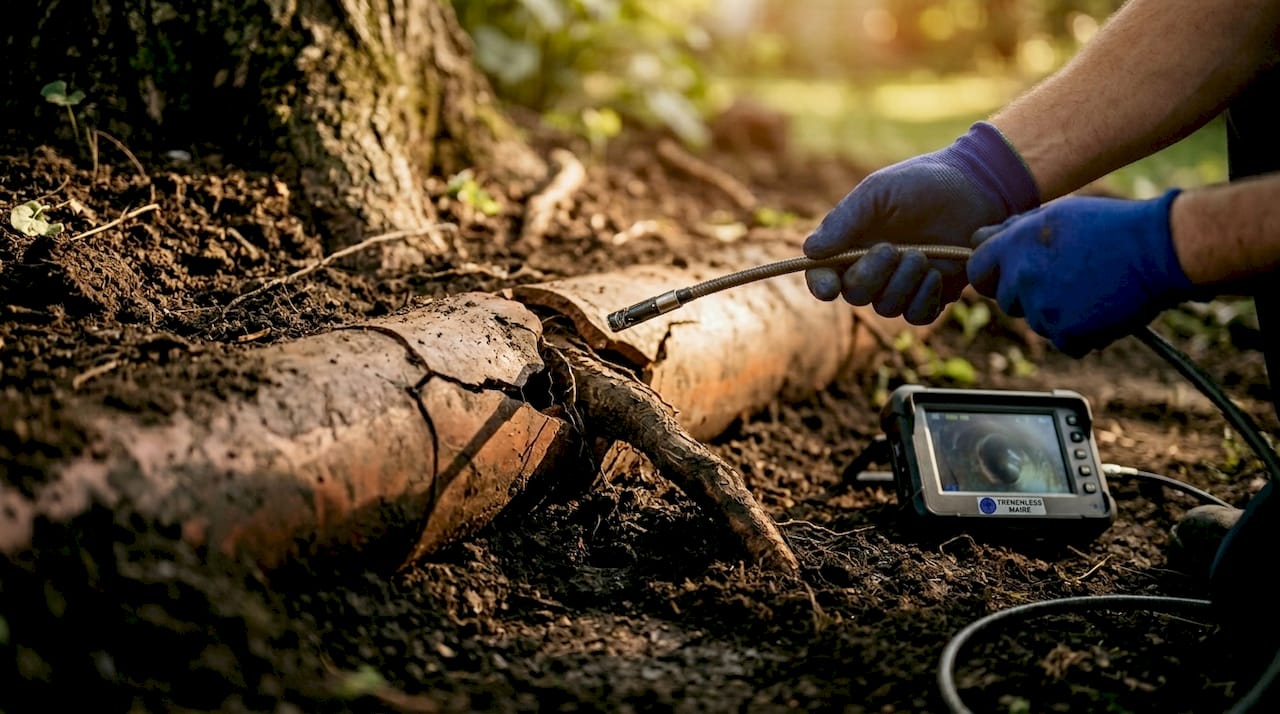
- Tree root intrusion: Roots seek moisture and naturally find their way into pipe joints or existing cracks. Once inside, they expand and eventually block or break the pipe entirely.
- Improper bedding or backfill: Pipes installed without adequate gravel bedding or with poorly compacted backfill are vulnerable to uneven loading. Surface traffic above, such as vehicles driving over a sewer easement, accelerates this damage.
- Pipe material degradation: Cast iron corrodes from the inside out. Clay pipe joints dry out and separate. Orangeburg pipe, a compressed fiber material used in homes built before the 1970s, softens and deforms under soil pressure. Each material has a predictable failure mode.
Chemical and biological causes
Inside the pipe, hydrogen sulfide gas produced by anaerobic bacteria triggers a process called microbially induced corrosion, or MIC. The gas oxidizes into sulfuric acid on pipe walls above the waterline, eating through concrete and clay from the inside. This is a documented cause of pipe deterioration that accelerates in poorly ventilated or slow-flow sections of the line.
Blockage-based failures
Flushable wipes do not break down like toilet paper. They combine with cooking grease to form dense, semi-solid masses that clog sewer pumps and lines. Cities across the country have issued warnings about this exact problem, and the repair costs to municipal systems run into the thousands. The same risk applies to your home lateral.
Pro Tip: If your home was built before 1975, ask a licensed plumber or sewer contractor what pipe material was used. Orangeburg and clay pipe have well-documented failure timelines, and knowing what you have lets you plan proactively rather than react to an emergency.
What are the warning signs of a failed sewer line?
Recognizing the signs of broken sewer pipes early is the single most effective way to avoid a full-scale emergency repair. The key is looking at patterns across your home, not just one slow drain.
Here are the most reliable symptoms to watch for:
- Multiple slow drains throughout the house. When the kitchen sink, bathroom sink, and shower all drain slowly at the same time, the problem is in the main line, not a single fixture trap.
- Gurgling sounds in toilets or drains. Air trapped by a partial blockage or structural deformation escapes through the nearest fixture, producing a gurgling or bubbling sound.
- Persistent sewage odor indoors or in the yard. Sewage odor inside the home signals pipe cracks, joint failures, or leaking cleanouts. Running water in the fixture does not eliminate the smell if the pipe itself is compromised.
- Water backing up in the wrong fixture. If flushing the toilet causes water to rise in the bathtub, wastewater has nowhere to go and is reversing direction. This is a clear sign of main-line obstruction.
- Wet or soggy patches in the yard. A strip of unusually green, lush grass running across your yard often marks an underground sewer leak. Sewage acts as a fertilizer for grass, and the moisture pattern follows the pipe route.
- Yard depressions or surface settling. Soil above a collapsed or leaking pipe loses support and sinks. A visible depression along your sewer path is a late-stage warning sign.
- Recurring toilet clogs. A toilet that clogs repeatedly without an obvious cause points to a restriction or partial collapse downstream in the lateral.
The most common homeowner mistake is treating each of these symptoms in isolation. A single slow drain is a clog. Multiple fixtures draining slowly at the same time is a main-line failure in progress. Treating the symptom without diagnosing the cause adds cost and delays the repair you actually need.
Pro Tip: Keep a simple log of drain problems in your home. If you notice two or more fixtures acting up within the same week, call for a camera inspection before spending money on individual drain cleaning.
How professionals diagnose sewer line failures
Accurate diagnosis before any repair work is non-negotiable. Guessing at the cause and method without inspection leads to unnecessary expense and the wrong fix.
CCTV pipe inspection is the standard first step. A waterproof camera mounted on a flexible rod travels through the pipe, transmitting live video to a monitor. A trained technician reads the footage for root intrusion, pipe bellies (low spots where water pools), cracks, joint displacement, and material condition. Sewer video inspections typically take under two hours and give you a clear picture of exactly what is wrong and where.
Here is a comparison of the most common diagnostic methods:
| Method | Best used for | Limitations |
|---|---|---|
| CCTV camera inspection | Root intrusion, cracks, bellies, joint gaps | Cannot see outside pipe wall |
| Smoke testing | Locating breaks and displaced joints | Requires access to cleanouts |
| Sonar profiling | Larger pipes, partial collapses with water present | Less common for residential laterals |
| Dye testing | Confirming leak location and direction | Confirms leak but not cause |
Camera inspection alone covers the majority of residential sewer lateral diagnoses. Smoke testing adds value when a break is suspected but the camera cannot confirm the exact location. Sonar profiling is more common in municipal or commercial applications. Dye testing is a low-cost confirmation tool, not a primary diagnostic method.
Pro Tip: Always request a copy of the camera inspection footage. A reputable contractor will provide it without hesitation. That footage protects you if there is ever a dispute about the scope of work or the condition of the pipe before repair.
Repair options for a failed sewer line: what works and what it costs
The right repair method depends on the type and extent of failure. Open-cut replacement is necessary for full pipe collapses where the line is completely obstructed and structurally unsalvageable. It requires excavation, permits in most municipalities, and significant disruption to landscaping, driveways, or hardscaping above the pipe route.
Trenchless methods are the preferred alternative for partial collapses, cracks, root intrusion, and joint failures where the pipe still has structural integrity. Two methods dominate:
- Cured-in-place pipe lining (CIPP): A resin-saturated liner is inserted into the existing pipe and inflated against the pipe wall, then cured with heat or UV light. The result is a new pipe inside the old one, with no digging required. CIPP works in most pipe materials and diameters and carries warranties up to 50 years from established providers.
- Pipe bursting: A bursting head is pulled through the old pipe, fracturing it outward while simultaneously pulling a new pipe into place. This method replaces the pipe entirely without excavation and suits situations where the existing pipe is too deteriorated for lining.
Here is a practical comparison to help you decide:
| Method | Excavation required | Best failure type | Typical disruption |
|---|---|---|---|
| Open-cut replacement | Yes, full trench | Full collapse, severe damage | High, days to weeks |
| CIPP lining | No | Cracks, root intrusion, joint gaps | Low, often under 24 hours |
| Pipe bursting | Minimal access pits | Severely deteriorated pipe | Low to moderate |
The average sewer line repair in 2026 costs around $2,600, with full replacements ranging from roughly $1,388 to $5,323 before landscaping and cleanup. Trenchless methods often fall within that range while eliminating the added cost of surface restoration. For a detailed breakdown of what drives pricing, the sewer repair cost guide from Trenchlessmaine covers pipe length, access conditions, and material factors in depth.
Pro Tip: Ask any contractor you consider whether they will provide a post-repair camera inspection to confirm the work. This is standard practice among reputable trenchless repair providers and gives you documented proof that the repair was completed correctly.
Key takeaways
Failed sewer lines follow a predictable progression from stress to collapse, and catching the pattern of symptoms early is the most reliable way to avoid a costly emergency repair.
| Point | Details |
|---|---|
| Failure follows a progression | Stress, cracking, displacement, and obstruction are stages, not sudden events. |
| Multiple symptoms signal main-line failure | Two or more slow drains at once point to the lateral, not individual fixture clogs. |
| Camera inspection comes first | CCTV inspection under two hours identifies the exact failure type before any repair work begins. |
| Trenchless methods suit most failures | CIPP lining and pipe bursting resolve most partial collapses without excavation or major disruption. |
| 2026 repair costs average $2,600 | Full replacements range from $1,388 to $5,323, making early detection a strong financial argument. |
What I've learned from years of sewer line calls
After years of working with homeowners across Maine on sewer line problems, the pattern I see most often is not the failure itself. It is the delay. A homeowner notices a slow drain in October, pours a bottle of drain cleaner down it, and calls us in February when three fixtures are backing up and the yard has a depression the size of a dinner table. The October problem was a $2,600 repair. The February problem is a full replacement.
The other thing I have learned is that homeowners consistently underestimate how much their pipe material matters. If you live in a home built before 1975 in Maine and you have never had a camera inspection, you may have Orangeburg pipe under your yard right now. That material has a service life of roughly 50 years under ideal conditions. Under Maine frost cycles and soil movement, it often fails sooner. Knowing that changes how you prioritize an inspection.
I also want to push back on the idea that trenchless repair is a premium option for people who want to avoid inconvenience. It is often the more cost-effective choice when you factor in surface restoration. Digging up a concrete driveway to replace 40 feet of pipe adds thousands to the base repair cost. CIPP lining through the same section costs less and takes one day. The lateral sewer line repair guide from Trenchlessmaine walks through exactly when each method applies, and it is worth reading before you talk to any contractor.
The homeowners who handle sewer problems best are the ones who treat the first symptom as a signal, not a nuisance. Get the inspection. Know what you have. Then decide.
— John
How Trenchlessmaine can help with your sewer line
When your sewer line shows signs of failure, the first step is knowing exactly what you are dealing with. Trenchlessmaine provides professional sewer camera inspections across Maine that identify the failure type, location, and severity before any repair work begins. That inspection protects you from guesswork and unnecessary expense.

From there, Trenchlessmaine offers no-dig repair solutions including CIPP pipe lining and pipe bursting, with most residential projects completed within 24 hours and warranties up to 50 years. For lines blocked by grease or debris buildup, hydro jetting clears the pipe without chemicals or excavation. If you are seeing any of the warning signs covered in this article, contact Trenchlessmaine today for an assessment and get a clear picture of your options before a manageable problem becomes an emergency.
FAQ
What is a failed sewer line?
A failed sewer line is a pipe that can no longer move wastewater properly due to structural damage, collapse, or severe blockage. The industry term is sewer lateral failure, and it requires professional inspection to diagnose accurately.
How do I know if my sewer line has failed?
Multiple slow drains across the house, gurgling sounds, sewage odor, and wet patches in the yard are the most reliable signs. A single slow drain is usually a clog; multiple fixtures affected at once points to the main line.
What is the most common cause of sewer line failure?
Tree root intrusion, pipe material degradation in older homes, and microbially induced corrosion from hydrogen sulfide gas are the leading causes. Homes with Orangeburg or clay pipe are at higher risk due to material age and brittleness.
How much does sewer line repair cost in 2026?
The average repair cost is around $2,600, with full replacements ranging from $1,388 to $5,323 before landscaping. Trenchless methods like CIPP lining often fall within that range while eliminating surface restoration costs.
Is trenchless repair better than open-cut replacement?
Trenchless methods like CIPP lining and pipe bursting are faster, less disruptive, and often equally cost-effective for partial collapses and most residential failures. Open-cut replacement is necessary only when the pipe has fully collapsed and cannot support a liner or bursting head.