
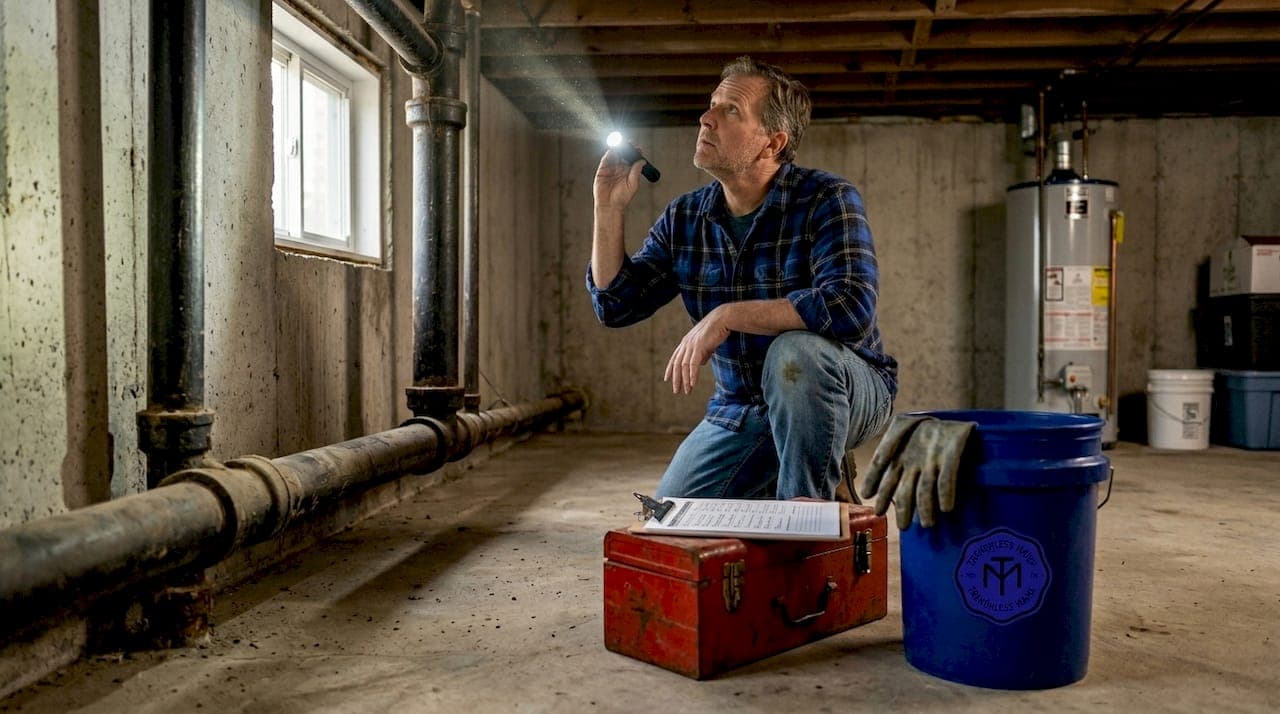
Sewer problems rarely announce themselves with flashing warning signs. They build quietly, starting as a slow drain or a faint smell, until one day you're facing a backed-up basement or a torn-up yard. Sewer repairs can cost thousands more than routine preventive care, yet most homeowners in Maine don't think about their sewer system until something goes very wrong. This article walks you through practical, evidence-backed steps to keep your sewer or septic system healthy through Maine's demanding seasons, saving you money and stress along the way.
Table of Contents
- Start with regular sewer inspections
- Control what goes down your drains
- Manage rainwater and backup risk
- Schedule cleaning and pumping for long-term health
- Why most Maine sewer failures start with small, preventable mistakes
- Get expert help for lasting sewer health
- Frequently asked questions
Key Takeaways
| Point | Details |
|---|---|
| Routine inspections matter | Regular professional inspections catch problems early before they get expensive. |
| Mind your flushes | Never flush wipes, grease, or chemicals that can clog your sewer or septic system. |
| Manage stormwater wisely | Keep roof, sump, and foundation drains away from sewers to avoid backups. |
| Stick to a pumping schedule | Pumping tanks and cleaning lines every few years prevents urgent, costly repairs. |
| Small steps save big money | Proactive maintenance habits can dramatically reduce risk of sewer failures. |
Start with regular sewer inspections
Inspections are the single most important habit you can build around sewer maintenance. Think of them as a routine physical exam for your pipes. You wouldn't skip annual checkups and hope your health stays fine, and the same logic applies here.
According to EPA guidance on septic systems, conventional septic systems should be inspected at least every three years and pumped every three to five years. Alternative systems, such as those with electrical float switches or mechanical components, need professional attention every year. Skipping these intervals is one of the fastest ways to turn a minor repair into a full system replacement.
Here's what a proper inspection program looks like in practice:
- Schedule a visual walkthrough yourself every spring and fall. Walk the area above your sewer lateral (the pipe connecting your home to the main line) and look for soft, soggy ground, a strip of unusually green grass, or any odor near cleanout access points. These are early indicators of a leak or overloaded system.
- Book a professional sewer camera inspection every two to three years. A camera run through your pipes gives technicians a live view of cracks, root intrusion, joint separation, and buildup that no surface check can reveal.
- Ask for a written report after every professional inspection. This documentation tells you the current condition of your pipes, what defects were found, and what to watch for next time.
- Set calendar reminders for your next scheduled inspection date. It sounds simple, but this step gets skipped constantly.
Research on pipe inspection methods confirms that periodic CCTV (closed-circuit television) camera assessment detects defects before they become structural failures, dramatically reducing repair costs. A small crack found today costs far less to address than a collapsed pipe found after sewage backs up into your home.
Pro Tip: Keep a simple maintenance notebook or digital folder for your property. Log every inspection date, the name of the technician, findings, and any repairs made. This record is invaluable for future service calls and for buyers if you ever sell your home.
Your spring sewer maintenance checklist should always include scheduling that professional inspection, especially after a harsh Maine winter when freeze-thaw cycles can shift pipes and crack joints.
Control what goes down your drains
Once inspections are on your schedule, making smart choices about what enters your system is the next daily defense. This section covers the habits that silently destroy pipes over months and years.
The most damaging things homeowners introduce to their sewer systems fall into three categories: solids that don't break down, fats and oils that solidify, and harsh chemicals that kill the beneficial bacteria that septic systems need to function.
Here's what you should never put into your drains or toilets:
- Wipes of any kind, including those labeled "flushable." These do not break down in pipes and are a leading cause of blockages.
- Paper towels, diapers, or feminine hygiene products. These belong in the trash, not the toilet.
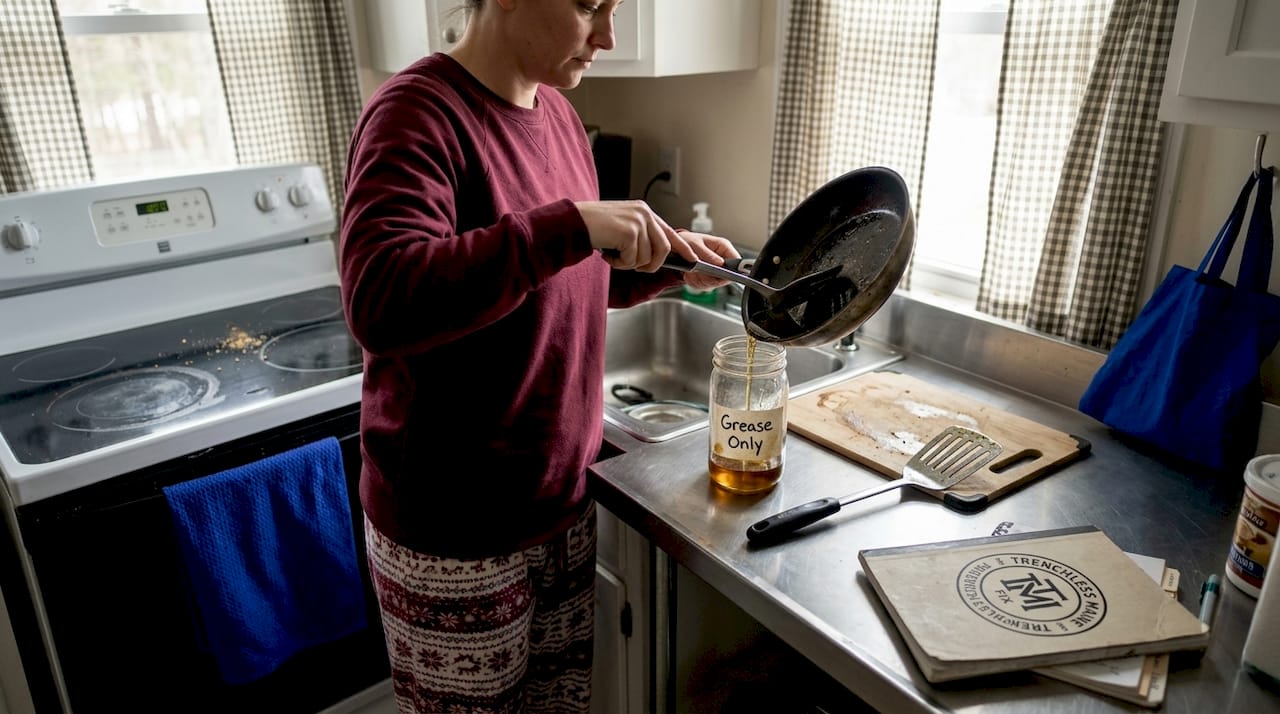
- Cooking grease, bacon fat, or frying oil. These seem liquid when hot but solidify inside your pipes and create thick, stubborn blockages.
- Solvents, paint thinner, or harsh chemical drain cleaners. These damage pipe walls over time and kill the bacteria in septic tanks that process waste.
- Coffee grounds, eggshells, and food scraps (even with a garbage disposal). These accumulate in pipe joints and bends, narrowing your lines gradually.
The EPA is clear that pouring grease, oil, and inappropriate materials down any drain is one of the top causes of system failure. The data backs this up: analysis of sewer backup reports shows that grease and wet wipes are among the primary causes of residential sewer backups, contributing to tens of thousands of incidents every year in cities and suburban communities alike.
Pro Tip: Keep a labeled glass jar near your stove for collecting cooking grease. Once it solidifies, seal it and dispose of it in your trash. This one habit eliminates a huge source of buildup in kitchen drain lines.
If you notice a sewer gas smell in your home, that's often a sign that a dry trap or cracked vent pipe is allowing dangerous gases like hydrogen sulfide to enter your living space. Don't mask the smell. Investigate it immediately, because it can signal a blockage or partial pipe failure elsewhere in your system.
Reducing chemical drain opener use is especially important for septic system owners. Products that dissolve clogs with strong acids or alkalis can wipe out the bacterial colonies that make your septic tank work. Enzymatic drain cleaners, used sparingly, are a safer option for both septic and municipal sewer connections.
Manage rainwater and backup risk
Even if you're careful about what goes down your drains, stormwater problems can overwhelm your system from the outside. This is particularly true in Maine, where spring snowmelt and heavy summer storms can push enormous amounts of water through local infrastructure.
The core issue is this: when stormwater enters a sanitary sewer system (the one designed for household waste), it can overload the capacity of both private laterals and municipal mains. The result is sewage backing up into homes through floor drains, toilets, and tubs. Data shows that nearly one in three sewer backups are caused by improper internal drainage connections, meaning sump pumps, roof drains, or foundation drains that empty into the sanitary sewer instead of the storm system or yard.
Here are practical steps to protect your home:
- Check where your sump pump discharges. It should direct water away from your foundation toward a dry well, rain garden, or street, not into the sanitary sewer line.
- Inspect roof downspouts. Make sure they are not connected to your sewer lateral. Disconnecting them and directing flow to the lawn or a rain barrel is both legal and effective in Maine.
- Grade your yard away from the foundation. The ground should slope away from your home at least six inches over ten feet to prevent pooling near your foundation.
- Consider a backwater valve. This is a one-way valve installed in your sewer lateral that allows sewage to flow out but physically blocks it from flowing back in during surges. It's one of the most cost-effective investments for homes in low-lying areas of Maine.
| Protection method | Upfront cost | Maintenance required | Effectiveness |
|---|---|---|---|
| Backwater valve | Moderate | Annual inspection | High |
| Temporary drain plug | Low | Remove and reinstall as needed | Moderate |
| Sump pump redirect | Low to moderate | Check seasonally | High |
| Yard regrading | Moderate to high | Minimal | High |
Knowing the signs you need sewer repair before a storm season hits is critical. Gurgling sounds from drains, slow-moving water in multiple fixtures at once, or sewage smells after heavy rain are red flags that your system may already be compromised.
Schedule cleaning and pumping for long-term health
Alongside prevention and inspection, hands-on maintenance like pumping and hydro jetting (cleaning pipes with high-pressure water) is vital to system longevity. A system that is never cleaned accumulates buildup year after year until the pipe diameter effectively shrinks or the tank can no longer process waste.
Household septic tanks should be pumped every three to five years and inspected at a minimum every three years. Alternative systems with pumps or mechanical parts need annual attention. Municipal sewer connections benefit from periodic line cleaning as well, especially in older homes with cast iron or clay pipes that accumulate grease and mineral scale.
| System type | Inspection interval | Pumping or cleaning interval |
|---|---|---|
| Conventional septic | Every 3 years | Every 3 to 5 years |
| Alternative/mechanical septic | Every year | As recommended by service provider |
| Municipal sewer (older home) | Every 2 to 3 years | Every 3 to 5 years |
| Municipal sewer (newer home) | Every 3 to 5 years | Every 5 to 7 years |
Warning signs that your system is overdue for cleaning include:
- Slow drains throughout the house, not just in one fixture
- Gurgling sounds after flushing or running water
- Wet, spongy ground near your septic tank or drain field
- Odors inside or outside the home, especially after rain
- Sewage backup in the lowest drain in the house
Here's how to prepare for a professional cleaning visit:
- Locate your cleanout access points before the technician arrives. These are usually capped PVC or metal pipes near the foundation or in the yard.
- Note any specific issues you've observed, such as slow drains in particular rooms or odors at certain times.
- Clear the area around your septic tank lid or cleanout so the technician can work efficiently.
- Ask about condition of the pipes or tank after service. A good technician will share findings and give you a next-service recommendation.
- Log the service date and findings in your maintenance record.
Pro Tip: Many service providers in Maine will set up automatic reminders for your next pumping or cleaning interval. Ask them to add you to their scheduling system so the task never slips through the cracks.
Staying on top of spring sewer maintenance tips is especially important in Maine, where winter puts additional stress on pipes. Comparing septic vs. sewer system care can also help you understand which maintenance schedule applies to your specific property.
Why most Maine sewer failures start with small, preventable mistakes
Here's something we see repeatedly in our work across Maine: the homeowners dealing with the most serious and expensive sewer failures almost never had a catastrophic event trigger the problem. What they had was a series of small, ignored signs, each one easy to rationalize away.
A slow drain becomes "just how it drains now." A faint outdoor odor gets blamed on a neighbor or a dead animal. A patch of soggy ground near the house is written off as seasonal. These small signals are the sewer system asking for attention. Ignored long enough, they turn into backups, structural failures, and five-figure repair bills.
Maine's climate makes this worse. Freeze-thaw cycles are brutal on underground infrastructure. When the ground heaves in winter and settles in spring, pipe joints shift, cracks open, and tree roots find new entry points. Root intrusion, where roots grow into pipe joints searching for moisture and nutrients, is one of the most common causes of pipe blockage and deformation we see in older Maine properties. By the time roots are causing visible symptoms, they've often been growing inside the pipe for years.
The uncomfortable truth is that routine, unglamorous habits matter far more than occasional big repairs. Monitoring your drains weekly, keeping your maintenance log current, knowing where your cleanout is, and being strict about what gets flushed: these things actually work. They are not exciting, but they are what separates the homeowners who never deal with a sewer emergency from those who do.
We also see homeowners in Maine wait until late fall or even winter to address issues they noticed in spring. By then, frozen ground makes repairs harder and more expensive. If you notice any sewer warning signs between May and October, that is the window to act. Don't wait.
Get expert help for lasting sewer health
When routine care uncovers something bigger, or when years of missed maintenance have built up into a real problem, you need more than a checklist. Persistent slow drains, recurring backups, or odors that won't resolve after basic maintenance are all signs that a professional assessment is the right next step.

At Trenchless Maine, we specialize in professional sewer services that protect your property while solving the problem completely. Our team uses camera inspections to pinpoint the exact location and nature of any defect, and our trenchless repair methods, including CIPP (cured-in-place pipe) lining and hydro jetting, fix the problem without tearing up your yard or driveway. Most jobs are completed within 24 hours, and our repairs are backed by industry-leading warranties up to 50 years. You can see the quality of our work firsthand through real results from local repairs completed for Maine homeowners just like you.
Frequently asked questions
How often should septic tanks in Maine be pumped?
Septic tanks should be pumped every 3 to 5 years and inspected at least every three years to maintain optimal function and avoid costly failures.
What are the most common causes of sewer backups in homes?
The most common causes are blockages from grease, wipes, non-flushable items, and stormwater connections that feed directly into the sanitary sewer line.
Can camera inspections really prevent sewer line failures?
Yes, periodic CCTV inspection allows technicians to spot cracks, root intrusion, and joint failures early, making targeted repairs far less expensive than addressing a full collapse.
Are rainwater issues a risk for sewer systems in Maine?
Absolutely. Nearly one in three sewer backups are caused by improper drainage connections, and Maine's snowmelt and storm seasons put significant extra pressure on residential systems.