
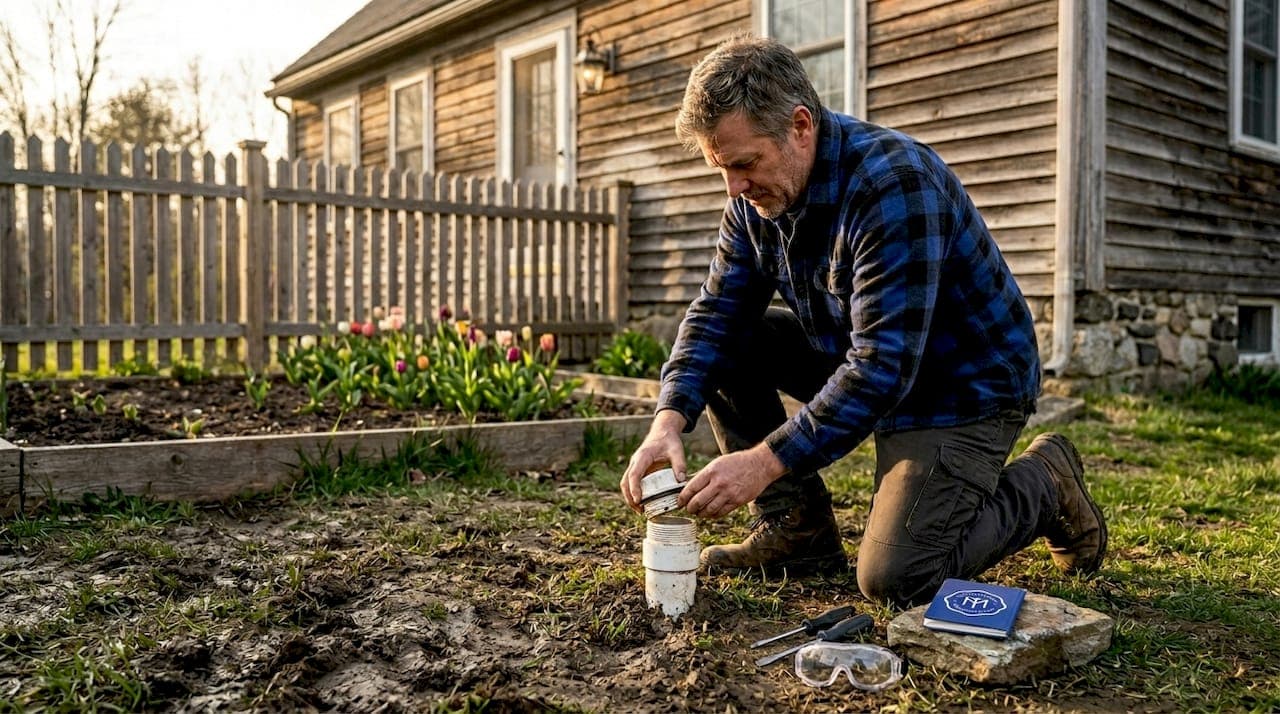
When your drains back up or your toilet gurgles, the immediate fear is a big, expensive repair. Many homeowners picture torn-up yards and five-figure bills before they've even called a plumber. But in many cases, the real solution is right at your feet: a sewer cleanout. This simple access point is one of the most underused tools in home maintenance, yet it can be the difference between a quick $200 service call and a $5,000 excavation. If you own a home in Maine, understanding your sewer cleanout is not optional. It's essential.
Table of Contents
- What is a sewer cleanout and where is it found?
- How sewer cleanouts help with maintenance and blockages
- Sewer cleanout codes and what Maine homeowners should know
- How cleanouts relate to inspection, cleaning, and repair options
- Why most homeowners underestimate cleanouts and how to use them to your advantage
- Turn knowledge into action: protect your Maine home with expert help
- Frequently asked questions
Key Takeaways
| Point | Details |
|---|---|
| Cleanouts provide vital access | Sewer cleanouts allow quick, non-invasive access to your plumbing system for maintenance and emergency repair. |
| Maine plumbing code matters | Local rules require cleanouts and govern their placement; keeping yours visible protects you from costly issues. |
| Inspection prevents major repairs | Using your cleanout for regular camera inspections can detect issues before they become expensive emergencies. |
| Proper use saves money | Knowing when to use a cleanout and when to call a pro can mean the difference between a simple cleaning and a major dig. |
What is a sewer cleanout and where is it found?
A sewer cleanout is a capped pipe that gives direct access to your home's main sewer line. Think of it as a service door into your underground plumbing. It's not glamorous, but it's one of the most practical components in your entire plumbing system. When something goes wrong in the sewer lateral (the pipe that connects your home to the municipal sewer main or septic system), the cleanout is where service professionals start their work.
Physically, a cleanout looks like a short vertical pipe sticking up from the ground or emerging from a wall or floor. It usually measures about 4 inches in diameter and is capped with a threaded plug. In Maine homes, you'll typically find them made from white or black PVC plastic, or cast iron in older properties. The cap is meant to be removable, but over time it can corrode or get buried.
Where to look for your cleanout:
- Basement or crawlspace: Many Maine homes have interior cleanouts near the base of the main drain stack, often within a few feet of where the sewer line exits the foundation.
- Outside near the foundation: A common location is along the exterior wall closest to the main sewer line, sometimes close to the front or side yard.
- In the yard between house and street: If the cleanout is not immediately next to the home, it may be placed partway along the sewer lateral as it runs toward the city main or septic tank.
- Hidden under soil or landscaping: In older Maine homes, outdoor cleanouts can be swallowed by decades of soil buildup, mulch, or shrubs. You may need to probe the ground or check old plumbing diagrams.
It's worth knowing how your home connects to the municipal system, especially if you're unsure whether you're on city sewer or a private septic system. The septic vs. sewer differences in Maine matter a lot for where your cleanout is positioned and who is responsible for maintenance.
According to the Maine Plumbing Code Framework, cleanout placement is part of the drain-waste-vent (DWV) system design requirements. This means your cleanout isn't just a convenience. It's a code-mandated feature of your home's plumbing plan.
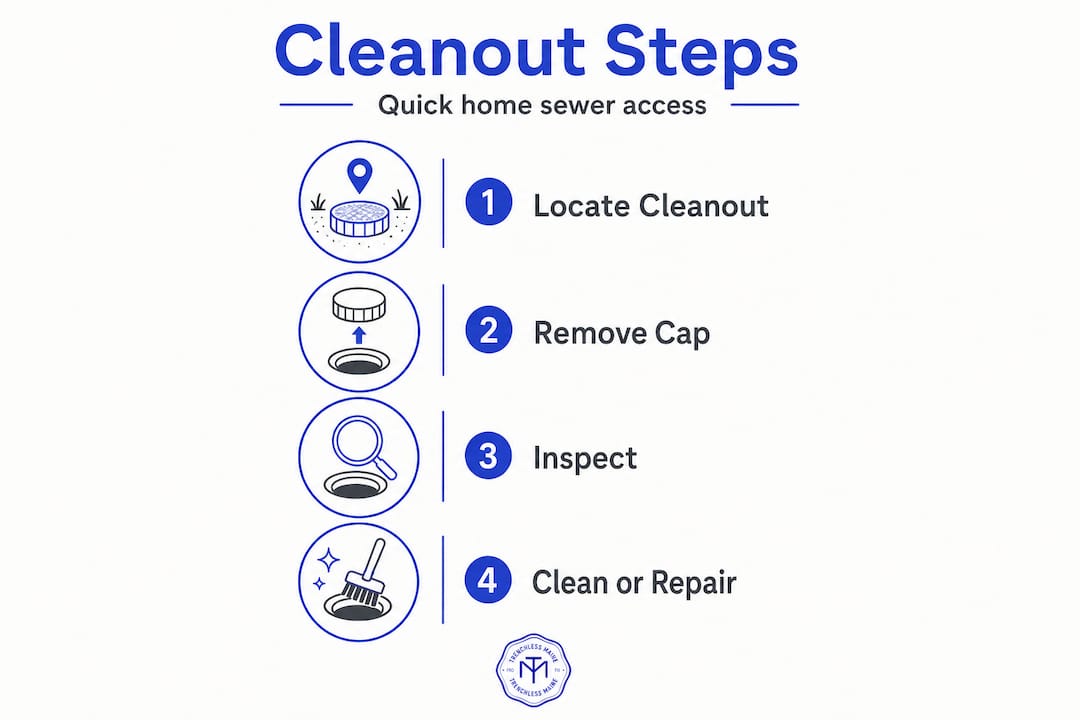
Pro Tip: Take a photo of your cleanout's location now and save it on your phone. Maine winters and spring frost heaves can shift soil and cover outdoor cleanouts quickly, and finding it later could cost you time and money during an emergency.
How sewer cleanouts help with maintenance and blockages
Now that you know what a cleanout is, let's see why having one is so valuable for ongoing care and emergency scenarios.
When a blockage occurs in your main sewer line, plumbers need a way in. Without a cleanout, accessing the pipe can mean removing toilets, cutting into walls, or digging up your yard. With a cleanout, a technician can remove the cap, thread in a snake or hydro jetting hose, and clear the blockage in a fraction of the time. No digging. No mess inside your home. No structural damage to your property.
Here are the four key ways cleanouts protect you as a homeowner:
- Faster emergency response. When sewage is backing up into your home, every minute counts. A cleanout gives a plumber immediate access to the main sewer line without tearing up your floor or landscaping.
- Lower service costs. Routine snaking or hydro jetting is far less expensive when done through a cleanout. You avoid the labor costs of digging or disassembly.
- Root intrusion treatment. Maine's mature tree population means root intrusion (tree roots growing into sewer pipes) is a common problem. Roots can only be safely cut and flushed out through a cleanout access point.
- Non-invasive camera inspection. A cleanout is the entry point for a sewer camera, which lets technicians see exactly what's going on inside the pipe before any cleaning or repair work begins.
"Proper cleanout placement is part of the DWV system design requirements under the Maine Plumbing Code Framework, ensuring homeowners have the access points needed for safe, timely maintenance."
Following sewer maintenance tips regularly can help you avoid unexpected blockages. And if you want to time your maintenance strategically, running through a spring sewer checklist each year is one of the smartest things a Maine homeowner can do. Spring thaw puts enormous stress on underground pipes, and catching problems early is always cheaper than reacting to a crisis.
Sewer cleanout codes and what Maine homeowners should know
Understanding code isn't just for contractors. Homeowners should know why and how Maine sets standards for cleanouts, and how these codes impact both new and older homes.
Under the plumbing code framework that governs Maine homes, every residential property must have accessible cleanouts as part of its Maine code on DWV systems. This applies to new construction, major renovations, and it influences what you're required to maintain as an existing homeowner.
Here's a simplified comparison of Maine-specific considerations versus general national standards:
| Requirement | General national standard | Maine-specific considerations |
|---|---|---|
| Cleanout placement | At every change of direction over 45 degrees | Required under DWV design rules; may vary by local municipality |
| Cleanout diameter | Matches pipe size (typically 4 inches) | Same; PVC or cast iron both accepted |
| Access requirement | Must be accessible for maintenance | Must remain visible, uncovered, and uncapped |
| Responsibility | Homeowner maintains from house to city main | Homeowner responsible; older Maine homes may lack compliant cleanouts |
| Code compliance | National plumbing code guidelines | Local authority approval may also be required |
What does this mean for you in practice? A few important points:
- Older Maine homes (pre-1980s construction especially) may have been built before modern cleanout requirements were enforced. These homes sometimes have no cleanout at all, or only a single cleanout in a location that doesn't comply with current placement standards.
- Missing or inaccessible cleanouts can trigger code violations if your home undergoes inspection, permit review, or renovation. Insurance adjusters have also been known to deny claims related to sewer backups when cleanouts were not properly accessible.
- Adding a cleanout is a relatively affordable plumbing upgrade. If your home doesn't have one, or if yours is buried and inaccessible, having a plumber install or expose a compliant cleanout is money well spent.
- Capped and clear. Codes require cleanout caps to stay in place when not in use. An uncapped cleanout introduces sewer gases (like hydrogen sulfide) into your home or yard, which is both a health hazard and a code violation.
Knowing your code obligations isn't about being a rules expert. It's about protecting your investment in your Maine home.
How cleanouts relate to inspection, cleaning, and repair options
So, what can you actually do with a sewer cleanout? Here's how it factors into inspections, cleaning, and when it's time to call for a repair.
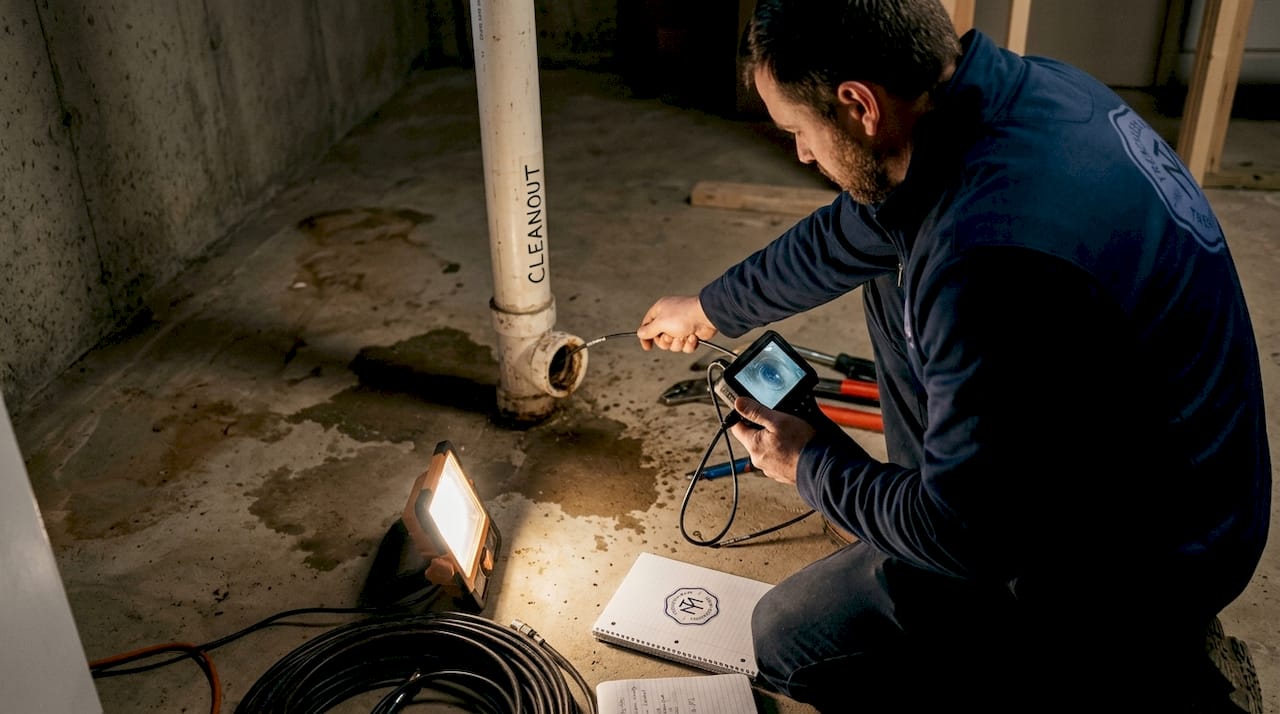
The cleanout is the front door for almost every non-invasive sewer service. Whether you need a routine flush or a full assessment before a major repair, everything starts at that capped pipe.
| Situation | Cleanout use | Recommended action |
|---|---|---|
| Slow drains, no backups | Inspection access | Sewer camera inspection to assess buildup |
| Active blockage | Cleaning access | Snaking or hydro jetting depending on severity |
| Recurring blockages | Inspection + cleaning | Camera first, then targeted cleaning |
| Root intrusion suspected | Inspection + cleaning | Camera to confirm, hydro jetting to clear |
| Collapsed or cracked pipe | Inspection access | Camera inspection, then sewer repair options |
| Pre-purchase inspection | Inspection access | Full pipe inspection methods for condition report |
The key decision point is always: inspect before you act. When technicians skip the camera inspection and go straight to hydro jetting (a high-pressure water cleaning method), they risk making things worse. According to sewer line hydrojetting guidance, if the underlying issue is structural, such as deteriorated or degraded pipe, cleaning methods alone may not be an appropriate long-term fix. Technicians should evaluate pipe condition by camera before choosing hydro jetting versus repair or rehabilitation.
This matters for you because a cracked pipe that gets high-pressure water blasted through it could sustain additional damage. The cleanout makes it easy to run the camera first, so you know what you're dealing with before any cleaning or repair work begins.
Pro Tip: Always request a camera inspection before any major cleaning service. A 20-minute camera run through the cleanout can reveal root intrusion, pipe deformation, or cracks that would make cleaning ineffective. Knowing this upfront saves you from paying for a service that won't solve your actual problem.
Why most homeowners underestimate cleanouts and how to use them to your advantage
Now that you understand the role and value of cleanouts, here's a perspective most guides miss. One that could genuinely change how you approach maintenance in your Maine home.
Most homeowners only think about their sewer cleanout when something has already gone seriously wrong. The toilet is overflowing, the basement smells like sewage, or a neighbor mentions they just paid thousands to have their yard dug up. At that point, the cleanout becomes the hero of the story. But by then, some of the damage is already done.
Here's the uncomfortable truth: a buried or missing cleanout is one of the leading reasons homeowners end up paying for property excavation. When there's no clean access point and a blockage occurs, plumbers have no choice but to dig. In Maine, where freeze-thaw cycles can shift soil by several inches each year, an outdoor cleanout that was visible last spring can be completely buried under displaced earth by fall. Frost heaves are real, and they don't care about your plumbing budget.
We've seen it many times. A homeowner calls with a serious blockage, and after some investigation, it turns out the cleanout exists but hasn't been seen in years because a raised flower bed or sod grew over it. What would have been a one-hour job with direct cleanout access becomes a half-day dig. The cost difference between those two scenarios is significant, often $200 to $300 versus $3,000 or more depending on depth and access.
The proactive homeowner approach is simple. Locate your cleanout, mark it with a painted stake or a simple landscape marker, and check it once a year. Building essential sewer maintenance tips into your annual home care routine is the kind of low-effort habit that pays off in a big way. A cleanout is not just an emergency valve. It's a management tool, and using it regularly keeps your entire sewer system running the way it should.
Turn knowledge into action: protect your Maine home with expert help
You now know where your sewer cleanout should be, what it does, how Maine codes govern it, and why using it proactively is far smarter than waiting for a crisis. That knowledge puts you ahead of most homeowners in the state.

But knowing and doing are two different things. Sewer inspections, cleanout location services, hydro jetting, and pipe repairs all require professional tools and expertise, especially when pipe condition is unknown. Trenchless Maine offers the full range of trenchless sewer services that start with your cleanout and go from there, whether you need a simple camera inspection or a full no-dig sewer repair using CIPP pipe lining technology. You can also browse the repair project gallery to see real Maine homes where non-invasive methods saved both yards and budgets. Reach out today and get eyes on your sewer line before a small problem grows into an expensive one.
Frequently asked questions
How do I find my sewer cleanout in a Maine home?
Look for a capped pipe, usually 4 inches wide, in your basement, crawlspace, or outside near your home's foundation or sewer line. Under the Maine Plumbing Code Framework, cleanouts are required components of the DWV system, but in older homes they may be buried under soil or landscaping.
Can a homeowner use a sewer cleanout for DIY clog removal?
You can remove the cap and attempt basic snaking for minor blockages, but deeper or recurring clogs need professional attention. According to sewer line hydrojetting guidance, structural pipe problems require camera evaluation before any cleaning method is used, which is beyond most DIY setups.
What should I do if my cleanout is buried or missing?
Contact a licensed plumber right away. Maine plumbing code requires cleanouts to be accessible, and a missing or buried cleanout should be professionally located, exposed, or newly installed to keep your home compliant and protected.
Do sewer cleanouts have to be replaced when sewer lines are repaired?
Not always, but if a repair affects the section of pipe where the cleanout connects, or if the existing cleanout doesn't meet current code standards, a new or upgraded cleanout may be installed as part of the repair. Your plumber will confirm requirements based on Maine Plumbing Code Framework rules for your specific situation.