
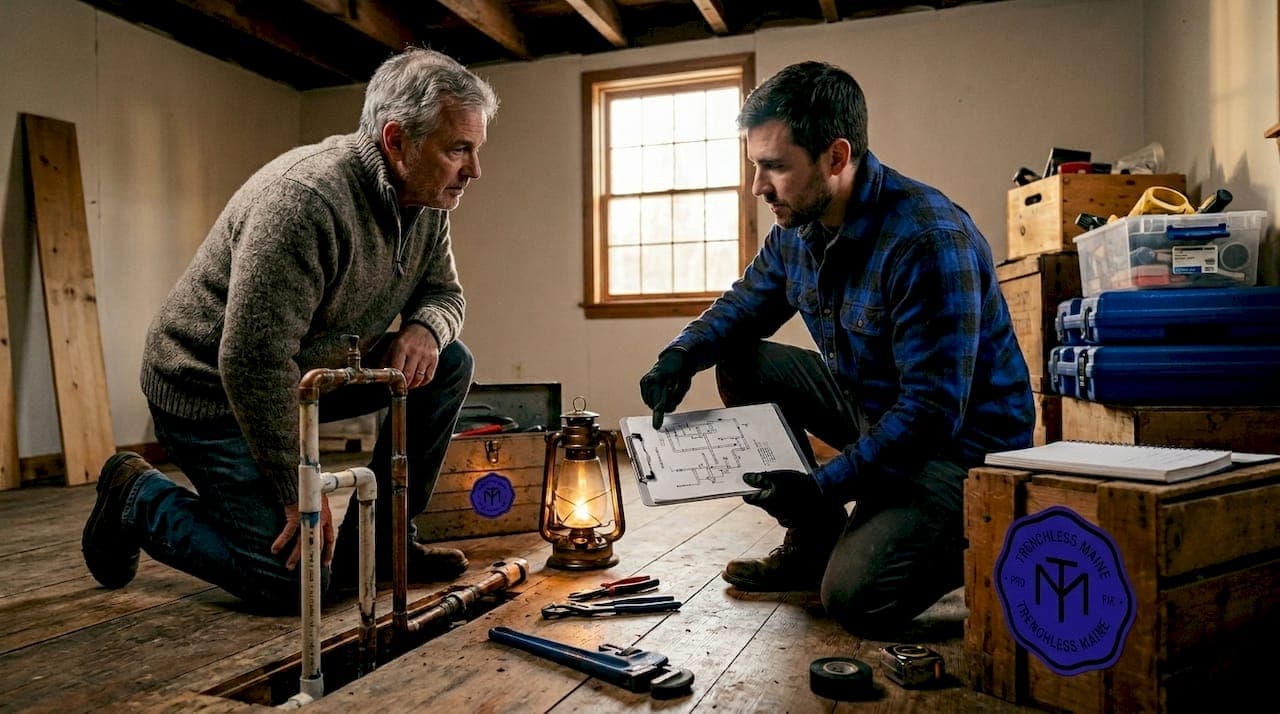
Picture this: a plumber shows up, marks your lawn with spray paint, and within hours a backhoe is tearing through your flower beds, driveway, and carefully laid stone pathway. Your yard is unrecognizable. Your weekend plans are gone, and so is several thousand dollars. This is the reality of traditional sewer repair, and it's why so many Maine homeowners are actively seeking better options. Non-invasive pipe repair technology has changed the game entirely, offering solutions that protect your property, your budget, and your sanity while delivering results built to last decades.
Table of Contents
- How to assess your pipe repair needs
- Top non-invasive pipe repair methods explained
- Comparison: Which method fits your situation?
- Cost, disruption, and what to expect
- Our perspective: Why non-invasive pipe repair is a Maine homeowner's smartest bet
- Ready to protect your property with non-invasive pipe repair?
- Frequently asked questions
Key Takeaways
| Point | Details |
|---|---|
| Start with an inspection | A professional camera inspection is essential before choosing a pipe repair method. |
| Several non-invasive options | CIPP, pipe bursting, slip lining, and epoxy coatings suit different pipe issues and conditions. |
| Minimal property disruption | Modern trenchless repairs protect your landscape and restore pipes faster than traditional digging. |
| Long-term cost savings | Quality non-invasive repairs like CIPP can last 50 years or more and reduce repeat problems. |
| Choose expert help | Selecting the right method and service provider ensures the best outcome for Maine homes. |
How to assess your pipe repair needs
Now that you understand why minimizing disruption matters, let's define what to consider before choosing a repair method.
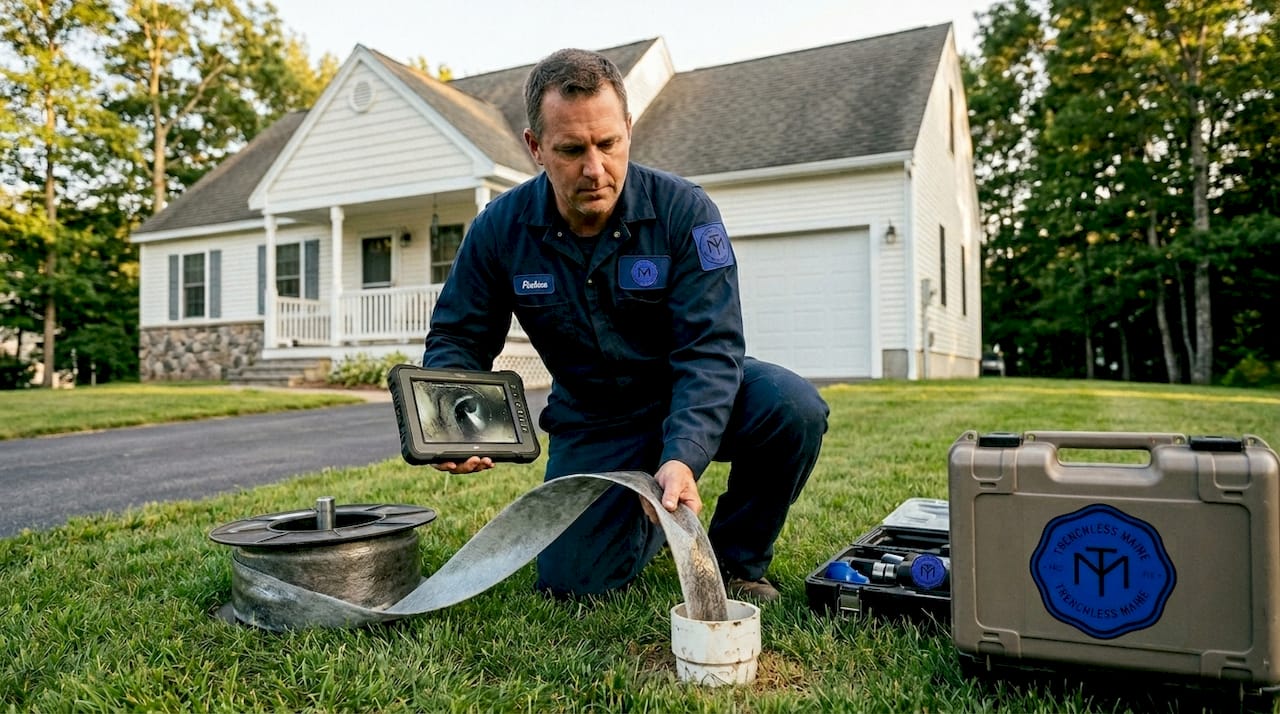
Before anyone starts talking about solutions, you need a clear picture of what's actually happening inside your pipes. That starts with a professional sewer scope inspection, where a high-definition camera is fed through your sewer line to reveal cracks, root intrusion, pipe deformation, blockages, offset joints, and the overall structural condition of the pipe.
Without this step, you're guessing. And guessing on sewer repairs is expensive.
Here are the key factors every Maine homeowner should evaluate before selecting a repair method:
- Pipe material: Clay, cast iron, PVC, and Orangeburg (a paper-based pipe used in older homes) each respond differently to repair methods. Cast iron, for example, may be a strong candidate for trenchless repair basics like lining rather than full replacement.
- Pipe location: Is it under a driveway, beneath your foundation, or in an open yard? Location affects access and method choice.
- Level of damage: Minor cracks and root intrusion are very different from a completely collapsed or offset pipe section. Each requires a specific approach.
- Pipe diameter and bends: Some methods work best in straight runs, while others can navigate bends and changes in pipe size.
- Budget: Non-invasive methods are generally more affordable than excavation, but costs still vary by method and scope.
- Landscaping and hardscaping value: If you have an expensive driveway, mature trees, or a well-maintained garden, the cost of disturbing those areas factors heavily into the repair decision.
The most important takeaway here is that CIPP is the most versatile method for residential sewers, working well around bends and handling moderate damage, but it is not suited for fully collapsed pipes where pipe bursting performs better. Starting with a camera inspection is always the right first move.
Pro Tip: Ask your contractor to provide a video recording of the pipe inspection. This gives you a visual record of the damage, helps you understand the repair recommendation, and serves as documentation if you ever sell your home.
Top non-invasive pipe repair methods explained
With your criteria in mind, let's break down the specific repair options and how they work in Maine homes.
There are four primary non-invasive pipe repair methods used in residential settings across Maine. Each has distinct strengths, and choosing the right one depends on what the camera inspection reveals.
-
Cured-in-Place Pipe (CIPP) lining: This method inserts a resin-saturated liner into the damaged pipe, then inflates and cures it in place to form a new pipe within the old one. No large trenches are needed. The CIPP lining process works around bends and multiple damage points in a single session. According to industry data, CIPP provides a 50-plus year lifespan with minimal disruption and costs 30 to 60 percent less than traditional excavation. It is the most commonly recommended option for Maine homeowners with cracked, leaking, or root-invaded pipes.
-
Pipe bursting: This method is used when a pipe is too damaged or collapsed for lining. A bursting head is pulled through the old pipe, fracturing it outward while simultaneously pulling a new HDPE (high-density polyethylene) pipe through the same path. It requires only small access pits at each end rather than a full trench. Pipe bursting suits collapsed or severely deteriorated lines but typically costs more than CIPP.
-
Slip lining: An older but still valid technique, slip lining inserts a smaller new pipe inside the existing one. It works best for straight runs and larger-diameter pipes. The downside is a slight reduction in pipe diameter, which can affect flow capacity in already narrow lines. It requires more access than CIPP but less than full excavation.
-
Epoxy and spray coating: Epoxy coatings apply liquid epoxy via brush, spray, or spin-cast technology directly to the pipe's interior surface. This seals minor leaks and protects against further corrosion. It is ideal for smaller pipes or situations where structural reinforcement is not the primary need. For homes with cast iron pipes showing corrosion, cast iron lining with epoxy spray is a fast and highly effective solution.
"CIPP lining and epoxy coatings together cover the majority of non-invasive repair scenarios for Maine homes. When your camera inspection shows moderate to severe damage, CIPP is almost always the most cost-effective long-term choice." This is the recommendation we give to most homeowners after reviewing inspection results.
Pro Tip: Match the repair method to your pipe's specific bends, diameter, and damage level. A method that's perfect for a straight 6-inch clay pipe in Portland may be entirely wrong for a 4-inch cast iron line with 90-degree bends in Bangor.
For homeowners interested in Maine pipe lining options, it is worth noting that CIPP can be completed in most residential projects within a single day, with the pipe back in service the same afternoon.
Comparison: Which method fits your situation?
Once you know how each method works, comparing them side-by-side helps narrow down your best option.
| Method | Best use | Pipe flexibility | Lifespan | Cost range | Disruption level |
|---|---|---|---|---|---|
| CIPP lining | Cracks, root intrusion, moderate damage | Works on bends | 50+ years | $80–$250/ft | Very low |
| Pipe bursting | Collapsed or severely damaged pipes | Straight runs preferred | 50+ years | $100–$300/ft | Low (small pits) |
| Slip lining | Straight, large-diameter pipes | Straight runs only | 30–50 years | $60–$150/ft | Low to moderate |
| Epoxy/spray coating | Minor leaks, corrosion sealing | Works on bends | 10–30 years | $40–$100/ft | Very low |
After reviewing the table, use these scenarios to quickly identify your best match:
- Tight bends and multiple cracks: CIPP lining is your top choice. It navigates curves and can address multiple problem areas in one pass, making it the most efficient option for typical Maine residential sewer laterals.
- Fully collapsed pipe with no structural integrity remaining: Pipe bursting is the correct method. According to trenchless technology resources, pipe bursting fractures the old pipe while pulling a new HDPE pipe into place, requiring only small access pits at each end.
- Straight run with large diameter and budget constraints: Slip lining is a viable, lower-cost option. However, note that slip lining reduces flow capacity because the new pipe sits inside the old one, making it less ideal for already-narrow pipes.
- Shallow corrosion or pinhole leaks in smaller pipes: Epoxy or spray coating is the fastest and least expensive fix for this specific scenario, though it does not address structural failures.
- Pipes under driveways or finished basements: Both CIPP and pipe bursting are appropriate here, as both methods require minimal surface access compared to full excavation.
For a broader look at your options, the sewer repair methods available in Maine are well-suited to the state's mix of older clay and cast iron pipes in historic neighborhoods alongside newer PVC systems in more recent developments. You can also explore the full trenchless technology overview to understand how each method is executed on-site.
Cost, disruption, and what to expect
Finally, let's look at what these methods mean in the real world: costs, mess, and how fast your life returns to normal.
One of the most common questions we hear from Maine homeowners is: "How much will this actually save me, and how long will my yard be torn up?" Here's what the data and real project outcomes show.
| Method | Typical savings vs. excavation | Average project time | Site mess level |
|---|---|---|---|
| CIPP lining | 30–60% less | 4–8 hours | Minimal, small access only |
| Pipe bursting | 20–40% less | 1–2 days | Low, small pits at access points |
| Slip lining | 15–35% less | 1–2 days | Low to moderate |
| Epoxy/spray coating | 40–70% less | 2–6 hours | Minimal |
The cost savings with CIPP in particular are significant. Case studies show CIPP reduced project costs by up to 90% in some commercial drainage projects, and in a hospital rehabilitation project, crews successfully lined 1,670 feet of pipe in just 77 days. For residential use, the savings are consistently dramatic compared to traditional open-cut excavation.
Here is what Maine homeowners typically report after a non-invasive pipe repair:
- Gardens and lawns remain intact. No ruts, no piles of soil, no dead grass from equipment damage.
- Projects finish the same day. Most CIPP jobs are complete and the pipe is back in service within hours, not days.
- No heavy equipment on the property. No backhoes, no dump trucks parked on the driveway. The job is done with a van and specialized equipment.
- Neighbors barely notice. There is no noise from excavation, no road closures, and no piles of materials sitting in front of your home for days.
- Long-term durability. A properly installed CIPP liner delivers a 50-plus year expected service life, meaning most homeowners will never have to deal with that same pipe again.
For a closer look at real project outcomes, the CIPP cost savings breakdown for Maine homeowners and a before-and-after repairs gallery illustrate just how clean and efficient these projects really are.
Our perspective: Why non-invasive pipe repair is a Maine homeowner's smartest bet
After years of seeing how sewer repairs play out across Maine, from Portland's older Victorian neighborhoods to newer developments in South Portland and Bangor, there is one thing we know for certain: most homeowners significantly underestimate what is happening beneath their property until something goes seriously wrong.
The real danger is not the crack you can see. It is the damage slowly spreading through your sewer lateral while tree roots quietly infiltrate every small opening and soil shifts with each freeze-thaw cycle. Maine winters are particularly hard on underground pipes, and by the time sewage backs up into your basement, what might have been a straightforward lining job has often turned into a much larger, more expensive project.
Non-invasive technology does not just save you money on repairs. It gives you the ability to address problems early, before they become emergencies. A camera inspection that reveals minor cracking today is a far better outcome than ignoring the warning signs until a full pipe collapse forces your hand.
Here is the contrarian view we feel obligated to share: not every non-invasive repair offer is created equal. We have seen homeowners choose the lowest-price bid, only to discover that the contractor skipped proper pipe preparation, used lower-quality resin, or did not perform a post-repair camera inspection to verify the work. A lining that fails in five years because of poor installation is not a bargain. It is a hidden cost that shows up later.
The Maine trenchless trend is real and growing, but value-driven assessment matters more than price. Always ask for a camera inspection before and after the repair, verify the warranty terms in writing, and confirm the contractor's experience with the specific method they are recommending. A 50-year warrant on a properly installed CIPP liner is worth far more than a low number on a quote sheet.
Ready to protect your property with non-invasive pipe repair?
You have done the research, compared the methods, and now you understand what separates a smart repair decision from a costly mistake. The next step is straightforward.
At Trenchless Maine, we bring over 50 years of combined expertise to every project, from single-family sewer laterals in historic neighborhoods to larger commercial pipe rehabilitation jobs. Our process starts with a professional camera inspection, followed by a clear, honest recommendation matched to your pipe's actual condition. No guesswork. No unnecessary upselling. Just the right solution for your home. Explore our full range of Maine no-dig solutions or browse all available trenchless repair services to find exactly what you need. When you are ready to move forward, get a quote today and protect your property without the mess.
Frequently asked questions
What is the most durable non-invasive pipe repair method?
CIPP lining typically lasts 50-plus years and is extremely durable for most home sewer issues, making it the leading choice for long-term residential pipe repair.
How much property disruption is caused by trenchless pipe repair?
Trenchless methods usually require only small access points, so most landscaping and driveways stay untouched. Even pipe bursting only needs small access pits at each end of the repair zone.
Can non-invasive methods fix fully collapsed pipes?
Pipe bursting handles completely collapsed pipes effectively, while CIPP requires some original pipe structure to remain intact. CIPP excels on moderate damage with bends, but pipe bursting is the right call when the pipe is fully gone.
Is epoxy pipe lining suitable for major sewer repairs?
Epoxy spray lining is best for sealing minor leaks and corrosion protection in smaller pipes. Epoxy coatings are not designed for large structural failures or collapsed sections.
What is the first step in choosing a non-invasive repair?
A professional pipe camera inspection is always the first step. Camera inspection determines suitability for every non-invasive method and ensures your contractor recommends the right solution for your specific pipe condition.