
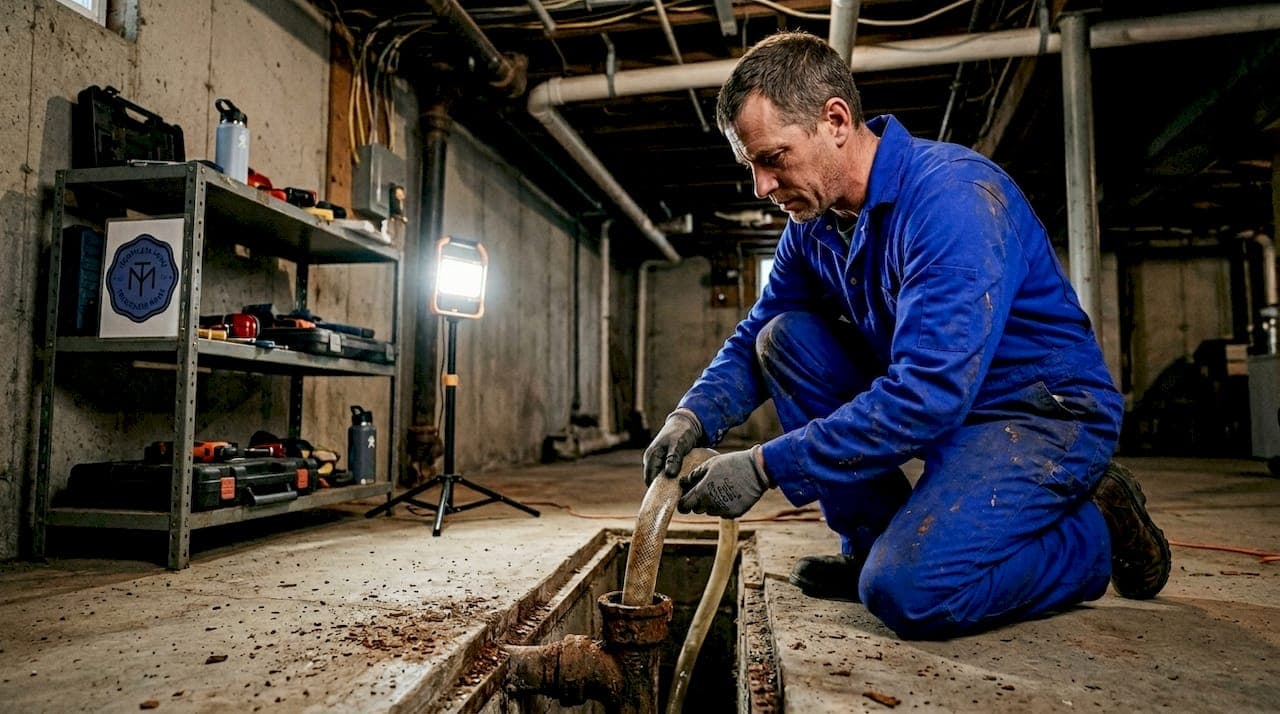
Most Maine homeowners assume a broken sewer line means torn-up landscaping, heavy equipment in the driveway, and weeks of chaos. That assumption is costing people money and stress they don't need to spend. Cast iron pipe lining, specifically the process called Cured-In-Place Pipe (CIPP) lining, is a proven trenchless method that repairs your existing cast iron drains from the inside out, without digging up your yard. This article explains what it is, how it works, when it's the right call, and how it stacks up against older repair methods so you can make a confident, informed decision.
Table of Contents
- What is cast iron pipe lining?
- How the cast iron pipe lining process works
- When is pipe lining suitable—and when is it not?
- How pipe lining compares to other sewer repair methods
- What "pipe lining" means for water vs. sewer systems
- A Maine expert's perspective: What most homeowners miss about cast iron pipe lining
- Find out if your Maine property qualifies for cast iron pipe lining
- Frequently asked questions
Key Takeaways
| Point | Details |
|---|---|
| Pipe lining is trenchless | Cast iron pipe lining repairs pipes internally, avoiding major digging and surface damage. |
| Not all pipes qualify | Only pipes with enough structure and correct alignment can be relined—collapses or severe sags require replacement. |
| Inspection is essential | CCTV or video inspection before and after lining is mandatory for success and long-term results. |
| Lower disruption, comparable costs | Trenchless pipe lining is often less disruptive and comparably priced to excavation, but each project’s costs and benefits should be evaluated case by case. |
| Terminology clarity matters | ‘Pipe lining’ can mean different things—make sure you and your contractor are discussing the same process. |
What is cast iron pipe lining?
Cast iron pipe lining is exactly what it sounds like: a method of repairing damaged cast iron sewer or drain pipes by lining them from within. You don't remove the old pipe. Instead, you restore it. The technical name for this process is Cured-In-Place Pipe lining, or CIPP for short.
Cast iron pipe lining creates a new "pipe within a pipe" by installing a resin-saturated flexible liner inside the existing cast iron piping and then curing it in place. Once cured, the liner becomes a rigid, jointless tube that seals cracks, stops root intrusion, and restores smooth flow.
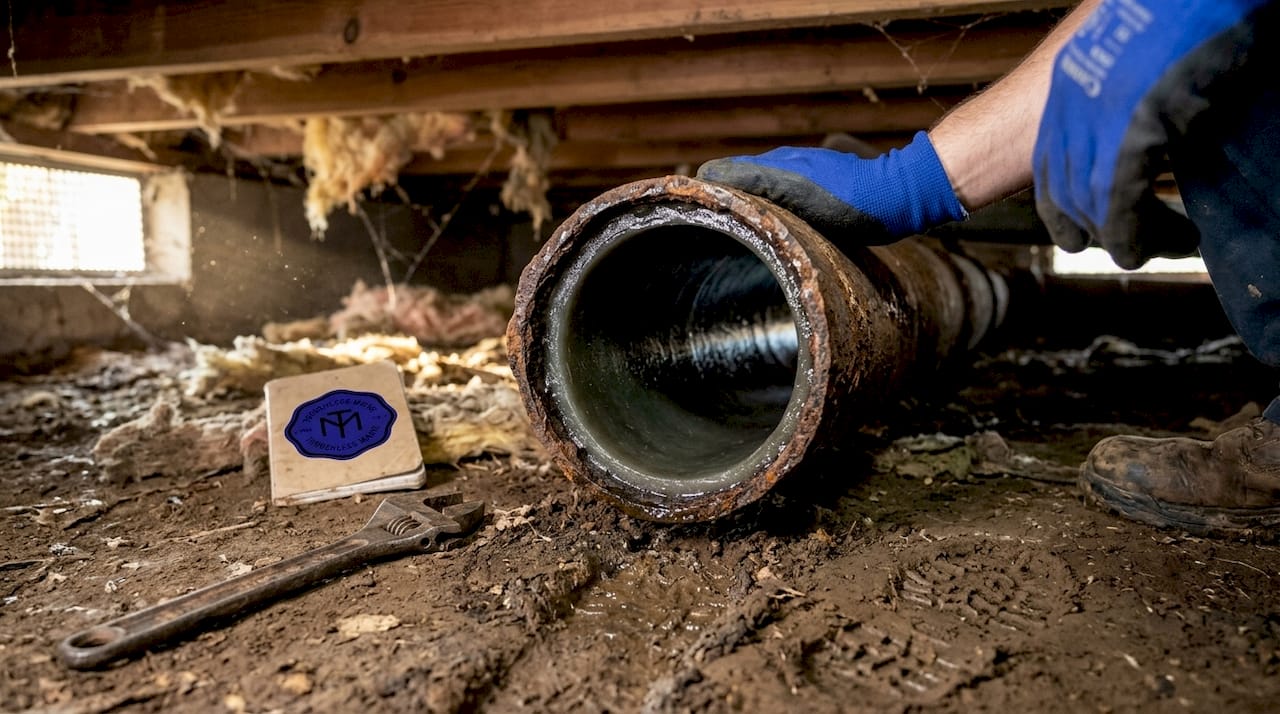
If your Maine home was built before the 1970s, there's a very good chance your drains and sewer lateral (the pipe connecting your home to the public sewer main) are original cast iron. Over decades, cast iron corrodes from the inside out, develops pinhole leaks, and becomes vulnerable to root intrusion. Learning more about modern pipe lining explained can help you understand why this solution is so well suited to those aging systems.
Here's what makes CIPP lining particularly relevant for Maine properties:
- Cast iron pipes with interior corrosion and scaling are excellent candidates for lining
- Older homes with original drain systems can be relined without full excavation
- Lining restores structural integrity and flow capacity in a single process
- The jointless interior eliminates the seam gaps that allow root intrusion over time
- Cast iron pipe issues in Maine are accelerated by freeze-thaw cycles and ground movement, making early intervention critical
"The key insight with CIPP lining is that you're not patching a problem—you're creating a new pipe inside the old one. When done correctly, that new pipe can outlast the structure it sits inside."
How the cast iron pipe lining process works
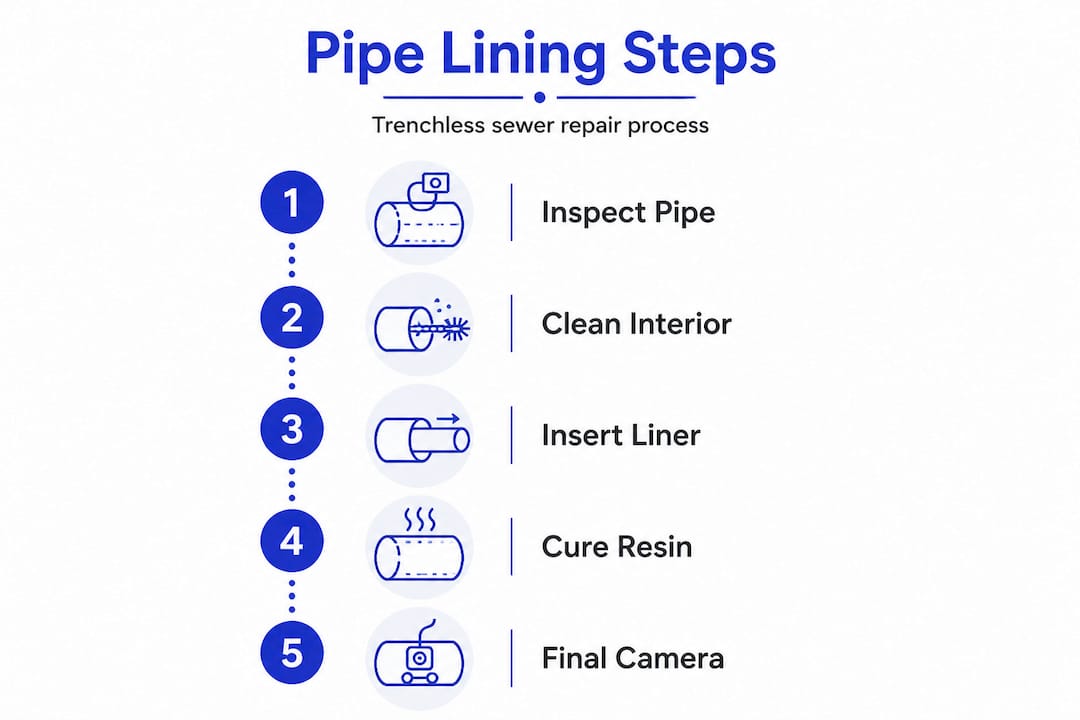
Having covered what cast iron pipe lining is, let's walk through how the process works in detail. There are six distinct steps, and every one of them matters. Skipping or rushing any step is the most common reason lining jobs fail.
The full pipe lining process involves inspection, cleaning and prep for bonding, liner sizing and fabrication, insertion and inversion, inflation and curing, and finally post-cure video verification. Here's how each step plays out on a real Maine job:
-
Camera inspection: A CCTV (closed-circuit television) camera is pushed through the pipe to document its condition. Technicians look for cracks, corrosion, root intrusion, misalignment, and any areas of partial collapse. This footage determines whether lining is viable. You can learn more about what goes into pipe inspection methods used on Maine properties.
-
Cleaning and prep: The pipe is cleaned aggressively, usually by hydro jetting (high-pressure water blasting). Any loose scale, debris, grease buildup, or root growth must be removed. The liner only bonds well to a clean pipe wall. Skipping thorough cleaning leads to liner failure.
-
Liner sizing and fabrication: The liner is custom-cut to the pipe's diameter and length. It's then saturated with a two-part epoxy or polyester resin. Getting the saturation right is a technical step that directly affects the liner's finished strength.
-
Insertion and inversion: The saturated liner is inserted into the pipe, either by pulling it through with a cable or inverting it using air pressure. Inversion flips the liner inside out as it travels through the pipe, pressing it firmly against the interior wall.
-
Inflation and curing: The liner is inflated using an air bladder and then cured in place. Curing can be done using ambient temperature, circulated hot water, steam, or ultraviolet (UV) light depending on the resin and equipment being used. Curing times range from a couple of hours to about a day.
-
Post-cure video verification: Once the liner has cured, the camera goes back in. Technicians confirm full wall contact, check for any bridging or voids, and verify that flow is restored. This footage also becomes your documentation. You can see how this whole sequence is part of an efficient pipe lining process.
| Step | Traditional Excavation | CIPP Lining |
|---|---|---|
| Site preparation | Heavy equipment, permits | Access point only |
| Disruption | Full yard excavation | Minimal surface disturbance |
| Duration | Multiple days to weeks | Often completed in one day |
| Restoration needed | Landscaping, paving, walls | None or minimal |
| Verification | Visual inspection | CCTV footage before and after |
Pro Tip: Before signing any contract, insist on documented CCTV video from both before the work starts and after the liner cures. This protects you legally and confirms the job was done right.
When is pipe lining suitable—and when is it not?
Now that you know how lining works, when is it actually possible, and what are the hard limits? Not every cast iron pipe qualifies for lining. The condition of the existing pipe drives this decision, and that's why the inspection step is so critical.
Pipe lining is generally viable when the existing pipe is not completely collapsed and retains enough structural integrity for the liner to be installed and to cure correctly. When severe collapse, major pipe deformation (like bellies or sags), or unacceptable misalignment are present, lining becomes risky or simply impossible. Reviewing failure signs for cast iron ahead of your consultation can help you come prepared.
Pipes that are good candidates for lining typically meet these criteria:
- The pipe walls are cracked or corroded but still holding their round shape
- Root intrusion is present but has not caused structural collapse
- The pipe alignment is acceptable (no major bellies or settlement)
- Access points exist at both ends of the damaged section
- The host pipe diameter is within the range that available liners can address
Lining is not appropriate in these situations:
- The pipe has completely collapsed or caved in over a section
- There are significant belly sections (low spots that trap waste and water)
- CIPP lining generally does not correct slope or belly problems because the liner conforms to the existing pipe geometry rather than correcting it
- The misalignment is so severe that the liner cannot be installed without bridging
Cost perspective: Typical pricing for cast iron pipe lining runs from $60 to $250 per linear foot, depending on pipe diameter, depth, access conditions, and liner material. This range reflects qualifying jobs, meaning pipes that have already been confirmed suitable through inspection. Pipes that ultimately need full replacement will be priced differently.
Pro Tip: Always request that your contract be contingent on the pre-work inspection confirming lining suitability. If the camera reveals a collapsed section, you don't want to be locked into a lining price for a job that actually requires excavation. Any reputable contractor will agree to this condition. You can review additional pipe lining criteria that apply to commercial properties, many of which also apply to larger residential jobs.
How pipe lining compares to other sewer repair methods
So how does lining stack up against the traditional ways Mainers have repaired old sewer pipes? The answer depends heavily on your specific situation. Lining is not always the right choice, but when it is, it offers real, measurable advantages.
The core comparison is between CIPP lining, pipe bursting (another trenchless option), and open-cut (excavation) replacement. Trenchless options minimize excavation and surface disruption compared with open-cut replacement, though costs and suitability vary by access and pipe condition. Understanding the benefits of trenchless sewer repair can help you evaluate your options more confidently.
| Method | Avg. Cost Per Foot | Excavation Required | Works on Collapsed Pipes | Typical Timeline |
|---|---|---|---|---|
| CIPP Lining | $60–$250 | None to minimal | No | 1 day |
| Pipe Bursting | $80–$200 | Minor (entry/exit pits) | Sometimes | 1–2 days |
| Open-Cut Replacement | $100–$300+ | Full trench | Yes | 3–7+ days |
CIPP lining:
- Pros: No digging, fastest completion, preserves existing pipe path, jointless finish
- Cons: Cannot fix collapsed sections, does not correct belly or slope problems, requires host pipe integrity
Pipe bursting:
- Pros: Can upsize pipe diameter, works on more severely deteriorated pipes
- Cons: Requires access pits, not ideal in congested underground areas
Open-cut replacement:
- Pros: Solves any problem, total control over slope and alignment
- Cons: Most disruptive, highest restoration cost, longest timeline, requires permits in most Maine municipalities
The situational factors that push you toward one method over another include the depth of the pipe, what's above it (driveways, mature trees, finished basements), the pipe's current condition, and how quickly you need the repair done. For a deeper breakdown, see trenchless vs excavation cost comparison and the efficient sewer pipe relining overview for Maine homeowners.
What "pipe lining" means for water vs. sewer systems
Finally, let's clear up a common terminology mixup that can confuse homeowners and contractors alike. When you search for "pipe lining" online or talk to a plumber, you may get two very different things, depending on context.
CIPP lining for sewer and drain pipes is the modern trenchless method we've been discussing throughout this article. It uses flexible resin-saturated liners cured in place to restore drainage function. This is almost certainly what you need if you have a damaged sewer lateral or cast iron drain.
In older water systems, "lining" can refer to something entirely different: historical materials like bituminous coatings and cement-mortar linings applied to water mains to prevent corrosion and contamination. These are older, passive protective treatments, not a repair method for damaged pipes.
Here's why this distinction matters:
- Process: CIPP for sewers involves custom liner fabrication and on-site curing. Historical water main lining involved applying coatings to pipe interiors during manufacturing or maintenance.
- Materials: Sewer CIPP uses epoxy or polyester resin. Water main lining used bituminous compounds or Portland cement mortar.
- Goal: Sewer lining restores a failing pipe. Water main lining was primarily a corrosion prevention measure.
- Application: CIPP is performed on existing installed pipes as a repair. Traditional water main lining was often done during pipe production.
When you're calling contractors or researching solutions, always specify that you're looking for CIPP or trenchless sewer lining if that's your situation. Using the wrong terminology can lead to wasted time and mismatched quotes.
A Maine expert's perspective: What most homeowners miss about cast iron pipe lining
Here's the firsthand wisdom most Maine homeowners never hear: the biggest mistakes we see are not technical failures. They're decision-making failures. Specifically, homeowners either assume lining will work without getting an inspection first, or they reject lining outright because a neighbor had a different outcome with a different contractor on a different pipe.
The practical decision is not whether your pipe is cast iron, but whether the host pipe has enough structural integrity, acceptable alignment, and workable access points. Those criteria require a real CCTV inspection and proper cleaning, not a visual look from the cleanout.
We've seen pipes that looked terrible on the outside but lined beautifully. We've also seen pipes that homeowners assumed were fine, only to find a fully collapsed section 30 feet in. Age and material alone tell you almost nothing. Condition tells you everything.
Because lining suitability is heavily site-specific, every bid should be contingent on pre-work inspection findings and should include documentation of cleaning, prep, liner sizing, and post-cure verification. A generic quote for "pipe lining" without those specifics is a red flag.
Our strongest advice: request both before and after CCTV footage as part of any lining contract. Ask the contractor to walk you through what they found, what they cleaned, and what the finished liner looks like on camera. The efficient relining process in Maine should always include this level of documentation. If a contractor pushes back on that request, keep looking.
A properly assessed, properly cleaned, and properly installed CIPP liner creates a jointless, smooth interior surface that outperforms the original cast iron in corrosion resistance. The "pipe within a pipe" advantage is real, but only when the groundwork is done right.
Find out if your Maine property qualifies for cast iron pipe lining
Ready to take real action on your sewer line problems? Here's how to proceed.
The first step is always a professional camera inspection. There's no substitute for knowing exactly what your pipe looks like inside before any repair decision is made.

At Trenchless Maine, we specialize in exactly this kind of work across most of Maine's cities and towns. Our trenchless sewer services cover everything from the initial inspection through post-lining verification, and our team uses industry-leading no-dig technology to assess and repair pipes with minimal disruption to your property. If you want to see what real completed projects look like, browse our sewer repair before & afters to get a clear picture of what's possible. Our work is backed by warranties up to 50 years because we stand behind every installation we complete.
Frequently asked questions
How long does cast iron pipe lining last?
Properly installed cast iron pipe lining typically lasts 30 to 50 years or more, depending on installation quality and whether regular maintenance like periodic hydro jetting is performed.
Will pipe lining fix every problem in an old cast iron drain?
No. Lining works only when structural integrity is sufficient for the liner to install and cure correctly. Collapsed or severely misaligned pipes require excavation and replacement instead.
How disruptive is trenchless sewer lining to my yard and landscaping?
Trenchless lining minimizes excavation significantly compared to open-cut methods. Most jobs require only small access points, leaving your yard, driveway, and landscaping essentially intact.
What steps are included in a typical cast iron pipe lining project?
A complete lining project includes inspection, cleaning and prep, liner sizing, insertion, curing, and a final CCTV camera inspection to confirm the liner is fully bonded and flow is restored.
Is pipe lining approved by city plumbing codes in Maine?
Yes. Pipe lining is accepted under many plumbing codes when performed by certified contractors using materials that meet established standards. Always confirm your contractor holds proper licensing and uses code-compliant liner materials for your municipality.