
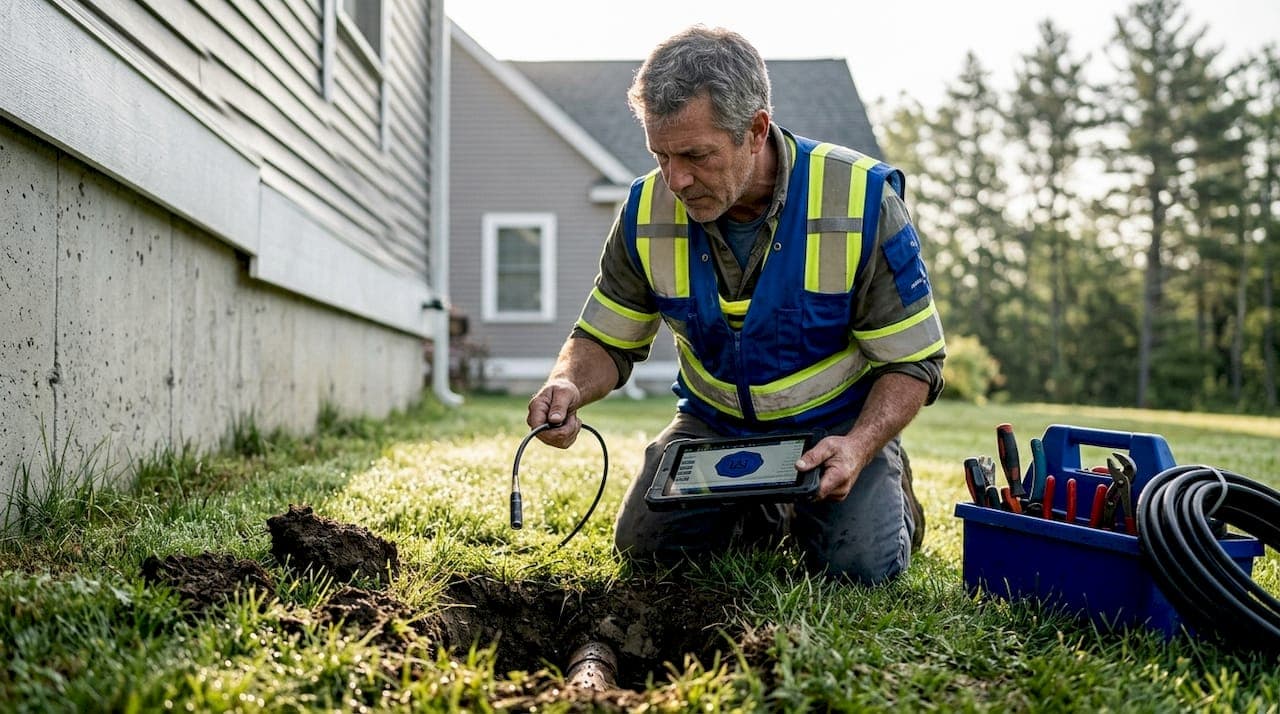
Modern sewer repair doesn't have to mean a torn-up yard, a ruined driveway, or weeks of construction noise. Most Maine homeowners assume that fixing a damaged sewer line requires a full excavation, but that assumption is outdated. No-dig sewer repair, also called trenchless repair, can restore cracked, root-invaded, or deteriorating pipes under lawns, driveways, and even homes, often within a single day. This article explains exactly how these methods work, when they're the right fit, and what you should know before calling a contractor.
Table of Contents
- What is no-dig sewer repair?
- How no-dig methods compare to traditional excavation
- When no-dig repair works and when it doesn't
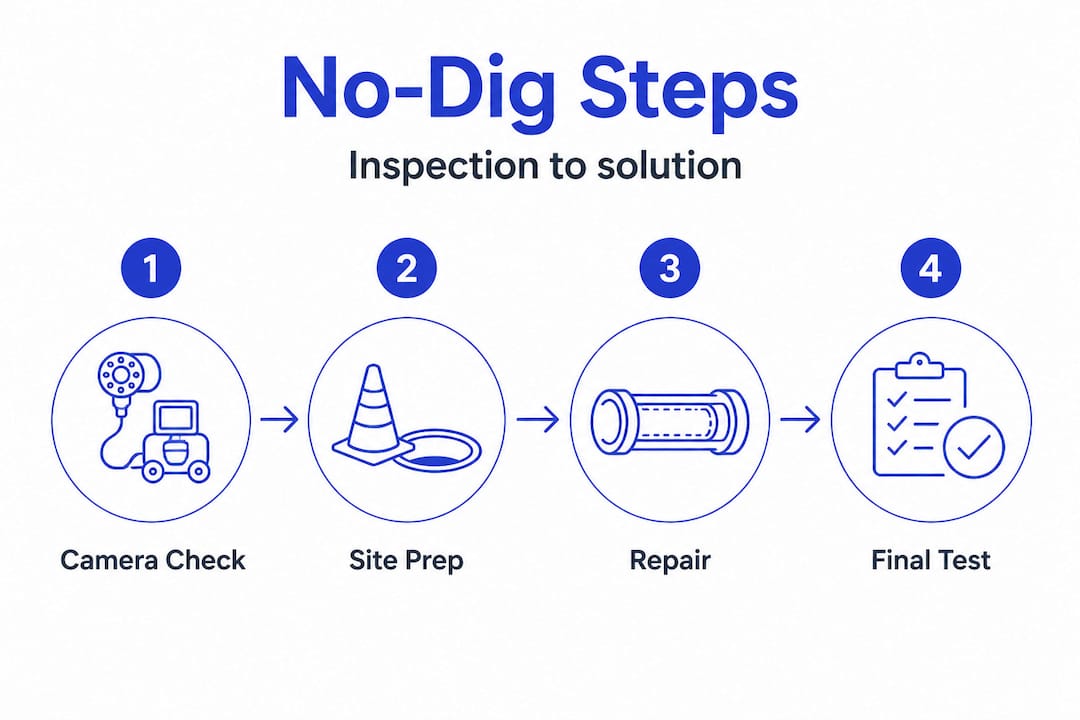
- The step-by-step process: From inspection to finished repair
- What Maine homeowners gain from no-dig repair
- What most homeowners miss about no-dig sewer repair
- Next steps: Explore Maine's leading trenchless solutions
- Frequently asked questions
Key Takeaways
| Point | Details |
|---|---|
| Minimal property impact | No-dig repair preserves lawns and landscapes, requiring only small access pits. |
| Fast, reliable solutions | Most repairs use trenchless methods and finish in 1-2 days for quicker results. |
| Know the limitations | Not all pipes qualify—severe collapses or poor soil may need traditional fixes. |
| Quality depends on standards | Best results require cleaning, inspections, and adherence to national trenchless standards. |
What is no-dig sewer repair?
"No-dig" is a plain-language term for trenchless sewer repair techniques. Instead of digging a long trench from your house to the street, technicians access the pipe from small pits at entry and exit points, then repair or replace the pipe from the inside out.
The two most common trenchless repair methods are:
- Cured-in-place pipe (CIPP) lining: A resin-saturated liner is inserted into the damaged pipe and inflated. Once the resin cures, it forms a new, smooth pipe inside the old one.
- Pipe bursting: A bursting head is pulled through the old pipe, fracturing it outward while simultaneously pulling a new pipe into place.
Both no-dig methods avoid open trenches entirely, making them far less disruptive than traditional excavation.
That said, "no-dig" is not the same as "zero-dig." Before work begins, technicians need to complete several critical steps. These include a camera inspection to map damage, hydro jetting to clean the pipe thoroughly, and in some cases a geotechnical assessment to evaluate soil conditions around the pipe. Small access pits are almost always required, typically one at each end of the repair zone.
Pro Tip: Ask your contractor to walk you through the pre-repair process before any equipment shows up. Knowing what to expect, including where the small access pits will go, helps you plan around your landscaping and avoids surprises.
Quality standards matter here too. Reputable contractors follow ASTM F1216 for CIPP lining and ASTM F1962 for pipe bursting. These are industry benchmarks that define liner thickness, pressure tolerance, and installation procedures. If a contractor can't tell you which standards they follow, that's a red flag.
After the basics are clear, the natural next question is: how does this compare to the old way of doing things?
How no-dig methods compare to traditional excavation
Traditional sewer repair means a crew digs a trench, often three to six feet deep and running the full length of the damaged pipe. That can cut through your lawn, crack your driveway, uproot landscaping, and disrupt your daily routine for days or even weeks.
No-dig methods are a fundamentally different experience. Here's a direct comparison:
| Factor | No-dig (trenchless) | Traditional excavation |
|---|---|---|
| Property disruption | Minimal, small access pits only | Major, full-length trench |
| Repair time | Typically 1 to 2 days | 3 to 10+ days |
| Landscape restoration | Little to none needed | Sod, driveway, plantings often replaced |
| Pipe lifespan | 50+ years with CIPP lining | Depends on pipe material |
| Cost range | Competitive, often similar or lower | Higher when restoration is included |
| Mess level | Low | High |
Trenchless repairs avoid major property disruption and are typically completed faster than open-trench repairs, making them the preferred choice for most residential situations in Maine.
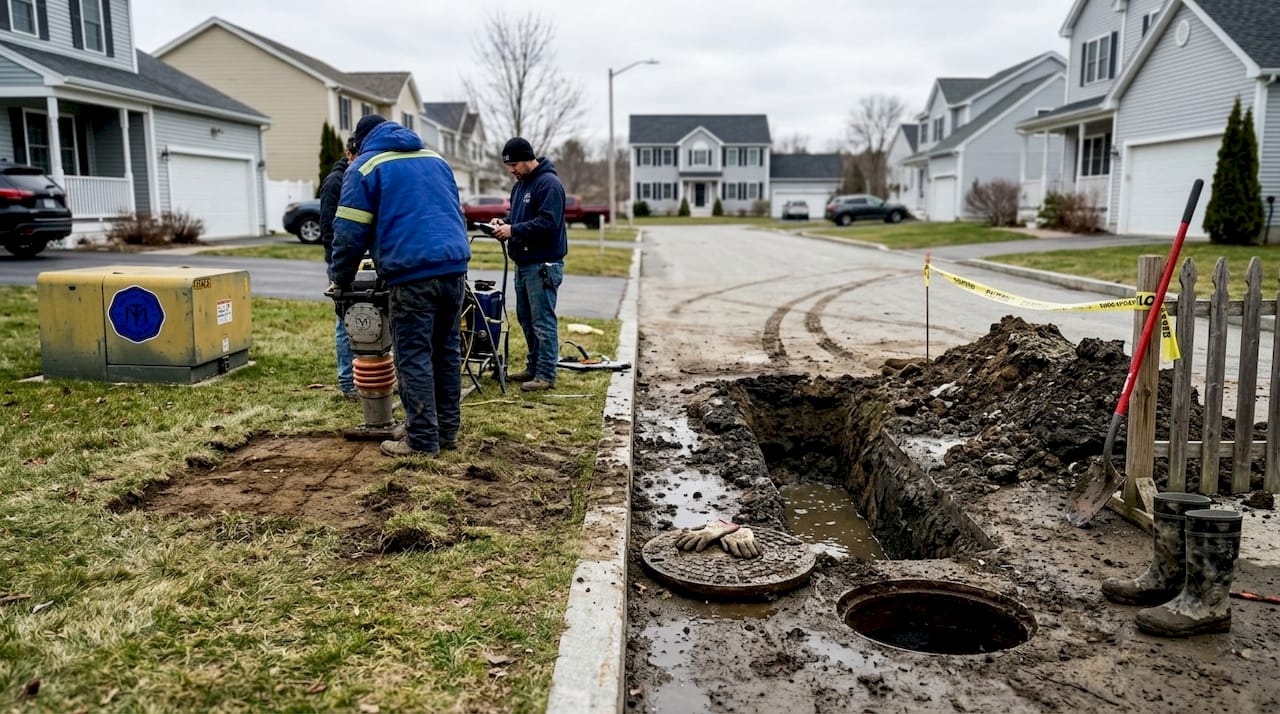
One point that surprises many homeowners: trenchless repair is frequently less expensive than traditional excavation once you factor in landscape restoration. Replacing sod, repaving a driveway, and replanting garden beds after an open-trench job adds significant cost. With trenchless work, those costs are largely eliminated.
You can also look at before-and-after trenchless repairs from real Maine projects to see the difference in property condition after each method. The visual contrast is striking.
It's also worth noting that cutting project time is one of the most meaningful advantages for working families. A repair completed in one day means one day without sewer access, not a week of portable toilets and orange cones.
There are cases where excavation remains the right call, particularly for completely collapsed pipes or sections with severe structural failure. But for the majority of Maine homeowners dealing with root intrusion, cracks, joint separation, or aging clay or cast iron pipes, no-dig is both practical and durable.
Now that you understand the key advantages, it's important to know when these methods are actually appropriate for your situation.
When no-dig repair works and when it doesn't
Trenchless repair is not a solution for every damaged pipe. Understanding the limitations helps you avoid wasted quotes and ensure you get the right recommendation from the start.
When no-dig repair is the right choice:
- Pipes with cracks, fractures, or joint gaps but intact structural shape
- Pipes with moderate root intrusion (roots that haven't collapsed the pipe wall)
- Aging clay, cast iron, or Orangeburg pipes with corrosion but at least 25% of the wall still intact
- Pipes under driveways, landscaped yards, or structures where excavation would cause major damage
- Situations where trenchless root repairs are needed without destroying established trees
When no-dig repair is not suitable:
Trenchless methods have real limits. Not suitable for collapsed pipes with more than 25 to 50 percent wall loss, severe pipe bellies or sags (because lining simply follows the existing contour and won't correct grade), or very long pipe runs with multiple bends that prevent liner or bursting head access. Pipe bursting in particular creates soil displacement of 12 to 24 inches outward, which can be a serious problem in areas with poor or unstable soil. Lines running closer than 18 inches to utilities are also a concern.
Before any trenchless repair begins, a licensed professional must pull the required permits and schedule a post-repair inspection. Skipping these steps can create liability issues and void your warranty. Always confirm permit status before work starts.
Pro Tip: If a contractor quotes you for trenchless repair without first conducting a camera inspection, walk away. A proper inspection is non-negotiable. It's the only way to confirm whether your pipe qualifies for a no-dig solution.
Here's a quick reference for suitability:
| Pipe condition | No-dig suitable? |
|---|---|
| Cracks and fractures, pipe shape intact | Yes |
| Root intrusion, pipe largely intact | Yes |
| Bellies or sags | No (lining won't correct grade) |
| Collapse with 25 to 50%+ wall loss | No |
| Multiple tight bends in long run | No |
| Adjacent utilities within 18 inches | No (pipe bursting) |
Once you've confirmed your pipe qualifies, the next step is understanding exactly what the repair process looks like.
The step-by-step process: From inspection to finished repair
Knowing what to expect at each stage helps you stay informed and ask the right questions. Here's how a typical no-dig sewer repair unfolds from start to finish.
-
Camera inspection: A waterproof camera is fed through the pipe to identify damage location, type, and severity. This footage is recorded and reviewed to determine the best repair method. This step often takes one to two hours and causes no disruption to your property.
-
Hydro jetting and pipe cleaning: Before any repair can begin, the pipe must be thoroughly cleaned. Hydro jetting uses high-pressure water to clear grease, scale, debris, and roots. A dirty pipe won't bond with liner resin properly, so this step is critical, not optional.
-
Geotechnical and site assessment: Technicians evaluate soil conditions and pipe depth to determine whether pipe bursting is safe and to plan access pit locations. This assessment follows ASTM F1216/F1962 standards to ensure the work meets quality benchmarks.
-
Permits and setup: Most trenchless sewer repairs require a permit from your local municipality. Your contractor handles this, but you should confirm it's done before work begins. Small access pits are excavated, typically two to three feet wide, at the pipe entry and exit points.
-
Lining or bursting: For CIPP lining, a felt liner saturated with epoxy resin is inserted and inflated against the pipe wall. It's held in place while the resin cures, either through ambient temperature, hot water, or UV light, depending on the system used. For pipe bursting, a hydraulic machine pulls a new HDPE (high-density polyethylene) pipe through the old one, fragmenting the original pipe outward.
-
Final camera inspection: Once the liner is cured or the new pipe is set, a second camera run confirms the repair is smooth, properly seated, and free of defects. This is your quality check, and the footage should be shared with you.
Reviewing your trenchless service steps with your contractor before the job starts ensures everyone is aligned on timeline and access points.
Pro Tip: Request a copy of both the pre-repair and post-repair camera inspection footage. This documentation is valuable if you ever need to make a warranty claim or sell your home.
Now let's look at what this all means for you as a Maine homeowner.
What Maine homeowners gain from no-dig repair
Maine's climate and landscape create specific challenges for sewer lines. Freeze-thaw cycles stress pipe joints. Mature trees with aggressive root systems, like maples and oaks, are common throughout the state. Older neighborhoods in Portland, Bangor, Augusta, and Lewiston still have clay and cast iron pipes from the mid-twentieth century.
No-dig repair addresses all of these problems without compounding them with construction damage. Here's what you specifically gain:
- Preserved landscaping: Your lawn, garden beds, stone walkways, and mature plantings stay intact. For homeowners who've spent years establishing a yard, this matters enormously.
- Faster project completion: Most repairs finish in one to two days. You're not living with an open trench for a week or managing contractor traffic through your property for days on end.
- Durable, long-lasting results: CIPP liners carry warranties up to 50 years, and the smooth interior surface actually improves flow rate compared to corroded original pipe.
- Lower total cost: When you factor out landscape restoration, driveway repaving, and extended labor, trenchless repairs are faster and frequently more cost-effective than digging.
- Less stress: One of the most underrated benefits is simply the reduced anxiety. A contained, well-managed repair with a clear timeline is a very different experience than watching a crew dig up your yard.
Maine homeowners who want to understand their insurance coverage for sewer repairs should review their policy carefully, as trenchless methods may be covered differently than traditional excavation.
What most homeowners miss about no-dig sewer repair
Here's something we've learned from years of working on sewer lines across Maine: most homeowners research trenchless repair by asking "is it cheaper?" or "is it faster?" Those are fair questions, but they're not the most important ones.
The question that actually determines whether you get a good outcome is: does the contractor follow the right process?
"No-dig" is a description of the method, not a guarantee of quality. We've seen jobs where a contractor skipped the geotechnical assessment, installed a liner in a pipe with too little wall thickness remaining, and the liner failed within two years. The homeowner thought they were getting a modern, durable fix. What they got was a cheaper shortcut dressed up with the right marketing language.
True quality comes from following established standards like ASTM F1216 and F1962, and from skilled technicians who know when to say "this pipe isn't a candidate for trenchless repair." That kind of honesty is actually a sign of expertise, not a sales failure.
We'd also push back on the idea that "no-dig" means zero impact. Small pits are always needed. Cleaning, inspection, and curing all take time. A good trenchless job still requires careful coordination and respect for your property. What it avoids is the wholesale destruction of a traditional dig. That's a meaningful difference, but it's not magic.
The takeaway: vet your contractor on process and standards, not just price or promised speed. Look at their technology overview and ask direct questions about how they comply with ASTM standards. Your sewer line is a critical part of your home's infrastructure. It deserves the same scrutiny you'd give a roofing contractor or a foundation repair company.
Next steps: Explore Maine's leading trenchless solutions
If you're dealing with a slow drain, recurring backups, or a sewer line that hasn't been inspected in years, now is the right time to act before a minor issue becomes a major emergency.

Trenchless Maine specializes in no-dig sewer repair for homeowners across Maine, from Portland to Bangor and beyond. You can explore Maine no-dig technology to understand exactly how we approach each job, or browse the before-and-after gallery to see real results from real Maine properties. When you're ready to talk specifics, review service details for your area, or go ahead and get a free quote to get a clear picture of what repair will cost and how long it will take. We back our work with warranties up to 50 years, so you can move forward with confidence.
Frequently asked questions
Does no-dig sewer repair require digging anywhere on my property?
Yes, small access pits are needed at the entry and exit points of the repair zone, but there is no full-length trench cut through your property.
How long does no-dig sewer repair usually take?
Most trenchless repairs are completed in 1 to 2 days, which is significantly faster than traditional open-trench methods that can take a week or more.
Are there pipes that no-dig methods can't fix?
Yes, pipes with severe collapse involving more than 25 to 50 percent wall loss, extreme grade sags, very long runs with multiple bends, or lines adjacent to utilities within 18 inches are generally not candidates for trenchless repair.
Do I need permits for no-dig sewer repair in Maine?
Most trenchless projects require permits and inspection before work begins, and your contractor should handle pulling those permits as part of the job.
How can I find qualified no-dig repair specialists in Maine?
Look for local providers who follow ASTM F1216/F1962 standards and can show you documented before-and-after results from completed jobs in your area.