
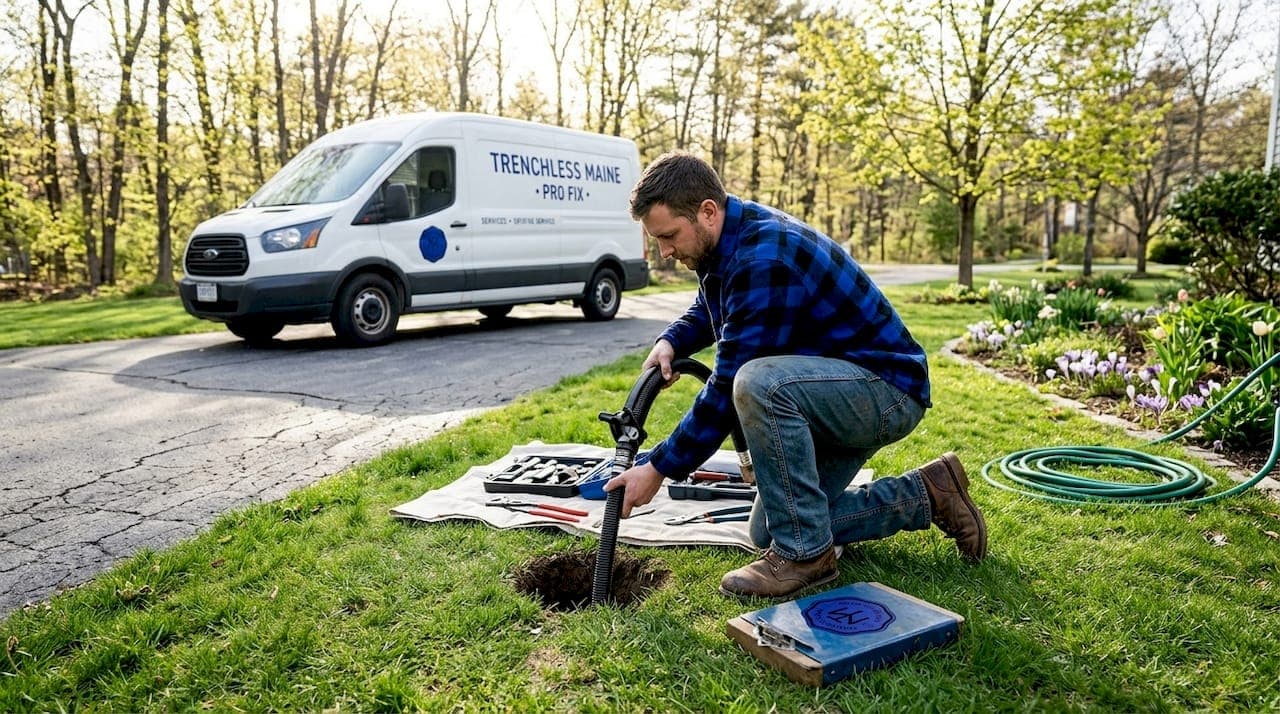
Most Maine homeowners assume that fixing a broken sewer line means watching a crew tear up everything they've spent years building outdoors. The raised garden beds, the mature hedges, the carefully laid stone pathway — all of it gone in a single afternoon. That assumption is understandable, but it's no longer accurate. Modern trenchless sewer repair methods can resolve pipe problems including root intrusion, corrosion, and cracking without digging up your yard. This article walks you through exactly how these methods work, what the data says about their long-term performance, and how to prepare your property for the most protection possible.
Table of Contents
- Understanding trenchless sewer repair methods
- Comparing trenchless vs. traditional repairs: Impact on landscaping
- How trenchless repairs protect your landscaping: Real-world outcomes
- Practical tips for Maine homeowners: Preparing for trenchless repairs
- The overlooked truth about trenchless repairs and landscaping
- Explore trenchless solutions for your Maine property
- Frequently asked questions
Key Takeaways
| Point | Details |
|---|---|
| Minimal disruption | Trenchless sewer repair uses small access points, keeping landscaping intact. |
| Long-term results | These methods last 50 to 100 years, reducing future repairs and disturbances. |
| Cost and eco savings | Trenchless repairs save up to 75% on restoration costs and cut greenhouse gas emissions by 97%. |
| Applies to tree root issues | Trenchless lining handles root intrusion without removing trees or damaging gardens. |
Understanding trenchless sewer repair methods
Now that we've set the stage, let's break down what makes trenchless repairs different from the traditional approach.
Trenchless sewer repair is a category of techniques designed to fix or replace damaged underground pipes with minimal surface disruption. Instead of excavating a long trench across your property to access the pipe, contractors use small access points — typically at existing cleanouts or manholes — to do all the work underground. You can explore the full trenchless technology overview to see how these systems are designed for residential applications in Maine.
The two primary methods you'll encounter are Cured-In-Place Pipe (CIPP) lining and pipe bursting. Both are proven and widely used, but they work differently and suit different pipe conditions.
CIPP lining is the method most homeowners end up using when their existing pipe is structurally compromised but still mostly intact. A flexible liner soaked in epoxy resin is inserted through an access point, inflated against the interior walls of the damaged pipe, and then cured using heat or UV light. Once hardened, it forms a new pipe inside the old one. This CIPP process seals cracks, blocks root intrusion, and resists corrosion without removing the original pipe at all. It's particularly well suited for pipes suffering from hairline fractures, joint separation, or moderate root intrusion.
Pipe bursting takes a different approach. A bursting head is pulled through the old pipe, fracturing it outward while simultaneously pulling a new high-density polyethylene (HDPE) pipe into place. This method is better suited for pipes that are too deteriorated for lining. It still requires only small access pits at either end, so your landscaping remains largely untouched.
Here's a quick summary of what each method handles best:
- CIPP lining: cracks, corrosion, root intrusion, joint leaks in structurally sound pipes
- Pipe bursting: severely deteriorated or collapsed pipes needing full replacement
- Both methods: minimal surface access points, no yard-wide trench required
- Both methods: compatible with residential sewer laterals (the pipe connecting your home to the main sewer)
- CIPP lining: works in curved or offset pipes where bursting equipment can't easily pass
The flexibility of these trenchless services is one of the biggest advantages for Maine homeowners, where mature landscaping and established gardens are common features of residential properties.
Comparing trenchless vs. traditional repairs: Impact on landscaping
With this understanding, let's see how trenchless truly stacks up against traditional methods when it comes to protecting what's above ground.
Traditional open-cut sewer repair requires digging a trench the full length of the damaged pipe. For a typical residential sewer lateral that runs 30 to 60 feet, that means a long, deep trench cutting through your lawn, across your driveway, through garden beds, and potentially around tree roots. The excavation itself takes a day or two, but the damage to your landscaping can take years to fully recover. Replanting grass seed, waiting for shrubs to re-establish, and repairing cracked concrete or pavers all add up, both in time and money.
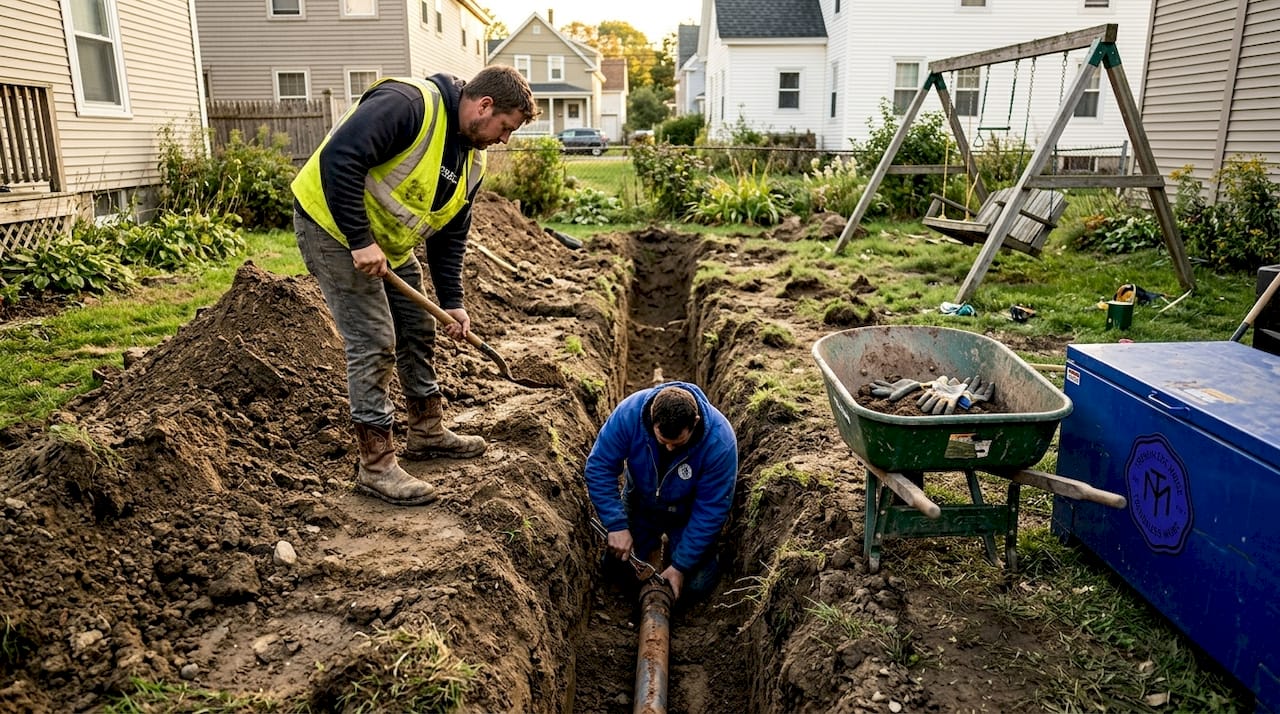
Trenchless repairs, by contrast, require only small access pits at one or two points along the pipe. Your lawn stays intact. Your garden beds stay in place. Your driveway doesn't need to be jackhammered. The visual and functional impact on your property is dramatically reduced.
Here's how the two approaches compare across the factors that matter most to homeowners:
| Factor | Trenchless repair | Traditional open-cut |
|---|---|---|
| Surface disruption | Minimal (small access points only) | Major (full-length trench) |
| Pipe lifespan | CIPP 50+ years, HDPE 50-100 years | 25-50 years depending on material |
| Cost in urban/residential settings | Up to 75% cheaper | Higher with restoration costs added |
| Greenhouse gas emissions | 97% less than open-cut | Significantly higher |
| Landscaping restoration needed | Little to none | Extensive |
| Project completion time | Often within 24 hours | Multiple days to weeks |
| Warranty availability | Up to 50 years | Typically shorter |
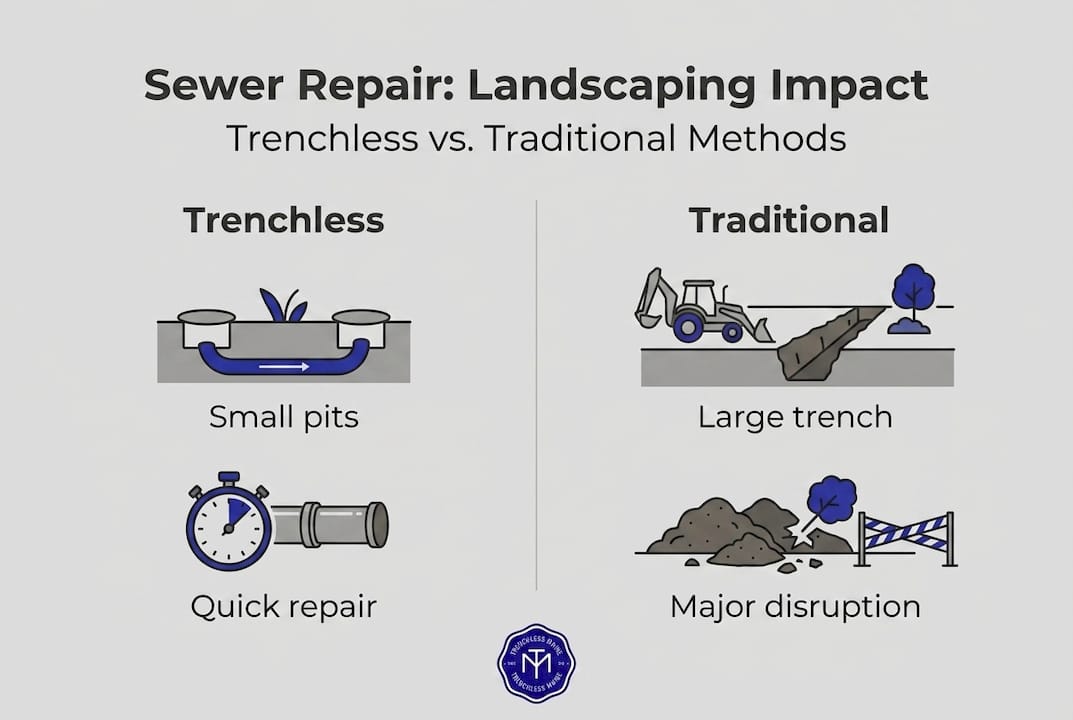
The numbers tell a clear story. You can also look at trenchless vs excavation cost breakdowns to see exactly where those savings come from in residential scenarios.
If you're dealing with tree roots growing into your sewer lateral, keep in mind that open-cut excavation often damages those same trees in the process. Cutting through the root zone to access the pipe can cause significant stress to mature trees, and in some cases, the tree may not survive. Trenchless lining addresses tree root intrusion from the inside of the pipe without ever touching the surrounding soil.
Pro Tip: Always ask your contractor for before-and-after project photos from previous Maine jobs. A reputable trenchless provider will have a before and after gallery showing minimal landscaping disturbance and clean finished results.
When you consider warranty coverage, trenchless repair has another clear advantage. A warranty lookup tool can help you understand what coverage applies to your specific repair, but industry-leading providers offer protection up to 50 years on CIPP installations, meaning fewer future disturbances to your property over time.
How trenchless repairs protect your landscaping: Real-world outcomes
The numbers show clear benefits, so what does protecting your landscaping actually look like in practice for Maine homeowners?
Picture a homeowner in Portland with a 40-year-old clay sewer lateral running beneath a carefully maintained backyard garden. Traditional excavation would require removing raised bed frames, pulling out established perennials, and cutting through a root system from a 30-year-old oak. The repair itself might take two days, but the restoration could take two growing seasons.
With CIPP lining, a technician accesses the pipe through an existing cleanout near the foundation. The liner is pulled into place, cured, and the job is done, typically within a single workday. The garden is untouched. The oak is untouched. The homeowner walks out the next morning to a yard that looks exactly the same as it did before.
This isn't an isolated example. Across Maine, from Bangor to Brunswick, homeowners are choosing sewer repair in Maine solutions that leave their properties intact. The outcomes consistently include:
- Lawns preserved: No seeding, no patching, no bare soil to manage through winter
- Gardens protected: Perennials, shrubs, and established plantings remain in place
- Driveways intact: No need to break and repour concrete or asphalt
- Trees unharmed: Root zones stay undisturbed, protecting mature trees
- Retaining walls and edging untouched: Hardscape features remain exactly as installed
The environmental benefits compound the property benefits. Research confirms that trenchless repair generates 97% fewer greenhouse gas emissions compared to open-cut methods. For homeowners who care about their environmental footprint, that's a meaningful advantage on top of everything else.
Statistically, the longevity data is equally compelling. CIPP liners last 50 or more years, and HDPE pipe installed through pipe bursting has a proven lifespan of 50 to 100 years. This durability matters because every future repair is another opportunity for disruption. When you install a solution that lasts decades, you're protecting your landscaping not just today but for the long term.
Well-maintained landscaping accounts for a significant portion of property value, and preserving it during infrastructure work is a genuinely smart financial decision. You can also browse the sewer repair tips blog for more real-world examples and guidance tailored to Maine conditions.
Practical tips for Maine homeowners: Preparing for trenchless repairs
To make the most of trenchless technology, here's what you should do as a homeowner before and during the repair process.
Preparation matters. The more clearly you communicate your property's specifics to your contractor, the better they can plan the work to minimize impact. A good trenchless contractor will conduct a camera inspection of your pipe first to confirm the pipe's condition and identify exactly where the damage is located. This also confirms which method, CIPP lining or pipe bursting, is appropriate for your situation. The CIPP method is only appropriate when the pipe is structurally sound enough to hold the liner during curing.
Follow these steps to prepare your property and get the best outcome:
- Request a camera inspection first. Before any work begins, a video inspection of your sewer lateral confirms the exact problem and the pipe's condition. This prevents guesswork and ensures the right method is used.
- Walk the pipe route with your contractor. Know where your sewer lateral runs underground. Point out raised beds, tree root zones, irrigation lines, and hardscape features you want protected.
- Identify and clear access points. Cleanouts are the small capped pipes that extend from the sewer lateral to the surface. Locate them and clear the area around them so the crew can work efficiently.
- Document your landscaping before work begins. Take photos of your yard, garden, and hardscape. This gives you a clear baseline to reference when verifying that nothing was disturbed.
- Discuss irrigation systems. If you have underground irrigation lines, make sure your contractor knows where they run. While trenchless methods rarely conflict with them, awareness prevents accidental damage at access points.
- Ask about cleanup and site restoration. Even with minimal disruption, small pits need to be backfilled. Confirm that the contractor will restore any disturbed soil or turf at access points.
- Review the warranty documentation. Before signing off, confirm the warranty terms in writing. Understand what's covered, for how long, and what conditions apply.
Pro Tip: Schedule your trenchless repair during Maine's dry months, typically May through September. Dry ground is easier to work in, access pits are less prone to collapse, and your plantings are more resilient to any minor disturbance near work areas. Check the spring maintenance checklist for a full seasonal guide to sewer care in Maine.
When you speak with your contractor, ask these specific questions: What access points will you use? Will you need to create new access pits, and if so, where? How long will the curing process take? What limitations apply to the CIPP liner material in cold Maine winters? These aren't just good questions for the contractor. They signal that you're an informed homeowner who expects professional results. When you're ready to move forward, request a quote so you can compare options with full cost transparency.
The overlooked truth about trenchless repairs and landscaping
Conventional wisdom says that sewer repair is disruptive no matter what, and you should just budget for landscaping restoration as part of the job. We disagree, and here's why that mindset costs Maine homeowners more than they realize.
When contractors frame landscaping damage as inevitable, they're often underselling what that damage actually means in practice. A trench through an established garden doesn't just mean replanting. It can mean losing mature perennials that took five or ten years to fill in. It can mean replanting ground cover that took three seasons to spread across a slope. And it can mean resetting hardscape features like stone edging or gravel paths that took significant time and money to install correctly.
The real cost of landscaping disruption is rarely captured in a contractor's restoration estimate. That estimate might cover grass seeding or basic topsoil replacement, but it almost never accounts for the years of growth lost, the visual gap in an established landscape, or the emotional frustration of watching something you've built be undone in an afternoon.
Trenchless repair isn't just a technical upgrade over open-cut methods. It's a strategic investment in your property's current and future value. Cost breakdown insights show that when you factor in full restoration costs alongside the repair itself, trenchless methods consistently come out ahead, sometimes dramatically so.
Our advice: ask every contractor you're considering for a detailed impact projection. Not just the repair price, but a clear description of every surface area that will be disturbed, what restoration is included, and what you'll be responsible for afterward. That conversation will tell you very quickly whether a contractor is thinking about your property the way they should be.
Explore trenchless solutions for your Maine property
If you're dealing with a slow drain, a suspected pipe crack, or early signs of root intrusion in your sewer lateral, don't wait for the problem to escalate into an emergency.

Trenchless Maine specializes in protecting Maine properties while delivering reliable, long-lasting sewer repairs. Whether you need a camera inspection to diagnose a problem or a full CIPP lining job to restore your pipe, we bring over 50 years of combined expertise to every project. Explore our full range of trenchless repair services to understand what's possible for your property, review the technology options available for your pipe type, and see real local project outcomes from Maine homeowners who chose to protect their landscaping. Reach out today for a free consultation and find out how quickly we can solve your sewer problem without touching your yard.
Frequently asked questions
How does trenchless repair minimize landscaping damage?
CIPP lining uses small access points to insert and cure a resin liner inside your existing pipe, leaving most of your yard completely undisturbed during the entire process.
Will trenchless repairs last as long as traditional methods?
Yes, CIPP lasts 50+ years and HDPE pipe from pipe bursting lasts 50 to 100 years, matching or exceeding the lifespan of traditionally installed pipes.
How much does trenchless sewer repair save on landscaping restoration costs?
Trenchless methods can reduce total repair and restoration costs by up to 75% compared to traditional open-cut excavation in residential and urban settings.
Which trenchless methods protect landscaping best?
Both CIPP lining and pipe bursting protect lawns, gardens, and driveways effectively, since neither method requires a yard-wide trench to access the damaged pipe.
Can trenchless repairs solve pipe problems caused by tree roots?
Yes, CIPP lining seals root intrusion from inside the pipe without requiring excavation around the tree's root zone, protecting both your plumbing and your trees.