
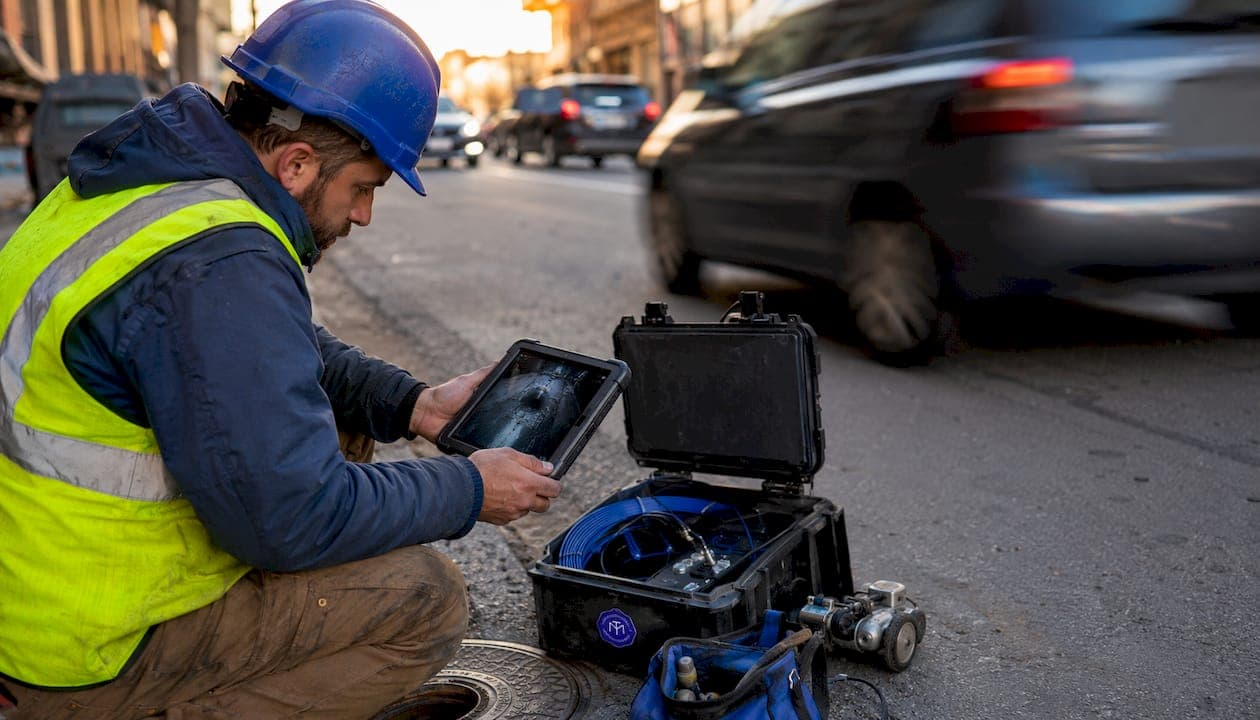
The most important shift in sewer infrastructure right now is the move from reactive to proactive management. New sewer technology advancements, including IoT sensors, AI-driven predictive software, autonomous inspection robots, and modular hybrid treatment systems, are making it possible to catch pipe failures before they become emergencies. For homeowners and businesses in Maine, this means fewer surprise excavations, lower repair costs, and longer-lasting results.
Here is what is driving that change:
- Intelligent IoT sensors monitor flow rates, pressure, gas concentrations, and structural conditions in real time
- AI and machine learning analyze that data to predict blockages and failures before they occur
- Autonomous inspection robots navigate pipelines, detect defects, and transmit data without putting workers at risk
- Modular hybrid treatment systems combine biological, electrochemical, and membrane processes for better contaminant removal
- Trenchless repair methods like cured-in-place pipe (CIPP) lining and pipe bursting deliver durable fixes with minimal property disruption
Table of Contents
- 1. How trenchless sewer repair technologies actually work
- 2. How IoT sensors and predictive software prevent sewer failures
- 3. What modular hybrid sewer systems offer municipalities and businesses
- 4. What experts say about the proven benefits of modern trenchless repairs
- 5. How trenchless repair costs compare to traditional excavation
- 6. How long trenchless repairs last and what maintenance they need
- 7. What are the real limitations of trenchless sewer technology?
- Trenchlessmaine brings these advancements to Maine homeowners
- Key Takeaways
1. How trenchless sewer repair technologies actually work
Trenchless sewer repair covers a family of methods that fix or replace damaged pipes without digging up your yard, driveway, or landscaping. The two most widely used techniques are CIPP lining and pipe bursting.
CIPP lining inserts a resin-saturated liner into the existing pipe, then cures it in place using hot water, steam, or UV light. The result is a smooth, jointless pipe within a pipe that resists root intrusion and corrosion. Pipe bursting pulls a new pipe through the old one while simultaneously fracturing the original pipe outward, replacing it entirely without excavation.
Both methods apply to residential sewer laterals, commercial drain systems, and municipal mains. Sensor data and camera inspection footage now feed directly into the repair decision, so technicians know exactly where the damage is and which method fits before any equipment arrives on site.
- CIPP lining works well for cracked, corroded, or root-invaded pipes still holding their shape
- Pipe bursting suits pipes that have collapsed or deformed beyond lining
- Camera inspections confirm pipe condition and guide method selection
- Most residential CIPP jobs complete within 24 hours with no landscape damage
Pro Tip: Ask your contractor for a pre-repair camera inspection report. That footage is your proof of pipe condition before and after the job, and it matters for warranty claims.
2. How IoT sensors and predictive software prevent sewer failures
The shift from reactive to proactive sewer management is driven mainly by IoT sensors integrated with AI, enabling data-driven interventions that reduce maintenance costs and environmental risks. Instead of waiting for a backup or overflow, these systems flag problems while they are still small.
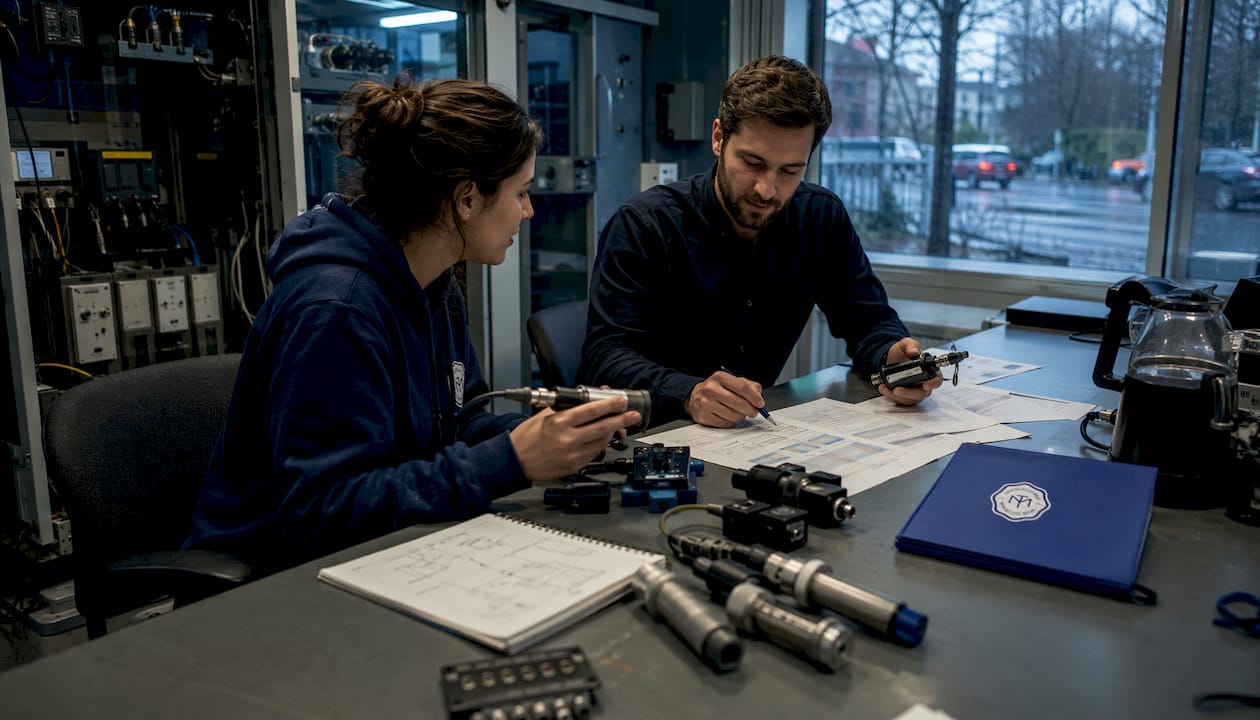
| Sensor Type | What It Monitors | Key Benefit |
|---|---|---|
| Flow and water-level sensors | Hydraulic conditions, blockages, flooding risk | Early blockage detection |
| Pressure sensors | Pipeline stress and leaks | Prevents pipe deformation |
| Gas concentration sensors | Hydrogen sulfide, methane levels | Worker safety and corrosion alerts |
| Structural sensors | Pipe wall integrity | Predicts collapse risk |
Predictive software uses machine learning to analyze both historical and real-time data for anomaly detection, flagging potential blockages or failures before they require emergency response. Cloud computing centralizes that data for trend analysis, while edge computing processes it locally to cut response time when network disruptions occur.
Battery backup systems for sewage pumps add another layer of protection. During power outages, these systems keep pumps running to prevent raw sewage from spilling into the environment. The technology is transitioning from trials to wider deployment as reliability data accumulates. For homeowners concerned about discharge line protection during outages, pairing smart pump technology with discharge line safeguards reduces the risk of costly backups.
Pro Tip: Predictive alerts identify symptoms, not always root causes. When your system flags an anomaly, treat it as a prompt to schedule a camera inspection, not a reason to skip one.
3. What modular hybrid sewer systems offer municipalities and businesses
Modular hybrid sewer systems let municipalities and commercial operators customize treatment by combining biological, electrochemical, and membrane processes in configurations tailored to local conditions. That flexibility is a significant departure from one-size-fits-all treatment plants.
Key components and their roles:
- Biological treatment uses microbial activity to break down organic waste and remove nutrients
- Electrochemical processes target persistent pollutants and support resource recovery
- Membrane filtration (including nanofiltration and reverse osmosis) produces high-quality effluent that meets stringent discharge standards
- Nanotechnology integration enhances contaminant removal and improves membrane performance
The practical appeal is scalability. A small municipality can start with a compact modular unit and expand capacity as demand grows, without rebuilding the entire system. Improved contaminant removal also helps facilities meet tighter EPA discharge limits without major infrastructure overhauls.
The trade-off is cost. Modular hybrid systems require higher long-term operational budgets to manage energy use and membrane maintenance. Any municipality or commercial client evaluating these systems needs a lifecycle budget that accounts for those ongoing expenses, not just the upfront installation cost.
4. What experts say about the proven benefits of modern trenchless repairs
The evidence for trenchless repair's advantages over traditional open-cut methods is consistent across residential, commercial, and municipal applications. Traditional excavation is far more invasive and costly, requiring heavy equipment, landscape restoration, and extended project timelines that can stretch days or weeks.
"Autonomous robots enhance sewer maintenance by improving safety, reducing manual labor, and operating in otherwise inaccessible conditions. Ongoing domestic and international developments continue to refine these technologies to meet the unique demands of sewer infrastructure management." — Robotic Technologies for Sewer Inspection
Proven benefits that homeowners and businesses consistently report:
- Minimal property disruption: No torn-up yards, driveways, or landscaping
- Faster completion: Most residential jobs finish within 24 hours
- Long-term durability: CIPP liners carry warranties up to 50 years through providers like Trenchlessmaine
- Environmental protection: No soil disturbance reduces the risk of groundwater contamination
- Regulatory compliance: Relining deteriorated pipes helps properties meet current discharge standards
Trenchlessmaine brings over 50 years of combined expertise to every project, backed by a track record of completed trenchless sewer repairs across Maine with minimal property impact. That depth of experience matters when you are choosing between a quick fix and a solution that holds for decades.
5. How trenchless repair costs compare to traditional excavation
Trenchless methods cost more per linear foot of pipe than the pipe material alone, but the total project cost almost always runs lower than traditional open-cut repair. The difference comes from what excavation actually requires: equipment rental, labor for digging and backfilling, pavement cutting and patching, and landscape restoration after the fact.
For a typical residential sewer lateral, open-cut repair can involve days of work, multiple contractors, and restoration costs that dwarf the pipe repair itself. Trenchless methods eliminate most of that. A CIPP lining job on the same lateral typically wraps up in a single day with one crew.
For commercial and municipal projects, the cost gap widens further. Closing a street or parking lot for excavation carries real business costs: lost revenue, traffic management, and permit fees. Trenchless pipe bursting or lining avoids most of those disruptions entirely. The no-dig repair approach is not just less disruptive. It is usually the more economical choice when you factor in the full scope of a traditional repair.
6. How long trenchless repairs last and what maintenance they need
CIPP liners, when properly installed, carry manufacturer warranties of 50 years and have a proven service life that matches or exceeds that of new PVC pipe. The liner bonds to the interior of the host pipe, creating a smooth, jointless surface that resists root intrusion, corrosion, and sediment buildup.
Maintenance requirements after a trenchless repair are minimal compared to open-cut replacements. Periodic camera inspections every few years confirm the liner remains intact and the pipe is flowing freely. Hydro jetting can clear any buildup that accumulates over time without damaging the liner. There are no joints or seams where roots can re-enter, which is one of the most common failure points in older clay or cast-iron pipes.
For homeowners with sump pump systems connected to their drain lines, keeping those components in good working order complements the longevity of a trenchless repair. A well-maintained system from the pump to the lateral protects your investment at every point.
7. What are the real limitations of trenchless sewer technology?
Trenchless methods are not the right fit for every situation. Understanding where they fall short helps you make an informed decision rather than a disappointing one.
Real-world integration of AI and robotics faces a practical barrier: aging infrastructure often lacks standardized digital maps, and pipes may need pre-cleaning and mapping before sensors or robots can operate reliably. That adds time and cost to projects in older neighborhoods.
Other genuine limitations include:
- Severely collapsed pipes may not support CIPP lining and require pipe bursting or partial excavation instead
- Very short pipe sections or pipes with extreme bends can limit robotic access and liner installation
- Pre-existing joint offsets need assessment before lining, since a liner cannot correct a pipe that has shifted out of alignment
- Sensor accuracy depends on clean, mapped infrastructure. Debris-filled or unmapped pipes reduce the reliability of IoT monitoring data
- Human validation remains necessary. Predictive analytics detect symptoms, not always root causes, so physical site visits are still required to confirm what an alert actually means
None of these limitations make trenchless repair the wrong choice for most residential and commercial projects. They do mean that a thorough camera inspection before any repair is not optional. It is the step that determines which method fits your specific pipe condition.
Trenchlessmaine brings these advancements to Maine homeowners
When you need a sewer repair that does not tear up your property, Trenchlessmaine delivers exactly that. With over 50 years of combined expertise and warranties up to 50 years on completed work, the team applies the latest trenchless methods, including CIPP lining, pipe bursting, and hydro jetting, to residential, commercial, and municipal projects across Maine.
Trenchlessmaine's process starts with a camera inspection to confirm pipe condition, then matches the right repair method to your specific situation. Most jobs complete within 24 hours. No excavation. No landscape restoration bills. No weeks of disruption. If you are dealing with a slow drain, recurring backups, or a pipe that has not been inspected in years, the right next step is a professional assessment. Get a free quote for trenchless sewer repair in your area, or learn more about hydro jetting services to keep your lines clear between repairs.
Key Takeaways
Trenchless sewer repair, powered by IoT sensors, AI diagnostics, and CIPP lining, delivers durable, low-disruption pipe restoration with warranties up to 50 years at lower total cost than traditional excavation.
| Point | Details |
|---|---|
| Proactive monitoring pays off | IoT sensors and AI analytics catch blockages and failures early, reducing emergency repair costs. |
| CIPP lining vs. pipe bursting | CIPP suits cracked or corroded pipes; pipe bursting replaces pipes that have collapsed or deformed. |
| Total cost favors trenchless | Eliminating excavation, landscape restoration, and street closure fees makes trenchless the lower-cost option for most projects. |
| Lifespan up to 50 years | Properly installed CIPP liners match or exceed the service life of new PVC pipe with minimal ongoing maintenance. |
| Trenchlessmaine's approach | Over 50 years of combined expertise, camera-confirmed repairs, and warranties up to 50 years across Maine. |