
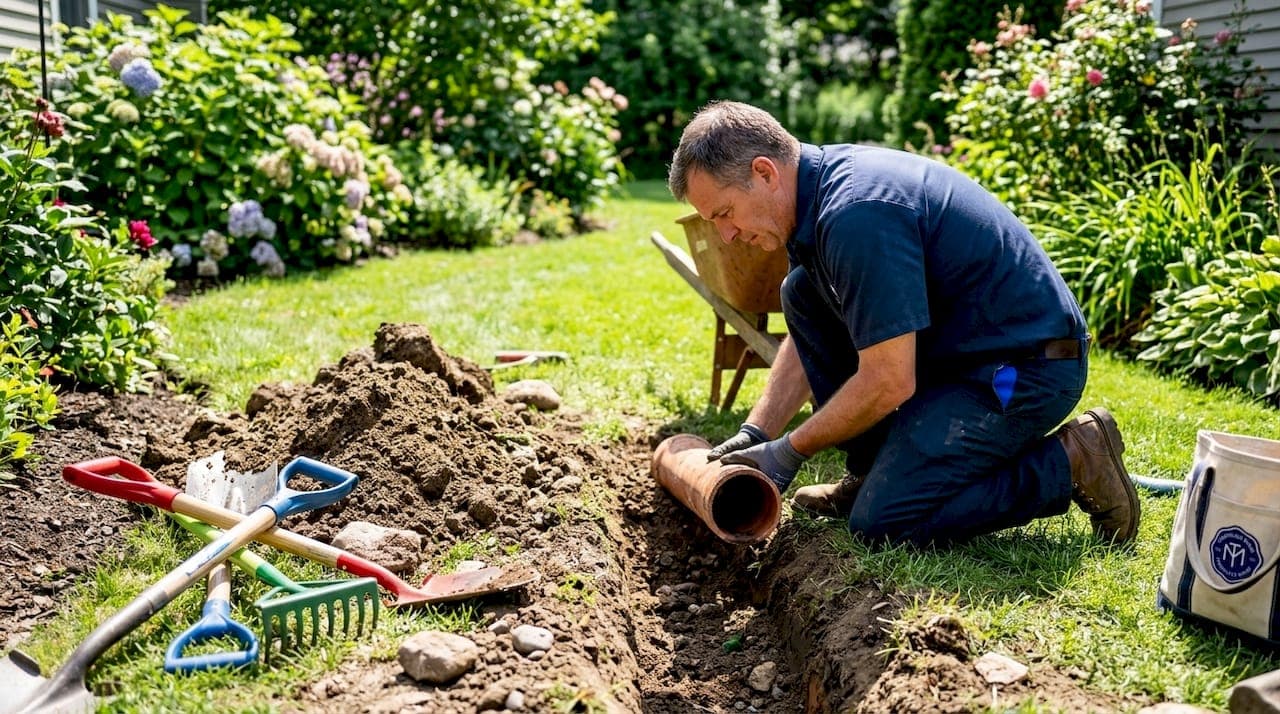
Your sewer line's replacement timeline depends on pipe material and current condition, not just how many years it has been in the ground. A well-maintained PVC lateral can outlast a neglected cast iron pipe by decades. Knowing the sewer line age replacement timeline for your specific material helps you plan repairs before a slow drain becomes a $20,000 emergency. This guide covers lifespan ranges by material, the factors that accelerate failure, how to read the warning signs, and what to expect from a modern replacement project.
What is the typical sewer line lifespan by material?
Most residential sewer lines last between 50 and 100-plus years, but that range is almost meaningless without knowing what your pipe is made of. Material is the single biggest predictor of how long your sewer lateral will hold up.
| Material | Expected Lifespan | Common Failure Mode |
|---|---|---|
| Schedule 40 PVC | 75–100+ years | Joint separation, root intrusion at connections |
| Cast iron | 50–75 years | Corrosion, scale buildup, cracking |
| Clay (vitrified) | 50–60 years | Root intrusion, joint failure, brittleness |
| Orangeburg | 25–50 years | Moisture absorption, collapse, deformation |
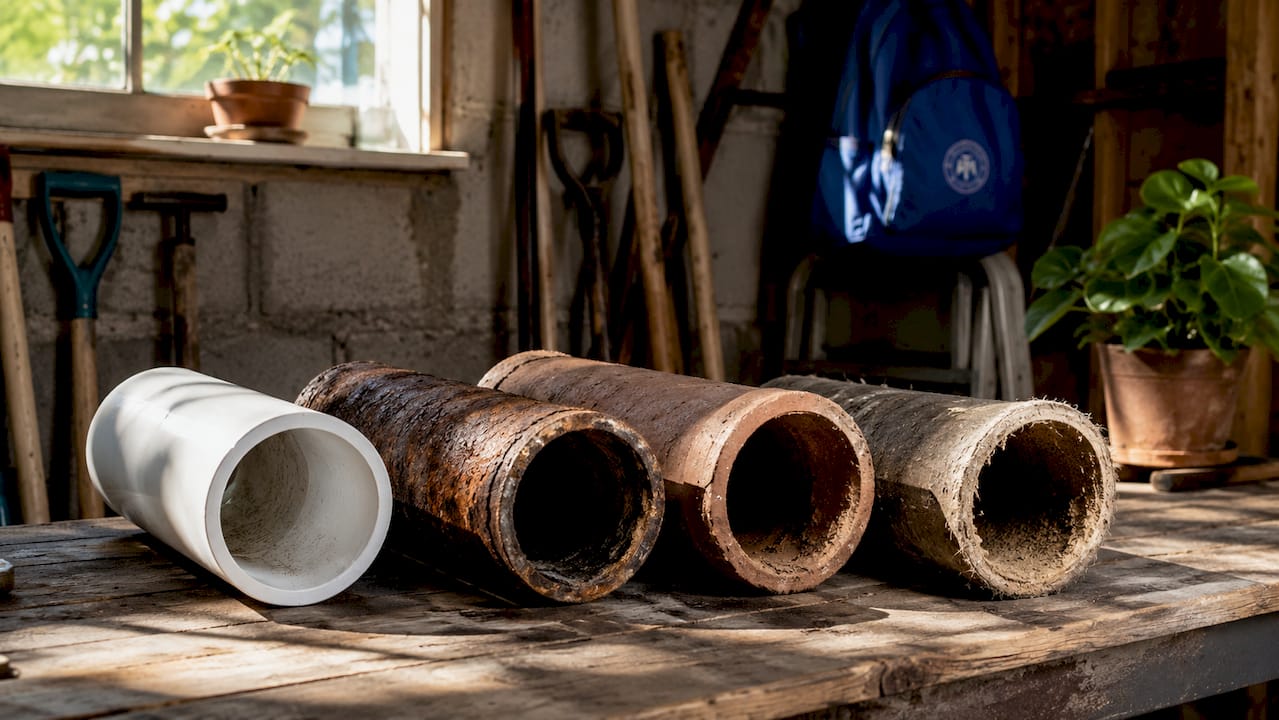
PVC is the most durable option in residential use today. Its smooth interior resists root intrusion and corrosion, which is why most pipes installed after the 1980s use it.
Cast iron was the standard for decades before PVC. It handles heavy loads well but corrodes from the inside out over time, especially in homes with acidic wastewater. Scale buildup narrows the pipe bore and eventually causes blockages.
Clay pipe is common in homes built before 1960. It is brittle and relies on bell-and-spigot joints that roots target aggressively. Once roots find a joint, they widen it until the pipe cracks.
Orangeburg pipe is the most urgent concern for homeowners in older properties. Orangeburg, common from the 1940s through the 1970s, is made from compressed wood pulp and coal tar. It absorbs moisture, loses its round shape, and collapses rather than cracks. If your home was built in that era and has never had a sewer inspection, schedule one immediately.
Pro Tip: Check your home's build date and ask a plumber or inspector what pipe material your sewer lateral uses. This one piece of information shapes every decision about inspection frequency and replacement timing.
What factors beyond age affect sewer line condition?
Age alone is insufficient to dictate replacement timing. Environmental conditions and maintenance history are often more accurate predictors of pipe health than the year a pipe was installed.
The following factors accelerate deterioration regardless of material:
- Root intrusion. Tree and shrub roots follow moisture directly to pipe joints. Once inside, they expand with the plant's growth, cracking clay and widening gaps in cast iron joints. A single large tree near your sewer lateral can cause significant damage within a few years.
- Soil shifting. Freeze-thaw cycles, heavy rainfall, and soil settlement put lateral stress on buried pipes. Maine's winters are particularly hard on underground infrastructure. Soil movement can cause pipe deformation, misalignment, or outright separation at joints.
- Moisture and corrosion. Cast iron corrodes when exposed to hydrogen sulfide gas produced by wastewater. Clay absorbs moisture at cracked joints. Both processes weaken the pipe from the outside in, independent of how old the pipe is.
- Grease and debris buildup. Fats, oils, and non-flushable wipes accumulate on pipe walls and restrict flow. Over time, this buildup creates pressure that stresses already-weakened sections.
- Improper past repairs. Spot repairs using mismatched materials or poor technique can create weak points that fail faster than the surrounding pipe.
For sewer pipe longevity factors like root intrusion and soil shifting, routine camera inspections are the most reliable way to catch problems before they compound. Camera inspections every 1 to 2 years are recommended for older clay or cast iron pipes. PVC pipes in good condition warrant inspection every 2 to 3 years.
Pro Tip: Schedule a video pipe inspection after any significant landscaping work near your sewer line. Root disturbance during digging can shift soil and stress pipe joints in ways that are invisible from the surface.
How do you know when it's time to replace your sewer line?
Sewer lines are rarely replaced on fixed schedules. Replacement decisions rely on symptoms and inspection findings because age alone does not tell the full story.
Warning signs that demand attention
Watch for these symptoms, especially in homes with older sewer infrastructure:
- Slow drains in multiple fixtures simultaneously (not just one clogged sink)
- Gurgling sounds from toilets or floor drains after water use elsewhere
- Sewage odors inside the home or near the yard
- A strip of unusually green, lush grass running across your yard (leaking sewage acts as a fertilizer)
- Wet patches or sinkholes in the yard above the sewer line path
- Recurring backups that return within weeks of a drain cleaning
Any one of these symptoms warrants a professional video pipe inspection. Multiple symptoms together indicate a systemic problem, not a localized clog.
What inspection results tell you
A video camera inspection is the definitive diagnostic tool for sewer laterals. The camera reveals root intrusion, pipe deformation, offset joints, corrosion, and collapse. An inspector grades the pipe's condition and recommends repair, lining, or full replacement based on what the footage shows.
The decision between repair and replacement comes down to four factors:
- Pipe condition. Widespread cracking, collapse, or severe root intrusion across multiple sections means spot repairs will not hold. Full replacement is the right call.
- Frequency of problems. If you are clearing the same blockage every few months, the pipe is failing. Repeated spot repairs cost more over time than a single replacement.
- Pipe material. Orangeburg pipe requires immediate replacement upon discovery. Clay and cast iron pipes showing significant deterioration are candidates for lining or replacement depending on severity.
- Age combined with condition. A 60-year-old cast iron pipe showing early corrosion may still have years of life with proper maintenance. The same pipe showing heavy scale and multiple cracks does not.
CIPP lining can extend a pipe's service life by 40–50 years if the pipe is structurally intact but deteriorating on the interior. Full replacement is the better option when the pipe has collapsed sections or severe deformation.
What timelines should homeowners expect for replacement?
Trenchless sewer replacement typically takes 1 to 3 days. Traditional excavation takes 5 to 14 days depending on depth, surface conditions, and the extent of damage. That difference matters significantly when you are without full plumbing use during the project.
| Method | Typical Duration | Key Disruption Factor |
|---|---|---|
| Trenchless pipe lining (CIPP) | 1–3 days | Minimal; no excavation required |
| Trenchless pipe bursting | 1–3 days | Small access pits only |
| Traditional open-cut excavation | 5–14 days | Landscaping, driveway, or pavement restoration |
Trenchless methods work by accessing the pipe through existing cleanout points or small access pits. Pipe lining and pipe bursting both avoid the need to dig a trench along the full pipe length, which is what drives the time and cost savings.
Factors that extend any project timeline include:
- Pipe depth greater than 8 feet
- Pipes running under concrete driveways, patios, or foundations
- Severe collapse requiring excavation before lining can proceed
- Permit requirements in your municipality
Pro Tip: Ask your contractor whether your pipe's condition qualifies for CIPP lining before committing to full excavation. A pipe that is cracked but structurally present is often a lining candidate, which cuts project time and preserves your yard.
How can homeowners plan and prepare for sewer line replacement?
Preparation reduces both cost and stress. Follow these steps before a replacement project begins:
- Schedule a camera inspection now, not after symptoms appear. Homeowners often overlook invisible sewer damage until visible symptoms arrive, by which point repair costs are significantly higher. An inspection costs a fraction of an emergency replacement.
- Budget realistically. Neglected sewer infrastructure in older properties carries replacement costs of $12,000 to $20,000 or more. Trenchless methods typically cost less than open-cut excavation when surface restoration is factored in.
- Check your insurance coverage. Standard homeowner policies exclude gradual sewer deterioration. A service line coverage endorsement costs $30 to $60 annually and covers underground repair costs. That is a straightforward investment given the potential exposure.
- Review your inspection report with your contractor. Ask specifically whether lining, bursting, or full replacement is recommended, and why. A good contractor explains the tradeoffs clearly.
- Confirm licensing and warranty terms. Modern trenchless repairs backed by long-term warranties protect your investment. Trenchlessmaine, for example, offers warranties up to 50 years on pipe lining work.
Key Takeaways
Pipe material and current condition determine your sewer line's replacement timeline far more accurately than age alone, making routine video inspections the most valuable maintenance tool you have.
| Point | Details |
|---|---|
| Material drives lifespan | PVC lasts 75–100+ years; Orangeburg lasts 25–50 years and requires immediate replacement when found. |
| Age is not the trigger | Inspection results and recurring symptoms are more reliable replacement indicators than pipe age. |
| Trenchless saves time | CIPP lining and pipe bursting complete in 1–3 days versus 5–14 days for open-cut excavation. |
| Budget and insure early | Replacement costs reach $12,000–$20,000+; a service line endorsement costs $30–$60 per year. |
| Inspect proactively | Camera inspections every 1–2 years for older pipes catch problems before they become emergencies. |
What I've learned after years of watching homeowners delay sewer decisions
The most common and costly mistake I see is homeowners patching the same failing pipe over and over. A drain cleaning clears the blockage, life returns to normal, and the underlying deterioration continues. Six months later, the same call comes in. After two or three cycles of this, the repair bills have added up to a significant portion of what a proper replacement would have cost.
Age alone rarely tells you what you need to know. I have seen 70-year-old cast iron pipes in excellent condition and 30-year-old clay pipes that were essentially rubble. The pipe that sat under a large oak tree for 40 years looks nothing like the one that ran through stable, sandy soil. Condition is everything.
My honest advice: get a camera inspection before you buy an older home, and get one again every couple of years if your pipe is clay or cast iron. The inspection costs are minor. The information they provide is not. Knowing your pipe's actual condition lets you plan a replacement on your schedule and your budget, rather than reacting to a sewage backup at the worst possible moment.
The homeowners who handle this well are the ones who treat their sewer lateral like any other major home system. They inspect it, they understand what they have, and they make decisions based on real data. That approach consistently saves money and eliminates the worst-case scenarios.
— John
Trenchlessmaine offers faster sewer repair with less disruption
If your inspection reveals deteriorating pipe or you are planning ahead on an older property, Trenchlessmaine provides trenchless sewer repair across Maine with minimal impact to your yard, driveway, and daily routine.

Trenchlessmaine's CIPP pipe lining service rehabilitates existing pipes without excavation, extending service life by decades and backed by warranties up to 50 years. For pipes that need clearing before lining, hydro jetting removes grease, roots, and debris using high-pressure water, restoring full flow capacity. Most projects complete within one to three days. Contact Trenchlessmaine to schedule a camera inspection and get a clear picture of your pipe's condition before a small problem becomes a large one.
FAQ
How long does a sewer line last on average?
Most residential sewer lines last 50 to 100-plus years depending on material. PVC lasts the longest at 75–100+ years, while Orangeburg pipe typically fails within 25–50 years.
What are the main signs of sewer line failure?
The clearest signs include slow drains in multiple fixtures, gurgling toilets, sewage odors, recurring backups, and unusually green grass running across your yard above the pipe path.
Is trenchless repair faster than traditional excavation?
Trenchless methods like CIPP lining and pipe bursting typically complete in 1–3 days. Traditional open-cut excavation takes 5–14 days and requires surface restoration afterward.
Does homeowner insurance cover sewer line replacement?
Standard homeowner policies exclude gradual sewer deterioration. A service line coverage endorsement, which costs $30–$60 per year, provides coverage for underground pipe repairs.
When should I replace versus repair my sewer line?
Replace when inspection reveals widespread cracking, collapse, or severe root intrusion across multiple sections. Repair or lining is appropriate when the pipe is structurally present but deteriorating on the interior.