

Upgrading sewer systems is defined as the process of renovating, repairing, or replacing sewer components to improve flow efficiency, meet regulatory standards, and extend infrastructure lifespan. The most effective modern approach combines trenchless rehabilitation methods like cured-in-place pipe lining (CIPP) with smart monitoring tools that detect problems before they become emergencies. Trenchless methods cost 30–60% less than open-trench excavation and take 50–80% less time. That means less disruption to your yard, your driveway, and your daily routine. For homeowners and property managers in Maine, understanding your upgrade options is the first step toward protecting your property and avoiding costly emergency repairs.
What are the best sewer upgrade strategies for homeowners?
The two core decisions in any sewer upgrade are retrofit vs. full replacement and trenchless vs. open-trench methods. Getting these choices right saves you money and prevents repeat repairs within a few years.
Retrofit vs. full replacement
Retrofit decisions should be based on total cost of ownership, not just the upfront price tag. If your existing pipes or wet well geometry are undersized or structurally flawed, retrofitting only delays the inevitable. Full replacement becomes the right call when the system's design limits its useful life regardless of what components you swap out.
Trenchless vs. open-trench methods
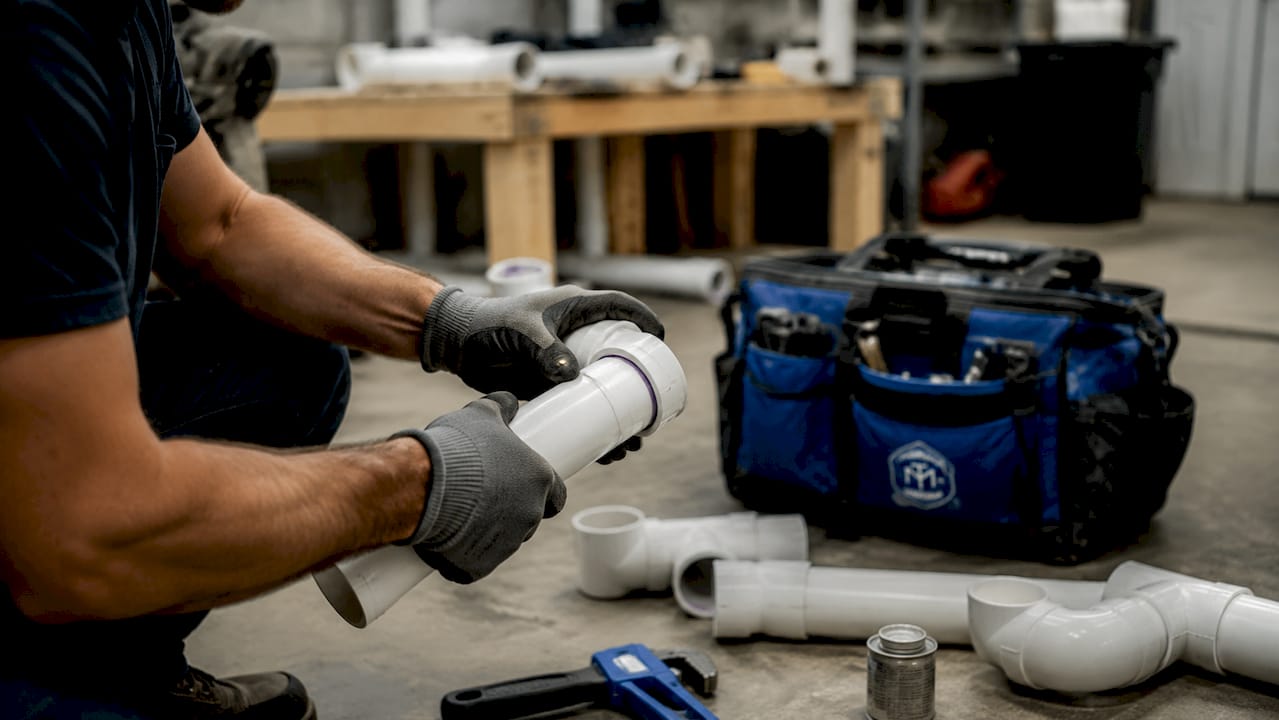
Trenchless rehabilitation installs a new structural pipe inside your existing pipe without digging up your yard. CIPP lining, pipe bursting, and spray lining are the three most common trenchless techniques. Open-trench excavation remains necessary when pipes are severely collapsed or when access points are too restricted for trenchless equipment.
One critical technical limit applies to trenchless lining: pipes deformed more than 10–15% out of round cannot accept a liner. If your pipe has that level of deformation, point repairs or full replacement must come first. A camera inspection before any upgrade decision will confirm whether your pipe qualifies.
| Method | Cost | Disruption | Best For |
|---|---|---|---|
| CIPP lining | Low to moderate | Minimal | Cracked or root-invaded pipes in good shape |
| Pipe bursting | Moderate | Low | Pipes needing upsizing with no liner access |
| Spray lining | Low | Minimal | Smaller diameter pipes with surface corrosion |
| Open-trench replacement | High | Significant | Collapsed pipes or severe deformation |
Pro Tip: Get a video camera inspection before committing to any method. It confirms pipe condition, deformation level, and whether lining is even an option for your specific line.
How to evaluate and manage costs in upgrading sewer systems
Cost is the most common reason homeowners delay sewer upgrades. Understanding what drives the final number helps you budget accurately and avoid surprises.
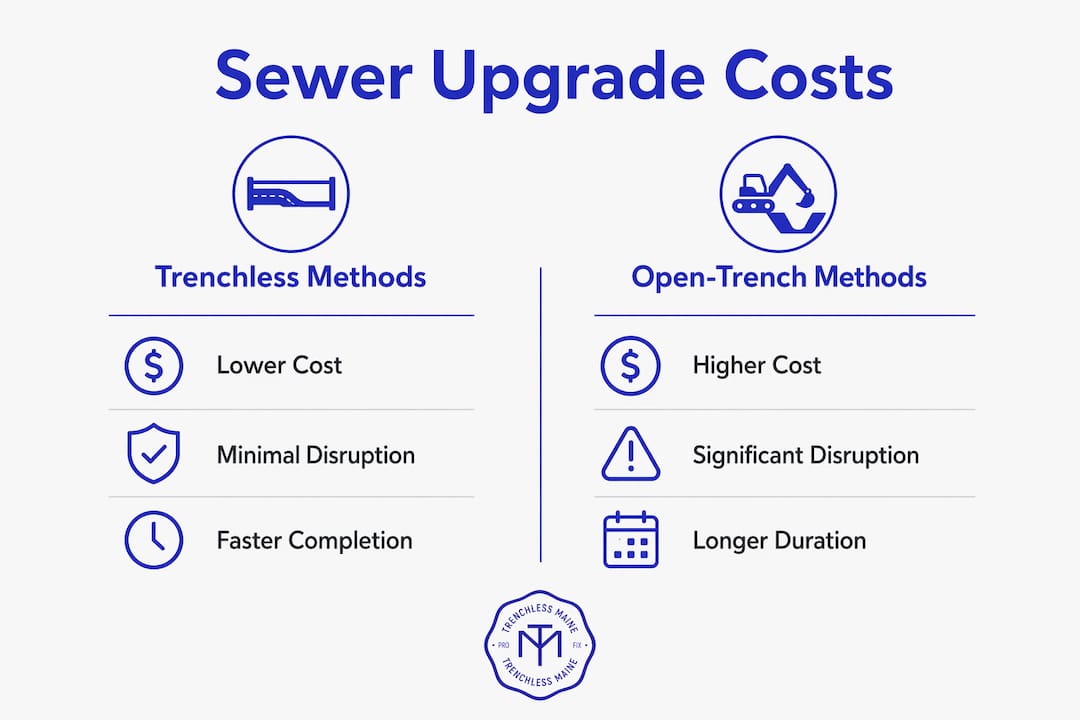
The main cost factors in any sewer upgrade include pipe material and diameter, labor rates, permit fees, surface restoration, and the length of pipe being treated. Open-trench projects carry the highest total cost because they require excavation crews, heavy equipment, and full surface restoration after the work is done. Trenchless projects eliminate most of those line items.
| Method | Relative Cost | Typical Project Duration |
|---|---|---|
| CIPP lining (residential) | Low to moderate | 1–2 days |
| Pipe bursting | Moderate | 1–3 days |
| Open-trench replacement | High | 3–10 days |
| Lift station modernization | Moderate to high | 3–7 days |
The trenchless cost advantage is most visible when you factor in landscape restoration. Replacing a sewer line through an established yard or under a driveway with open-trench methods can add thousands of dollars in restoration costs alone. Trenchless methods access the pipe through existing cleanouts or small entry points, leaving your property largely intact.
Total cost of ownership thinking changes how you evaluate bids. A cheaper upfront quote for an open-trench job often costs more over five years when you add restoration, disruption, and the risk of repeat failures. Ask contractors to break down long-term maintenance expectations alongside the initial project price.
Pro Tip: Always get at least three written estimates. Ask each contractor to specify what surface restoration is included and what is billed separately. That single question often reveals thousands of dollars in hidden cost differences.
What are the best practices for compliance and long-term sustainability?
Regulatory compliance is not optional. Failing to meet leakage and infiltration standards can result in fines, mandatory repairs, and liability for downstream sewer overflows.
The standard leakage limit for new sewer construction sits at 150 gallons per inch of pipe diameter per mile per day. That figure is the benchmark inspectors use to assess whether groundwater infiltration is within acceptable limits. Exceeding it signals a pipe system that needs immediate attention.
Inflow and infiltration (I&I) reduction is one of the highest-impact compliance strategies available. Modern I&I programs using predictive maintenance and trenchless repairs achieve 15–30% reductions in wastewater volume. Reducing that volume lowers the risk of sewer overflows during heavy rain events, which protects both your property and your neighbors.
Key best practices for long-term sustainability include:
- Camera inspections every 3–5 years to catch root intrusion, joint separation, and pipe deformation before they escalate.
- Sensor networks and robotic pipeline inspection to forecast system performance proactively and reduce emergency repairs.
- PLC-based controls and SCADA systems for lift stations, which improve energy efficiency and early fault detection while keeping operators safer.
- Backflow prevention devices to protect against contamination risks during high-flow events or pressure fluctuations.
- Design velocity checks to confirm your pipes maintain self-cleaning flow speeds, typically above 2 feet per second in sanitary sewers.
Effective sewer upgrades increasingly adopt a 100-year planning mindset using digital twins, real-time sensors, and automated response systems. That approach shifts maintenance from reactive to predictive, which is where the real long-term savings come from.
How do you plan and execute a sewer upgrade project at your property?
A well-planned sewer upgrade avoids costly mistakes and keeps your household or tenants comfortable throughout the process. Follow these steps to move from problem identification to completed project.
-
Schedule a camera inspection. A licensed plumber or sewer contractor runs a video camera through your lateral to document pipe condition, joint integrity, root intrusion, and any deformation. This inspection is the foundation of every other decision.
-
Review your system's hydraulic capacity. Before upgrading pumps or adding new connections, verify that your existing pipe diameters and flow velocities can handle the new load. Ignoring boundary conditions like pipe diameter capacity can cause water hammer, pipe vibration, and flange failure after the upgrade is complete.
-
Get a condition survey and written report. Ask your contractor to provide a written condition assessment that grades each pipe segment. This document supports permit applications and gives you a baseline for future inspections.
-
Select your method and contractor. Match the repair method to your pipe's condition. Confirm the contractor holds a valid Maine plumbing or contractor license, carries liability insurance, and has documented experience with the specific method they are proposing. Trenchless specialists like Trenchlessmaine bring over 50 years of combined expertise to residential and commercial projects across Maine.
-
Pull permits before work begins. Most Maine municipalities require permits for sewer lateral repairs and replacements. Your contractor should handle the permit application, but confirm this in writing before signing any contract.
-
Plan for service continuity. Ask your contractor how sewer service will be maintained during the project. CIPP lining projects typically complete within 24 hours, minimizing disruption. Open-trench projects may require temporary bypass pumping for multi-day jobs.
-
Conduct a post-project inspection. After work is complete, request a final camera inspection to confirm the liner or repair is properly installed and the line flows freely. Proper backfilling and compaction on open-trench jobs should also be documented to prevent surface subsidence later.
Key Takeaways
Upgrading sewer systems with trenchless methods like CIPP lining delivers the best combination of cost savings, minimal disruption, and long-term structural performance for most residential and commercial properties.
| Point | Details |
|---|---|
| Trenchless methods save money | CIPP and pipe bursting cost 30–60% less than open-trench replacement and finish faster. |
| Pipe condition determines method | Pipes deformed more than 10–15% out of round require structural repair before lining. |
| Total cost of ownership matters | Factor in restoration, maintenance, and operational costs, not just the upfront project price. |
| Compliance standards are fixed | Leakage limits around 150 gallons per inch per mile per day define acceptable infiltration levels. |
| Proactive monitoring prevents emergencies | Sensor networks and camera inspections catch failures early and reduce costly emergency repairs. |
What I've learned after years of watching sewer upgrades go wrong
The biggest mistake I see homeowners make is treating a sewer upgrade as a one-time fix rather than a system decision. They approve the lowest bid, the contractor patches the visible problem, and within three years the same line is failing again because nobody evaluated the full pipe condition or the system's hydraulic limits.
The Total Cost of Ownership approach sounds like corporate language, but it is genuinely the most practical framework for homeowners. A $4,000 trenchless lining job that lasts 50 years beats a $2,500 patch that fails in five. The math is obvious once you lay it out, but most people never ask the contractor to show them the long-term picture.
The other pattern I see constantly is skipped boundary condition checks. A homeowner upgrades a pump or adds a bathroom, and nobody verifies whether the existing lateral pipe can handle the new flow rate. The result is pipe vibration, joint separation, or water hammer that damages the very system they just paid to improve. Verify capacity before you upgrade anything.
My practical recommendation for most Maine homeowners is to start with a camera inspection, get a written condition report, and then ask specifically about trenchless pipe lining as the first option. The technology has matured significantly. Warranties now extend up to 50 years on quality CIPP installations. That is not a marketing claim. That is a structural guarantee backed by the liner manufacturer.
The future of sewer maintenance is predictive, not reactive. Sensor networks, robotic inspection, and real-time monitoring are moving from municipal utilities down to residential and commercial properties. Homeowners who invest in that direction now will spend far less on emergency repairs over the next decade.
— John
Trenchlessmaine: no-dig sewer upgrades for Maine properties
Trenchlessmaine specializes in trenchless sewer repair and pipe lining across Maine, giving homeowners and property managers a way to upgrade aging infrastructure without tearing up their property.
Their no-dig sewer solutions include CIPP lining, hydro jetting, camera inspections, and drain clearing, all completed with minimal surface disruption. Most residential projects finish within 24 hours. Trenchlessmaine backs its work with warranties up to 50 years and brings over 50 years of combined team expertise to every job. If you are weighing your upgrade options, their team can assess your pipe condition and recommend the most cost-effective path forward. You can also check whether your Maine address falls within their service area for drain clearing directly on their website.
FAQ
What is the cheapest way to repair a sewer line?
CIPP trenchless lining is typically the most cost-effective repair method. It costs 30–60% less than open-trench replacement and requires no surface restoration.
How long does a trenchless sewer repair last?
Quality CIPP lining installations carry warranties up to 50 years. The liner bonds to the interior of the existing pipe and creates a structurally independent new pipe inside the old one.
When is full sewer line replacement necessary?
Full replacement is necessary when a pipe is collapsed, severely deformed beyond 10–15% out of round, or when the existing pipe diameter is too small to meet current flow demands.
How do I know if my sewer line needs upgrading?
Recurring blockages, slow drains, sewage odors in the yard, or a strip of unusually green grass over your sewer line are all signs of a failing lateral. A camera inspection confirms the exact condition.
Do I need a permit to repair my sewer line in Maine?
Most Maine municipalities require permits for sewer lateral repairs and replacements. Your licensed contractor should handle the permit application as part of the project scope.