
When your sewer line starts backing up or leaking, the last thing you want is a contractor tearing apart your yard, ripping up your driveway, and leaving your property looking like a construction site for weeks. Most Maine homeowners assume that's the only option. The good news is that epoxy pipe lining changes that expectation entirely, offering a way to repair damaged sewer pipes from the inside out without a single shovel breaking ground on your landscaping.
Table of Contents
- What is epoxy pipe lining?
- How epoxy pipe lining solves common Maine sewer challenges
- Epoxy pipe lining versus traditional repair: A comparison
- Limitations to consider: When epoxy pipe lining isn't the best fit
- The real value of epoxy pipe lining: What most homeowners overlook
- Ready to solve your sewer issue? Connect with Maine's epoxy lining experts
- Frequently asked questions
Key Takeaways
| Point | Details |
|---|---|
| Minimal disruption | Epoxy pipe lining repairs pipes without digging up your yard or landscaping. |
| Cost savings | Homeowners can save 30-50% compared to traditional methods ($110–$180 per foot). |
| Long lifespan | Epoxy lining can last two decades or more when properly applied and maintained. |
| Know limitations | Epoxy lining isn’t suitable for severely damaged or galvanized pipes; expert inspection is critical. |
What is epoxy pipe lining?
Epoxy pipe lining is a method that restores a damaged or deteriorating pipe by coating its interior with a specially formulated epoxy resin. Think of it as creating a brand new pipe wall inside your existing one. Once the resin cures, it forms a hard, smooth, seamless surface that seals cracks, closes off root intrusion points, and stops leaks without requiring excavation.
If you want a deeper look at how this fits into the broader category of modern repair methods, this pipe lining overview explains the full range of options available to Maine homeowners.
Here's how the process typically works, step by step:
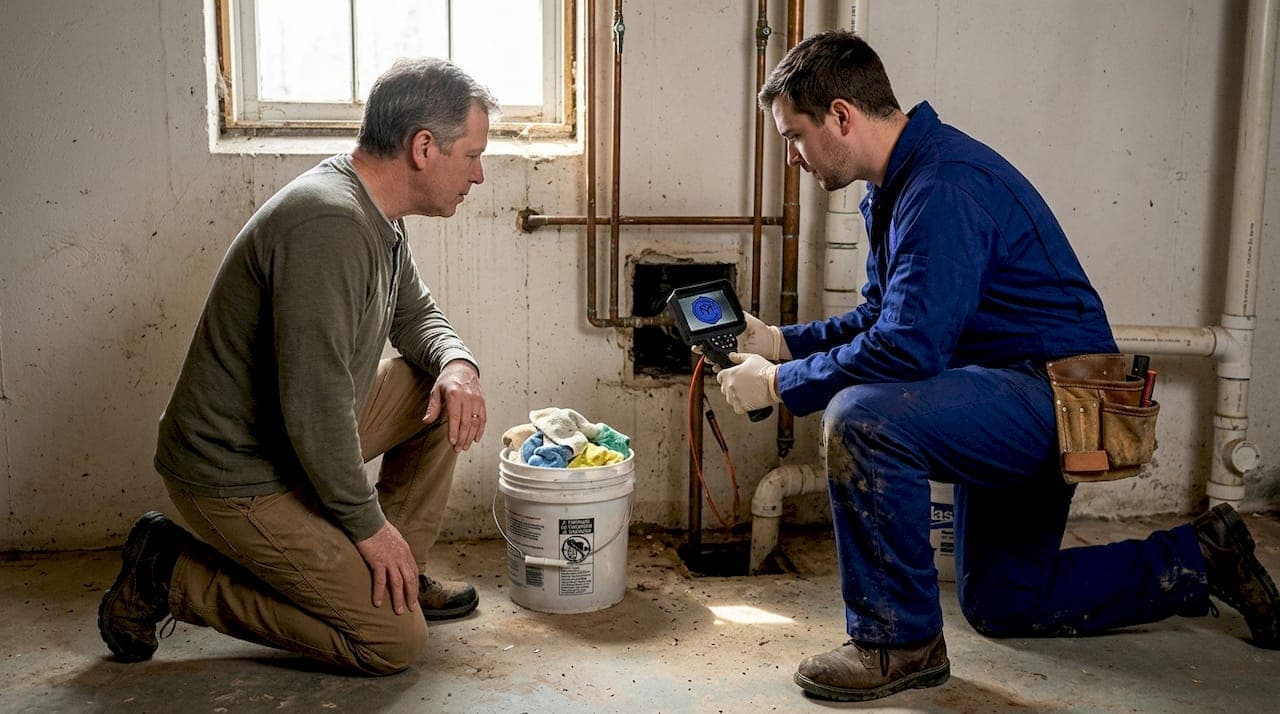
- Camera inspection. A technician runs a video camera through your pipe to assess the damage, confirm the pipe's diameter, and determine whether epoxy lining is appropriate for your specific situation.
- Pipe cleaning. The pipe is thoroughly cleaned using hydro jetting (high-pressure water) to remove grease buildup, mineral deposits, root debris, and any loose material that would prevent the epoxy from bonding properly.
- Drying the pipe. Moisture is removed from the pipe walls, since water contamination is one of the leading causes of lining failure.
- Epoxy application. A resin-saturated liner or epoxy coating is inserted into the pipe and pressed against the interior walls. Depending on the method, this might involve a flexible liner pulled into place or an epoxy spray applied evenly across the pipe's surface.
- Curing. The resin hardens over several hours, either through ambient air curing or an accelerated process using hot water or UV light.
- Final inspection. Another camera pass confirms the lining has bonded correctly, with no gaps, bubbles, or thin spots.
Compared to the traditional dig-and-replace approach, which involves breaking through concrete, excavating your yard, replacing the pipe section, and then restoring the surface, epoxy lining is dramatically less invasive. Trenchless pipe lining costs typically run 30 to 50% less than full excavation and replacement, making it a practical and cost-effective solution for most homeowners dealing with cracked or leaking sewer laterals.
How epoxy pipe lining solves common Maine sewer challenges
With a clear understanding of epoxy lining, let's see how it specifically benefits Maine homeowners facing tough pipe problems.
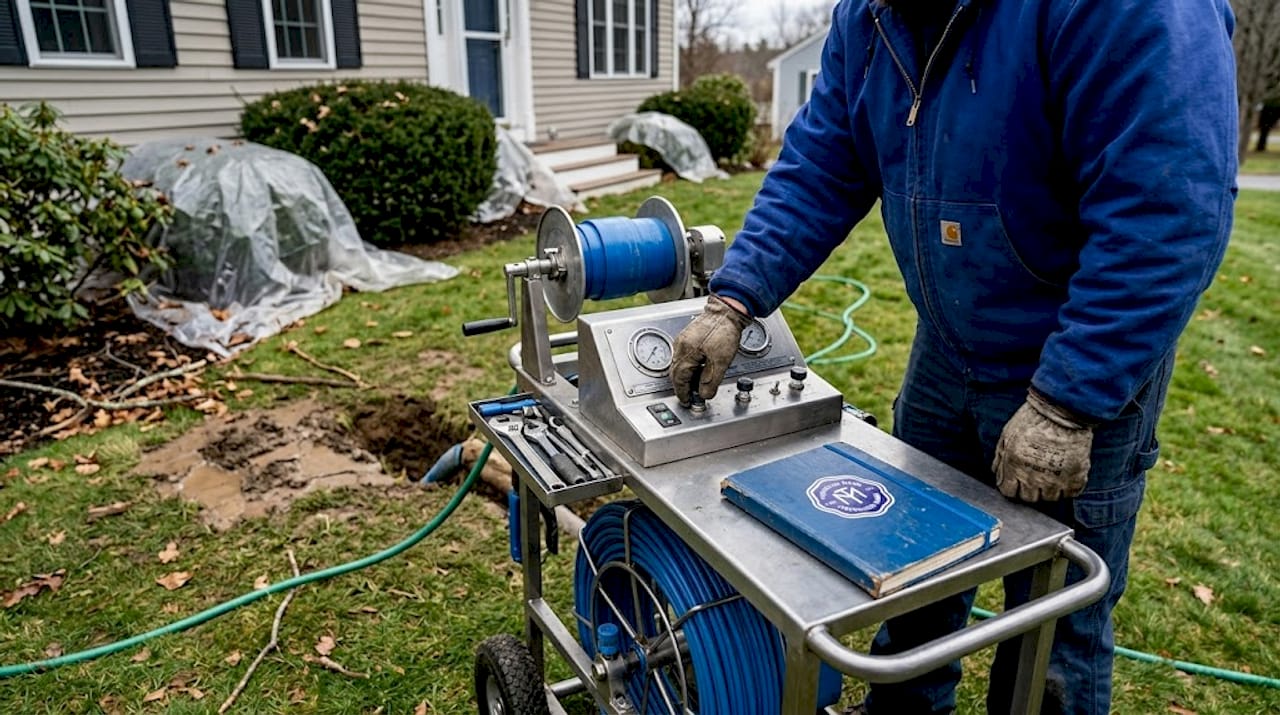
Maine's climate creates a unique set of challenges for sewer pipes. Freeze-thaw cycles are particularly hard on older clay, cast iron, and concrete pipes. When water seeps into small cracks and then freezes, it expands and widens those cracks significantly over time. A pipe that had a minor leak in October can become a serious structural problem by March. Homes built before the 1970s are especially vulnerable because they often use materials that were never designed to flex under repeated thermal stress.
Here's what Maine homeowners typically deal with when their pipes start failing:
- Root intrusion from trees and shrubs whose roots seek out the moisture and nutrients in sewer lines
- Pipe deformation caused by soil shifting or frost heave pushing against the pipe exterior
- Corrosion and scaling inside older cast iron pipes that restricts flow and causes chronic backups
- Joint separation where pipe sections have pulled apart at the seams due to ground movement
- Cracking along the pipe barrel from repeated freeze-thaw stress over decades
Epoxy lining addresses all of these issues except severe structural collapse. For leaks, cracks, and root intrusion points, the resin fills those gaps and creates a sealed barrier. It also smooths out internal scaling and corrosion, improving flow capacity in pipes that had been partially blocked for years.
One of the biggest concerns we hear from homeowners is protecting their landscaping. You may have mature trees, a well-maintained lawn, or a garden that took years to establish. No-dig sewer repair eliminates that worry entirely. Work is done through small access points rather than a trench running the full length of the pipe. For more context on how different repair methods compare in Maine's specific environment, this guide to sewer repair methods is worth reviewing.
Pricing for epoxy lining runs approximately $110 to $180 per foot, depending on the method used and the condition of the pipe. That's a predictable cost you can plan around, unlike excavation projects that often balloon due to unexpected soil conditions or surface restoration expenses.
Pro Tip: Always request a camera inspection before committing to epoxy lining. Not every damaged pipe qualifies, and a visual assessment is the only reliable way to confirm the pipe has enough structural integrity to serve as a host for the liner.
Epoxy pipe lining versus traditional repair: A comparison
Homeowners often weigh different repair options. Here's how epoxy lining stacks up against conventional practices.
The side-by-side differences are substantial, and they go well beyond the upfront cost. Excavation-based repair is sometimes unavoidable, but for the vast majority of sewer lateral problems in Maine homes, epoxy lining delivers equal or better results with far less impact on your daily life and property.
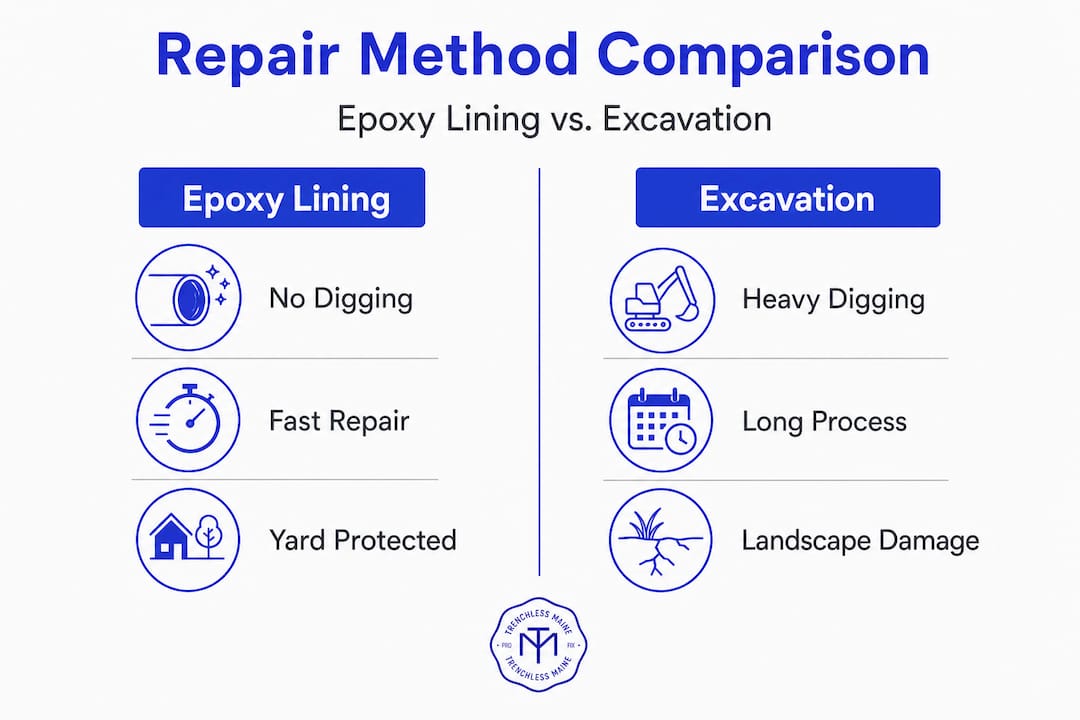
| Factor | Epoxy pipe lining | Traditional dig-and-replace |
|---|---|---|
| Yard disruption | Minimal, small access points | Major, full trench required |
| Average cost per foot | $110 to $180 | Often $200 to $400+ with restoration |
| Project duration | Usually completed in one day | Several days to weeks |
| Landscaping impact | None to minimal | Significant, requires restoration |
| Lifespan | 20 to 50 years | 25 to 50 years depending on material |
| Suitable for root intrusion | Yes | Yes |
| Works on collapsed pipes | No | Yes |
| Permitting complexity | Generally lower | Often higher |
For a thorough breakdown of trenchless vs excavation cost in Maine's specific market, you can find detailed figures that reflect local labor and material rates. If you want to understand exactly what happens on the day of service, the full pipe lining process walk-through covers each phase in detail.
"Epoxy pipe lining is 30 to 50% less expensive than traditional dig-and-replace methods, with minimal disruption to your property and daily routine." — ThePricer.org
The time factor is often what tips homeowners toward epoxy lining once they understand it. Traditional excavation can leave your yard unusable for days or weeks. The pipe itself might be repaired quickly, but surface restoration, backfilling, and compaction take time. Most epoxy lining projects wrap up within a single day, and your sewer system is typically back in service the same afternoon.
Limitations to consider: When epoxy pipe lining isn't the best fit
While epoxy lining works for many situations, it's important to understand its limitations and risks so you can make an informed decision.
Epoxy pipe lining is not a universal fix. There are situations where it genuinely won't work, and using it in the wrong conditions can lead to premature failure, sometimes within just a few years. Understanding these limitations upfront protects you from investing in a repair that won't last.
Here are the key situations where epoxy lining is not appropriate:
- Severely collapsed or misaligned pipes. The liner needs a structural host pipe to bond to and maintain its shape. If the pipe has lost too much of its original form, the liner cannot fill that void effectively.
- Pipes with significant joint offsets. If sections have shifted out of alignment by more than a small margin, the liner may not seal properly at the transition points.
- Galvanized steel pipes. The zinc coating on galvanized pipes creates a poor bonding surface for epoxy resin, which significantly increases the risk of delamination over time.
- Pipes that weren't properly cleaned or dried. Epoxy liner failures are frequently caused by incomplete cleaning before application, residual moisture in the pipe, or contamination that prevents full adhesion. Delamination (where the liner separates from the pipe wall) is a known failure mode that can occur as soon as 2 to 15 years into the liner's life if prep work was rushed or inadequate.
- Pipes with active groundwater intrusion. If water is flowing in through cracks or joints during the lining process, it interferes with curing and bonding.
This is why choosing an experienced contractor matters so much. The prep work is just as important as the lining itself, and shortcuts in cleaning or drying are the most common reason epoxy lining jobs fail early.
For Maine homeowners who want to explore all available options before deciding, this overview of non-invasive options covers everything from CIPP (cured-in-place pipe) lining to pipe bursting, so you can compare approaches that may suit your specific pipe condition better.
Pro Tip: Before any lining work begins, ask your technician to walk you through their cleaning and prep protocol. Confirm they are drying the pipe before application and that they've confirmed your pipe material is compatible with the epoxy product they plan to use. A contractor who is transparent about this process is one you can trust.
The real value of epoxy pipe lining: What most homeowners overlook
After exploring the facts, here's a perspective on why epoxy lining has become the preferred choice for many Maine homeowners, and why its full value often goes unrecognized.
Most conversations about epoxy pipe lining focus on one thing: cost savings versus excavation. And yes, the 30 to 50% cost reduction is meaningful. But in our experience working with Maine homeowners across the state, the cost comparison is rarely what makes people feel genuinely relieved after the job is done. What they actually value most is getting their life back quickly.
When you hire a traditional excavation crew, your yard becomes a worksite. You may not be able to use your driveway. Your septic system or sewer line may be out of commission for days. You're coordinating with multiple tradespeople, waiting on permits, watching your landscaping get torn apart, and then hoping the restoration work looks halfway decent when it's all over.
With epoxy lining, you wake up with a sewer problem and by late afternoon you have a repaired pipe and a yard that looks exactly like it did that morning. That's not a minor convenience. For working families, elderly homeowners, or anyone running a business from their home, that difference in downtime has real dollar value that doesn't show up in a cost-per-foot estimate.
There's also a longer-term benefit that rarely gets mentioned. Protecting your landscaping matters for more than just aesthetics. Mature trees and established gardens add real property value and take years to grow back once disturbed. Trench work near root systems can damage or kill trees that have been growing for decades, which is a loss no restoration estimate can fully cover.
The peace of mind factor is real, too. A properly installed epoxy liner essentially seals off all the entry points that roots and groundwater have been exploiting. That means fewer emergency calls down the road, less risk of a backup at the worst possible moment, and a pipe system that performs consistently for the next several decades. In our view, the convenience and long-term reliability of epoxy lining are just as important as the upfront cost savings, and often more so.
Ready to solve your sewer issue? Connect with Maine's epoxy lining experts
Once you recognize the value, it's easy to connect with specialists and get your project started.
If you're dealing with slow drains, recurring backups, or you suspect your older pipes are cracking under Maine's tough seasonal conditions, now is the right time to act. Small issues become expensive emergencies when they're left alone through another winter.
Trenchless Maine offers a full range of sewer lining services for residential, commercial, and municipal clients across Maine, backed by warranties up to 50 years and over 50 years of combined team expertise. We use industry-leading no-dig sewer technology that gets the job done efficiently, usually within 24 hours. You can also view real before-and-after results in our sewer repair gallery to see exactly what's possible. Contact us today to schedule a camera inspection and get a clear picture of what your pipes need.
Frequently asked questions
Is epoxy pipe lining safe for drinking water pipes?
Epoxy pipe lining is generally used for sewer lines rather than drinking water pipes. If you're considering lining a potable water line, consult your local health regulations and work only with specialists certified for that application.
How long does epoxy pipe lining last in Maine homes?
A properly applied epoxy liner can last 20 to 50 years in residential sewer applications. However, liner failures from poor prep such as incomplete cleaning or residual moisture can cause delamination as early as 2 to 15 years into the liner's life, which is why quality installation matters enormously.
What pipes can't be lined with epoxy?
Epoxy lining is not suitable for severely collapsed or misaligned pipes because the liner requires a structurally intact host pipe to bond to. Galvanized pipes are also problematic due to zinc coating, which prevents proper epoxy adhesion.
How much does epoxy pipe lining cost for a typical Maine home?
Epoxy pipe lining typically runs $110 to $180 per foot, which is generally 30 to 50% less than traditional dig-and-replace repair when you factor in excavation labor, materials, and surface restoration.