
If you've ever gotten a sewer repair estimate and felt your stomach drop at the mention of excavation, you're not alone. Most Maine homeowners assume that fixing a damaged sewer line means tearing up their yard, cracking open their driveway, or worse, ripping out basement floors. Pipe lining changes that equation entirely. It's a trenchless method that repairs your existing pipe from the inside, without a single shovel breaking ground in most cases. This guide walks you through what pipe lining is, how the process works, and how to decide whether it's the right fix for your property.
Table of Contents
- What is pipe lining? A plain-English explanation
- How does pipe lining work? Methods and materials
- Pipe lining vs. traditional sewer repair: Which is better?
- Is pipe lining right for your Maine property?
- Why most Maine homeowners wait too long, and what actually works
- Get started with a Maine trenchless sewer lining specialist
- Frequently asked questions
Key Takeaways
| Point | Details |
|---|---|
| Trenchless solution | Pipe lining repairs damaged sewer lines with minimal digging and property disruption. |
| Expert-recommended process | Start with a CCTV inspection and choose a certified installer for the best results. |
| Environmental benefits | CIPP lining is proven to have up to 90% lower impact than traditional dig-and-replace repair. |
| Lasting durability | Modern pipe liners often last 50 years or more, even in Maine’s harsh climate. |
What is pipe lining? A plain-English explanation
First, let's strip away the jargon and clarify exactly what pipe lining means.
Pipe lining is a trenchless technology that repairs leaking, cracked, or root-damaged sewer pipes by building a new liner inside the old pipe. Think of it as slipping a strong, seamless sleeve inside your existing pipe and bonding it permanently to the interior walls. The result is a smooth, durable, corrosion-resistant pipe within a pipe, restored to full function without excavation.
Here's the basic process in order:
- Clean the pipe. Technicians use hydro jetting to clear out grease, debris, mineral buildup, and tree roots.
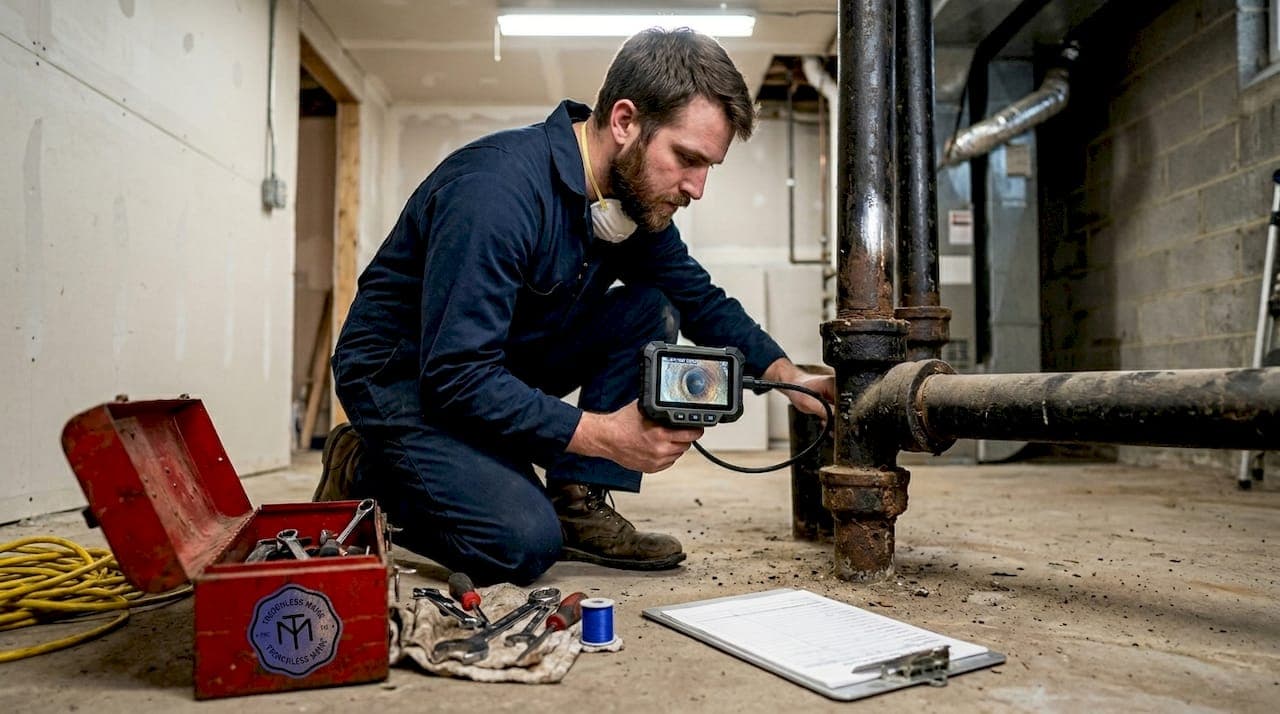
- Inspect with a camera. A CCTV (closed-circuit television) camera runs through the line to identify cracks, offsets, or root intrusion.
- Insert the liner. A felt or fiberglass tube soaked in resin is inserted into the damaged pipe through a small access point.
- Expand and cure. The liner is inflated against the pipe walls and cured using hot air, steam, or UV light, hardening the resin into a rigid new pipe surface.
- Restore service connections. Technicians reopen any lateral connections that were covered during lining.
As noted in the Maine DOT Project Manual, pipe lining repairs use a trenchless approach that protects surrounding infrastructure. This matters a lot when your sewer line runs under a finished driveway, a mature garden, or a landscaped lawn.
Compared to open-cut excavation, pipe lining dramatically cuts repair time. Many residential jobs are completed within a single day. There's no need to restore or reseed landscaping, replace pavement, or deal with extended service interruptions. And when you factor in those avoided costs, trenchless vs. excavation cost comparisons routinely show trenchless methods coming out ahead.
Pro Tip: If your home is more than 30 years old or has large trees growing near the sewer line, ask for a camera inspection before any repair quote. Knowing the exact condition of your pipe saves time and money from the start.
How does pipe lining work? Methods and materials
Now that you know what pipe lining is, let's break down how it actually works and what materials are used.
There are two primary pipe lining methods used by certified contractors today.
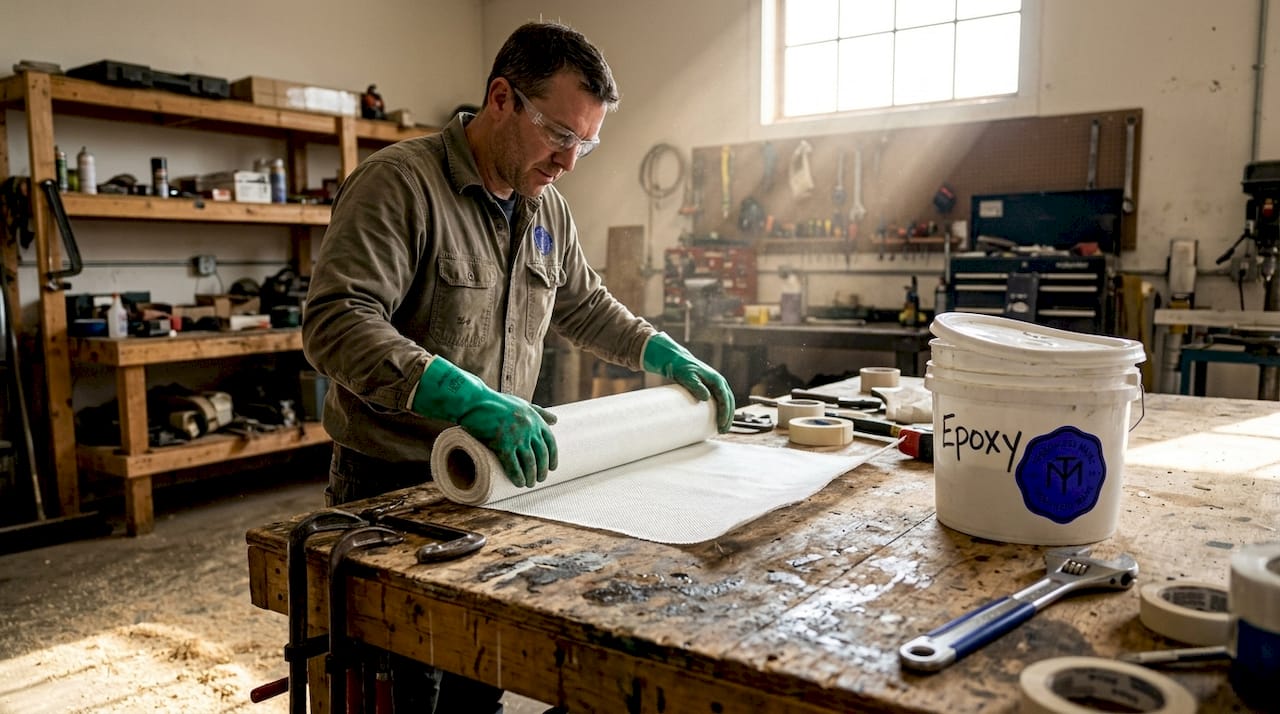
Cured-in-Place Pipe (CIPP) is the most widely used method. A resin-saturated liner made from polyester felt or fiberglass is inserted into the host pipe and cured using hot water or steam. The resin hardens to form a rigid, jointless new pipe.
UV-curing lining uses a liner embedded with glass fiber and cured with ultraviolet light rather than heat. This method is faster, produces lower odor during installation, and is environmentally preferred for many sewer repair technology applications, including projects following Maine DOT specifications.
Here's a quick comparison of the two methods:
| Feature | CIPP (hot cure) | UV-curing |
|---|---|---|
| Cure method | Hot water or steam | Ultraviolet light |
| Odor during install | Moderate | Minimal |
| Speed | Standard | Faster cure times |
| Environmental profile | Good | Preferred for Maine projects |
| Common liner material | Polyester felt | Fiberglass |
The materials matter too. Epoxy or silicate resins bond the liner tightly to the pipe walls. Fiberglass adds structural strength, which is critical for pipes under driveways or roadways. Polyester felt absorbs the resin evenly, ensuring a consistent cure throughout the liner's length.
A critical step that professionals stress: always start with a video inspection. As Maine DOT standards confirm, CCTV inspection with UV-curing is the preferred sequence for environmental protection and job accuracy. Skipping the inspection is how contractors miss a collapsed section or an offset joint that lining alone can't fix.
Installer certification also matters. NASSCO (National Association of Sewer Service Companies) certification signals that a contractor follows industry standards for both pipe assessment and lining installation. When you contact a provider, ask if they're NASSCO certified and whether they use UV-curing for Maine projects. You can review lining and camera services to see what a full-service trenchless provider should offer.
Pro Tip: UV-cured lining is worth requesting specifically for Maine properties near wetlands, wells, or sensitive soil. The reduced chemical off-gassing protects both your property and the surrounding environment.
Pipe lining vs. traditional sewer repair: Which is better?
It's helpful to see how pipe lining stacks up against traditional approaches before making a choice.
Traditional sewer repair means excavation: heavy machinery, open trenches, removed pavement, destroyed plantings, and often days or weeks of disruption. The pipe is dug up, replaced in sections or completely, then buried again. You're then left to deal with restoring everything above ground.
| Factor | Pipe lining | Traditional excavation |
|---|---|---|
| Yard disruption | Minimal to none | Significant |
| Driveway damage | Rarely needed | Often required |
| Project timeline | Usually 1 day | Days to weeks |
| Landscaping cost | None | Can add thousands |
| Lifespan | 50+ years | Varies by material |
| Environmental impact | Up to 90% lower | High |
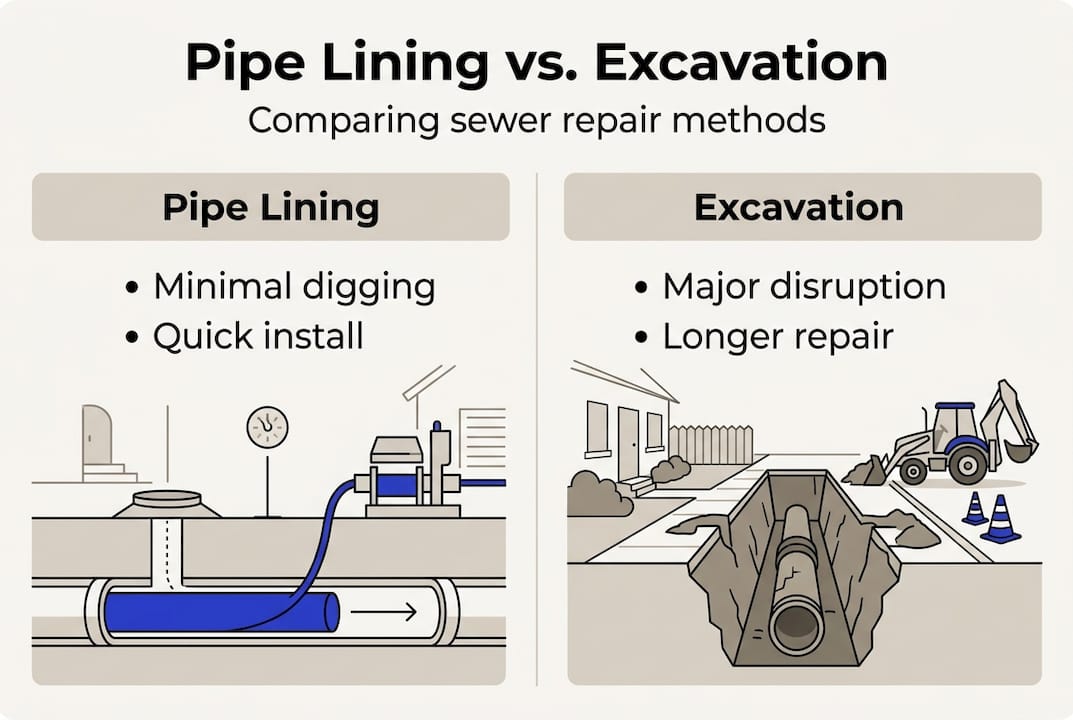
The environmental difference is significant. Research published on CIPP environmental impact shows that CIPP lining delivers up to 90% lower environmental and social impact compared to open-cut methods, with strong performance in controlling sewer leakage.
For Maine property managers overseeing multi-unit buildings or commercial sites, that reduced disruption translates directly to fewer tenant complaints, less liability, and lower total project costs. You avoid closing parking lots, disrupting businesses, or scheduling around excavation crews for extended periods.
Here's a quick summary of where pipe lining wins:
- No landscape restoration costs
- No pavement replacement
- Dramatically shorter project timelines
- Lower noise and neighborhood disruption
- Comparable or superior long-term durability
For a detailed cost breakdown between these two approaches, including real project examples, check out how the numbers compare side by side. You can also view before-and-after results from completed Maine projects to see the difference firsthand.
Is pipe lining right for your Maine property?
So, when should you consider pipe lining for your own property?
Pipe lining works for the majority of homes and commercial buildings dealing with common sewer issues. It's particularly effective for:
- Cracked or fractured pipes caused by ground shift, frost heave, or age
- Root intrusion where tree roots have penetrated pipe joints or cracks
- Corroded or deteriorating pipes, including older cast iron pipe repair situations
- Leaking joints that allow ground water infiltration or sewage exfiltration
- Aging clay or Orangeburg pipes common in older Maine homes
Pipe lining is suitable for pipes ranging from 2 to 48 inches in diameter. As long as the host pipe is structurally present and mostly intact, lining can be applied. CIPP lining shows low leakage after installation, confirming it as a reliable, long-term solution rather than a temporary patch.
There are situations where pipe lining is not the right call. If a pipe has fully collapsed, has major vertical offsets (called bellies), or is so severely deformed that a liner cannot make proper contact with the walls, excavation may still be necessary. That's why the video inspection step is non-negotiable before committing to any method.
For Maine homeowners dealing with tree root intrusion, pipe lining is often the preferred solution. After hydro jetting clears the roots, the liner seals the entry points permanently, stopping future intrusion from the same locations.
If you're unsure about your pipe's condition, request a no-dig CCTV inspection from a NASSCO-certified provider. It takes about an hour, gives you a clear picture of what's happening underground, and tells you exactly whether lining is viable or whether another approach is needed.
Why most Maine homeowners wait too long, and what actually works
Here's something we've seen repeatedly: most property owners don't act until they have a backup in the basement or a sinkhole forming in the yard. By that point, the problem has usually grown from a manageable crack or root intrusion into a partial collapse or full failure. What could have been a one-day lining job becomes a multi-day excavation with a bill to match.
Maine's climate makes this worse. Freeze-thaw cycles stress already-weakened pipes every single winter. A hairline crack in October can become a fractured section by March. Waiting for visible failure is the most expensive strategy available to you.
The smarter approach is preservation over crisis management. Schedule periodic camera inspections, address issues early with targeted lining, and you avoid the worst-case scenarios entirely. Reading through sewer repair tips from certified professionals gives you a framework for staying ahead of problems rather than reacting to them. Your yard, your driveway, and your budget will be better for it.
Get started with a Maine trenchless sewer lining specialist
Ready to take action or just want to see what's possible with modern methods?
Trenchless Maine specializes in non-invasive pipe lining, camera inspections, and hydro jetting for residential, commercial, and municipal clients across the state. With over 50 years of combined expertise and projects completed often within 24 hours, the team brings both speed and reliability to every job.
You can learn more about the no-dig technology behind these methods, review the full range of lining, jetting, and camera inspection options available, or take the first step by requesting a free pipe lining quote. A video inspection is all it takes to find out exactly what your pipe needs and whether lining is the right fit.
Frequently asked questions
How long does pipe lining last in Maine's climate?
Most pipe liners are engineered to last 50 years or more, and pipe liner durability holds up well even through Maine's freeze-thaw cycles. The seamless interior surface also resists the corrosion that shortens the life of older metal or clay pipes.
Does pipe lining work for cast iron or clay pipes?
Yes, pipe lining is effective on cast iron, clay, and most other sewer pipe materials. As confirmed by the Maine DOT Project Manual, lining suits aging pipes of various materials, provided the pipe retains enough structural shape to accept a liner.
Is there any odor or environmental hazard during lining installation?
Modern UV-curing methods significantly reduce odor and chemical exposure during installation. The Maine DOT specification confirms UV-curing reduces odors and is the preferred approach for environmental protection on Maine projects.
Can pipe lining fix pipes with significant root intrusion?
Pipe lining is one of the most effective solutions for root-intruded sewer lines. After the roots are cleared with hydro jetting, the liner permanently seals entry points. According to tree root intrusion resources, lining addresses root-intruded lines as long as the pipe is mostly intact.
How soon can the pipe be used again after lining?
Most lined pipes are ready for use within 12 to 24 hours after installation. UV-cured liners often reach service readiness even faster, making this one of the least disruptive repair options available.
Recommended
- Before & After Gallery | Trenchless Sewer Repair Projects | Trenchless Maine
- Sewer Repair Technology: No-Dig Solutions | Trenchless Maine
- Trenchless Sewer Services Maine | Lining, Jetting & Camera
- Old Clay & Orangeburg Pipes in Maine: When to Repair, When to Replace
- Plumbing Pipe Repair – Orange County, California - MDTECH APPLIANCE REPAIR
- How to fix leaking pipes fast: step-by-step repair guide