
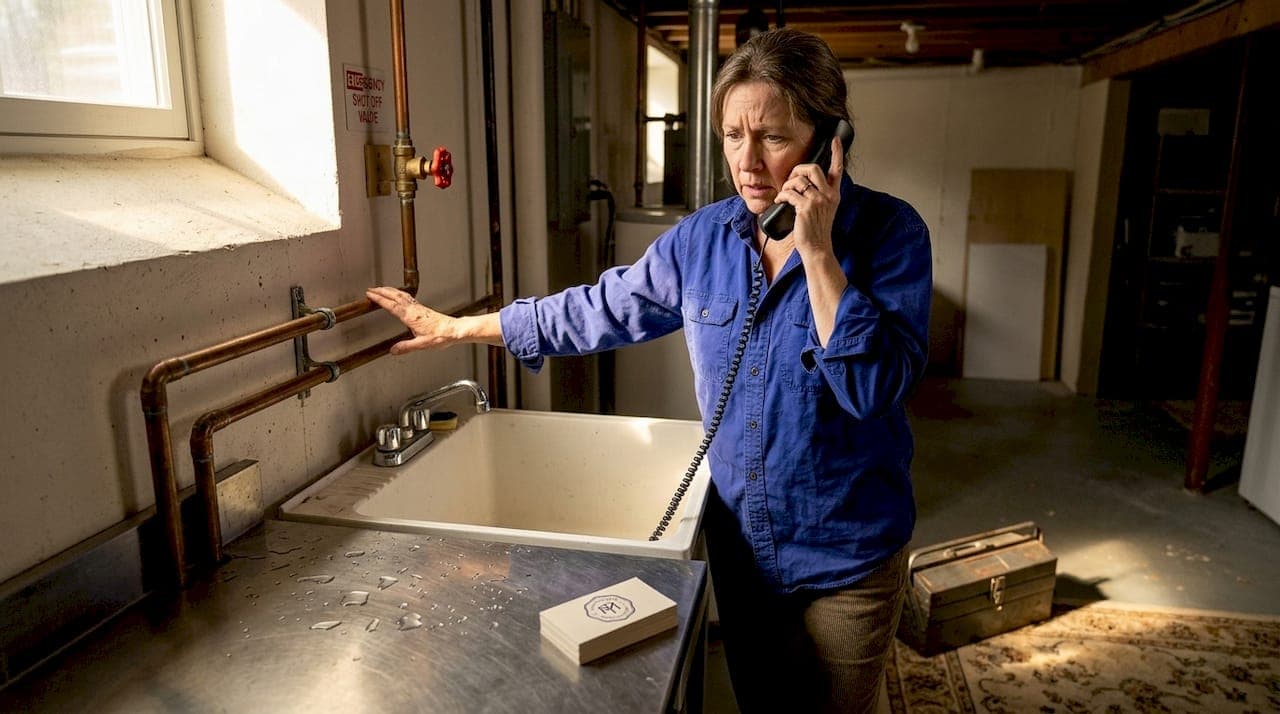
You're in the middle of a normal evening when the smell hits you. Water is backing up in your basement drain, your toilets are gurgling, and the yard near your sewer line is suddenly soggy. For Maine homeowners, a sewer emergency like this is disorienting and frightening, but the good news is that non-invasive sewer repair solutions are available that can resolve the problem quickly, without tearing apart your yard or flooring. This guide walks you through every step, from spotting the emergency to completing a long-lasting, eco-friendly repair.
Table of Contents
- Recognizing sewer emergencies: Act fast to limit damage
- Immediate actions: What to do before professionals arrive
- Required tools and preparation for non-invasive repairs
- Step-by-step: How trenchless sewer repair works
- After repair: Verifying results and preventing future issues
- Why non-invasive repairs are changing emergency sewer care in Maine
- Get reliable, eco-friendly sewer repair in Maine today
- Frequently asked questions
Key Takeaways
| Point | Details |
|---|---|
| Act quickly | Immediate steps minimize expensive damage and health risks during a sewer emergency. |
| Choose non-invasive solutions | Modern trenchless repairs fix pipes without digging up your yard or landscaping. |
| Prepare and stay safe | Shut off water, avoid hazardous areas, and get professional help fast. |
| Verify repairs | Confirm a successful fix with a camera inspection and follow annual maintenance for long-term protection. |
Recognizing sewer emergencies: Act fast to limit damage
Every minute you wait during a sewer emergency costs you. Sewage backup causes immediate water damage and introduces harmful bacteria into your living spaces. Knowing the warning signs makes the difference between a contained repair and a catastrophic one.
Common symptoms of a sewer emergency include:
- Multiple drains backing up at the same time throughout the house
- Gurgling or bubbling sounds coming from your toilet after flushing
- Sewage odors rising from floor drains, sinks, or the yard
- Unusually wet or sunken patches of ground directly above your sewer lateral
- A strip of unusually green, lush grass running across your yard, which often indicates a slow leak acting as fertilizer underground
- Water pooling around basement floor drains after any water use in the house
Outdoor signs are especially important in Maine, where cold ground conditions and tree root intrusion from hardwood species like maple and oak are particularly common causes of pipe damage. Root intrusion occurs when tree roots grow into small cracks in aging pipes seeking water, and over time they can completely block or deform the pipe.
"Speed is everything when it comes to sewer failures. The longer wastewater sits in your pipes or backs into your home, the worse the contamination and structural damage becomes."
Acting on even one or two of these symptoms can prevent a situation from escalating. The data is sobering: ignoring early warning signs can lead to repairs exceeding $20,000. Catching a problem early, before pipe deformation or full collapse, gives you far more affordable options, including trenchless repairs.
Pro Tip: If you notice multiple slow drains at once, don't reach for store-bought drain cleaner. That chemical reaction can damage older pipes and often masks a much bigger blockage deeper in your sewer lateral.
With the problem identified, the next step is to safely take control of the situation before professional help arrives.
Immediate actions: What to do before professionals arrive
Acting decisively in the first 30 minutes of a sewer emergency reduces damage, protects your family, and makes the professional repair faster and safer. Follow these steps in order.
- Shut off your main water supply. Locate your main shutoff valve, usually near the water meter in the basement or utility room, and turn it off. This stops additional water from pushing sewage further into your home or backing up through floor drains.
- Stop using all plumbing fixtures. Every flush, every sink rinse, and every shower adds volume to an already overwhelmed sewer system. Tell everyone in the house immediately.
- Keep children and pets away from affected areas. Sewage contains pathogens including E. coli and Hepatitis A. Block off basement drains, flooded areas, or any visible sewage with physical barriers.
- Ventilate the affected space. Open windows if safe to do so. Sewer gas contains hydrogen sulfide, which is harmful in enclosed spaces.
- Document everything. Take photos and video of all visible damage for your insurance claim. Note the location, the time you first noticed symptoms, and any recent changes such as new landscaping or heavy rain.
- Call a licensed sewer professional. For emergency service in Maine, you want someone who specializes in trenchless methods and can respond quickly. Many offer same-day or 24-hour service for confirmed emergencies.
Stopgap measures like these can significantly limit water damage and reduce your exposure to harmful contaminants before the crew arrives. Check the emergency sewer repair tips available for Maine homeowners for additional guidance on what to communicate to your repair team.
"Never enter standing wastewater. Even a few inches of sewage-contaminated water in a basement can carry dangerous bacteria and create electrical hazards if any outlets or appliances are submerged."
Pro Tip: Take a photo of your water meter reading before and after shutting off the supply. This helps your technician and your insurance company understand the volume of water involved.
Once you've taken immediate measures, you need to know what to expect from the emergency response and how to prepare for next steps.
Required tools and preparation for non-invasive repairs
Whether you're managing containment on your own while waiting for professionals or helping to expedite the repair process, having the right items on hand matters. Here's what you need.
Basic homeowner safety and containment tools:
- Heavy-duty rubber gloves (sewage-rated)
- An N95 or P100 respirator mask designed for biological exposure
- A wet-dry vacuum rated for liquid use, to remove standing water from non-sewage areas
- Plastic sheeting and duct tape to isolate affected rooms
- Absorbent floor mats or towels for perimeter containment
- Disinfectant rated for biological contamination cleanup
Preparation checklist to speed up professional arrival:
| Task | Why it matters |
|---|---|
| Clear access to cleanout ports | Technicians need unobstructed access for camera inspection |
| Locate property blueprints or drawings | Helps identify sewer lateral routing and depth |
| Note exact locations where symptoms appeared | Pinpoints the likely blockage or break zone |
| Remove items near floor drains and access hatches | Reduces setup time and protects your belongings |
| Write down any recent landscaping or digging near the yard | Root intrusion and accidental pipe damage are common causes |
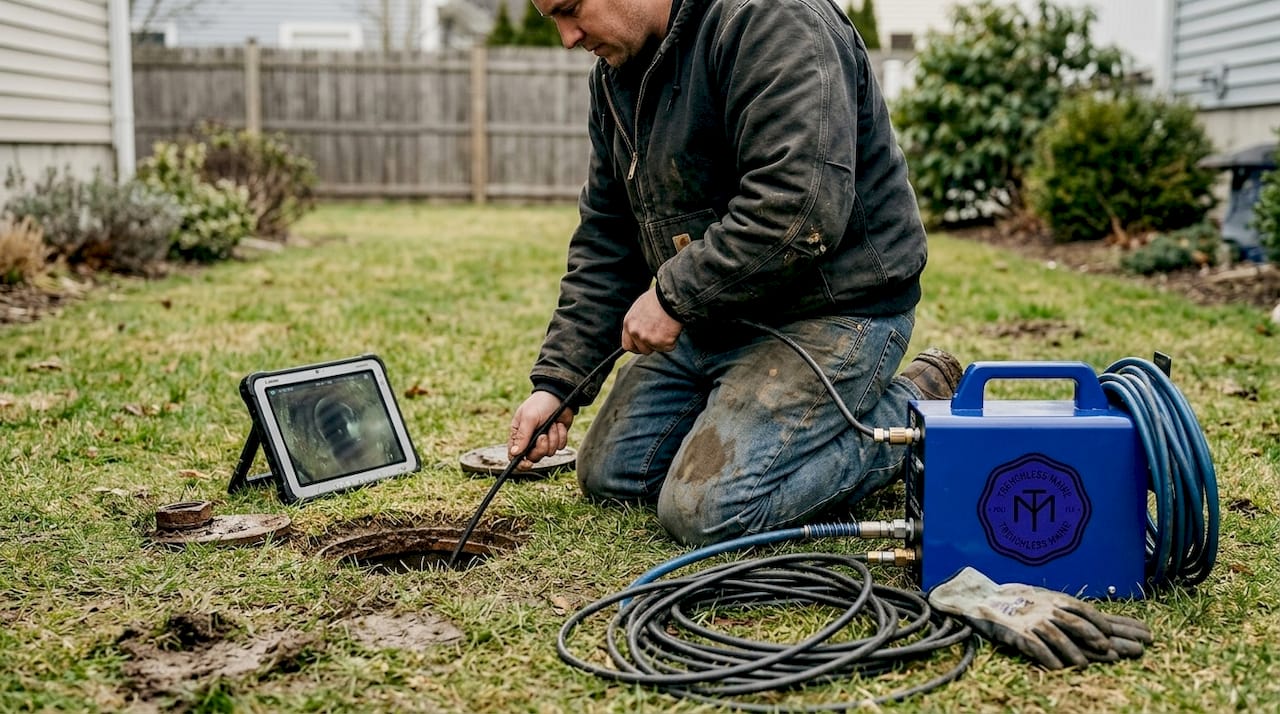
Professional non-invasive trenchless methods require specialized equipment including high-definition sewer cameras, hydro jetting units, and CIPP (cured-in-place pipe) lining systems. These are not consumer-grade tools, and attempting to use rented alternatives without training can make the damage worse. Understanding the pipe lining process helps you ask the right questions when your crew arrives.
The goal of this preparation phase is simple: reduce the variables that slow down diagnosis and repair so the technicians can get to work immediately.
With tools and preparations in place, it's time to understand the steps professionals will take using eco-friendly, trenchless repair technology.
Step-by-step: How trenchless sewer repair works
Trenchless sewer repair is not a single technique. It's a category of methods that share one defining feature: they fix your pipe from the inside, without major excavation. Here's how the process typically unfolds for Maine homeowners.
- Camera inspection. A waterproof, high-definition camera is inserted into the sewer line through an existing cleanout access point. The technician views the pipe interior in real time, locating cracks, root intrusion, joint displacement, or full blockages. This step eliminates guesswork entirely.
- Hydro jetting for cleaning. Before any lining or repair, the pipe interior is thoroughly cleaned using high-pressure water jets. This removes grease buildup, mineral deposits, and root debris. Hydro jetting is environmentally safe and far more effective than chemical cleaners.
- Selecting the repair method. Based on the camera findings, the technician recommends either CIPP lining or pipe bursting.
- CIPP lining involves inserting a resin-saturated liner into the damaged pipe, then inflating and curing it in place. The result is essentially a new pipe inside the old one, with no digging required.
- Pipe bursting is used when the original pipe is too damaged to line. A bursting head breaks the old pipe outward while simultaneously pulling a new pipe into place.
- Curing and final inspection. After lining, the resin cures to a hard, seamless surface. A second camera pass confirms the repair is complete, sealed, and properly aligned.
"Maine's rocky, frost-affected soil makes traditional dig-and-replace work especially difficult and expensive. Trenchless methods sidestep these challenges entirely."
Trenchless repairs avoid extensive digging and are particularly well-suited to Maine's climate. The freeze-thaw cycles that crack driveways and shift foundations also affect buried pipes. Lining a pipe from the inside adds structural strength that actually helps pipes resist future frost-related movement.
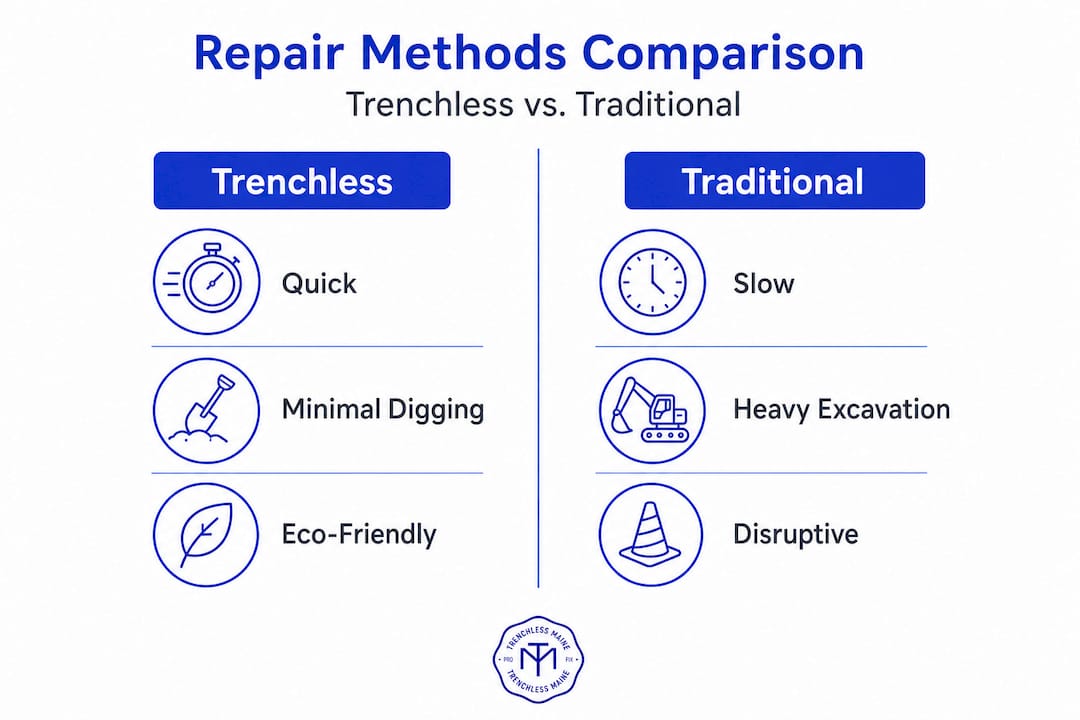
Trenchless vs. traditional repair: A direct comparison
| Factor | Trenchless repair | Traditional dig-and-replace |
|---|---|---|
| Property disruption | Minimal, no excavation needed | Major, yard and landscaping removed |
| Project timeline | Often same day or 24 hours | Several days to weeks |
| Environmental impact | Low, no soil removal | High, significant waste generated |
| Long-term warranty | Up to 50 years | Varies, often shorter |
| Cost efficiency | Lower overall cost | Higher due to excavation labor |
| Effectiveness in rocky soil | Excellent | Very difficult and costly |
Pro Tip: Ask your trenchless contractor for a copy of the pre-repair and post-repair camera footage. This documentation is valuable for future maintenance records and insurance purposes.
The sewer pipe relining guide for Maine homeowners goes deeper into how different pipe materials respond to the lining process, including clay, cast iron, and PVC pipes commonly found in older Maine properties.
After the repair process, it's important to verify results and put steps in place to avoid future emergencies.
After repair: Verifying results and preventing future issues
A completed trenchless repair isn't the end of the process. Verification is essential, and ongoing maintenance makes the difference between a one-time fix and a permanent solution.
How to confirm the repair was successful:
- Request a final post-repair camera inspection from your contractor. This should be standard, and if it isn't offered, ask for it.
- Run water through all fixtures slowly and observe that drains clear at a normal rate with no gurgling.
- Walk the yard above the repaired sewer lateral after 24 hours. There should be no new soft spots, wet areas, or odors.
- Check that your water pressure has returned to normal at all fixtures throughout the home.
Signs it's safe to resume normal water use:
- All drains run freely without backup
- No sewer odor indoors or outdoors
- No visible wet patches along the pipe route in the yard
- Your technician has confirmed the repair with a camera pass
For long-term maintenance, a sewer maintenance checklist is one of the most practical tools a Maine homeowner can use. Annual sewer maintenance inspections can head off the most common causes of emergency failures, including root intrusion, grease buildup, and joint movement from frost heave.
Preventive steps worth building into your annual routine:
- Schedule a professional camera inspection every one to two years, especially if you have mature trees near your sewer lateral
- Use enzyme-based drain treatments rather than chemical cleaners to protect pipe walls and the environment
- Avoid flushing wipes, paper towels, or hygiene products, even those labeled "flushable"
- Report changes in drain performance to a professional early, before a slowdown becomes a backup
Pro Tip: Spring is the ideal time for annual sewer inspections in Maine. After a winter of freeze-thaw stress on underground pipes, a spring checkup catches issues before they become summer emergencies during high water-use months.
Why non-invasive repairs are changing emergency sewer care in Maine
Here's something most sewer repair guides won't tell you: the biggest mistakes Maine homeowners make during a sewer emergency are not about what they do in the first hour. They're about what they believed before the emergency ever happened.
A large number of homeowners still believe that enzymatic drain treatments, store-bought drain snakes, and "pipe patch" products available at hardware stores can solve real sewer line failures. They can't. These products are useful for minor, localized drain clogs, but they are completely ineffective for root intrusion, pipe collapse, or joint separation. Using them delays real repairs and, in some cases, worsens the damage by temporarily masking symptoms.
There's also a persistent belief that trenchless repair is a premium service reserved for large commercial properties. That's simply not accurate. Residential sewer laterals across Maine, from Portland to Bangor to Augusta, are being successfully repaired using CIPP lining and pipe bursting with no landscape damage and no multi-week construction projects. The investment upfront is offset by not having to restore a torn-up driveway, replant landscaping, or replace a concrete sidewalk.
The environmental dimension matters too. Traditional excavation generates tons of soil displacement, broken concrete, and old pipe material that ends up in landfills. Trenchless methods produce a fraction of that waste. For property owners who care about Maine's landscape and water quality, that's not a minor consideration. Maine's rocky soil and proximity to water resources make it especially important to choose repair methods that don't risk disturbing or contaminating the surrounding environment.
The real-world results from Maine properties confirm this: trenchless repairs are ideal for Maine's rocky soil and cold climate, and the liners used in CIPP repairs are rated to last 50 years or more. That's not a marketing claim. It's backed by independent material testing and decades of field performance data.
The lesson we take from every emergency call we respond to in Maine is this: the homeowners who fare best are the ones who acted on early warning signs and chose a long-term solution over a short-term patch. That decision protects your property, your budget, and your peace of mind for decades.
Get reliable, eco-friendly sewer repair in Maine today
When a sewer emergency hits, you need a team with the equipment, training, and experience to resolve it fast and without tearing up your property.

At Trenchless Maine, we bring over 50 years of combined expertise to every job, from Portland to Bangor and across the state. Our trenchless services include CIPP lining, hydro jetting, camera inspections, and pipe bursting, all completed with minimal disruption and no unnecessary excavation. You can see real before-and-after results in our Maine repair gallery, and explore the no-dig technology we use on every job. Contact us today for a free consultation and find out how quickly we can restore your sewer system, without a single shovel in your yard.
Frequently asked questions
What is the first thing I should do during a sewer emergency?
Immediately shut off your main water supply and avoid using any plumbing fixtures until the issue is inspected. This minimizes costly damage by stopping additional water from overwhelming the system.
Are trenchless sewer repairs really less invasive than traditional methods?
Yes, trenchless methods require little or no digging, preserving your landscaping and reducing mess significantly. Trenchless repairs limit property disruption while delivering long-lasting results comparable or superior to traditional replacement.
Can I repair a sewer line myself in an emergency?
Major repairs should always be handled by licensed professionals, but you can take steps to safely contain damage before help arrives. Homeowners can take stopgap measures like shutting off water and isolating the affected area, but attempting the repair itself risks worsening the damage.
How can I prevent future sewer emergencies in my Maine home?
Annual inspections and using eco-friendly products in your plumbing help prevent future problems before they escalate. Routine maintenance catches root intrusion, grease buildup, and frost-related joint movement early, when repairs are still affordable.