

Expect all-in pipe repair projects to range from roughly $150 for a single accessible leak up to several thousand dollars for full traditional sewer replacement. CIPP lining typically costs $80–$250 per linear foot with a project minimum of about $3,000–$5,000. Spot section repairs typically cost $500–$3,000 depending on depth and access. Those numbers look simple until you add permits, excavation, and surface restoration — which is exactly where most budgets blow up.
Here is the rule of thumb worth keeping: if your expected near-term repair spending approaches a significant fraction of full replacement cost, replacement usually wins on long-term value. For owners planning to stay 5+ years with aging cast iron or repeated backups, trenchless lining or full replacement is almost always the smarter call. Short-term owners facing a single isolated failure may reasonably choose spot repair and move on.
Key standards that govern pipe repair work in the U.S. include the Uniform Plumbing Code (UPC), the International Plumbing Code (IPC), and NASSCO's PACP (Pipeline Assessment and Certification Program) scoring system, which contractors use to rate pipe structural condition before recommending lining versus replacement.
- Single accessible repair: $150–$1,000, national average near typical market rate
- Spot section repair: moderate cost range
- CIPP trenchless lining: typical per-foot rates and project cost
- Traditional full replacement: can vary widely depending on project size and complexity
Pro Tip: Schedule non-emergency repairs during regular business hours. After-hours and weekend calls typically carry a 1.5x–2x premium over standard rates — a repair cost can increase substantially on short notice.
Table of Contents
- How do the major pipe repair methods compare in cost?
- What factors drive your final pipe repair price?
- How do you build a realistic all-in cost estimate?
- What should you ask contractors before signing a bid?
- Trenchless vs. traditional: two real-world cost scenarios
- Key Takeaways
- Why a trenchless-first approach makes sense for most Maine homeowners
- Trenchlessmaine: skip the excavation, get a clear quote
- Useful sources and further reading
How do the major pipe repair methods compare in cost?
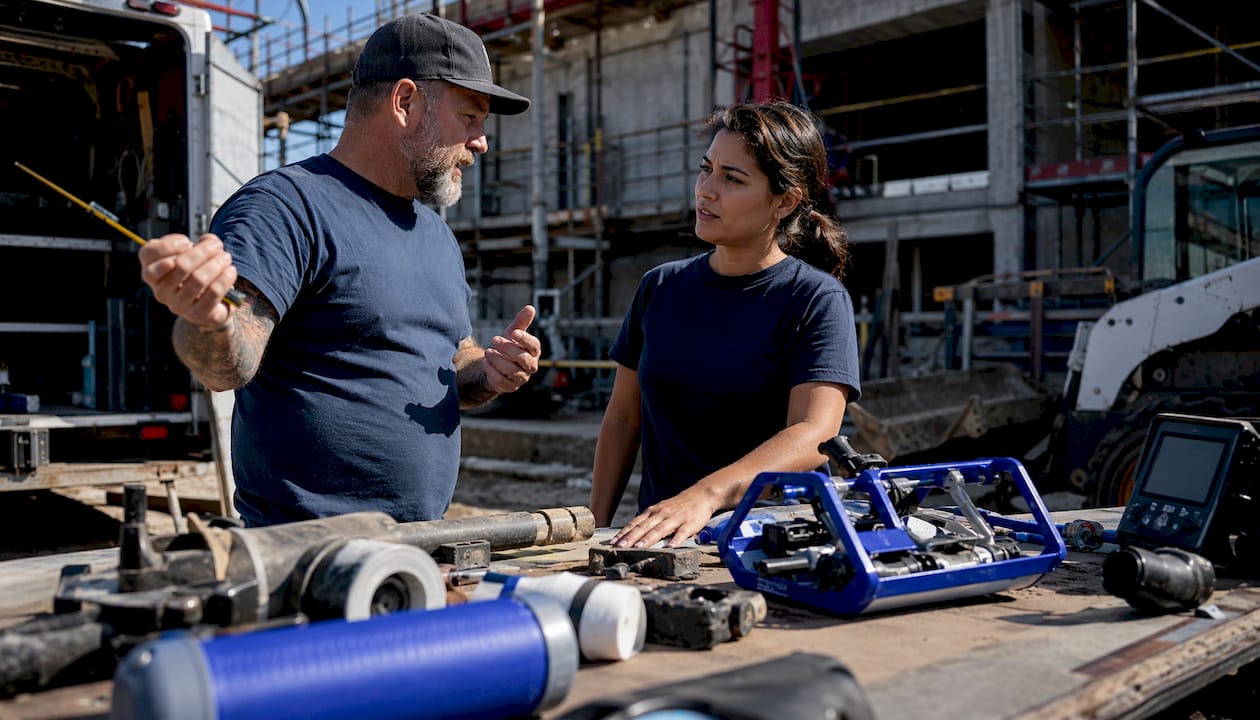
Comparing pipe repair costs across methods requires more than a per-foot number. The method you choose determines how much of your yard, driveway, or slab gets disturbed — and that restoration work often costs more than the pipe work itself.
| Method | Typical Cost (per linear foot) | Typical Project Total | Best For | Disruption & Restoration | Timeline | Lifespan / Warranty |
|---|---|---|---|---|---|---|
| Spot repair | N/A (per job) | $500–$3,000 | Single isolated failure, accessible pipe | Low; minimal excavation | 1–4 hours | Varies; no standard warranty |
| CIPP lining | $80–$250/ft | $3,000–$5,000 minimum for small jobs | Cracked, corroded, or root-intruded pipe with intact host | Very low; 1 access pit | 1–2 days | 25–50+ years |
| Pipe bursting | $60–$300/ft | $2,400–$6,000 | Collapsed or severely deformed pipe; upsizing needed | Moderate; 2 access pits | 1–2 days | 50+ years (HDPE) |
| Epoxy coating / pipe restoration | — | low thousands | Pinhole leaks, minor corrosion in water supply lines | Very low | 1 day | up to 50 years |
| Traditional open-cut replacement | $50–$250/ft (plus restoration) | $8,000–$25,000 | Severely collapsed pipe, complex grade changes | High; full excavation | 3–7 days | 50+ years |
| Whole-house repipe (PEX) | N/A (per project) | $4,500–$6,000 | Aging galvanized or polybutylene throughout home | High; wall and ceiling access | 3–5 days | 25–50 years |
| Whole-house repipe (copper) | N/A (per project) | $10,000–$15,000 | Premium repipe, code-required material upgrade | High | 4–7 days | 50+ years |
A few trade-offs worth understanding before you pick a method:
- CIPP lining costs 30–50% more per linear foot than open-cut excavation for the pipe installation itself, but restoration savings frequently offset that gap when hardscape or landscaping is involved.
- Pipe bursting requires two access pits. If those pits fall under a driveway or concrete patio, restoration can add thousands to the total — sometimes more than the pipe work.
- Open-cut replacement can look cheap per foot until you price the driveway, lawn, or slab repair. A 40-foot run under a custom paved driveway can generate $10,000–$15,000 in restoration alone.
- NASSCO PACP scoring matters here: if a pipe scores in the structural failure range, lining is not permitted under most codes. Severely collapsed or offset pipe requires bursting or open-cut.
For non-invasive repair options like CIPP and pipe patching, the key qualifier is that the host pipe must be continuous enough to hold a liner. A camera inspection before bidding is the only reliable way to confirm that.
What factors drive your final pipe repair price?
Per-foot estimates give you a starting point, but access difficulty is often the largest single line item on a pipe repair invoice — and it is the one most homeowners underestimate. A repair that costs $800 in an exposed basement can run up to $3,000 under a concrete slab once you add cutting, tunneling, and slab restoration.
The major cost drivers, ranked by impact:
- Access difficulty: Exposed basement or crawl space = 1.0x baseline. Behind walls = approximately 1.35x. Under slab = approximately 1.7x or higher. Slab leak detection alone typically costs $150–$400 before any repair work begins.
- Pipe material: PEX and PVC are the least expensive to repair. Copper and cast iron cost more due to material price and labor complexity. Galvanized steel in older homes often requires full replacement to meet current code.
- Footage and diameter: A 6-inch sewer lateral requires significantly more liner resin and larger equipment than a 4-inch line. Every additional foot adds both material and labor cost.
- Local labor rates: Plumbers charge $45–$200 per hour nationally, with Northeast and West Coast markets at the higher end. In Maine, rates track closer to the Northeast range.
- Permit and inspection fees: Permit fees commonly add $50–$500 to a project and are mandatory in most Maine jurisdictions. Some municipalities require a separate inspection fee on top of the permit.
- Emergency timing: After-hours, weekend, or holiday calls add a 1.5x–2x surcharge to standard rates. When the situation is not an active flood, waiting until the next business day saves real money.
- Restoration needs: Drywall repair runs $50–$75 per square foot. Landscaping replacement costs $4–$12 per square foot. Concrete slab replacement runs $6–$12 per square foot. These numbers add up fast on any open-cut job.
Pro Tip: Before accepting any quote, check your local municipality's permit fee schedule online. Permit costs vary widely by jurisdiction and are sometimes omitted from initial bids — then added as a change order after you have already signed.
A quick comparison illustrates the access multiplier in practice. The same 20-foot section repair under an exposed basement might total $900 in pipe work and labor. Move that same repair under a concrete slab, and you add substantial additional costs for slab access and concrete restoration, turning a $900 job into several thousand dollars all-in.
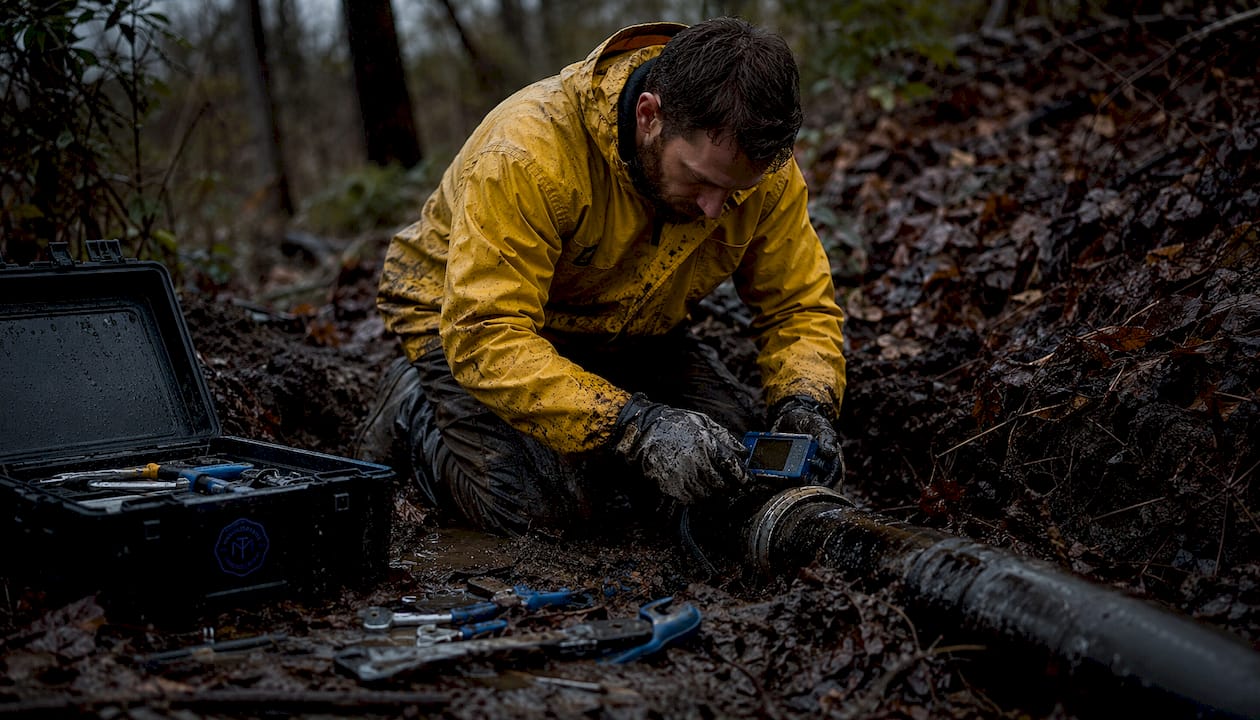
For a deeper breakdown of sewer repair cost factors specific to Maine properties, the variables around soil type, frost depth, and municipal permit requirements add additional layers worth reviewing before you request bids.
How do you build a realistic all-in cost estimate?
The most common budgeting mistake is stopping at the contractor's per-foot quote. A defensible estimate requires you to build up from diagnostics through restoration, then add a contingency. Here is a step-by-step method that works for both homeowners and property managers.
- Run an HD sewer camera inspection first. A camera inspection costs $125–$500 and tells you pipe condition, damage location, root intrusion, and whether the host pipe can support lining. Without it, you are guessing at method and footage — and contractors will price in that uncertainty.
- Hydro jet before bidding when buildup is present. Grease, scale, and root debris can obscure the true pipe condition on camera. Hydro jetting clears the line so the follow-up inspection gives an accurate picture. It also confirms whether lining is viable.
- Measure the run. Count linear feet from cleanout to connection point. Note any bends, offsets, or diameter changes — each adds cost.
- Identify your access method. Is the pipe exposed, behind a wall, under a slab, or under a driveway? This single variable can multiply your base labor cost by 1.35x–1.7x or more.
- List all restoration needs. Concrete, drywall, flooring, landscaping, or hardscape that must be repaired after access. Price each separately using the per-square-foot ranges above.
- Check local permit fees. Call your municipality or check online. Add the actual fee, not a guess.
- Add a 15–25% contingency. Hidden root damage, unexpected pipe offsets, and soil conditions routinely expand scope once work begins.
- Schedule during business hours. Avoid the emergency premium unless the situation demands immediate action.
A step-by-step pipe costing method starts from a per-foot base rate, then layers in diagnostics, permit fees, restoration, and contingency to reach a defensible total project number.
Sample calculation — 40-foot sewer lateral, CIPP lining, under lawn:
| Line Item | Estimated Cost |
|---|---|
| HD camera inspection | $250 |
| Hydro jetting (pre-lining clean) | $400 |
| CIPP lining (40 ft × $150/ft avg) | $6,000 |
| Access pit restoration (lawn) | $500 |
| Permit fee | $300 |
Typical timeline by method:
| Method | Typical Completion Time |
|---|---|
| Spot repair (accessible) | 2–4 hours |
| CIPP trenchless lining | 1–2 days |
| Pipe bursting | 1–2 days |
| Open-cut section replacement | 2–4 days |
| Whole-house repipe | 3–7 days |
What should you ask contractors before signing a bid?
Getting three bids is standard advice. Getting three comparable bids is what actually protects your budget. Most low bids look attractive because they omit restoration, permits, or disposal — not because the contractor is more efficient.
Questions to ask every contractor:
- Is this quote itemized by diagnosis, access method, pipe work, restoration, permit, and disposal?
- What camera inspection findings support this method recommendation?
- Does the quote include permit application and inspection scheduling?
- What is the written warranty on the pipe work, and what does it cover?
- Who handles surface restoration — your crew or a subcontractor, and is it in this quote?
- What is the timeline from start to final inspection?
- What happens if you find additional damage once work begins?
Red flags that should make you pause:
- No camera inspection before quoting (the contractor is guessing at scope)
- Lump-sum quote with no line-item breakdown
- Restoration described as "owner's responsibility" with no scope or cost estimate
- No permit line item for work that clearly requires one
- Verbal warranty only, or warranty limited to materials but not labor
- No written timeline or project schedule
On warranty: CIPP liners typically carry manufacturer warranties of 25–50 years when installed to NASSCO standards, and Trenchlessmaine backs its lining work with warranties up to 50 years. Traditional open-cut replacement with new PVC or HDPE pipe generally carries a 1–10 year labor warranty from the contractor, with the pipe material itself rated for 50+ years. Always request the warranty in writing and confirm it covers both materials and installation labor.
For a practical guide on what pipe patching covers versus full lining, reviewing the scope differences before your contractor conversation helps you ask sharper questions.
Trenchless vs. traditional: two real-world cost scenarios
The math on trenchless versus open-cut replacement shifts dramatically based on what sits above the pipe. These two scenarios show how restoration changes the economics more than the pipe method itself.
Case A: 40-foot sewer lateral under lawn
| Cost Item | Open-Cut Excavation | CIPP Lining |
|---|---|---|
| Camera inspection | $250 | $250 |
| Pipe work (labor + material) | — | $6,000 (at $150/ft) |
| Excavation / access | $1,200 | $200 (single pit) |
| Lawn restoration | low thousands | $300 |
| Permit | $300 | $300 |
Under lawn, the totals are close. CIPP lining costs more per foot for the pipe work, but the minimal excavation and faster lawn restoration close the gap. The real advantage here is time on site: CIPP typically finishes in 1–2 days versus 3–4 days for open-cut.
Case B: 60-foot lateral under driveway or hardscape
| Cost Item | Open-Cut Excavation | CIPP Lining |
|---|---|---|
| Camera inspection | $250 | $250 |
| Excavation / access | — | $400 (two access pits) |
| Driveway/hardscape restoration | $10,000–$15,000 | $800 |
| Permit | $400 | $400 |
Under a driveway, the economics flip hard. Trenchless methods reduce surface-restoration costs substantially, and on a hardscape job, CIPP lining can save $6,000–$13,000 in total project cost despite the higher per-foot installation price. This is the scenario where the "trenchless costs more" assumption breaks down completely.
One more scenario worth flagging: repeated spot repairs on aging cast iron can accumulate $6,000–$7,500 over 5–7 years — often approaching or exceeding the cost of a single trenchless replacement that comes with a 50-year warranty. If your pipe has failed twice in three years, the math on replacement usually wins.
Trenchlessmaine's standard workflow on a lateral job combines HD camera inspection, hydro jetting to clear the line, CIPP lining, and a post-lining camera verification. That sequence reduces time on site, eliminates guesswork about pipe condition, and produces a documented record for warranty purposes. For a detailed trenchless vs. excavation cost breakdown specific to Maine conditions, the site walks through the same math with local labor and permit context.
Key Takeaways
Trenchless lining is typically the lower total-cost option when hardscape or landscaping sits above the pipe, even though its per-foot installation price runs 30–50% higher than open-cut excavation.
| Point | Details |
|---|---|
| Use the 30–40% rule | If near-term repair costs approach 30–40% of replacement, full replacement usually delivers better long-term value. |
| Access drives cost more than method | Under-slab or under-driveway access can multiply base labor cost by 1.35x–1.7x or more, often exceeding the pipe work itself. |
| Always build an all-in estimate | Add diagnostics, permits ($50–$500), restoration, and a 15–25% contingency to any per-foot quote before comparing bids. |
| Avoid emergency premiums | Scheduling during business hours saves 1.5x–2x on labor rates when the situation is not an active emergency. |
| Trenchlessmaine for Maine laterals | Trenchlessmaine's CIPP lining, hydro jetting, and HD camera workflow typically completes in 1–2 days with warranties up to 50 years. |
Why a trenchless-first approach makes sense for most Maine homeowners
Most pipe repair guides lead with method descriptions and bury the cost logic. The more useful frame is this: the method that minimizes total cost of disruption is almost always the right starting point, and in most Maine residential scenarios, that method is CIPP lining when the pipe condition allows it.
The case for trenchless-first rests on a few concrete realities. Maine's frost depth and soil conditions mean excavation jobs routinely encounter complications — rocky ledge, high groundwater, and frost-heaved pipe sections that add scope once the trench is open. Those surprises are priced into open-cut bids as contingencies, or they show up as change orders. A CIPP liner, by contrast, goes in through access pits and does not require the contractor to open the full run.
There are situations where open-cut wins outright. A short 10–15 foot run in an exposed basement with no hardscape above it is often cheaper to cut and replace than to line. A severely collapsed pipe with no continuous host structure cannot be lined at all — pipe bursting or open-cut replacement is the only viable path. And when a pipe needs to be upsized (say, from 4 inches to 6 inches to address chronic backups), pipe bursting is the trenchless method that accomplishes that.
The honest answer on trenchless versus traditional is that neither method wins universally. What wins is the right diagnostic before the bid. An HD sewer camera inspection and a NASSCO-informed condition assessment tell you which methods are even on the table — and that information is worth the $250–$500 it costs before you commit to anything.
Trenchlessmaine: skip the excavation, get a clear quote
Trenchlessmaine delivers the full diagnostic-to-repair workflow that makes pipe repair cost comparisons actually useful: HD sewer camera inspection to confirm pipe condition, hydro jetting to clear the line when needed, CIPP lining for qualifying laterals, and trenchless replacement options for pipes that are too far gone to line. Every quote separates diagnosis, pipe method, access, and restoration into individual line items — so you can see exactly what you are paying for and compare it against any other bid on equal terms.
The warranty backing that work is up to 50 years on CIPP lining, and most trenchless jobs complete within 24 hours. For Maine homeowners and property managers dealing with aging sewer laterals, root intrusion, or recurring backups, that combination of speed, minimal disruption, and long-term coverage is worth a direct conversation. Request an inspection or itemized quote to find out whether your pipe qualifies for trenchless lining and what the all-in cost looks like for your specific property. You can also review Trenchlessmaine's dedicated CIPP pipe lining service page for technical details and warranty specifics.
Useful sources and further reading
External research sources used in this guide:
- Pipe Repair Cost Guide: National Pricing Benchmarks — CIPP per-foot ranges, restoration trade-offs, and access multipliers
- Cast Iron Pipe Repair vs. Replacement Decision Guide — spot repair ranges, full replacement costs, and cumulative repair math
- Pipe Repair Cost in 2026 (Plumbing Price Guide) — national average for accessible repairs, emergency multipliers, slab leak detection costs
- Pipe Leak Repair Cost (Angi) — labor rate ranges, city-by-city cost comparisons, restoration cost breakdowns
- Pipe Leak Repair Cost (HomeGuide) — camera inspection fees, repair cost by pipe type and location
- Pipe Repair Cost Calculator (HomeCostCalc) — permit fee ranges, access multipliers, whole-house repipe tiers
- Pipe Bursting vs. Pipe Lining Costs (Plumbing Guider) — method comparison table, regional cost multipliers, 40-foot scenario examples
- Step-by-Step Pipe Costing Method (LinkedIn) — per-unit cost calculation methodology
Trenchlessmaine resources for deeper reading:
- Trenchless vs. excavation cost breakdown for Maine
- Types of underground pipe repairs: homeowner guide
- Cost-effective pipe lining guide for homeowners in 2026
- Sewer repair cost factors explained for homeowners
- What is trenchless sewer repair? Benefits for Maine homeowners
This guide is general information for planning and budgeting purposes. Pipe repair costs vary by location, pipe condition, and site-specific factors. Confirm current permit requirements and code standards with your local municipality or a licensed plumber before proceeding with any repair work.