
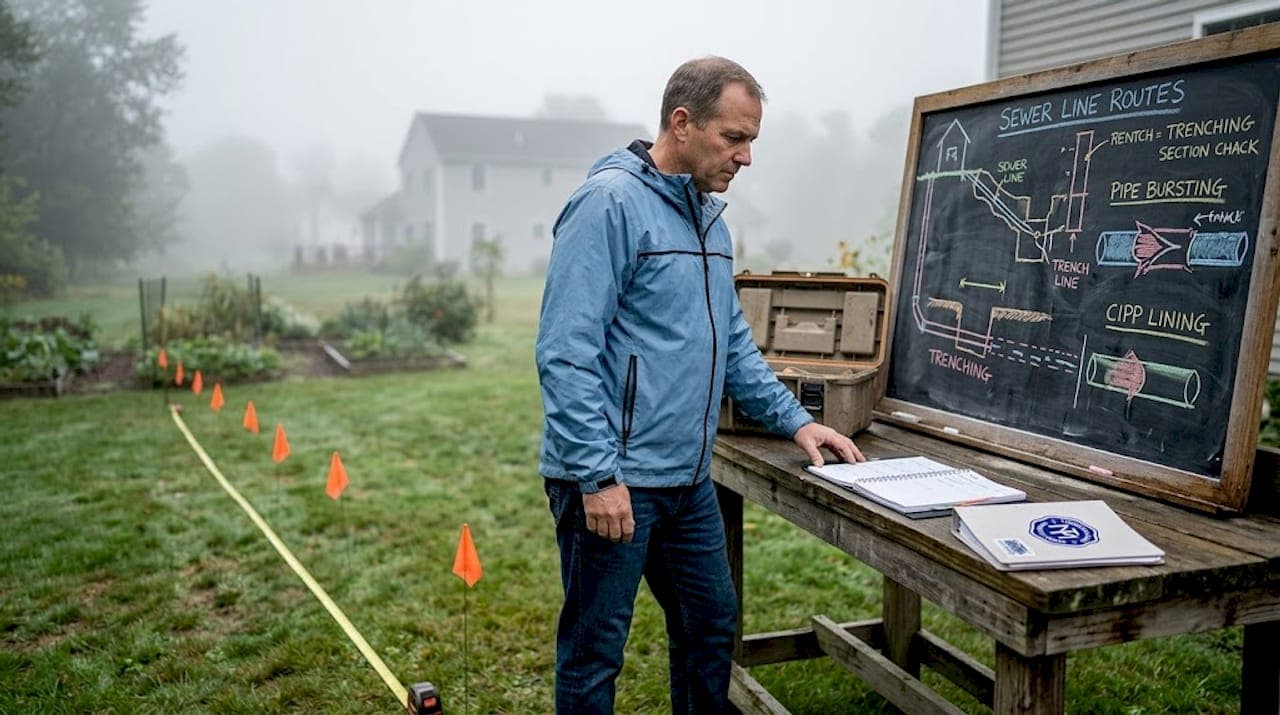
Sewer repair costs confuse most homeowners for one simple reason: the price range is enormous. With sewer repair cost factors explained clearly, you realize why one neighbor pays $1,500 and another pays $12,000 for what sounds like the same job. The average repair runs about $3,319, but that number means very little without understanding what drives it up or down. Pipe material, access, depth, repair method, permits, and labor rates all stack on top of each other. This guide breaks every factor down so you can evaluate quotes with confidence and protect your property budget.
Table of Contents
- Key takeaways
- Sewer repair cost factors explained: what drives the price
- Repair methods and how they affect total cost
- Additional cost influencers you may not expect
- Common pitfalls that cause cost overruns
- Budgeting realistically for sewer repair
- My perspective on navigating sewer repair costs
- How Trenchlessmaine can help you manage repair costs
- FAQ
Key takeaways
| Point | Details |
|---|---|
| Costs vary widely | Per-foot pricing runs $60 to $250, but property-specific factors push totals far beyond the base rate. |
| Pipe material matters significantly | Cast iron and Orangeburg pipe costs dwarf PVC, and older materials often require more complex repair methods. |
| Trenchless saves on restoration | Trenchless methods eliminate $2,000 to $8,000 in surface restoration costs that excavation always adds. |
| Permits protect your finances | Skipping permits risks insurance denial if something goes wrong after the repair. |
| Early action prevents emergencies | Delaying small sewer issues can escalate repair costs into the tens of thousands of dollars. |
Sewer repair cost factors explained: what drives the price
Before you can accurately estimate sewer repair expenses, you need to understand that no two jobs are identical. The base per-foot price is just the starting point. Several property-specific variables determine whether your final bill sits at $2,000 or climbs past $10,000.
Pipe material
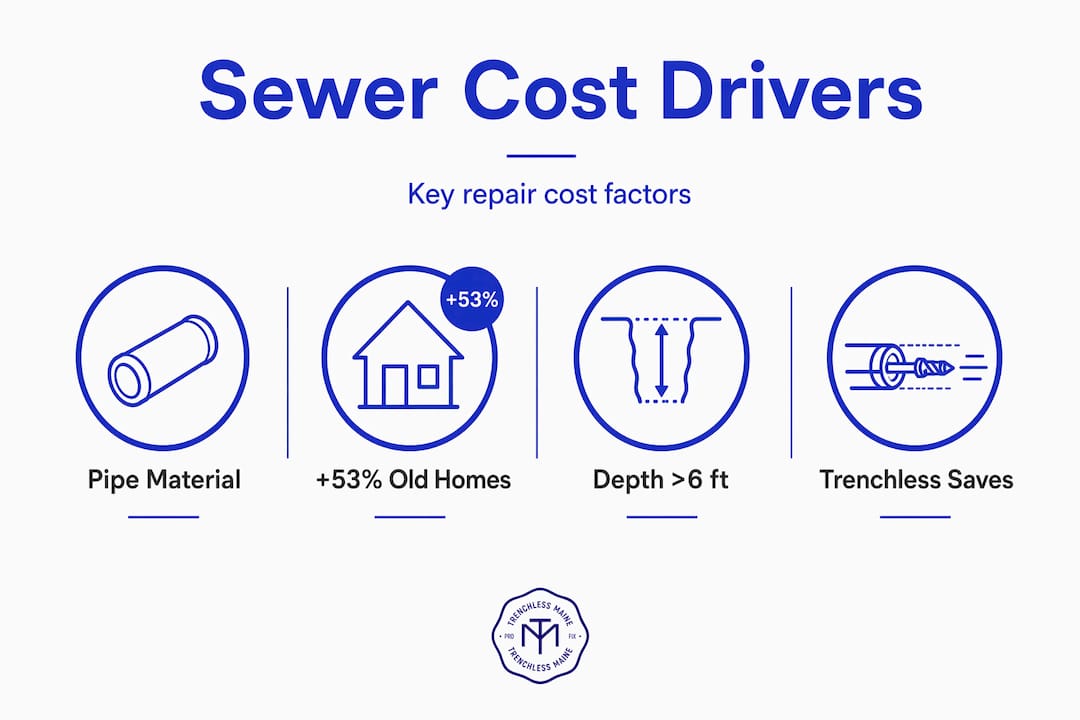
The material your sewer line is made of affects both the repair method available and the price per foot. PVC pipe costs around $4.50 per foot, is durable, and works well with trenchless lining. Cast iron, common in homes built before the 1970s, runs roughly $50 per foot and requires specialized cutting equipment. Orangeburg pipe (a compressed wood fiber material used from the 1940s through the 1970s) is perhaps the most problematic. It deteriorates over time, collapses under ground pressure, and almost always requires full excavation and replacement. Clay pipe, common in even older homes, is brittle and prone to root intrusion, making repairs more labor-intensive and costly.
Depth and accessibility
Deeper sewer lines mean more labor. Lines buried more than six feet require shoring (temporary support structures to prevent trench walls from collapsing), specialized equipment, and longer hours. Deep sewer lines add 20 to 40% to overall labor costs compared to shallower installations. Accessibility compounds this. A line running under an open lawn costs far less to access than one running under a concrete driveway, patio, or slab foundation. Concrete removal and restoration alone can add $3,000 to $10,000 to the total project cost.
Property age
If your home was built before 1940, budget accordingly. Pre-1940 homes cost 53% more to repair than homes built after 2000. The reasons are layered: older homes often have multiple pipe materials joined together, deteriorated connections at the city tap, and infrastructure that was never designed for modern diagnostics. Trenchless methods sometimes cannot navigate these systems cleanly, which means excavation becomes the only practical option.
| Factor | Lower cost scenario | Higher cost scenario |
|---|---|---|
| Pipe material | PVC (durable, trenchless-compatible) | Orangeburg or cast iron (complex repair) |
| Line depth | Under 4 feet | Over 6 feet (shoring required) |
| Access | Open lawn | Under concrete slab or driveway |
| Property age | Post-2000 construction | Pre-1940 home |
Pro Tip: Before signing any repair contract, ask your contractor specifically what pipe material you have and how deep the line runs. These two answers alone will tell you whether you are looking at a routine repair or a complex project.
Repair methods and how they affect total cost
The method used to repair your sewer line has as much impact on final cost as the physical condition of the pipe itself. Two methods dominate the industry: traditional open-trench excavation and trenchless techniques. Understanding the sewer repair expenses breakdown between these two approaches is critical to making a sound financial decision.
Traditional excavation
Open-trench excavation involves digging a trench along the path of the damaged pipe, removing and replacing the affected section, and then restoring everything disturbed during the dig. The per-foot pipe cost may appear lower on paper, but excavation projects carry significant hidden costs:
- Landscaping removal and replanting
- Driveway or concrete demolition and repaving
- Extended project timelines of 5 to 14 days or longer
- Possible need for temporary sanitation arrangements
- Hauling away excavated soil and debris
These restoration expenses routinely add $2,000 to $8,000 on top of the base repair price.
Trenchless methods: pipe bursting and CIPP lining
Trenchless repairs access the pipe through small entry points rather than a full trench. Pipe bursting fractures the old pipe outward while simultaneously pulling a new pipe into place. CIPP (cured-in-place pipe) lining inserts a resin-saturated liner into the existing pipe, which hardens into a smooth, durable new interior surface. Both methods typically complete in 1 to 3 days rather than a week or more.
The per-foot cost for trenchless work is sometimes comparable to or slightly higher than excavation, but trenchless methods frequently lower the overall cost by eliminating restoration expenses. For a homeowner with a paved driveway over the sewer line, trenchless is not just more convenient. It is almost always cheaper when you account for everything. You can read a detailed cost comparison here if you want to run the numbers for your specific situation.
Pro Tip: When comparing quotes for traditional vs. trenchless repair, always ask each contractor to itemize restoration costs separately. A trenchless quote that looks higher upfront often becomes the clear winner once restoration is factored in.
One important limitation: trenchless methods require that the pipe still has a continuous, accessible path. Fully collapsed or severely bellied pipes cannot be lined or burst through. In those situations, excavation is not optional, it is the only path forward.
Additional cost influencers you may not expect
Several factors fall outside the physical repair itself but still land squarely in your final bill. These are among the most overlooked cost factors for sewer repair, and they catch many homeowners off guard.
Permits and municipal requirements. Most municipalities require a permit for sewer lateral work, and some require a separate encroachment permit when work crosses into public right-of-way. Permit fees vary by location but typically run $200 to $600. More importantly, unpermitted sewer work risks insurance denial if the repair fails and causes property damage. This is not a place to cut corners.
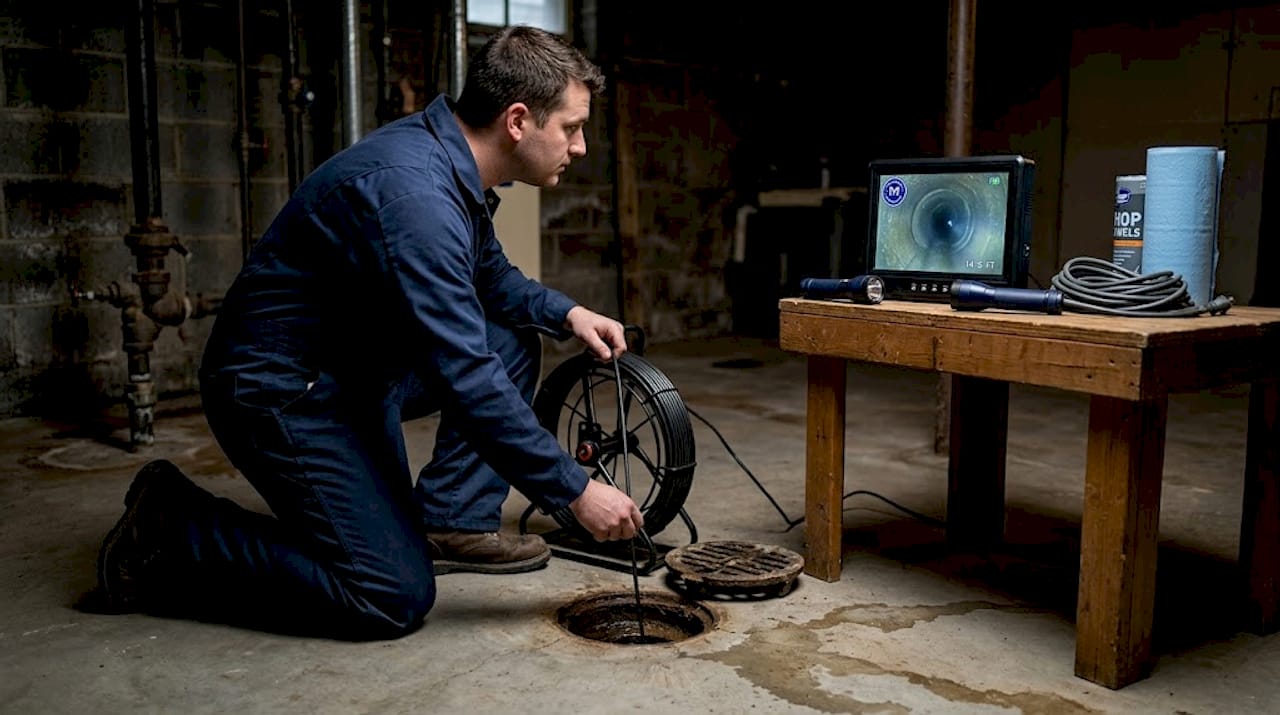
Video camera inspection. A professional video scope of your sewer line typically costs $150 to $350 for a standard appointment. It is the only reliable way to confirm exactly where damage is, what the pipe material is, and whether trenchless methods are viable. Skipping it often results in contractors discovering mid-project complications, which always costs more. You can see what a camera inspection involves before scheduling.
Labor rates by region. Labor accounts for roughly 50% of the total repair cost, with hourly rates ranging from $45 to $200 depending on your region, the contractor's experience, and job complexity. In Maine, labor rates fall in the mid range, but complex jobs with shoring requirements or specialized equipment will push toward the higher end.
Emergency and after-hours surcharges. A sewage backup at 10 p.m. on a Friday is not a situation where you can wait until Monday. Emergency after-hours inspections alone run $300 to $700, and full emergency repair crews command premium hourly rates. Knowing the warning signs of a failing sewer line before you reach that point can save you several thousand dollars.
Common pitfalls that cause cost overruns
Most budget surprises in sewer repair are preventable. Here are the most frequent mistakes homeowners make and how to avoid them:
-
Waiting too long to act. Minor root intrusion or a small crack is a manageable repair. Left alone for a season or two, it becomes a full collapse or sewage backup. Neglected sewer problems can reach $50,000 or more when foundation damage enters the picture. Getting a camera inspection at the first sign of trouble is far cheaper than emergency excavation later.
-
Accepting the first quote. Sewer line repair pricing varies considerably between contractors. Get at least three written quotes that itemize labor, materials, permits, and restoration separately. A quote missing any of these categories is incomplete.
-
Skipping the permit. Some contractors will offer to skip the permit to save time or money. Do not agree to this. Unpermitted work creates real financial and legal liability and voids insurance coverage if something fails post-repair.
-
Not confirming what restoration is included. Ask directly: does this quote include driveway restoration? Landscaping replacement? Soil compaction? Many homeowners receive a repair quote, approve it, and then discover restoration costs are billed separately afterward.
-
Ignoring early warning signs. Slow drains, gurgling toilets, and unusually lush grass growing in a strip across your yard are not coincidences. They are signals. Acting on them early keeps you out of plumbing emergency territory.
Pro Tip: Ask your contractor directly: "What would change this estimate?" A good contractor will walk you through the scenarios. If they cannot answer this question, that tells you something.
Budgeting realistically for sewer repair
With the cost factors for sewer repair now clear, you can build a more accurate working budget. Use the structure below as a framework.
Start with per-foot pricing. Measure or estimate the length of pipe needing repair. Multiply by the per-foot rate appropriate for your pipe material and method. The realistic range is $60 to $250 per linear foot depending on all the factors discussed above.
Layer in factor multipliers:
- Concrete or driveway overhead: add $3,000 to $10,000
- Pre-1940 home: add approximately 50% to base cost
- Depth over 6 feet: add 20 to 40% to labor
- Emergency timeline: add 25 to 50% to total
- Permits and inspection: budget $400 to $1,000
| Scenario | Estimated range |
|---|---|
| Simple repair, accessible lawn, modern home | $1,500 to $3,500 |
| Trenchless lining, moderate length, post-2000 home | $3,000 to $6,000 |
| Excavation under concrete, older property | $7,000 to $14,000 |
| Full line replacement, pre-1940 home, deep line | $12,000 to $20,000+ |
When weighing repair versus replacement, consider how many times a section has been repaired before. A pipe that has needed attention twice in five years is telling you it needs full replacement, not another spot fix. Trenchless lining, with warranty coverage extending to 50 years with some providers, can make full rehabilitation a smarter long-term investment than repeated spot repairs.
My perspective on navigating sewer repair costs
I have seen homeowners do nearly everything right when choosing a contractor and still end up with unexpected costs, simply because they did not know what questions to ask upfront. The biggest mistake I observe consistently is treating a verbal quote as a commitment. It is not. Every sewer repair quote should be written, itemized, and signed before work begins.
The other pattern I notice is a reluctance to spend $200 to $300 on a camera inspection before anything else. Homeowners either want to skip straight to repair or they trust a contractor's verbal assessment of the problem. A camera inspection is the only way to know exactly what you are dealing with, and it gives you the documentation to compare quotes accurately. Without it, you are guessing.
On trenchless technology: I think it is genuinely reshaping cost expectations for most residential jobs, but with real limits. It is not a solution for every pipe. When contractors push trenchless on a pipe that needs full replacement, the short-term savings evaporate quickly. Get the diagnosis first, then evaluate the method.
My core advice is this: act early, get the scope done, pull the permit, and get three written quotes. Those four steps alone will protect you from the majority of cost overruns I have seen homeowners face.
— John
How Trenchlessmaine can help you manage repair costs
Understanding what affects sewer repair cost is the first step. The next is finding a contractor who can deliver an honest diagnosis and the right repair method for your property.

Trenchlessmaine specializes in no-dig sewer repair technologies that eliminate the surface restoration costs that make traditional excavation so expensive. With CIPP lining, pipe bursting, and hydro jetting services across Maine, Trenchlessmaine handles everything from camera diagnosis to final repair, often completing projects within 24 hours. Warranties extend up to 50 years. Before you commit to any repair approach, review the full range of trenchless services Trenchlessmaine offers, then reach out for a transparent, itemized quote backed by over 50 years of combined team experience.
FAQ
What is the average sewer line repair cost?
The average sewer repair costs about $3,319, with a typical range between $1,388 and $5,323. Per-foot pricing runs $60 to $250 depending on pipe material, depth, and repair method.
Does trenchless repair actually cost less than excavation?
Trenchless methods often cost less in total because they eliminate $2,000 to $8,000 in surface restoration expenses. The per-foot price may be similar, but the overall project cost is frequently lower.
Why does my home's age affect sewer repair prices?
Older homes, particularly those built before 1940, have complex, often deteriorated infrastructure that increases labor, diagnostic difficulty, and material costs. Pre-1940 homes cost about 53% more to repair than homes built after 2000.
What happens if I skip a permit for sewer repair?
Unpermitted sewer work puts your insurance coverage at risk if the repair fails and causes subsequent damage. It can also create legal liability and affect your ability to sell the property.
How long does a trenchless sewer repair take?
Trenchless repairs typically take 1 to 3 days compared to 5 to 14 days or longer for traditional open-trench excavation, significantly reducing inconvenience and any associated costs tied to project duration.