
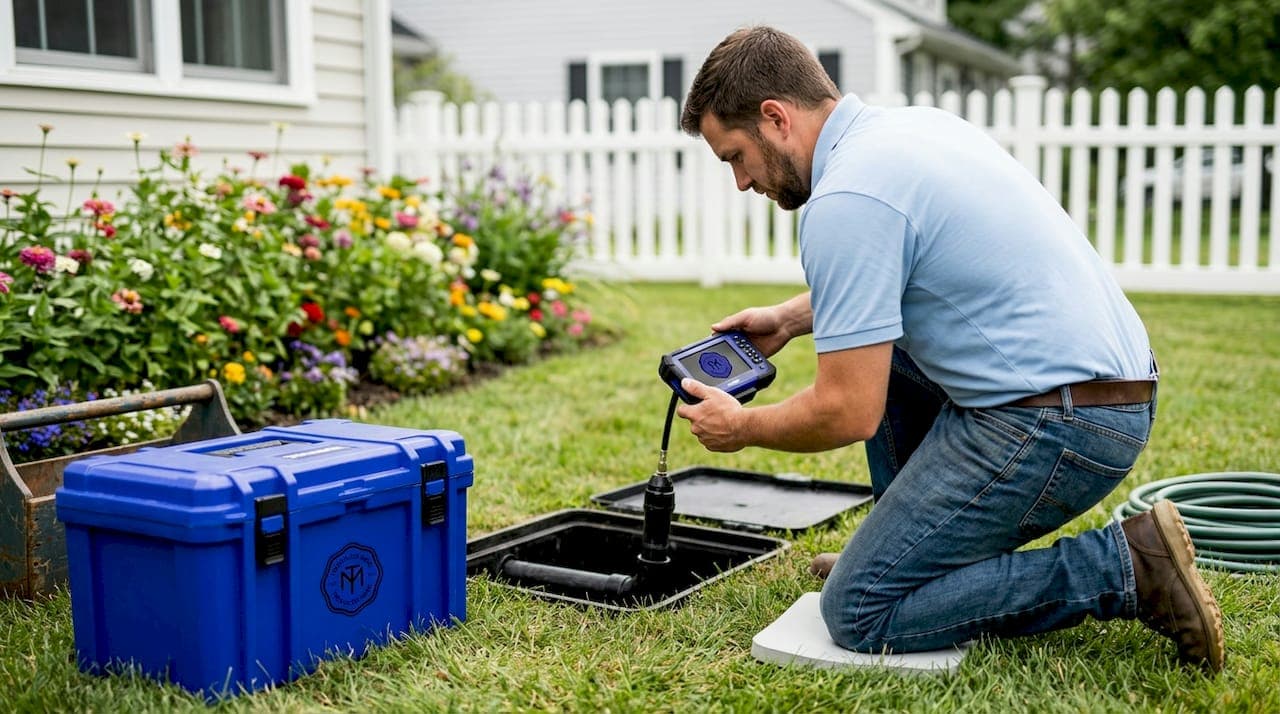
When something goes wrong beneath your yard, knowing the types of underground pipe repairs available can save you thousands of dollars and weeks of disruption. Underground plumbing repairs are not one-size-fits-all. From a slow drain caused by root intrusion to a fully collapsed sewer lateral, each problem has a matching solution, and picking the wrong one costs you twice. This guide breaks down every major pipe repair method, what it costs, how long it lasts, and when to use it.
Table of Contents
- Key takeaways
- What to consider before choosing underground pipe repair types
- Five common underground pipe repair methods explained
- Four additional repair methods worth knowing
- Comparing underground pipe repair methods at a glance
- How to match the right repair to your specific situation
- My honest take on how homeowners get this wrong
- See how Trenchless Maine handles underground pipe repairs
- FAQ
Key takeaways
| Point | Details |
|---|---|
| Match method to damage | The severity and type of pipe damage determines which repair method is appropriate and cost-effective. |
| Trenchless saves money | Trenchless methods can cost 30–60% less than open-cut excavation and often finish in a single day. |
| CCTV inspection first | Always get a camera inspection before any repair to confirm what method is feasible for your pipes. |
| Not all trenchless is dig-free | Even trenchless repairs typically require one or two small access pits, so expect minor landscaping impact. |
| Longevity varies widely | Repair lifespans range from a few years for mechanical clamps to 50+ years for properly installed CIPP lining. |
What to consider before choosing underground pipe repair types
Before you call a contractor, you need a clear picture of what you are dealing with. The right repair method depends on several factors working together, and skipping this step leads to mismatched solutions and wasted money.
Damage type and extent. Not all pipe failures look the same.
- Hairline cracks and small fractures respond well to lining methods
- Root intrusion requires cutting or lining depending on severity
- Full pipe collapse or severe back-pitching may rule out trenchless options entirely
- Joint misalignment from shifting soil is one of the most common causes of sewer failure
Pipe material and diameter. Older clay or cast iron pipes behave differently than modern PVC. Diameter also matters because some lining methods reduce internal flow space slightly, which could matter for smaller residential pipes.
Access and yard conditions. Do you have mature landscaping, a driveway over the pipe run, or a pipe running under your home's foundation? Each of these affects which methods are physically possible.
Budget and timeline. Some repairs take a single afternoon. Others require permits, excavation crews, and surface restoration that adds thousands to the bill. Know your constraints before you sit down with a contractor.
Pro Tip: Ask every contractor for a written scope that specifies the repair method, access points, and what surface restoration is included. Vague bids are how cost surprises happen.
Five common underground pipe repair methods explained
Understanding pipe repair methods starts with the options used most frequently by professionals. Here are the five you will encounter most often.
1. Cured-in-place pipe (CIPP) lining
CIPP is the most widely used trenchless repair method for residential sewer lines. A resin-saturated liner is inserted into the damaged pipe and inflated against the interior walls. Once the resin cures, you have a new pipe inside your old one.
CIPP works exceptionally well for cracked pipes, minor root intrusion, and joint deterioration. It is a permanent fix that can last 50 years or more with proper installation. The one caveat: CIPP slightly reduces internal pipe diameter, so for very small-diameter pipes, confirm with your contractor that flow capacity will not be affected.
Pro Tip: For Maine homeowners, CIPP is especially practical in winter because most installations can be completed indoors using small access pits rather than full outdoor excavation.
2. Pipe bursting
Pipe bursting is the go-to method when your pipe is too damaged for lining but you do not want full excavation. A bursting head is pulled through the old pipe, fracturing it outward while simultaneously pulling a new pipe into position.
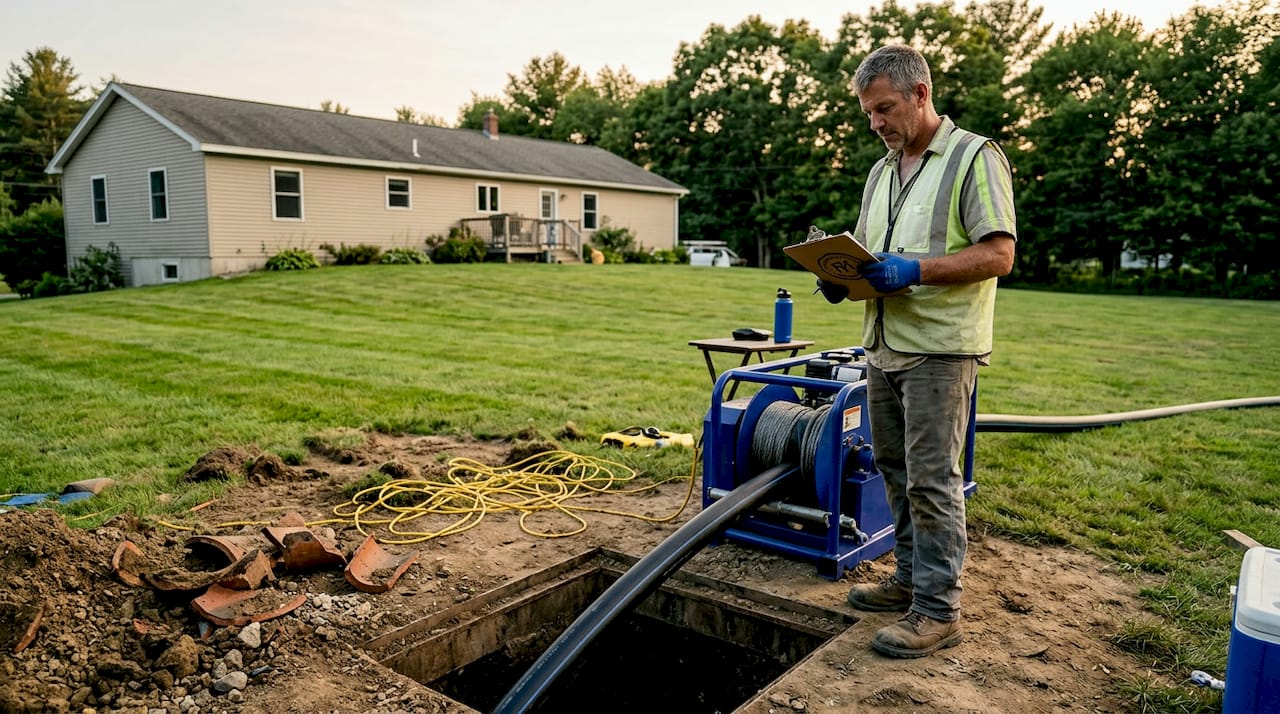
This method works for severely deteriorated pipes and also allows you to upsize to a larger diameter pipe at the same time, which is useful for homes with chronic flow capacity issues. It requires access pits at each end of the repair zone, but the rest of your yard stays intact. You can learn more about pipe bursting technology as it applies to Maine properties.
3. Slip lining
Slip lining involves inserting a smaller diameter pipe inside an existing damaged pipe and grouting the annular space between them. It is one of the oldest trenchless methods and works best on larger diameter pipes where the diameter reduction is acceptable.
For most residential sewer lines, the diameter loss is too significant. Slip lining is more commonly used in municipal or commercial applications. It does offer very long service life and works well for structurally compromised pipes that are still mostly intact.
4. Pipe clamps and mechanical couplings
These are short-term pipe leakage solutions for accessible, localized failures. A metal or rubber clamp is fitted directly over a crack or failed joint to stop leakage. Installation is fast, and costs are low.
The downside is that clamps do not address root intrusion or structural weakness beyond the immediate repair area. They work best as a stopgap fix until a more permanent solution can be scheduled, or for isolated leaks on accessible pipes that are otherwise in good condition.
5. Carbon fiber and fiberglass composite wraps
For pipes that need structural reinforcement without replacement, composite wraps apply layers of carbon fiber or fiberglass around the pipe exterior. These are more common in industrial settings but are used residentially on exposed pipes or in crawl spaces where direct access exists.
They add significant burst pressure resistance and are a good option for high-pressure lines. Underground application is limited because you need direct physical access to the pipe exterior.
Four additional repair methods worth knowing
The different types of pipe repair extend beyond the five methods above. These additional options cover specific situations that come up in real underground plumbing repair scenarios.
6. Spray-applied linings (epoxy and polyurea)
Spray lining involves applying a coating to the interior of a pipe using specialized spray equipment. Epoxy coatings are well established and provide corrosion resistance and minor crack sealing. Polyurea spray lining is a newer development that cures faster than epoxy and offers superior flexibility and chemical resistance.
Both options work well for pipes with widespread surface corrosion or minor porosity issues rather than structural damage. They are not suitable for pipes with significant cracks or joint separation.
Pro Tip: Spray lining works well as a preventive underground pipe maintenance measure on older metal pipes that are still structurally intact but showing early signs of corrosion.
7. Spiral wound lining
Spiral wound lining feeds a continuous strip of PVC or HDPE profile into an existing pipe, winding it into a tight liner. It is particularly useful for non-circular or deformed pipes because it conforms to irregular shapes. This makes it a strong option for older egg-shaped or oval municipal pipes, though it is less common in residential applications.
8. Traditional open-cut excavation
Some problems cannot be fixed without digging. Open-cut excavation remains necessary for fully collapsed pipes, severe back-pitching, or pipes that trenchless equipment cannot access. The process gives technicians direct visual and physical access to the entire failure zone, which makes it the most thorough option when the damage is catastrophic.
The trade-off is significant. Full surface restoration is required, work takes longer, and costs are higher. That said, it is sometimes the only responsible choice.
9. Tunneling under foundations
When a pipe runs beneath a home's foundation and fails, you face a dilemma. Tearing up interior floors is expensive and disruptive. Tunneling from underneath the foundation can solve the access problem without demolishing your flooring. Contractors excavate horizontally from outside the structure, creating a narrow tunnel to reach and repair the pipe without touching interior surfaces.
10. Hydro jetting as a maintenance method
Hydro jetting is not a structural repair, but it belongs in every conversation about underground pipe maintenance. High-pressure water clears grease buildup, soft root intrusion, and debris that causes blockages. Regular hydro jetting extends pipe life and can prevent conditions that lead to more serious structural failures. Tree roots and shifting soil are the two most common culprits behind sewer line problems, and catching them early with jetting and camera inspections avoids much larger repair bills.
Comparing underground pipe repair methods at a glance
This table gives you a direct comparison of the major repair methods on the four criteria that matter most to homeowners.
| Repair Method | Estimated Cost Range | Invasiveness | Expected Lifespan | Best For |
|---|---|---|---|---|
| CIPP lining | $3,000–$12,000 | Low (access pits) | 50+ years | Cracks, root intrusion, joint failure |
| Pipe bursting | $4,000–$15,000 | Low to moderate | 50+ years | Severely deteriorated pipes, upsizing |
| Slip lining | $2,000–$8,000 | Low | 30–50 years | Larger diameter, mostly intact pipes |
| Spray lining (epoxy/polyurea) | $1,500–$6,000 | Low | 20–40 years | Corrosion, porosity, minor cracks |
| Mechanical clamps | $200–$1,500 | Low to moderate | 5–15 years | Temporary or localized leak fixes |
| Open-cut excavation | $5,000–$25,000+ | High | 50+ years (new pipe) | Collapsed pipes, severe damage |
| Tunneling | $8,000–$20,000 | Moderate (exterior) | Depends on repair | Pipes under foundations |
Trenchless methods typically finish faster and cost less than traditional excavation, but they are not always the right fit. Pipe condition, diameter, and access all affect feasibility. A pipe that is too collapsed for a liner needs excavation, period.
One thing most homeowners overlook: trenchless methods still require access pits at one or both ends of the repair. These are much smaller than full trenches, but they do affect landscaping. Get a clear description from your contractor about exactly where those access points will be placed.
How to match the right repair to your specific situation
Knowing how to fix underground pipes effectively comes down to honest assessment. Start with a CCTV camera inspection. This is non-negotiable. Without video footage of the pipe's interior, no contractor can responsibly recommend a repair method. Any bid you receive without prior camera inspection should raise a red flag.
Here is a simple decision framework:
- Minor cracks or root intrusion with structurally sound pipe walls: CIPP lining or spray lining
- Severely deteriorated pipe that still has basic structure: Pipe bursting
- Isolated single-point leak with accessible pipe: Mechanical clamp as a temporary fix
- Completely collapsed pipe or severe misalignment: Open-cut excavation
- Pipe under a foundation: Tunneling combined with trenchless lining
- Corrosion prevention on older metal pipes still in good condition: Spray lining or proactive hydro jetting
When you get multiple bids, ask each contractor to specify which condition they found in the CCTV report and why their chosen method addresses it. Contractors who cannot explain the connection between their diagnosis and their repair recommendation are not worth hiring.
The cost of pipe repairs also depends heavily on how much restoration work is included in the quote. Surface restoration, permit fees, and cleanup can add 15 to 30 percent to a base repair cost. Confirm these line items in writing.
My honest take on how homeowners get this wrong
I have seen homeowners go through underground pipe repairs two or three times on the same section of pipe because the first repair was chosen based on price alone. That is the most expensive way to handle it.
The mistake I see most often is skipping the inspection and trusting a contractor who shows up with a single method they apply to everything. CIPP lining is outstanding technology. It is also completely wrong for a pipe that has already collapsed. Using it in that situation guarantees failure.
What I have learned is that the cost of pipe repairs feels enormous upfront, but the real financial pain comes from repeat repairs. A thorough CCTV inspection costs a few hundred dollars. It tells you exactly what you are dealing with. That information is worth far more than its price.
I am also skeptical of bids that are unusually low. In my experience, low bids on underground plumbing repairs either skip steps, use substandard materials, or do not include restoration costs. Get three bids. Make sure they are comparing the same scope of work. And make sure every bid includes what happens after the repair, not just the repair itself.
The good news is that when you choose the right method from the start and work with a contractor who does a thorough pre-inspection, these repairs hold for decades. Trenchless methods done correctly preserve your property value because you are not digging up mature landscaping or cracking a driveway.
Stay proactive. Slow drains, unusually green patches of grass running across your yard, and persistent foul odors are all signs worth acting on before they turn into emergencies.
— John
See how Trenchless Maine handles underground pipe repairs
When you are ready to move from information to action, Trenchless Maine has the technology and experience to diagnose and repair your underground pipes without turning your yard into a construction zone.

The team uses advanced no-dig repair technologies including CIPP lining, pipe bursting, hydro jetting, and full sewer camera inspections to give you a complete picture before any work begins. Projects across Maine are typically completed within 24 hours, and results are backed by warranties of up to 50 years. You can explore the full range of trenchless sewer services or browse the before and after project gallery to see actual Maine repair results firsthand. Request a free quote to get started.
FAQ
What are the main types of underground pipe repairs?
The main types include CIPP lining, pipe bursting, slip lining, spray-applied lining, mechanical clamps, and open-cut excavation. The right choice depends on the extent of damage, pipe material, and whether trenchless access is feasible.
How much does underground pipe repair typically cost?
The cost of pipe repairs ranges from around $200 for a mechanical clamp to over $25,000 for full open-cut excavation on a severely damaged line. Trenchless methods generally fall between $3,000 and $15,000 depending on pipe length and condition.
When is open-cut excavation necessary?
Open-cut excavation is necessary for fully collapsed pipes, severe back-pitching, or pipes that trenchless equipment cannot physically reach. It offers direct access to any failure but requires full surface restoration afterward.
Does CIPP lining reduce pipe flow capacity?
CIPP lining does slightly reduce internal pipe diameter. For most residential pipes this has no practical impact on flow, but for smaller diameter pipes you should confirm with your contractor that the reduction will not cause drainage issues.
Why is a camera inspection important before pipe repair?
A pre-repair CCTV inspection confirms whether the pipe structure can support trenchless methods or requires excavation. Skipping this step risks installing the wrong repair, which often leads to failure and a second round of costs.