
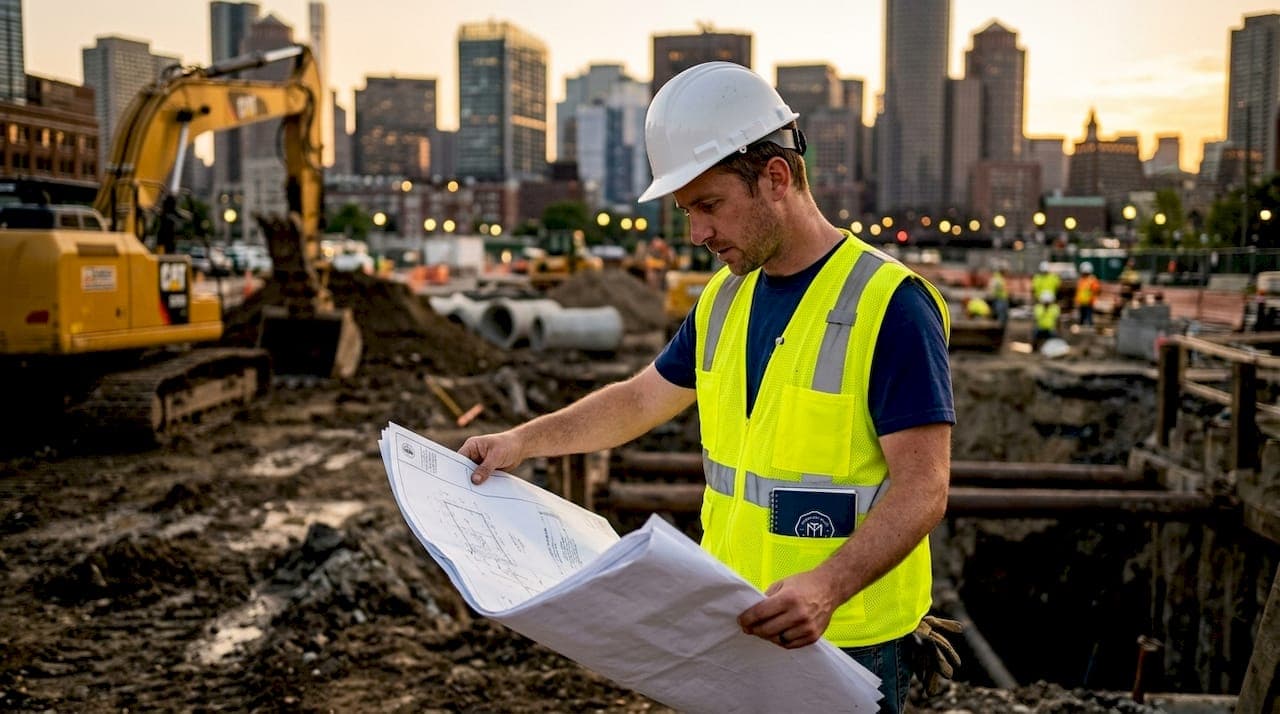
Sewer infrastructure is defined as the interconnected network of pipes, pump stations, manholes, and wastewater treatment facilities that collect, convey, and treat wastewater and stormwater to protect public health and the environment. Understanding sewer infrastructure means recognizing that this system operates largely out of sight but carries enormous consequences when it fails. A single sanitary sewer overflow can contaminate drinking water sources, close beaches, and trigger costly regulatory penalties. Whether you are a homeowner in Maine, a municipal engineer, or an environmental planner, knowing how sewer systems work gives you the foundation to make better decisions about maintenance, investment, and long-term planning.
What are the main components of sewer infrastructure?
Sewer infrastructure components fall into three broad categories: collection, conveyance, and treatment. Each layer depends on the others to move wastewater safely from its source to a point of discharge or reuse.
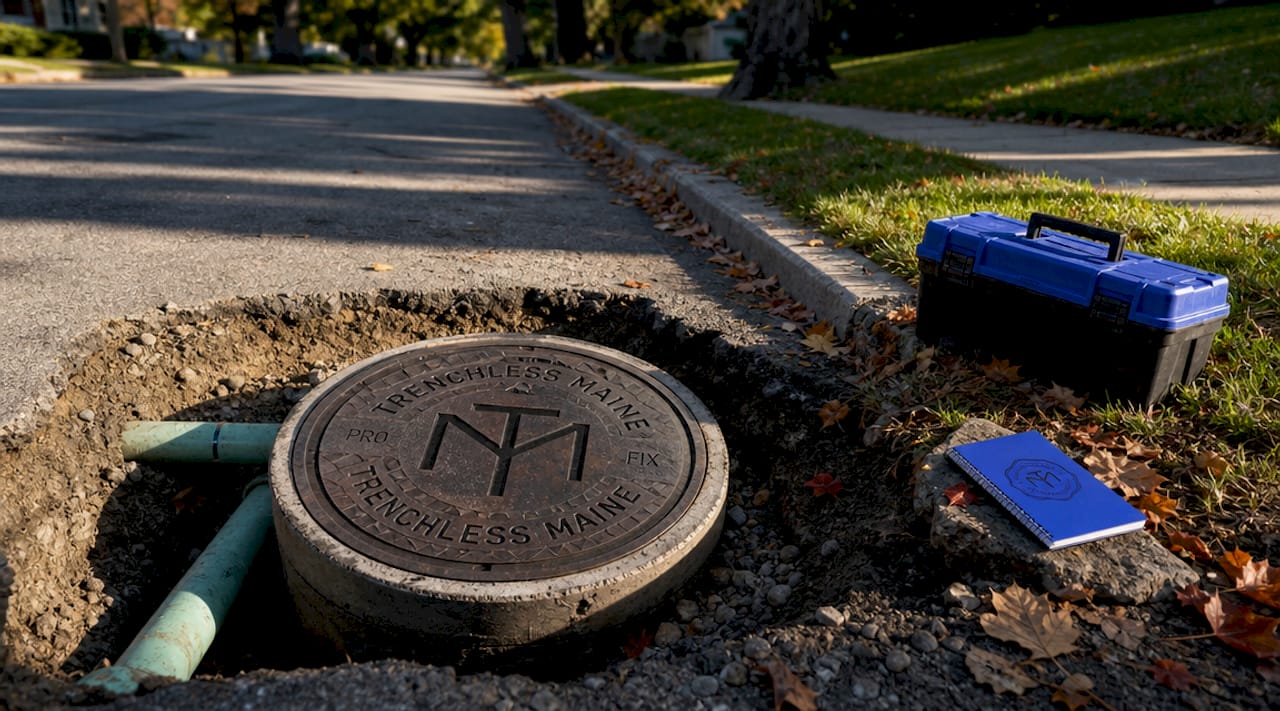
Collection pipes form the first layer. Sewer laterals are the pipes that run from your home or building to the public main. Sewer laterals connect through transition joints where different pipe materials meet, and those joints are among the most failure-prone points in any system. From the lateral, flow enters branch mains, then trunk sewers, which carry the combined volume toward treatment.
Here is a quick breakdown of the primary components you will encounter:
- Sewer laterals: Private pipes, typically 4 to 6 inches in diameter, connecting buildings to public mains
- Branch mains and trunk sewers: Progressively larger pipes that aggregate flow from multiple laterals
- Manholes and access points: Vertical access structures that allow inspection, cleaning, and flow monitoring
- Pump stations and force mains: Where gravity alone cannot move flow, pump stations pressurize wastewater through force mains to reach the next gravity segment
- Wastewater treatment plants: Facilities that process influent through primary (solids settling), secondary (biological treatment), and tertiary (nutrient removal, disinfection) stages before discharge
Pro Tip: Clay pipes are prone to root intrusion while cast iron corrodes through oxidation. Knowing your pipe material tells you which failure mode to watch for first, and that shapes your inspection schedule.
Pipe lifespan varies significantly by material and environment. Sewer pipes typically last 50 to 100 years, while mechanical components at treatment plants last only 20 to 30 years. That gap matters for capital planning because a plant built in the 1980s may have pipes that still have decades of service life while its pumps and blowers are already overdue for replacement.
| Component | Typical Lifespan | Primary Failure Mode |
|---|---|---|
| Clay sewer pipe | 50–100 years | Root intrusion, joint separation |
| Cast iron pipe | 50–75 years | Oxidation, corrosion |
| PVC pipe | 50–100 years | Joint failure, bedding settlement |
| Pump station equipment | 20–30 years | Mechanical wear, electrical failure |
| Concrete trunk sewer | 50–100 years | Hydrogen sulfide corrosion |
How do different sewer system types work?
Three distinct system types define how sewer infrastructure handles wastewater and stormwater, and the differences carry major environmental and regulatory consequences.
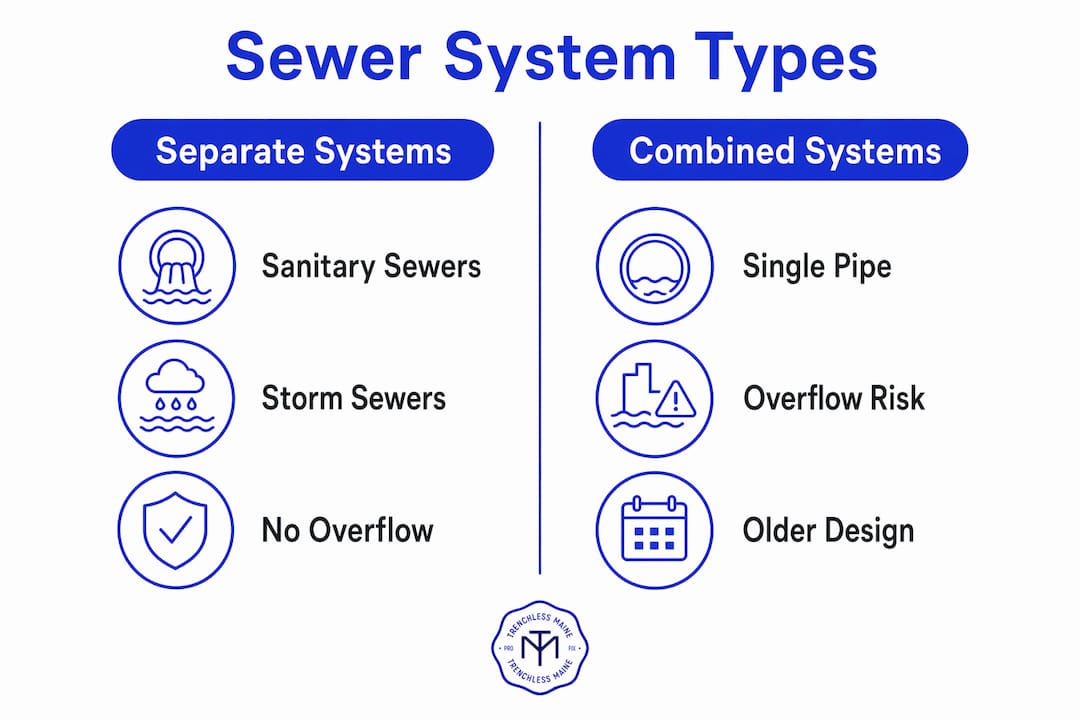
Separate systems use two entirely independent pipe networks. One carries sanitary sewage from homes and businesses. The other carries stormwater runoff from streets, parking lots, and rooftops directly to receiving waters with minimal or no treatment. The Clean Water Act governs sanitary systems while National Pollutant Discharge Elimination System (NPDES) permits govern storm systems separately. This regulatory split reflects the different pollutant profiles of each flow type.
Combined sewer systems were the dominant design in American cities built before the mid-20th century. A single pipe carries both sewage and stormwater to the treatment plant under dry conditions. During heavy rain, the combined volume can exceed treatment capacity, and the system discharges a mixture of raw sewage and stormwater directly to rivers, lakes, or coastal waters. These events are called combined sewer overflows, or CSOs. Heavy storms can push combined sewer flows to nine times their normal volume, overwhelming even well-maintained systems. That surge is not a design flaw so much as a physical limit built into the original infrastructure.
Cities like Alexandria, Virginia still operate combined systems covering roughly 5% of their networks, illustrating how slowly full separation progresses even with dedicated funding. The EPA requires municipalities with combined systems to develop Long Term Control Plans to manage CSO impacts under established policy.
| System type | Handles stormwater? | Overflow risk | Regulatory framework |
|---|---|---|---|
| Separate sanitary | No | Low (dry weather only) | Clean Water Act |
| Separate storm | Yes (untreated) | Moderate (pollutant runoff) | NPDES permits |
| Combined sewer | Yes (mixed) | High during rain events | CSO Long Term Control Plans |
The practical implication for urban planners is straightforward. Separating a combined system costs hundreds of millions of dollars in a mid-sized city and requires decades of phased construction. Green infrastructure, including bioswales, permeable pavement, and green roofs, offers a cost-effective complement by reducing the stormwater volume that enters the combined pipe in the first place.
What challenges does sewer infrastructure face?
Aging infrastructure is the defining challenge in American sewer management today. Many US sewer systems are 70 to 100 years old, and the investment needed to prevent leakage, infiltration, and outright failure is substantial. The problem compounds because deteriorating pipes allow groundwater and surface water to enter the system through cracks and faulty joints, a condition called inflow and infiltration (I&I). I&I inflates the volume of flow reaching treatment plants, raises operating costs, and increases overflow risk during wet weather.
Here is how a proactive maintenance program addresses these challenges in sequence:
- CCTV pipe inspection: Deploy closed-circuit television cameras through the pipe network to identify cracks, root intrusion, joint offsets, and corrosion before they cause failures. Transition interfaces between laterals and mains are the first places to inspect because they concentrate stress from differential settlement.
- Hydro jetting and root control: High-pressure water jetting clears grease, debris, and root growth from pipe interiors. Chemical root control treatments applied after jetting slow regrowth and extend the interval between cleanings.
- Flow monitoring and capacity management: Install flow sensors at key points to track wet-weather surges and identify I&I sources. Data from flow sensors and CCTV inspections together allow operators to predict overflow risk before a storm event rather than responding after the fact.
- SCADA and smart monitoring: Supervisory Control and Data Acquisition (SCADA) systems provide real-time visibility into pump station performance, wet well levels, and alarm conditions. Real-time SCADA monitoring shifts management from reactive repairs to predictive maintenance, reducing emergency callouts and extending equipment life.
- Rehabilitation and lining: Where pipes show structural deterioration, cured-in-place pipe (CIPP) lining restores structural integrity without excavation. This approach is faster, less disruptive, and typically less expensive than open-cut replacement.
The results of sustained maintenance investment are measurable. Sanitary sewer overflows dropped from 0.7 to 0.16 overflows per 100 miles between 2015 and 2021, a direct outcome of better inspection and maintenance programs across the country. That improvement did not happen by accident. It reflects deliberate capital allocation and the adoption of condition-based maintenance practices.
Pro Tip: Schedule CCTV inspections on a rotating basin-by-basin cycle rather than waiting for a complaint or a failure. You will catch root intrusion and joint separation while they are still minor repairs, not emergency excavations.
How does sewer infrastructure affect urban planning and environmental health?
Sewer capacity directly determines where and how densely a city can grow. A neighborhood without adequate sewer capacity cannot support new housing or commercial development regardless of zoning decisions. Conversely, proactive sewer investment unlocks development potential and supports property values across an entire service area.
The environmental stakes are equally direct. Combined sewer overflows discharge pathogens, nutrients, and industrial pollutants into waterways, triggering algal blooms, fish kills, and beach closures. Proper secondary and tertiary treatment at wastewater treatment plants removes the bulk of biological oxygen demand, suspended solids, and nutrients before discharge, protecting downstream ecosystems and drinking water intakes.
Climate change is intensifying these pressures in specific, measurable ways:
- More intense storm events increase peak flows in combined systems, raising CSO frequency even where total annual rainfall stays constant
- Sea-level rise threatens coastal treatment plants and low-lying collection infrastructure with flooding and saltwater intrusion
- Increased drought periods concentrate pollutants in receiving waters, reducing the dilution that historically buffered the impact of treated effluent
- Urban heat island effects accelerate pipe corrosion in some materials and increase summer biological activity in collection systems
Funding remains the central constraint. Annual household wastewater service costs grew from over $35 per month in 2010 to nearly $65 per month in 2020, yet that revenue still falls short of the capital investment needed to replace aging infrastructure at the rate it deteriorates. Federal programs including the Clean Water State Revolving Fund provide low-interest financing, but the gap between available funding and identified need remains significant.
"Green infrastructure investments, including permeable pavement, rain gardens, and constructed wetlands, reduce stormwater volumes entering combined systems and lower the cost of achieving CSO compliance compared to traditional gray infrastructure alone."
The most forward-thinking municipalities are integrating green and gray infrastructure planning, using asset management software to prioritize rehabilitation projects by condition, risk, and cost, and building climate resilience directly into capital improvement programs.
Key takeaways
Sewer infrastructure requires coordinated investment in collection, conveyance, and treatment systems to protect public health, support urban growth, and meet environmental compliance standards.
| Point | Details |
|---|---|
| Components work as a system | Laterals, mains, pump stations, and treatment plants each depend on the others to function reliably. |
| System type determines overflow risk | Combined sewers carry the highest CSO risk during heavy rain; separation or green infrastructure reduces that risk. |
| Aging pipes need proactive care | Most US systems are 70 to 100 years old; CCTV inspection and CIPP lining prevent costly emergency failures. |
| Maintenance improvements are measurable | SSO rates fell from 0.7 to 0.16 per 100 miles between 2015 and 2021 through sustained maintenance investment. |
| Climate change raises the stakes | Intensifying storms and sea-level rise demand that infrastructure planning account for future conditions, not just current ones. |
What I've learned from watching sewer systems age in real time
After years of working with sewer infrastructure across Maine, the pattern I see most often is this: the systems that fail expensively are almost never the ones that were poorly built. They are the ones that were well built, then ignored for 30 years because nothing visibly went wrong.
Concrete and clay pipes installed in the 1950s and 1960s were engineered to last. And they did. But root intrusion works slowly, joint sealants dry out, and groundwater finds every crack. By the time a homeowner notices a slow drain or a wet patch in the yard, the lateral has often been compromised for years. The repair cost at that stage is three to five times what a scheduled inspection and lining would have cost a decade earlier.
The shift toward predictive maintenance using SCADA, AI-assisted flow analysis, and regular CCTV inspection is the most important operational change in this industry in a generation. But technology only works if someone acts on the data. I have seen municipalities invest in smart monitoring systems and then defer the rehabilitation projects the data recommends because the capital budget is tight. That is not a technology problem. It is a prioritization problem.
My practical advice for anyone managing or owning infrastructure connected to a sewer system: treat your sewer lateral condition the same way you treat your roof. You do not wait for water to come through the ceiling before you inspect it. Schedule a camera inspection every 10 years, address root intrusion when it is minor, and line the pipe before it collapses. The cost difference between proactive and reactive is not marginal. It is the difference between a planned repair and an emergency excavation through your driveway in February.
— John
How Trenchlessmaine keeps your sewer system running without the dig
When your sewer system needs attention, the last thing you want is a crew tearing up your yard, driveway, or landscaping for days. Trenchlessmaine specializes in no-dig sewer repair solutions that restore pipe integrity from the inside out, using CIPP lining, hydro jetting, and camera inspection technology that resolves most problems within 24 hours.
Trenchlessmaine's hydro jetting service clears root intrusion, grease buildup, and debris that slow your system and increase overflow risk. Camera inspections give you a clear picture of pipe condition before problems become emergencies. With over 50 years of combined expertise and warranties up to 50 years on lining work, Trenchlessmaine delivers durable results that protect your property and your budget. Contact Trenchlessmaine today for a free assessment and find out if your area is covered.
FAQ
What is sewer infrastructure?
Sewer infrastructure is the network of pipes, pump stations, manholes, and wastewater treatment facilities that collect and treat wastewater and stormwater. Its primary purpose is protecting public health and receiving water quality by preventing untreated sewage from reaching the environment.
What is the difference between sanitary and storm sewers?
Sanitary sewers carry wastewater from homes and businesses to treatment plants, while storm sewers carry rainwater runoff directly to waterways with little or no treatment. Combined systems handle both in a single pipe, which creates overflow risk during heavy rain events.
How long do sewer pipes last?
Sewer pipes typically last 50 to 100 years depending on material, soil conditions, and maintenance history. Treatment plant mechanical components have a shorter lifespan of 20 to 30 years and require more frequent replacement.
What causes sanitary sewer overflows?
Sanitary sewer overflows occur when pipe capacity is exceeded by inflow and infiltration, blockages from grease or roots, or structural failures. Sustained maintenance programs reduced SSO rates from 0.7 to 0.16 overflows per 100 miles between 2015 and 2021 across the US.
What is the most cost-effective way to maintain a sewer lateral?
Scheduling periodic CCTV lateral inspections and addressing root intrusion or joint defects early with trenchless lining is far less expensive than emergency excavation after a collapse. Proactive maintenance at the lateral-to-main transition point prevents the most common and costly failure mode in residential sewer systems.