

If your property can't support a conventional gravity-fed septic tank, you have more options than you might think. Maine recognizes and permits several engineered wastewater treatment systems as viable alternatives, each designed for specific soil conditions, lot sizes, and environmental sensitivities. Here are the main types approved under Maine's subsurface wastewater disposal rules:
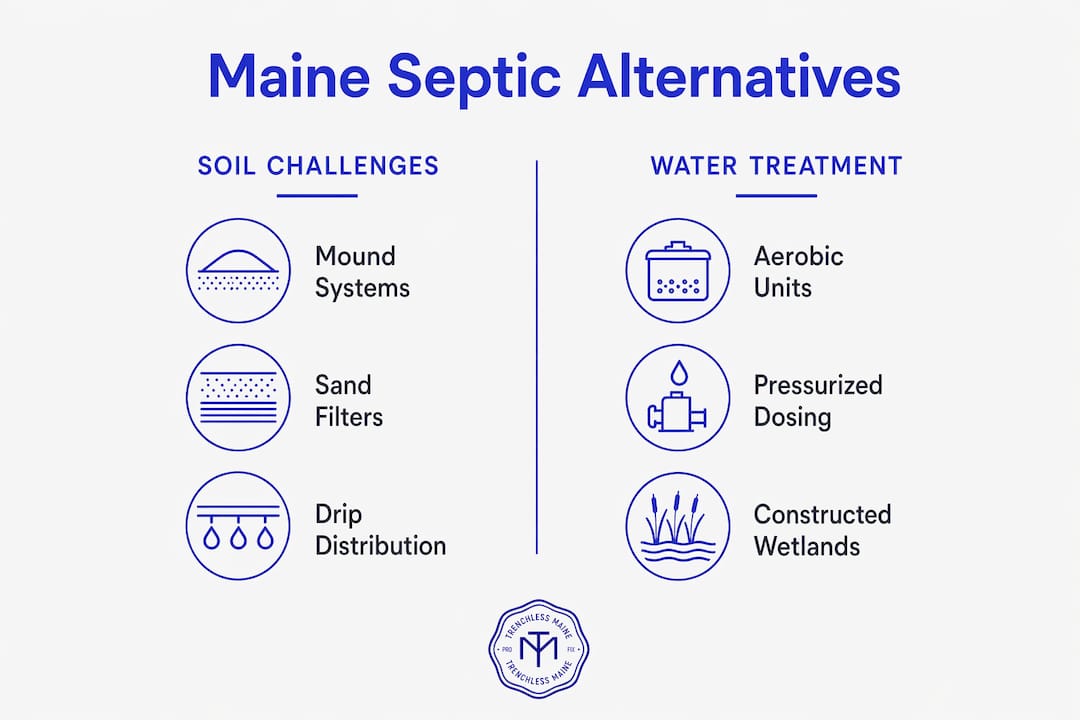
- Mound systems: Elevated drain fields built above native soil for properties with high water tables or shallow bedrock
- Aerobic treatment units (ATUs): Mechanical systems that inject air to break down waste more thoroughly before dispersal
- Pressurized dosing systems: Pump-driven systems that distribute effluent evenly across a drain field
- Sand filters: Pre-treatment chambers using sand media to filter solids and pathogens before soil dispersal
- Plastic chamber leach fields: Gravel-free chambers that replace traditional pipe-and-gravel drain fields
- Drip distribution systems: Subsurface irrigation networks that deliver treated effluent just below the soil surface
- Constructed wetland systems: Engineered wetland cells that use natural biological processes to treat wastewater
- Holding tanks: Sealed storage tanks permitted only as a last resort when no other system is feasible
Each system carries its own footprint, maintenance demands, and permit requirements under Maine DEP rules. The right fit for your property depends on a professional soil evaluation, not personal preference.
Why Maine homeowners look for alternative septic solutions
Maine's geology is the primary driver. Much of the state sits on shallow bedrock, dense glacial till, or clay-heavy soils that drain far too slowly for a standard gravity system to function safely. A conventional drain field needs adequate soil depth and absorption capacity. When those conditions don't exist, effluent backs up, surfaces in the yard, or seeps toward nearby water bodies.
Proximity to lakes, rivers, and coastal waters adds another layer of urgency. Maine's strict environmental standards require advanced treatment near sensitive water bodies to reduce nitrogen and pathogen loads. A standard septic tank simply doesn't remove enough contaminants in those situations.
Older failing systems are a third trigger. Many Maine homes built before modern plumbing codes have systems that are undersized, deteriorating, or located in areas that would never receive a permit today. Before committing to a full replacement, check the Maine DHHS permit database to review your existing system's design. Targeted repairs sometimes resolve the problem at a fraction of replacement cost.
A licensed site evaluator must conduct a percolation test, commonly called a perc test, before any system can be designed or permitted. That evaluation determines soil absorption rates and directly controls which system types are even on the table for your lot.
The 8 main alternative septic systems available in Maine
1. Mound systems
A mound system builds a raised drain field using imported sand and soil above the native ground surface. It's the go-to solution for properties with poor soil drainage or shallow bedrock, which are conditions that rule out conventional in-ground drain fields. Effluent from the septic tank is pumped up into the mound, where it filters through the engineered media before reaching native soil.
Key facts:
- Requires a pump and electrical connection
- Needs more surface area than a conventional system
- Pump components require periodic inspection and eventual replacement
- Works well on gently sloping lots with enough open space
Mound systems are one of the most common Maine septic alternatives precisely because they address the state's most prevalent soil problem. Learn more about how mound systems compare to conventional options for Maine properties.
2. Aerobic treatment units
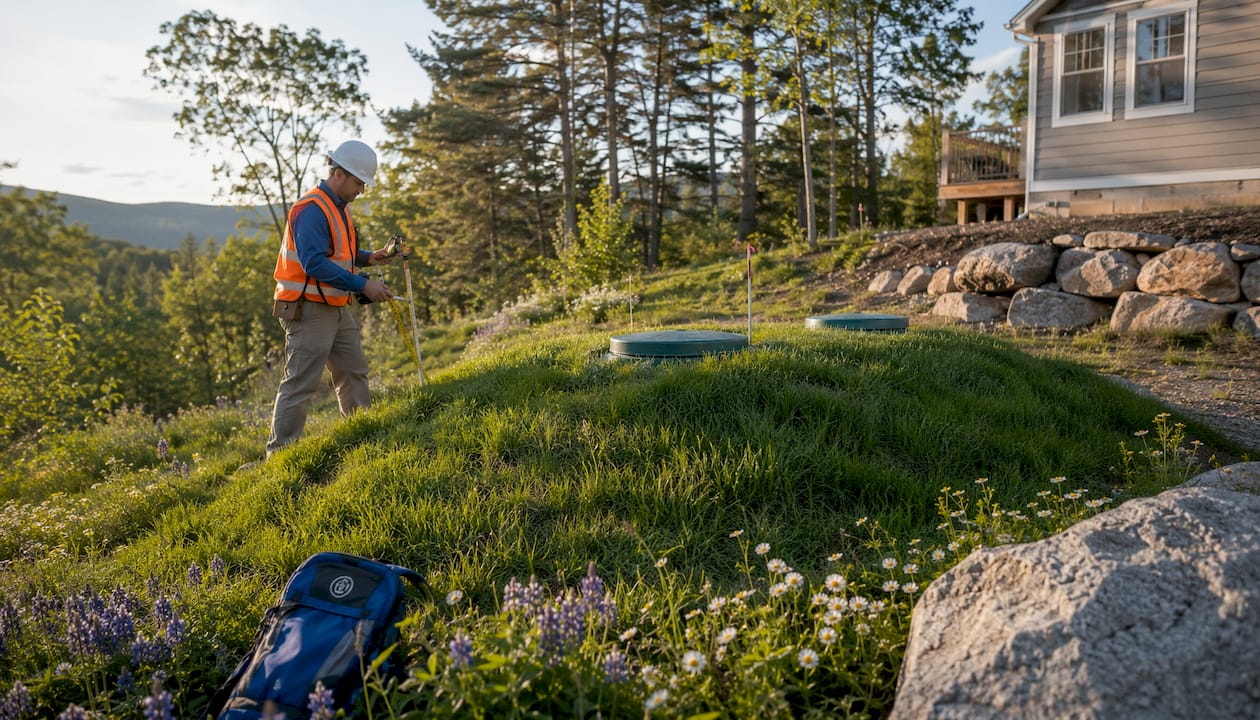
Aerobic treatment units, or ATUs, inject oxygen into the treatment chamber to accelerate bacterial breakdown of waste. The result is a significantly cleaner effluent than a standard septic tank produces, which is why ATUs are often required near water bodies or on lots where soil conditions limit natural filtration.
Key facts:
- Require electricity to run the aeration mechanism continuously
- Must have a service contract; most Maine permits require documented maintenance
- Produce effluent clean enough to allow smaller drain field footprints in some cases
- Higher upfront cost and ongoing electricity and service expenses compared to passive systems
Advanced treatment systems require consistent power and maintenance, a responsibility homeowners often underestimate when comparing them to a conventional gravity system that needs almost no active management.
3. Pressurized dosing systems
Pressurized dosing uses a pump to deliver measured doses of effluent to the drain field at timed intervals rather than allowing continuous gravity flow. This controlled distribution prevents any one area of the drain field from becoming saturated, extending the life of the system and improving treatment performance.
Key facts:
- Suitable for sloped lots or irregularly shaped drain fields
- Pump and timer require periodic inspection
- Can be paired with conventional drain fields or mound systems
- Moderate maintenance compared to full ATUs
This system works especially well when a drain field has uneven terrain or when the soil needs time to recover between doses.
4. Sand filters
A sand filter is a pre-treatment chamber, either buried or above ground, filled with a specific grade of sand through which effluent passes before entering the soil. Biological activity in the sand removes fine solids and pathogens that a septic tank alone cannot capture. Recirculating sand filters pass effluent through the media multiple times for even higher treatment levels.
Key facts:
- Effective for sites near sensitive water bodies
- Requires a pump to move effluent through the filter
- Sand media may need replacement over time
- Can reduce setback requirements from water bodies when paired with advanced treatment
5. Plastic chamber leach fields
Plastic chamber systems replace the traditional gravel-and-pipe drain field with molded plastic arches that create void space for effluent storage and soil contact. They're lighter, faster to install, and eliminate the cost and logistics of hauling gravel to the site.
Key facts:
- Suitable for the same soil conditions as conventional gravel systems
- Slightly larger footprint than gravel systems in some designs
- No electricity required for passive gravity-fed configurations
- Lower installation labor cost in many cases
These systems work best on properties with adequate native soil. They don't solve the underlying problem of poor drainage or high water tables.
6. Drip distribution systems
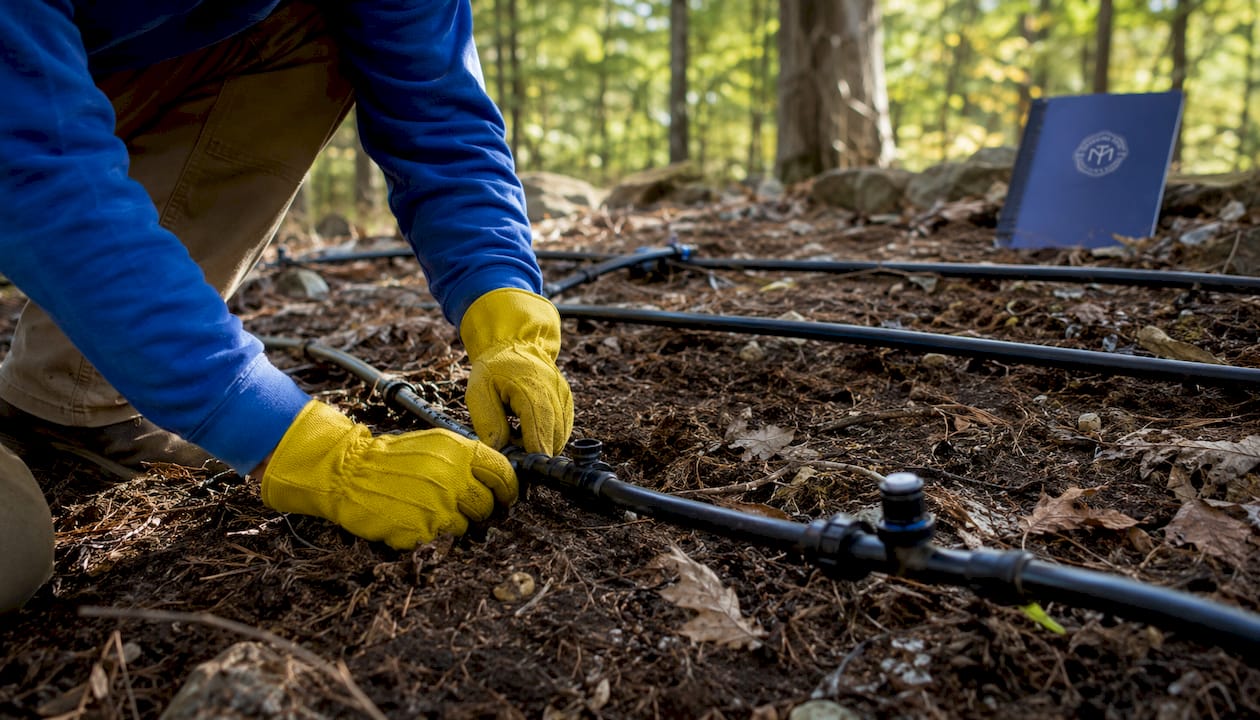
Drip distribution delivers treated effluent through a network of small-diameter tubing buried just below the soil surface, similar to agricultural drip irrigation. Because the tubing distributes effluent across a wide area in small, frequent doses, it works on sloped lots and sites where a conventional drain field would be impractical.
Key facts:
- Requires a pump, filter, and pressure-regulation components
- Performance during Maine winters can be uncertain; proper burial depth matters
- Higher installation cost than mound or chamber systems
- Excellent for sites with variable topography
The EPA recognizes drip distribution as a viable alternative for properties where conventional or mound systems cannot be sited.
7. Constructed wetland systems
A constructed wetland is an engineered cell, typically lined to prevent groundwater contamination, filled with gravel and planted with wetland vegetation. Wastewater flows through the root zone, where biological and physical processes remove nutrients and pathogens. These systems are passive, requiring minimal electricity, and blend into the landscape more naturally than above-ground alternatives.
Key facts:
- Require significant surface area
- Low operational cost once established
- Plants need periodic management
- Best suited for properties with space and appropriate climate conditions
- Maine's cold winters require careful design to maintain treatment performance year-round
8. Holding tanks
A holding tank stores raw wastewater in a sealed, watertight tank with no treatment or dispersal. Maine DEP permits holding tanks only when no other system is feasible, typically for seasonal camps or properties where site constraints make every other option impossible.
Key facts:
- Must be pumped frequently, often every few weeks for full-time residences
- Pumping contracts are required and enforceable under Maine rules
- No treatment occurs; all waste is hauled to a licensed facility
- Not a long-term solution for year-round homes due to ongoing pumping costs
Holding tanks are a last resort, not a cost-saving strategy. The recurring pumping expense makes them impractical for year-round homes.
A note on alternative toilets: Composting toilets and similar devices handle only black water (toilet waste). Gray water from sinks, showers, and laundry still requires a conventional or alternative subsurface system. Maine's plumbing code does not reduce the required size of the gray water system when an alternative toilet is used, so the overall cost savings are minimal.
Practical considerations before you choose a system
Choosing the right system starts with your soil, not your budget. A licensed site evaluator must assess your lot before any permit is issued under Maine Subsurface Wastewater Disposal Rules (06-096 CMR Chapter 241). That evaluation determines which systems are physically possible on your property. Skipping or rushing this step is the most common and costly mistake homeowners make.
Key factors to weigh:
- Soil type and depth: Clay soils, shallow bedrock, and high water tables eliminate conventional options and push you toward mound, ATU, or drip systems
- Lot size and layout: Mound and constructed wetland systems need substantial open space; drip systems can work on tighter or sloped lots
- Proximity to water: Homes within setback distances from lakes, rivers, or coastal waters typically require advanced treatment systems
- Electricity access: ATUs, pressurized dosing, and drip systems all need reliable power; off-grid properties face additional constraints
- Maintenance commitment: Mechanical systems require service contracts, annual inspections, and homeowner engagement that passive systems do not
- Budget: Advanced treatment systems carry higher upfront costs and ongoing operational expenses than conventional alternatives
The permit process runs through your local Code Enforcement Officer, who coordinates with Maine DEP. Getting quotes from two or more licensed contractors based on the same site evaluator's application is the most reliable way to compare true installation costs.
For ongoing maintenance guidance once your system is installed, Trenchlessmaine's sewer maintenance tips cover the long-term obligations that come with mechanical advanced treatment systems.
Pro Tip: Request your local Code Enforcement Officer's checklist before hiring a site evaluator. Some municipalities have additional local requirements beyond state minimums, and knowing them upfront prevents permit delays.
Properties with cluster system potential are worth exploring if you share a boundary with neighbors facing the same constraints. A shared system can provide treatment quality that no individual lot could achieve alone, though it requires formal maintenance agreements and long-term cooperation.
Maine regulations, funding programs, and where to get expert help
Maine's regulatory framework for alternative septic systems is detailed and strictly enforced. The Maine Subsurface Wastewater Disposal Rules require licensed site evaluator approval, local Code Enforcement Officer permits, and in many cases, ongoing service contracts for mechanical systems. There are no shortcuts, and unpermitted installations can result in fines and mandatory removal.
Funding sources worth exploring:
- Maine DEP Small Community Grant Program: Available to homeowners whose failing systems threaten water bodies or public health. Funding is administered through municipalities, so your first call should be to your local Code Enforcement Officer.
- Town loan programs: Some Maine municipalities offer low-interest loans for septic replacements. Availability varies by town.
- USDA Rural Development 504 Program: A federal program offering grants and loans for qualifying home improvements, including septic systems.
- Community Action Program (CAP) agencies: County-based agencies that provide financing assistance to low-income households.
- Home equity loans and refinancing: For homeowners with sufficient equity, borrowing against the property at a fixed rate can spread the cost over time.
The Maine Association of Site Evaluators (MASE) maintains a directory of licensed professionals who can conduct your soil evaluation and guide system selection. Hiring a licensed site evaluator early, before you've committed to a system type, saves time and prevents expensive redesigns.
Trenchlessmaine brings over 50 years of combined expertise to Maine's residential and commercial wastewater infrastructure. When your septic situation involves damaged lateral lines, root intrusion, or pipe deformation connecting your home to the treatment system, trenchless repair options can address those issues without excavating your yard. That matters especially when you've just invested in a new alternative septic system and want to protect the surrounding landscape.
If your drain lines or sewer laterals need attention alongside your septic upgrade, Trenchlessmaine's hydro jetting service clears blockages and restores flow without digging up your property. Most jobs are completed within 24 hours, with results backed by industry-leading warranties.
Get a free quote from Trenchlessmaine and find out whether your Maine property qualifies for non-invasive sewer repair that protects your investment and keeps your yard intact.
Key Takeaways
Maine's alternative septic systems are site-specific solutions, and the soil evaluation always comes before the system selection.
| Point | Details |
|---|---|
| Soil evaluation comes first | A licensed site evaluator's perc test determines which systems Maine DEP will permit on your property. |
| Eight recognized alternatives | Mound, ATU, pressurized dosing, sand filter, chamber leach field, drip distribution, constructed wetland, and holding tank systems are all approved options in Maine. |
| Mechanical systems need active management | ATUs and drip systems require electricity, service contracts, and ongoing homeowner engagement that passive systems do not. |
| Funding is available | The Maine DEP Small Community Grant Program and USDA Rural Development 504 Program can offset replacement costs for qualifying homeowners. |
| Holding tanks are a last resort | Maine DEP permits holding tanks only when no other system is feasible; frequent pumping makes them impractical for year-round homes. |