
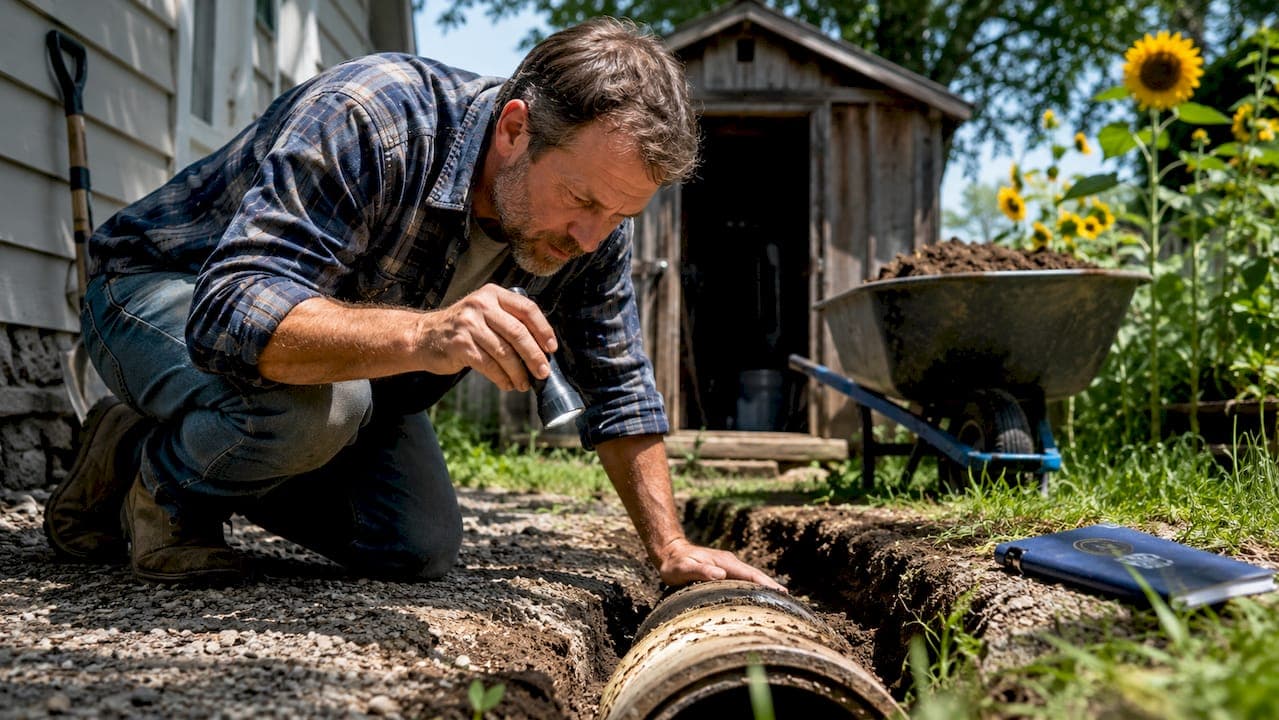
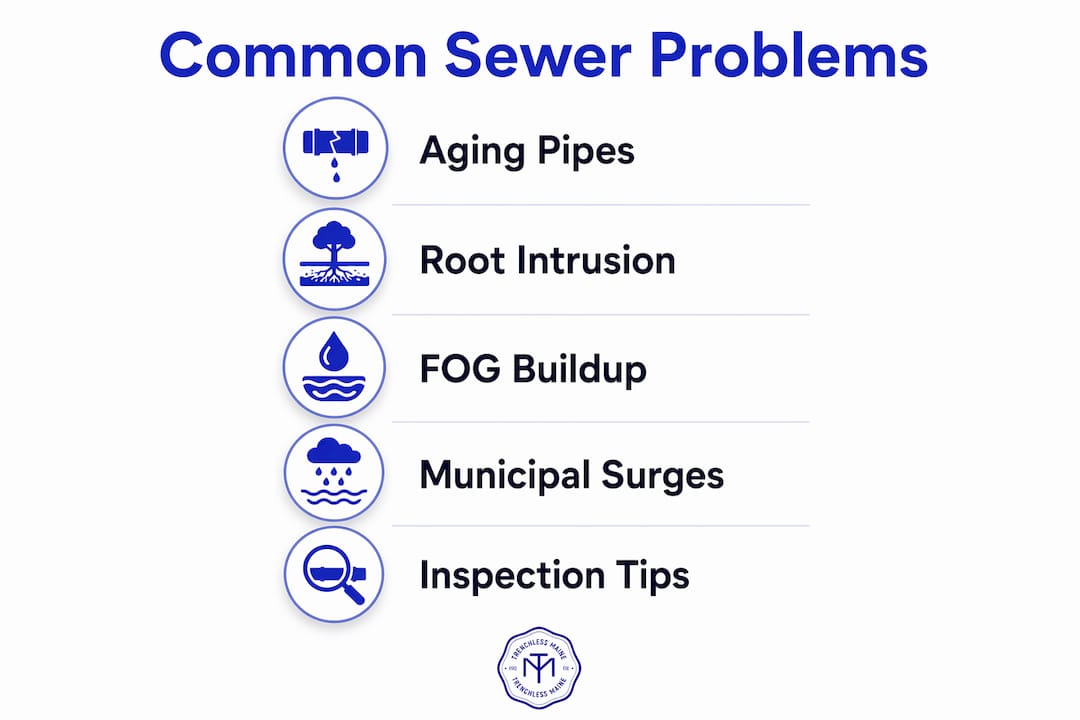
Maine homeowners face some of the most demanding sewer conditions in the Northeast. Common sewer problems in Maine stem from four main sources: aging pipe infrastructure, tree root intrusion, fats, oils, and grease (FOG) accumulation, and stress from municipal system surges. The state's older housing stock, harsh freeze-thaw winters, and evolving environmental regulations from the Maine Department of Environmental Protection (Maine DEP) all compound these challenges. Knowing what causes each problem, and what the warning signs look like, puts you in a position to act before a small issue becomes a costly emergency.
What causes aging and damaged sewer pipes in Maine homes?
Aging pipe materials are the root cause of most sewer line problems in Maine. Homes built before 1980 commonly used clay, cast iron, or galvanized steel for sewer laterals. Each of these materials has a finite lifespan, and many have already exceeded it.
Older sewer lines in Maine frequently show cracking, corrosion, and joint separation. Once a crack forms, debris catches on the rough edges, and blockages follow quickly. Cast iron corrodes from the inside out, so the pipe can look intact from the outside while the interior is heavily scaled.
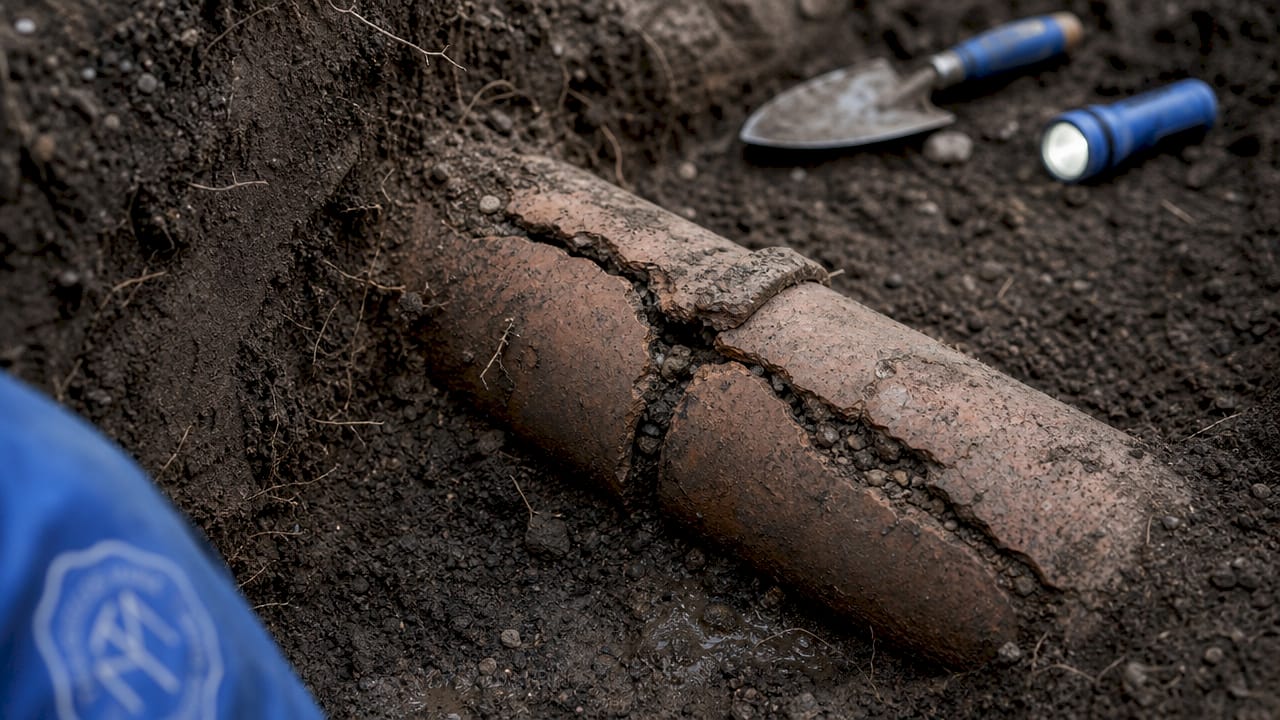
Maine's climate makes this worse. Freeze-thaw cycles cause pipes to expand and contract repeatedly through winter and spring. That stress accelerates cracking and creates pipe bellies, which are low spots where wastewater pools and solids settle instead of flowing through. A pipe belly is not visible from the surface, but it consistently traps debris and causes recurring backups.
Common signs of aging pipe damage include:
- Slow drains throughout the house, not just in one fixture
- Frequent backups that return shortly after clearing
- Sinkholes or soft spots in your yard above the sewer line
- Visible rust stains or sediment in your water
- A strip of unusually green, lush grass running across your yard (leaking sewage acts as a fertilizer)
A video camera inspection is the most reliable way to confirm pipe damage. A licensed technician feeds a camera through the line and identifies cracks, corrosion, and bellies without any digging.
Pro Tip: If your home was built before 1970 and you have never had a sewer inspection, schedule one now. Pipe failure rarely announces itself with a single dramatic event. It builds slowly, and catching it early saves thousands of dollars.
How do tree roots intrude and damage sewer lines in Maine?
Tree root intrusion is one of the most destructive and underestimated sewer line problems in Maine. Roots grow toward moisture and warmth, and a sewer pipe offers both. Even a hairline crack or a slightly loose joint gives roots a point of entry.
Maine's landscape is heavily wooded. Maples, oaks, willows, and birches are common in residential yards across the state, and all of them have aggressive root systems. Once roots enter a pipe, they do not stop. They expand with the pipe's water flow, eventually filling the line and causing complete blockages or structural collapse.
Signs of root intrusion include:
- Slow drains that worsen gradually over months
- Gurgling sounds from toilets or floor drains after flushing
- Recurring backups in the lowest fixtures in your home, such as basement drains
- Unexplained wet patches or depressions in your yard
Roots most commonly enter older clay and cast iron pipes because those materials develop cracks and joint gaps over time. Newer PVC lines are more resistant but not immune if a joint is improperly sealed.
Pro Tip: When planting trees or large shrubs, check the location of your sewer lateral first. Keep willows, silver maples, and other water-seeking species at least 20 feet from any sewer line. That single decision prevents years of root intrusion problems.
Trenchlessmaine uses hydro jetting to clear root masses from pipes without excavation. For more severe intrusion, CIPP (cured-in-place pipe) lining seals the pipe from the inside, cutting off root access permanently.
What role do FOG and blockages play in Maine sewer problems?
Fats, oils, and grease accumulation is the leading cause of sewer blockages in Maine homes and municipal systems. FOG enters the drain as a liquid but cools and solidifies on pipe walls, narrowing the line over time until flow stops entirely.
The City of Portland's FOG Program identifies this as a direct contributor to combined sewer overflow (CSO) events. When FOG-clogged pipes back up during heavy rain, the overflow reaches streets and waterways. That is a public health issue, not just a plumbing inconvenience.
Preventing FOG buildup is straightforward:
- Pour cooled cooking grease into a sealed container and dispose of it in the trash.
- Wipe pans with a paper towel before washing to remove residual grease.
- Use a sink strainer to catch food solids before they enter the drain.
- Avoid "flushable" wipes. They do not break down in pipes and combine with FOG to form dense clogs.
- Run hot water through the drain after washing dishes, but do not rely on it to clear grease already coating the pipe walls.
FOG blockages show up as slow kitchen drains first, then gurgling sounds, then full backups. If your kitchen sink drains slowly and the problem keeps returning after DIY clearing, FOG buildup deeper in the line is the likely cause.
Backwater valves provide an additional layer of protection. These one-way check valves prevent municipal sewage from pushing back into your home during a surge event. If your home does not have one, a licensed plumber can install it on your main sewer lateral.
Pro Tip: Enzyme-based drain treatments sold at hardware stores can help maintain clear pipes between professional cleanings. They are not a substitute for hydro jetting when a blockage is already established, but used monthly, they slow FOG accumulation significantly.
How do municipal surges and sludge disposal changes affect home sewer systems?
External factors beyond your property line directly affect your sewer system's performance. Spring snowmelt and heavy rains push enormous volumes of water into Maine's combined sewer systems, overwhelming capacity. Municipal sewer surges during these events can push sewage backward into residential lines, causing backups and releasing sewer gas odors inside homes.
Maine's sludge management situation adds another layer of complexity. Maine's ban on sludge land-spreading due to PFAS contamination has shifted disposal to landfills, increasing pressure on wastewater treatment facilities statewide. When treatment plants operate under stress, the effects ripple into the municipal collection system and, eventually, into residential connections.
The table below summarizes the key external risk factors and their direct impact on your home:
| External factor | Cause | Home impact |
|---|---|---|
| Spring runoff and storm surges | Overloaded municipal combined sewers | Sewage backup into basement or lower fixtures |
| PFAS-driven sludge policy changes | Landfill pressure on treatment capacity | Increased system stress and odor events |
| Aging municipal infrastructure | Deteriorating collection mains | Higher frequency of surges and backups |
| Heavy rainfall events | Stormwater infiltration into sewer lines | Reduced flow capacity and overflow risk |
Municipal wastewater management in Maine is growing more complex as PFAS regulations tighten. Homeowners who understand this connection can take targeted precautions, including installing backwater valves, checking sump pump function before spring, and scheduling inspections after major storm events.
What are the early warning signs of sewer problems in Maine?
Early detection is the most cost-effective sewer strategy available to you. Most sewer failures give clear signals weeks or months before they become emergencies. Recognizing them early means the difference between a repair and a full replacement.
Watch for these signs:
- Slow drains in multiple fixtures at once. A single slow drain usually points to a local clog. Multiple slow drains signal a problem in the main sewer line.
- Gurgling sounds from toilets or drains. This indicates air trapped in the line, often caused by a partial blockage or root intrusion.
- Foul odors inside or outside the home. Sewer gas odors indicate a break or blockage in the line allowing gas to escape. This is both a plumbing and a health concern.
- Wet spots or unusually lush grass in your yard. Sewage leaking underground acts as a fertilizer. A strip of green grass above your sewer line is a reliable indicator of a leak.
- Sewage backing up into floor drains or tubs. This is a late-stage sign. If it has reached this point, call a professional immediately.
Regular sewer inspections catch problems before they produce visible symptoms. Trenchlessmaine recommends camera inspections every few years for homes with older pipes or mature trees nearby. Catching a crack or root mass early costs far less than repairing a collapsed line.
Understanding the difference between a septic system and a municipal sewer connection also matters for diagnosis. The septic vs. sewer distinction affects which symptoms to look for and which professionals to call. Many rural Maine properties rely on septic systems, which have their own set of failure modes distinct from municipal sewer line problems.
Key Takeaways
Maine sewer problems are driven by aging infrastructure, root intrusion, FOG buildup, and municipal system stress, and early detection through camera inspection is the most cost-effective defense available.
| Point | Details |
|---|---|
| Aging pipes are the primary risk | Clay, cast iron, and galvanized pipes in pre-1980 homes crack and corrode, causing recurring blockages. |
| Root intrusion worsens gradually | Maples, oaks, and willows near sewer lines exploit cracks and can collapse a pipe over time. |
| FOG buildup is preventable | Disposing of grease in the trash instead of the drain stops the leading cause of sewer blockages. |
| Municipal surges affect your home | Installing a backwater valve protects against sewage pushed back by overloaded city systems. |
| Early signs save money | Multiple slow drains, gurgling sounds, and yard odors all signal problems before full failure occurs. |
What I've learned from years of Maine sewer work
The homeowners who avoid the worst repair bills are not the ones with newer homes. They are the ones who scheduled an inspection before they had a problem. I have seen $400 camera inspections prevent $15,000 pipe replacements. The math is not complicated.
What surprises most people is how much the municipal system affects their private line. A homeowner in Portland or Bangor can do everything right, keep grease out of the drain, trim trees away from the line, and still end up with a backup because the city's combined sewer hit capacity during a March rain event. That is not bad luck. It is a predictable outcome of aging infrastructure meeting climate variability. Installing a backwater valve is the single most underused protection in Maine residential plumbing.
The PFAS sludge situation is also worth watching closely. As Maine's wastewater treatment facilities face mounting pressure from landfill restrictions, the stress on collection systems will increase. That pressure eventually shows up as odors, surges, and backups at the residential level. Homeowners who stay informed and maintain their lateral connections will be far better positioned than those who wait for a crisis.
Proactive maintenance is not about being anxious. It is about being practical. A well-maintained sewer line is one less thing to worry about.
— John
Trenchlessmaine can solve these problems without tearing up your yard
If any of the warning signs in this article sound familiar, the right next step is a professional inspection, not a wait-and-see approach. Trenchlessmaine specializes in non-invasive sewer repair across Maine, with over 50 years of combined expertise and warranties up to 50 years on completed work.

For FOG buildup and root intrusion, high-pressure hydro jetting clears blockages thoroughly without excavation. For cracked or corroded pipes, CIPP lining restores the line from the inside, typically within 24 hours. Trenchlessmaine also offers fast drain clearing for immediate backup relief. If you are ready to address aging pipes or recurring drainage problems, check whether your address falls within the Trenchlessmaine service area and request a free quote today.
FAQ
What are the most common sewer problems in Maine?
The most common sewer problems in Maine are aging and cracked pipes, tree root intrusion, FOG blockages, and sewage backups caused by municipal system surges during heavy rain and spring runoff.
How do I know if tree roots are in my sewer line?
Gurgling toilets, slow drains that worsen over months, and recurring backups in basement fixtures are the primary signs of root intrusion. A camera inspection confirms the diagnosis.
Can I prevent FOG blockages on my own?
Yes. Dispose of cooking grease in the trash, wipe pans before washing, and use a sink strainer to catch food solids. Monthly enzyme treatments help slow buildup between professional cleanings.
What is a backwater valve and do I need one?
A backwater valve is a one-way check valve installed on your main sewer lateral that prevents sewage backup when the municipal system surges. Homes in areas with combined sewers or a history of basement flooding benefit most from this installation.
How often should Maine homeowners get a sewer inspection?
Homes with pipes older than 40 years or mature trees near the sewer line should have a camera inspection every two to three years. All other homes benefit from an inspection every five years or after any major storm event.