
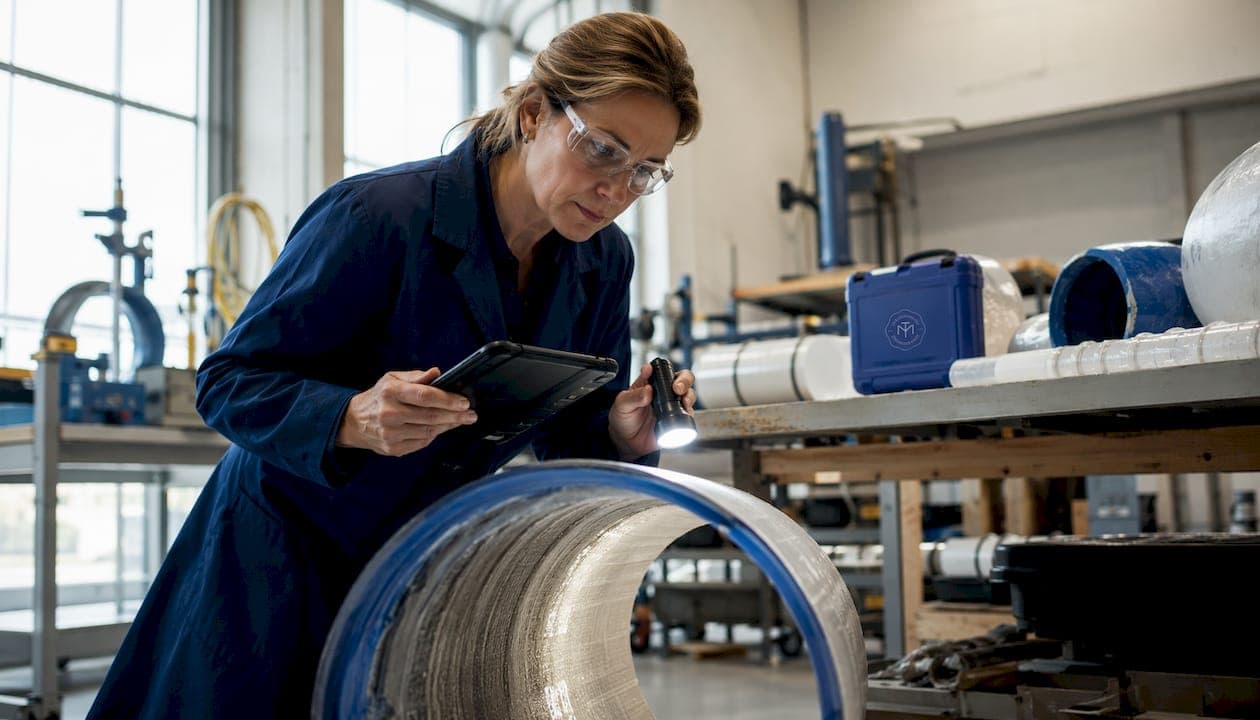
Effective pipe rehabilitation starts with one non-negotiable step: knowing exactly what you are dealing with before any liner, tool, or crew touches the pipe. The best practices for pipe rehabilitation follow a clear sequence: standardized condition assessment, method selection matched to actual pipe conditions, high-quality materials certified for the application, skilled labor following documented protocols, corrosion control integrated from the start, and post-repair monitoring that continues well after the crew leaves. Skip any of these, and you are spending money on a repair that will fail ahead of schedule.
Here is what that looks like in practice:
- Condition assessment first. CCTV inspection and risk-based criticality scoring tell you which pipes need rehabilitation now, which can wait, and which are too far gone for trenchless methods.
- Method matched to condition. Cured-in-Place Pipe (CIPP) handles pipes from 2 to 120 inches in diameter. Pipe bursting replaces and upsizes in a single pass. Sliplining, spiral wound lining, and coatings each fit different scenarios.
- Certified materials only. For potable water applications, NSF/ANSI Standard 61 certification is the baseline, not a bonus.
- Experienced labor, documented process. Curing temperature, pressure, and duration must be logged. Moisture control during CIPP installation is where most failures originate.
- Corrosion control built in. Pre-lining cleaning, chemical grouting, and post-repair water chemistry adjustments all reduce the rate of future deterioration.
- Post-repair verification. Pressure testing, leakage assessment, and CCTV re-inspection confirm the repair held before the project closes out.
- Lifecycle planning. Rehabilitation is one event in a longer asset management cycle. Budget, schedule, and maintenance plans need to account for what comes next.
1. Best practices for pipeline condition assessment
A rigorous condition assessment is the foundation of every sound rehabilitation decision. Without it, you are guessing at method selection, material specifications, and repair scope. Guessing costs money.
Effective municipal stormwater programs use a three-step process: closed-circuit television (CCTV) video inspection, condition scoring against national standards, and criticality scoring to prioritize which segments get repaired first. Programs target annual inspection of substantial pipe lengths to keep asset managers ahead of failures rather than reacting to them.
- CCTV inspection captures the full interior condition, including cracks, joint offsets, root intrusion, and active infiltration.
- NASSCO PACP scoring provides a standardized defect coding system that makes condition data comparable across projects and years.
- Criticality scoring layers in consequence of failure: a pipe under a major road or near a water intake scores higher urgency than one in a low-traffic area.
- Risk-based prioritization prevents applying trenchless solutions to pipes that are structurally beyond rehabilitation, where full replacement is the only viable path.
Pro Tip: Integrate criticality analysis with your GIS asset database so inspection results automatically update repair priority rankings. This removes guesswork from annual budget planning.
Understanding why condition assessment matters before committing to any repair method saves both time and money on every project.
2. How to select the right pipe rehabilitation method
The American Water Works Association is direct on this point: no single rehabilitation technology is best for every situation. Method selection must weigh the reason for rehabilitation, site conditions, comparative costs, and expected lifecycle performance.
The most common trenchless options each serve a distinct role:
- CIPP lining creates a seamless structural pipe within the existing host pipe, handling diameters from 2 to 120 inches and single installation runs up to half a mile. It works across all pipe materials and shapes, making it the most versatile trenchless option for gravity sewer and stormwater applications.
- Pipe bursting is the only trenchless method that can upsize a pipeline while replacing it, pulling a new pipe through the same path as the old one without excavation. It suits pipes too deteriorated for lining but still in consistent alignment and bedding.
- Sliplining inserts a smaller-diameter liner into the existing pipe, restoring structural integrity and flow capacity. HDPE is the most common liner material due to its flexibility and resistance to corrosion.
- Spiral wound lining uses a continuous PVC strip wound mechanically on-site through existing manholes, meeting ASTM F1741 and F1697 standards. It can be installed in live flow, which reduces bypass pumping costs.
- Coatings and spray-applied liners address corrosion in large-diameter pipes where structural lining is not required.
Factors that drive the final choice include pipe diameter, host material, degree of structural deterioration, hydraulic requirements, depth of cover, and local contractor availability. Choosing a technology that no regional crew has installed before adds risk regardless of how good the method looks on paper.
Pro Tip: Build a decision matrix that scores each candidate method against your specific pipe conditions, budget ceiling, and schedule constraints. A structured comparison prevents the common mistake of defaulting to the most familiar method rather than the most appropriate one.

For a closer look at non-invasive repair options and how they compare in practice, Trenchlessmaine has detailed breakdowns by application type.
3. Why high-quality materials determine repair longevity
Material selection is where many rehabilitation projects quietly fail. A liner installed with the right method but the wrong resin formulation, or a slipliner that does not meet the structural loading requirements, will underperform long before its design life.
- CIPP resin saturation must be uniform and complete. Dry spots in the felt tube create weak zones that crack under load or thermal cycling.
- NSF/ANSI Standard 61 certification is mandatory for any liner contacting potable water. This is not a specification detail to negotiate away for cost savings.
- HDPE and PVC liners used in sliplining must meet applicable ASTM standards (ASTM F894 for profile wall HDPE, ASTM F714 for smooth wall) and be rated for the depth of cover and loading conditions at the site.
- Mechanical sleeves and seals for joint and spot repairs are available in NSF 61-certified versions for potable water applications, with pressure ratings up to 236 psi for internal pipe pressure.
- Manufacturer specifications define minimum wall thickness, flexural modulus, and tensile strength. Deviating from these benchmarks to reduce material cost is a false economy.
Poor material choices show up in two ways: premature structural failure and water quality problems. Removing scale and tubercles from a corroded iron main without installing a certified liner often accelerates corrosion rather than stopping it, because the exposed base metal corrodes faster than the scaled surface did.
4. Skilled labor and strict protocol adherence make or break CIPP
CIPP installation looks straightforward on paper. In the field, it is a tightly controlled process where deviations from the manufacturer's recommended cure schedule directly affect the structural properties of the finished liner.
Moisture management is the most commonly overlooked variable. Active groundwater infiltration during curing contaminates the resin, reduces mechanical properties, and can prevent adequate cure entirely. When NASSCO PACP defect coding shows "infiltration gusher" or multiple "runners," the specification requires either a preliner or chemical grouting before the CIPP tube goes in.
- Cure temperature monitoring must be continuous, logged, and compared against the manufacturer's cure schedule. Fiber optic sensing systems allow real-time temperature tracking along the full pipe length, not just at the termination manhole.
- Installation speed and inversion pressure affect liner wall thickness uniformity. Both must stay within the manufacturer's specified range throughout the run.
- Environmental documentation covers ambient temperature, soil temperature, and moisture conditions at the time of installation. This record is what validates the warranty if a defect is disputed later.
- PACP-certified operators must be on-site during all CCTV inspections, both pre- and post-installation.
- Post-installation CCTV inspection per PACP requirements confirms the finished liner is continuous, free of lifts, holes, and significant visual defects before the project closes.
Training and certification programs through NASSCO and ASTM-referenced standards provide the framework for consistent labor quality across crews and projects.
5. Corrosion control measures that extend pipeline service life
Corrosion does not stop because you installed a liner. It continues wherever the liner leaves gaps, wherever groundwater infiltrates joints, and wherever water chemistry is aggressive enough to attack the pipe material from inside.
Cleaning pipelines before lining removes biofilms, sediments, and tubercles that promote both corrosion and hydraulic roughness. Skipping or shortcutting the cleaning step is one of the fastest ways to reduce the effective life of a rehabilitation project.
- Chemical grouting injects a two-component grout under low pressure through joints and pipe defects, filling voids in the surrounding soil and creating a waterproof barrier. This stops infiltration before lining and stabilizes the soil around the pipe.
- Pre-lining soil sealing via chemical grouting improves rehabilitation longevity by eliminating the groundwater pathways that would otherwise compromise liner bond and accelerate external corrosion.
- Cathodic protection applies to metallic pipes, particularly steel and ductile iron mains, where electrochemical corrosion is the primary deterioration mechanism.
- Water chemistry adjustment using corrosion inhibitors controls internal corrosion activity after lining, especially in systems with aggressive or soft water.
- Post-repair monitoring of corrosion indicators, including discoloration complaints and water quality sampling, provides early warning if corrosion activity resumes.
Corrosion control is not a one-time action. It is a maintenance discipline that runs parallel to the rehabilitation itself.
6. Post-repair testing and ongoing condition monitoring
A rehabilitation project is not complete when the crew packs up. Post-rehabilitation testing confirms structural integrity and hydraulic performance before the pipe goes back into service.
Standard testing methods include:
- Pressure testing and leakage assessment for pipes 36 inches and under, using water exfiltration (ASTM F1216) or low-pressure air testing. For larger diameters, visual inspection for leakage is the accepted alternative.
- CCTV re-inspection per PACP standards after liner installation and service lateral reconnection. The finished liner must be continuous and free of defects across the full installation length.
- Hydraulic performance verification using Hazen-Williams C-factor measurements before and after rehabilitation to confirm flow capacity improvements.
- Documentation of all test results creates the baseline record for future inspections and warranty claims.
Monitoring schedules after testing should reflect pipe criticality. A high-consequence sewer under a major road warrants more frequent re-inspection than a low-flow lateral in a residential area. Remote sensing technology, including fiber optic distributed sensing and acoustic leak detection, is expanding what teams can monitor without sending a camera crew into the pipe.
7. Long-term maintenance and lifecycle planning for rehabilitated pipes
Rehabilitation extends service life, but it does not eliminate the need for ongoing maintenance. The most cost-effective approach treats rehabilitation as one phase in a longer asset management cycle, not a one-time fix.
- Asset management integration means rehabilitation decisions connect to a broader inventory of pipe age, material, condition scores, and replacement schedules. A pipe rehabilitated today should have a documented re-inspection date and a projected end-of-life estimate built into the plan.
- Lifecycle cost analysis compares the upfront cost of rehabilitation against the projected savings from deferred replacement. For most pipe segments in fair to moderate condition, rehabilitation delivers a lower 20-year cost than open-cut replacement, particularly when social costs like traffic disruption and surface restoration are included.
- Coordinated work plans schedule rehabilitation alongside other infrastructure work in the same corridor, reducing mobilization costs and community disruption.
- Budget planning should account for annual inspection costs, periodic cleaning, and the eventual need for re-lining or replacement at the end of the rehabilitated pipe's design life.
- Sustainability and compliance goals increasingly factor into maintenance strategy. Trenchless methods generate less spoil, require less surface restoration, and produce lower carbon emissions than open-cut alternatives.
Pipe lining benefits extend well beyond the immediate repair, and understanding the full lifecycle picture helps decision-makers justify rehabilitation budgets to stakeholders.
8. Expert insights from Trenchlessmaine on pipe rehabilitation
Trenchlessmaine brings over 50 years of combined expertise to trenchless sewer repair and pipe lining across Maine, working with residential, commercial, and municipal clients. That depth of field experience shapes how the team approaches every project, from the initial camera inspection through final post-repair verification.
Trenchlessmaine's CIPP lining work demonstrates what proper protocol adherence produces: completed projects often within 24 hours, with warranties backed by documented installation records. Common challenges in Maine include high groundwater tables that require chemical grouting before lining, and older clay and cast-iron laterals where root intrusion has caused both structural damage and joint displacement. Addressing both conditions before the liner goes in is what separates a durable repair from one that fails within a few years.
The team's approach to CIPP pipe lining follows NASSCO specification guidelines, with full documentation of curing parameters and post-installation CCTV inspection on every project. That documentation is what makes the warranty meaningful rather than a marketing claim.
If you are dealing with a pipe failure that may have caused water damage to your property, understanding the scope of water damage before starting rehabilitation helps you coordinate repairs in the right sequence.
9. Time management and project scheduling best practices
Rehabilitation projects fail schedules for predictable reasons: inadequate pre-project inspection, equipment mobilization delays, and scope changes discovered after work begins. Getting ahead of these is a planning discipline, not a luck factor.
Pre-project CCTV inspection eliminates the most common source of scope changes by confirming actual pipe conditions before the bid is finalized. Cleaning verification, obstruction removal, and lateral connection mapping all belong in the pre-construction phase, not the construction phase.
Scheduling CIPP projects requires accounting for cure time, which varies by liner thickness, pipe diameter, and ambient ground temperature. In colder climates like Maine, ground temperatures in late fall and winter extend cure cycles and must be factored into daily production rates. Mobilizing specialized equipment across multiple pipe segments in the same area spreads fixed costs and keeps crews productive between cure cycles.
For municipal programs, coordinating rehabilitation schedules with road resurfacing and utility work in the same corridor reduces total project cost and limits the number of times a street is disrupted. A well-sequenced work plan is one of the most underused cost-control tools in infrastructure rehabilitation.
10. Latest technologies advancing pipe rehabilitation methods
The rehabilitation technology field has moved well beyond basic CIPP and sliplining. Several developments are changing what is possible in the field.
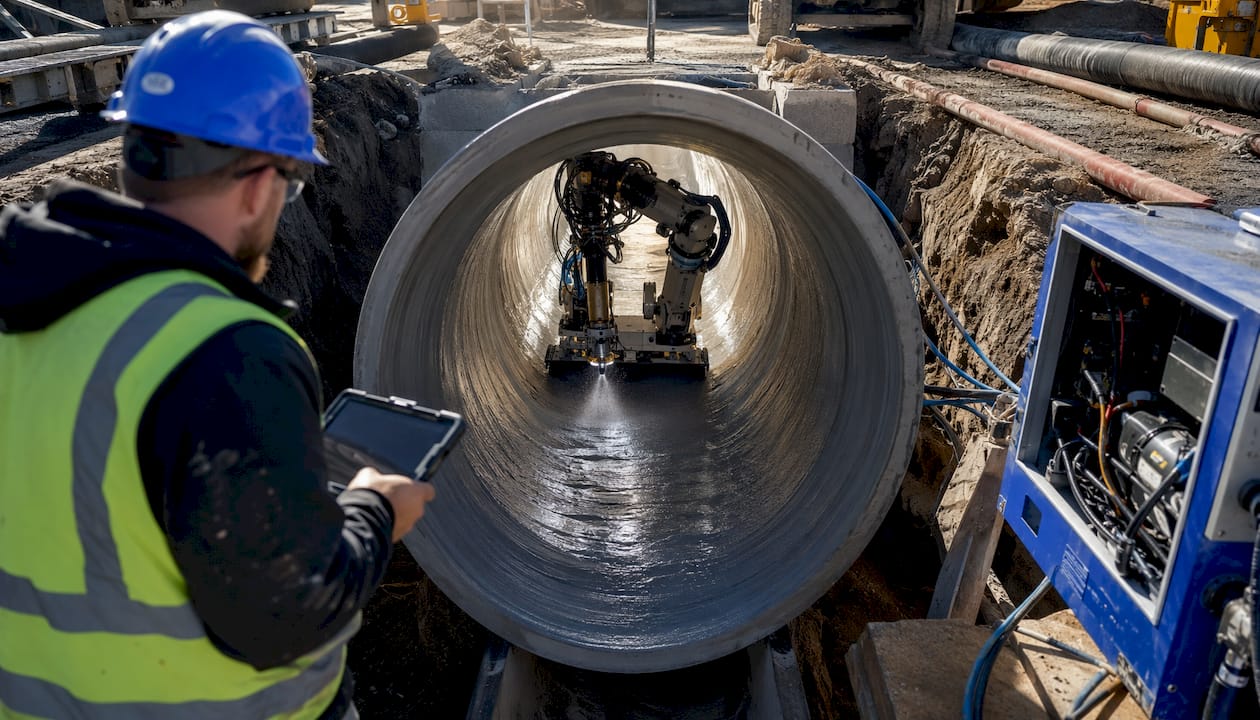
UV and LED-cured CIPP eliminates the need for hot water or steam curing equipment, reducing mobilization weight and enabling faster cure cycles. The photoinitiated reaction is triggered by pulling a UV or LED light train through the installed liner, with cure times measured in minutes per meter rather than hours per run.
Fiber optic distributed temperature sensing during hot-water or steam-cured CIPP provides continuous, real-time temperature data along the full pipe length, replacing spot thermocouples that only measure at one point. This gives crews immediate confirmation of complete cure before cooling begins.
Spray-in-place polymer (SIPP) systems use robotic applicators to coat large-diameter pipes from the inside, reaching segments where worker entry is impractical. These systems apply polymeric materials that bond directly to the host pipe, creating a corrosion-resistant lining without reducing internal diameter significantly.
Fold-and-form pipe lining uses thermoplastic liners that are heated, folded for transport, then re-rounded in place using pressurized steam and compressed air. The result is a structurally independent, close-fit liner installed through existing manholes.
Smart pig inspection tools, referenced by the Pipeline and Hazardous Materials Safety Administration, use magnetic flux leakage and ultrasonic sensors to detect wall loss and cracking in pressure pipelines, providing condition data that CCTV alone cannot capture.
11. Safety protocols and regulatory compliance in pipe rehabilitation
Confined space entry, bypass pumping, traffic control, and chemical handling each carry specific regulatory requirements that apply to rehabilitation projects. OSHA 29 CFR 1910.146 governs permit-required confined space entry, which applies to any manhole access during CIPP installation, CCTV inspection, or post-repair testing.
Chemical grouting materials require handling per Safety Data Sheet (SDS) requirements, with appropriate personal protective equipment and spill containment in place. CIPP resin systems, particularly styrene-based formulations, require air monitoring during installation to protect workers and nearby residents.
Regulatory compliance for potable water rehabilitation includes NSF/ANSI Standard 61 material certification and, in many states, notification to the state drinking water program before work begins on distribution mains. The NASSCO CIPP Specification Guideline 2023 requires contractors to identify byproducts produced during installation, monitor their levels, and comply with local waste discharge requirements.
Traffic control plans for urban rehabilitation projects must meet the Manual on Uniform Traffic Control Devices (MUTCD) standards. Trenchless methods reduce the footprint of surface work, but access pit excavation and equipment staging still require lane closures and pedestrian detour planning.
12. Environmental considerations during pipe rehabilitation
Trenchless rehabilitation methods carry a significantly lower environmental footprint than open-cut replacement, but they are not impact-free. Managing that impact requires deliberate planning at the project design stage.
CIPP installation generates byproducts during curing, including styrene vapors from polyester resin systems and condensate water that must be collected and disposed of per local discharge requirements. UV-cured and ambient-cure systems reduce or eliminate these emissions, which is one reason they are gaining preference in environmentally sensitive areas.
Chemical grouting materials must be selected for compatibility with the surrounding soil and groundwater. Acrylamide-based grouts are restricted or prohibited in many jurisdictions due to toxicity concerns. Polyurethane and acrylate grouts are the standard alternatives for most municipal applications.
Floodplain projects require hydraulic modeling to confirm that any reduction in internal pipe diameter from lining does not raise upstream water surface elevations. Sliplining in regulated floodplains typically requires Bureau of Structures review and approval before construction begins.
Debris and sediment from pre-lining cleaning must be captured and disposed of properly, particularly in stormwater systems that discharge to sensitive water bodies. Bypass pumping during rehabilitation prevents untreated flow from reaching surface waters, but the bypass system itself requires containment planning to prevent spills.
Hydro jetting before lining clears the pipe thoroughly while keeping debris contained, making it the preferred cleaning method for projects in environmentally sensitive areas.
Key takeaways
Effective pipe rehabilitation depends on a systematic sequence: accurate assessment, matched method selection, certified materials, documented installation, and ongoing monitoring.
| Point | Details |
|---|---|
| Assessment drives every decision | CCTV inspection and NASSCO PACP criticality scoring must precede method selection on every project. |
| No universal best method | AWWA confirms method choice depends on rehabilitation reason, site conditions, cost, and lifecycle performance. |
| CIPP handles the widest range | CIPP rehabilitates pipes from 2 to 120 inches in diameter, with single runs up to half a mile. |
| Moisture control is critical | Active groundwater infiltration during CIPP curing compromises resin cure and reduces structural performance. |
| Lifecycle planning reduces total cost | Integrating rehabilitation into an asset management plan lowers 20-year costs compared to reactive replacement. |