
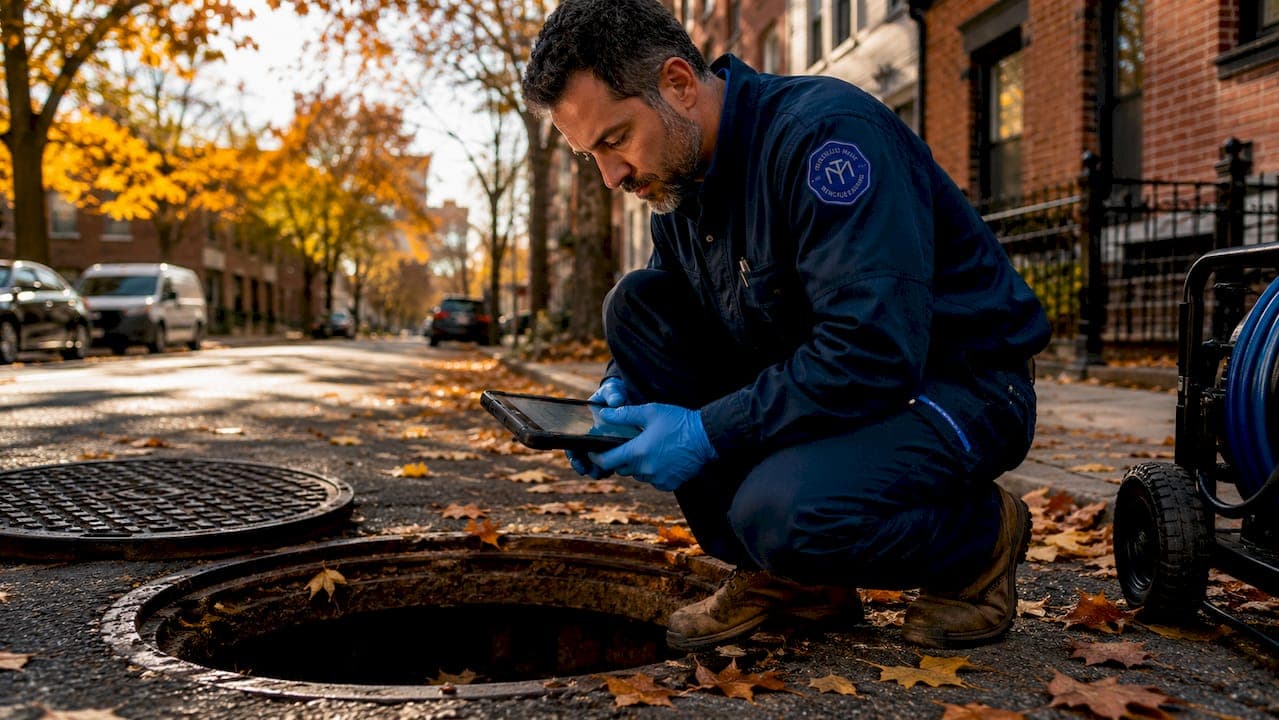
Rapid sewer repair is defined as the prompt diagnosis and restoration of damaged sewer lines before failures escalate into property damage, health hazards, or regulatory violations. For homeowners and property managers in Maine, a slow drain or sewage odor is rarely just a minor inconvenience. Left unaddressed, a compromised sewer lateral can cause sewage backups, foundation damage, and mold growth within days. Modern trenchless sewer rehabilitation methods, including Cured-In-Place Pipe (CIPP) lining and epoxy coating, now make it possible to fix these problems quickly and without tearing up your yard.
Why rapid sewer repair matters: property damage and health risks
Sewage backups are the most immediate and costly consequence of a delayed sewer repair. When a blocked or cracked sewer line fails, raw sewage reverses into your home through floor drains, tubs, and showers. Cleanup alone can cost thousands of dollars, and the unsanitary conditions create serious health risks from bacteria and pathogens.
Foundation damage is a slower but equally serious threat. A leaking sewer line saturates the surrounding soil, which gradually undermines the structural support beneath your home's foundation. Over time, this soil saturation causes settling, cracking, and in severe cases, structural failure that costs far more to fix than the original pipe repair would have.
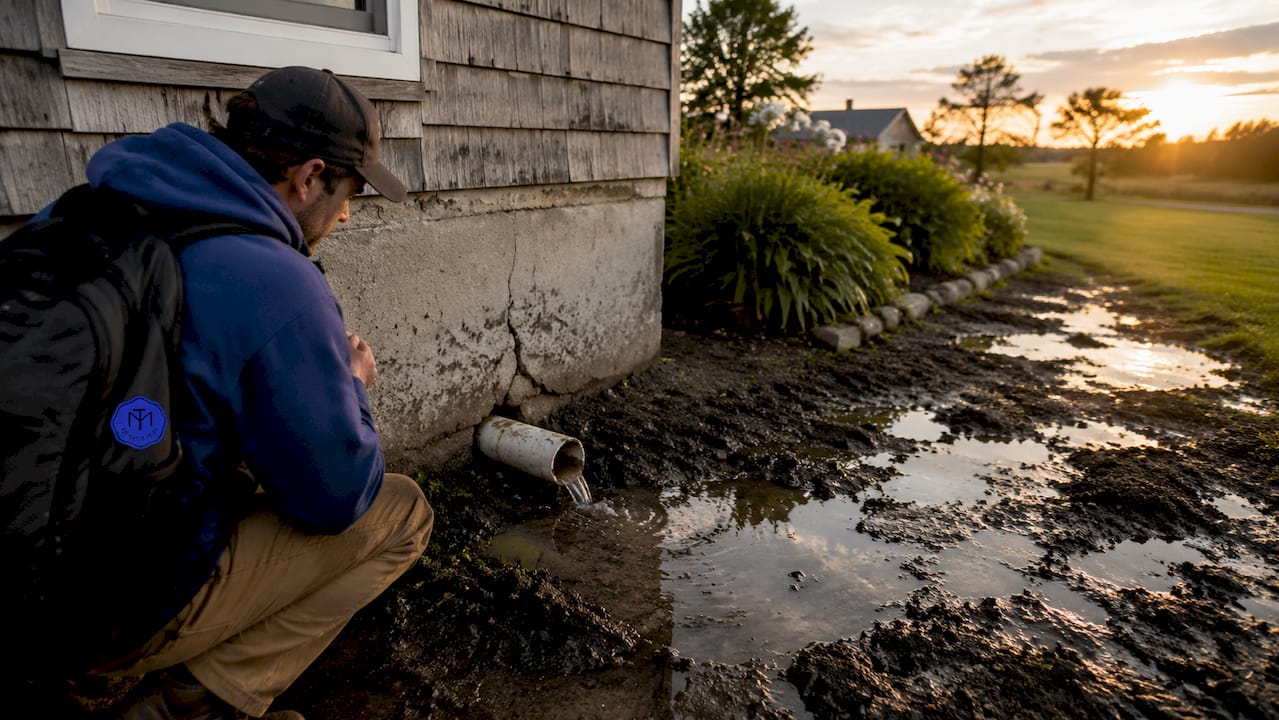
Mold growth follows moisture, and a leaking sewer line creates exactly the conditions mold needs. Mold can begin forming within 24–48 hours of water intrusion. Once it spreads inside wall cavities or beneath flooring, remediation becomes a separate and expensive project on top of the plumbing repair.
Key warning signs that demand immediate attention include:
- Sewage backup into tubs, showers, or floor drains
- Multiple slow drains throughout the home at the same time
- Sewage odors inside or outside the property
- Wet or sunken areas in the yard above the sewer line
- Persistent gurgling sounds from toilets or drains
These urgent repair indicators signal that the sewer line is already failing, not just aging. Each day without action increases both the repair scope and the total cost.
Pro Tip: If you notice a strip of unusually green, lush grass running across your yard, that is often a sign of a leaking sewer line acting as an effective fertilizer underground. Get a camera inspection scheduled before it becomes a full backup.
Trenchless vs. traditional excavation: which repair method wins?
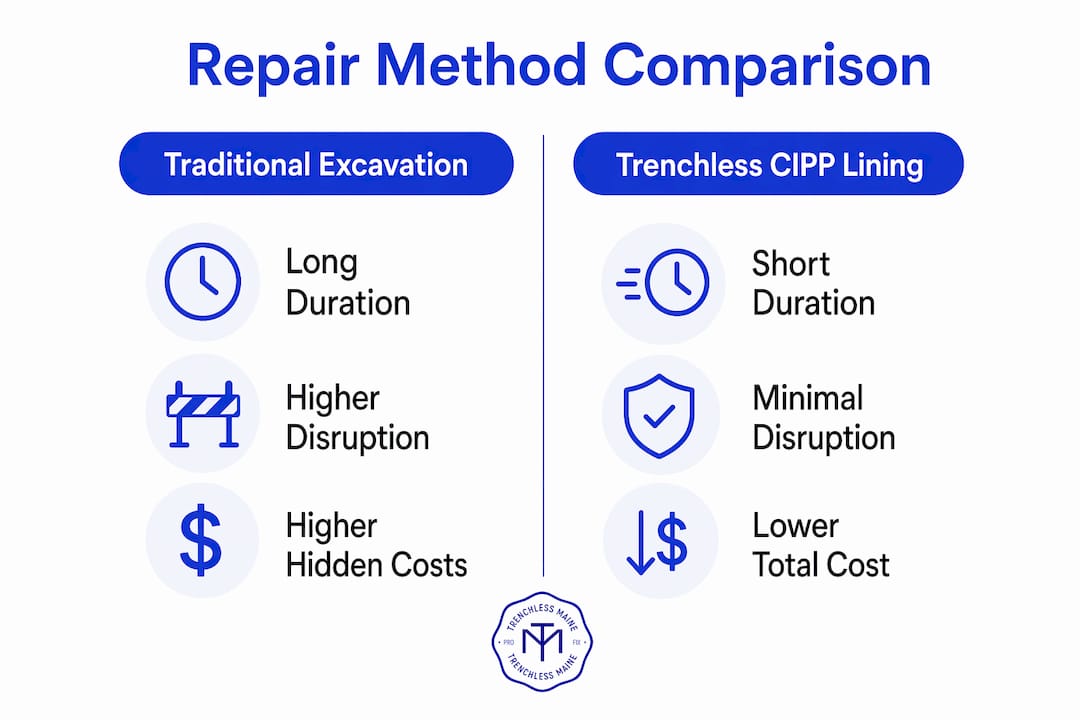
The comparison between traditional excavation and trenchless sewer repair comes down to four factors: cost, time, disruption, and long-term durability.
| Factor | Traditional Excavation | Trenchless CIPP Lining |
|---|---|---|
| Project duration | 3–5 days or longer | Typically 1 day |
| Surface disruption | Digs up yard, driveway, or porch | Minimal to none |
| Total project cost | Higher due to restoration costs | 30–50% lower overall |
| Service life added | Varies by pipe material | Up to 50+ years |
| Landscaping impact | Significant | Preserved |
Traditional excavation carries hidden costs that homeowners often underestimate. Beyond the plumbing labor, you pay to restore your driveway, replant landscaping, and repair any porch or hardscape that was removed. These surface restoration costs can easily match or exceed the plumbing charges themselves.
Trenchless CIPP lining inserts a resin-saturated liner into the damaged pipe, which then cures in place to form a new pipe within the old one. CIPP installations restore 95% of pipe flow capacity and typically complete in a single day, compared to 3–5 days for traditional excavation. That speed directly reduces the disruption to your household or tenants.
The long-term value is equally compelling. Modern trenchless lining systems extend pipeline service life by 50+ years, with chemical-resistant structural integrity that outperforms aging clay or cast iron pipe. For property managers overseeing multiple units, that lifespan means fewer repeat repairs and more predictable maintenance budgets.
Pro Tip: Trenchless repair has a higher per-foot cost than a simple patch, but the total project cost is almost always lower once you factor in surface restoration. Always ask for a total project estimate, not just a per-foot rate, before comparing quotes.
For a detailed breakdown specific to Maine properties, the trenchless vs. excavation cost comparison from Trenchlessmaine covers local pricing factors worth reviewing before you decide.
Why is acting quickly critical when sewer problems arise?
Delay is the single biggest cost multiplier in sewer repair. A small crack or root intrusion that costs a few hundred dollars to address with CIPP lining can become a full pipe collapse requiring emergency replacement if ignored for a season.
Deferred sewer maintenance increases the risk of system failure, regulatory penalties, and emergency repairs that cost far more than planned work. This is not a theoretical risk. The American Society of Civil Engineers (ASCE) has consistently flagged deferred maintenance as a primary driver of infrastructure failure across the country.
Here are the four most urgent reasons to act without delay:
-
Microbiologically influenced corrosion (MIC): Hydrogen sulfide gas produced by sewage bacteria corrodes pipe walls and manholes from the inside out. Early epoxy rehabilitation stops this process and extends manhole life by 50+ years at 40–60% of the cost of full replacement. Waiting until the structure fails eliminates that option entirely.
-
Infiltration and inflow: Cracked pipes allow groundwater and stormwater to enter the sewer system. This increases the volume your system must handle, raising the risk of backups during heavy rain events, which are common in Maine.
-
Regulatory exposure: The Clean Water Act holds property owners responsible for sewer lateral maintenance from the home to the municipal connection. A failing lateral that discharges sewage into soil or groundwater can trigger fines and mandatory repair orders.
-
Cost escalation: Proactive sewer lining programs produce a 3:1 to 8:1 return on investment compared to reactive emergency replacement. That ratio reflects the real cost difference between a planned repair and an emergency call after a full collapse.
The math is straightforward. Acting on the first warning sign costs a fraction of what you will pay after a backup floods your basement or a pipe collapse requires emergency excavation.
How can homeowners protect against sewer emergencies?
Proactive maintenance is the most reliable way to avoid the disruption and expense of an emergency sewer repair. The good news is that protecting your sewer system does not require constant attention. A few targeted steps each year make a significant difference.
Start with a professional video camera inspection. Video camera inspection before any repair identifies the exact location and nature of damage, whether that is root intrusion, pipe deformation, joint separation, or corrosion. Without this step, you risk paying for the wrong repair. A patch applied to a structurally failed Orangeburg pipe, for example, will not hold. The inspection determines whether you need a targeted patch, a full lining, or a replacement.
A sewer scope inspection is also strongly recommended when buying a home, after a major root removal, or following any sewage backup event. It gives you documented evidence of pipe condition before problems escalate.
Additional steps that protect your property include:
- Schedule routine hydro jetting every 1–3 years to clear grease buildup, root intrusion, and debris before they cause blockages
- Avoid flushing wipes, grease, or fibrous materials that accumulate in sewer laterals and accelerate blockage formation
- Inspect cleanout access points annually to confirm they are accessible and undamaged
- Act on slow drains immediately rather than waiting for a full backup to develop
- Choose a repair method matched to your pipe material since older clay or Orangeburg pipe may require full replacement rather than lining alone
For Maine homeowners specifically, the freeze-thaw cycle each winter puts additional stress on aging pipe joints. Addressing small cracks before winter arrives prevents them from widening under ground movement.
Pro Tip: Ask your sewer repair contractor to provide a post-repair video inspection report. This gives you a documented baseline of pipe condition and protects you if questions arise about the repair quality later.
Trenchlessmaine's guide on essential sewer maintenance tips covers Maine-specific seasonal factors worth reviewing before the next cold season.
Key takeaways
Rapid sewer repair prevents property damage, health hazards, and cost escalation by addressing pipe failures before they become emergencies that require full replacement.
| Point | Details |
|---|---|
| Act on warning signs immediately | Sewage odors, slow drains, and wet yard areas signal active pipe failure requiring prompt inspection. |
| Trenchless repair saves money overall | CIPP lining cuts total project costs by 30–50% by eliminating surface restoration expenses. |
| Delay multiplies repair costs | Proactive lining delivers a 3:1 to 8:1 ROI compared to emergency replacement after a collapse. |
| Camera inspection guides the right repair | Video inspection before any repair prevents wasted spending on the wrong fix for your pipe type. |
| Trenchless lining adds decades of life | Modern CIPP systems extend pipeline service life by 50+ years with chemical-resistant structural integrity. |
The repair decision most homeowners get wrong
I have seen the same pattern repeat itself more times than I can count. A homeowner notices a slow drain or a faint sewage smell, assumes it is a minor clog, and buys a bottle of drain cleaner. Six months later, they are calling for an emergency repair after a backup floods their finished basement. The drain cleaner did nothing. The underlying crack or root intrusion kept growing.
The misconception that drives this mistake is the belief that sewer problems announce themselves clearly before they become serious. They do not. A sewer lateral can lose structural integrity gradually over months while showing only minor symptoms. By the time the backup happens, the repair scope has expanded significantly.
What I consistently recommend is this: treat any recurring drain issue as a sewer line issue until a camera inspection proves otherwise. The inspection costs a fraction of what a backup cleanup and emergency repair will run. And if the inspection finds nothing serious, you have peace of mind and a documented baseline for future reference.
The shift toward minimally invasive sewer repair methods like CIPP lining has made rapid action far less disruptive than it used to be. There is no longer a good reason to delay a repair because you are worried about your yard or driveway. Modern trenchless methods protect both. The only thing that gets worse with waiting is the repair bill.
— John
How Trenchlessmaine can help you act fast
Trenchlessmaine specializes in no-dig sewer repair solutions across Maine, including CIPP pipe lining, hydro jetting, video camera inspections, and drain clearing. Most projects complete within a single day, with minimal disruption to your property and no excavation required. Trenchlessmaine backs its work with industry-leading warranties of up to 50 years, giving you lasting protection from the repairs that matter most.
If you have noticed any warning signs of sewer trouble, the right move is a professional inspection before the problem grows. Explore Trenchlessmaine's full range of no-dig sewer repair technologies to understand your options and get a free quote for your property.
FAQ
What happens if you delay a sewer line repair?
Delaying sewer repair increases the risk of sewage backups, foundation damage, mold growth, and regulatory fines. Deferred maintenance is a primary driver of system failure and leads to emergency repairs that cost significantly more than planned work.
How long does trenchless sewer repair take?
Most trenchless CIPP lining jobs complete in a single day. Traditional excavation repairs typically take 3–5 days or longer, plus additional time for surface restoration.
How do i know if my sewer line needs urgent repair?
Signs requiring urgent repair include sewage backup into tubs or showers, multiple slow drains throughout the home, sewage odors, wet or sunken yard areas above the sewer line, and persistent gurgling sounds from toilets.
Is trenchless sewer repair worth the cost?
Trenchless repair saves homeowners 30–50% on total project costs compared to traditional excavation by eliminating surface restoration expenses. The added service life of 50+ years makes it a strong long-term investment.
Do i need a camera inspection before sewer repair?
A video camera inspection is the only reliable way to determine whether you need a patch, a full lining, or a pipe replacement. Skipping this step risks paying for a repair that does not match the actual damage.