
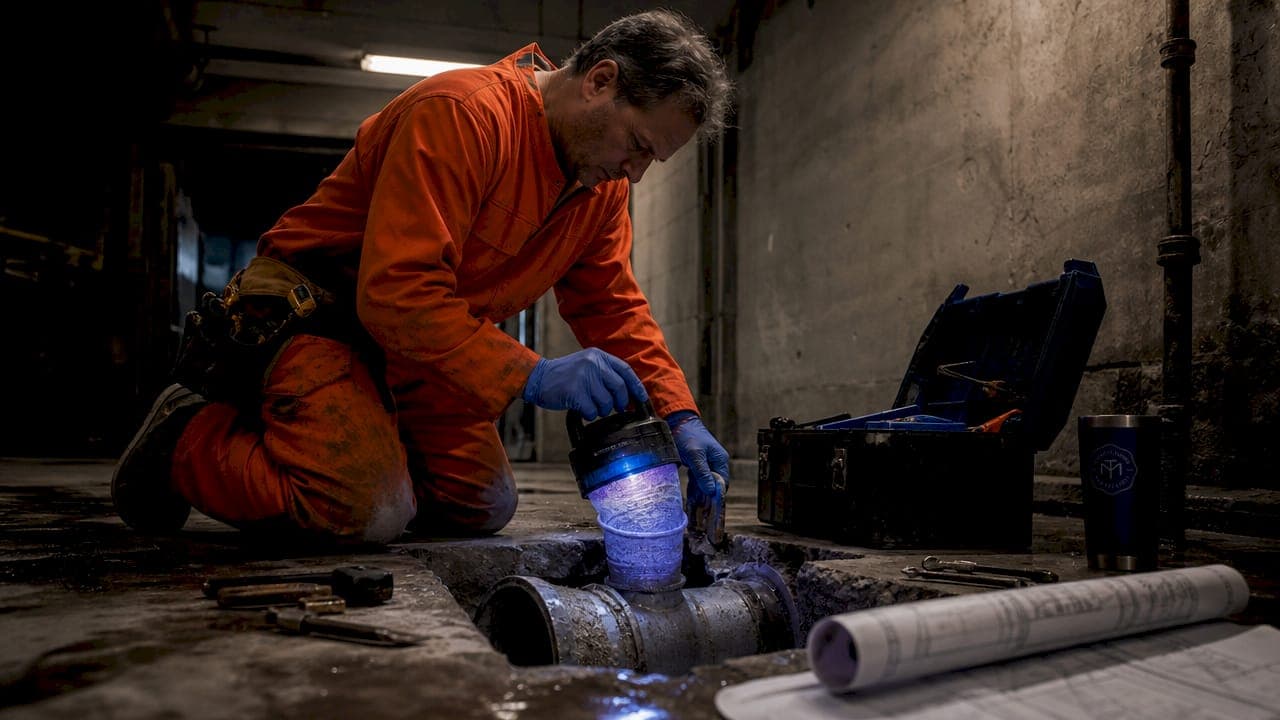
UV pipe lining is a trenchless pipe rehabilitation method that repairs damaged sewer and drain pipes by inserting a resin-saturated liner and curing it instantly with ultraviolet light, creating a new structural pipe inside the old one. The industry standard term for this technology is UV-cured cured-in-place pipe, or UV-CIPP. Unlike traditional excavation repairs that tear up your yard, driveway, or landscaping, UV pipe lining requires no digging. Systems like NuFlow and LightRay have helped bring this technology into the residential market, making it a practical option for homeowners dealing with cracked, corroded, or root-damaged pipes. If you are weighing your options for pipe repair, understanding how UV-CIPP works will help you make a confident, cost-informed decision.
How does the UV pipe lining process work?
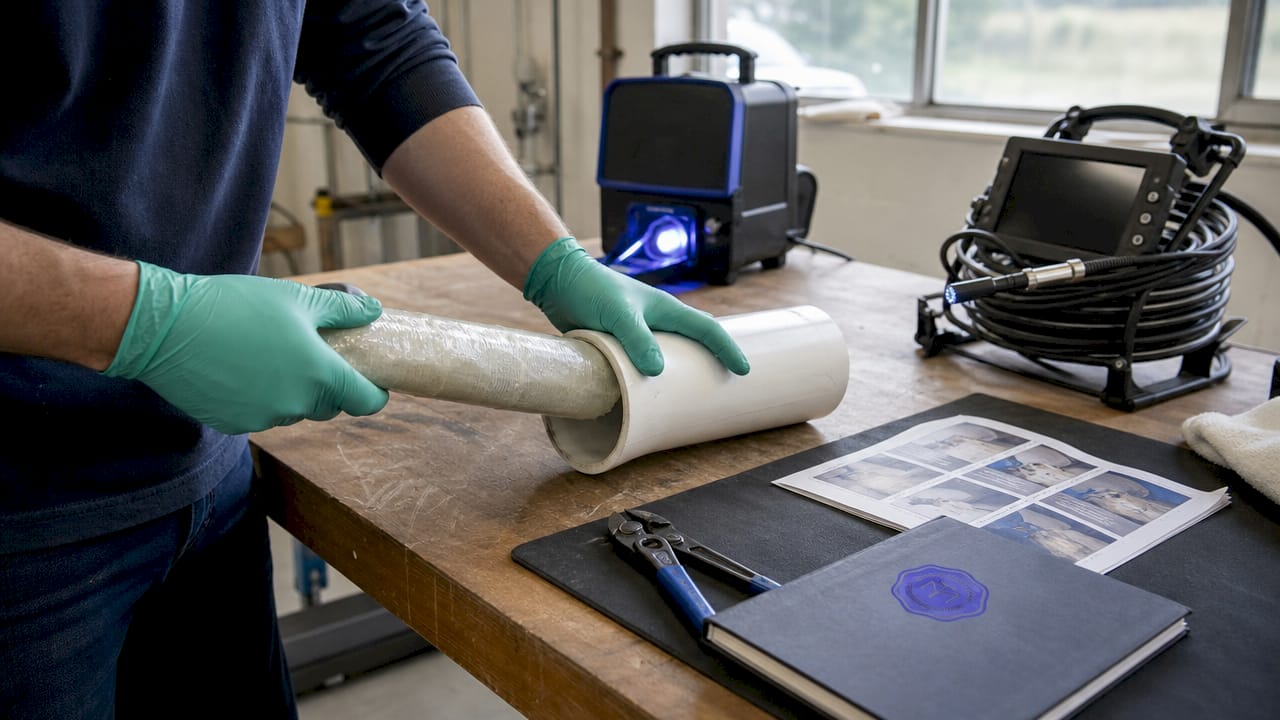
The UV pipe lining process follows a clear sequence of steps, and for most residential pipes, the entire job completes within a few hours. That speed matters because it means minimal disruption to your home and daily routine, unlike traditional repairs that can stretch across multiple days.
Here is what to expect from start to finish:
-
CCTV pipe inspection. A technician sends a small camera through your pipe to assess its condition. This footage confirms whether the pipe retains enough structural geometry for a liner to seat properly. A rigorous CCTV inspection is the non-negotiable first step before any UV lining work begins.
-
Pipe cleaning and preparation. Before the liner goes in, the pipe must be cleared of debris, grease buildup, and root intrusion. Hydro jetting is the most common cleaning method at this stage. Skipping thorough prep leads to poor liner adhesion and premature failure.
-
Liner insertion. A fiberglass or felt liner pre-saturated with light-sensitive resin is pulled or inverted into the pipe. The liner conforms to the shape of the host pipe, including bends and diameter changes.
-
UV curing. A specialized UV lamp train is pulled through the liner at a controlled speed. The ultraviolet light triggers rapid polymerization of the resin, hardening the liner into a rigid, fiber-reinforced composite. Note that cure time depends on pipe size: larger diameter pipes require slower lamp movement to achieve full curing throughout the liner wall.
-
Lateral reinstatement. Once cured, robotic cutters reopen any branch connections, called laterals, that were covered by the liner. These cutters rely on the CCTV footage captured earlier. If a pipe is severely offset or deformed, robotic cutters may struggle, which can require additional work to resolve.
-
Final inspection. A post-installation camera run confirms the liner is fully cured, properly seated, and all laterals are open.
Pro Tip: Ask your contractor to share both the pre- and post-installation CCTV footage. Comparing the two gives you documented proof of the repair quality and a baseline for future inspections.
What are the benefits of UV pipe lining vs. traditional repair?
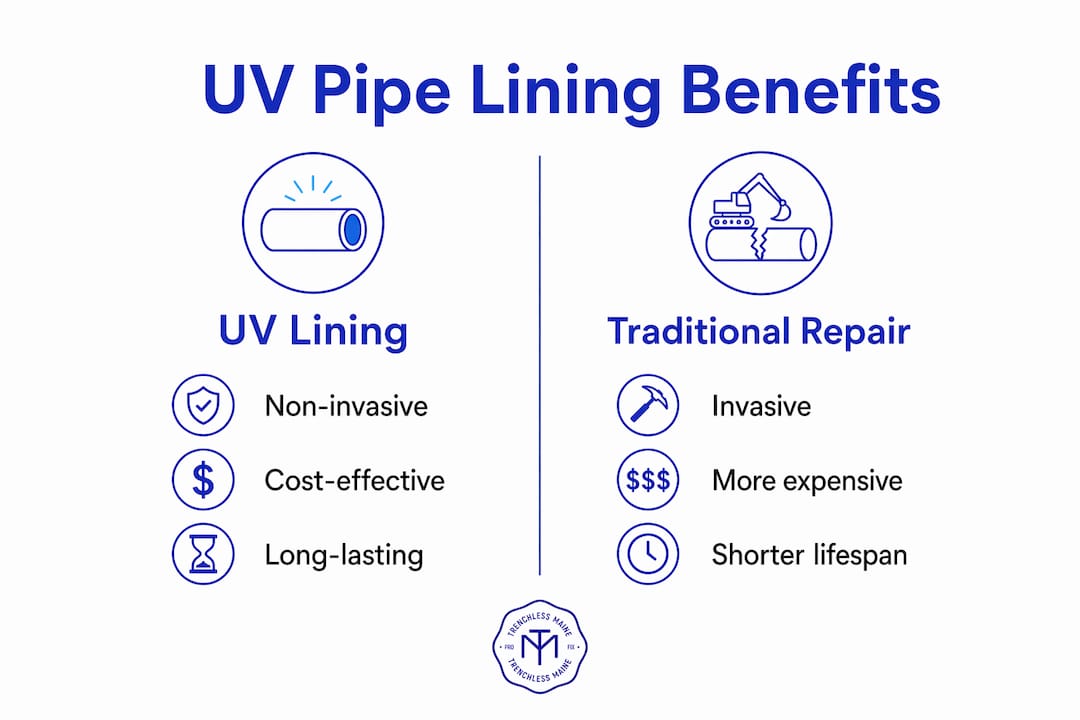
UV pipe lining outperforms traditional open-cut pipe replacement on nearly every practical measure that matters to a homeowner: speed, cost, disruption, and longevity.
Here are the core advantages:
-
No excavation required. Your yard, driveway, garden beds, and concrete stay intact. Traditional pipe replacement often means heavy machinery, trenches several feet deep, and weeks of landscape restoration after the pipe work is done.
-
Faster project completion. UV curing takes minutes per section rather than the hours required by steam or hot-water heat curing methods. Most residential UV lining jobs finish in a single day.
-
Significant cost savings. Trenchless pipe relining is typically 30 to 50 percent less expensive than open-cut replacement when you factor in reduced labor, equipment, and site restoration costs. For a homeowner facing a full sewer lateral replacement, that difference can represent thousands of dollars.
-
A seamless, jointless pipe within the pipe. UV-CIPP creates a close-fit liner that conforms tightly to the host pipe, eliminating joints where root intrusion and leaks typically originate. The result is a structurally renewed pipe with enhanced mechanical strength and chemical resistance.
-
Lower environmental impact. Trenchless rehabilitation technologies including UV-CIPP reduce carbon emissions and energy consumption compared to full excavation. Less heavy equipment means less fuel burned and less soil disturbance.
-
Long service life. UV lined pipes are built to last, which brings us to the next important question about longevity.
For a broader look at how UV lining compares to other no-dig options, the non-invasive pipe repair methods guide from Trenchlessmaine covers the full range of trenchless alternatives available to Maine homeowners.
What pipes and damage types are suitable for UV lining?
UV pipe lining is not a universal fix. The pipe must retain enough of its original shape for the liner to seat and cure correctly. Understanding what qualifies, and what does not, saves you time and prevents a mismatched repair.
Pipe materials that work well with UV lining:
- Cast iron pipes, which are common in homes built before 1980 and prone to corrosion and cracking
- Clay pipes, frequently found in older sewer laterals and susceptible to root intrusion and joint separation
- PVC pipes with cracks or minor deformation that have not lost structural geometry
Damage types UV lining addresses effectively:
- Hairline cracks and fractures from ground movement or freeze-thaw cycles
- Corrosion and pitting along pipe walls
- Root intrusion through joints or cracks
- Minor pipe deformation that still allows liner insertion
Situations where UV lining is not the right choice:
- Severely collapsed pipe sections where the liner cannot pass through
- Heavily offset joints that prevent liner seating
- Pipes with active sinkholes or major soil voids around them
Not all pipes are candidates for UV lining, which is exactly why the CCTV inspection step is so critical. A contractor who skips a thorough camera assessment before quoting you UV lining is cutting a corner that could cost you later.
Pro Tip: If you own a home built before 1970 in Maine, there is a strong chance your sewer lateral is clay or cast iron. Both materials are excellent candidates for UV lining, but both also tend to have root intrusion issues that need to be cleared before the liner goes in. Check out Trenchlessmaine's resource on older pipe materials to understand what you are likely dealing with.
How to maintain UV lined pipes and extend their lifespan
UV lined pipes are built to last, but they are not maintenance-free. Proper care after lining protects your investment and keeps the pipe performing at its best for decades.
UV lined pipes can last 20 to 50 years with proper maintenance and favorable pipe conditions. That range is wide because lifespan depends on factors like soil conditions, water chemistry, usage load, and how consistently you schedule upkeep.
Here is what good maintenance looks like in practice:
-
Schedule a CCTV inspection every 3 to 5 years. Even a healthy lined pipe benefits from periodic camera checks. Early detection of any new root intrusion or debris buildup prevents small problems from becoming expensive ones.
-
Use hydro jetting for cleaning, not mechanical snaking. Mechanical snakes can scratch or damage the liner surface over time. High-pressure water jetting clears blockages safely without compromising the liner's integrity.
-
Watch for slow drains or gurgling sounds. These are early warning signs that something is restricting flow inside the pipe. Catching a blockage early is far cheaper than addressing a full backup.
-
Review your warranty documentation. Reputable contractors offer warranties on UV-CIPP work, sometimes up to 50 years for structural integrity. Knowing what your warranty covers, and what voids it, helps you make informed maintenance decisions. Trenchlessmaine's pipe lining warranty checklist is a useful reference for property owners navigating this.
-
Avoid planting trees or large shrubs near lined pipe runs. Root intrusion is the most common threat to any pipe system. Keeping deep-rooted vegetation away from your sewer line is the simplest preventive measure available.
Compared to a traditionally replaced pipe, a UV lined pipe requires the same basic maintenance routine but tends to be more resistant to root intrusion because the seamless liner eliminates the joint gaps that roots exploit first.
My honest read on UV pipe lining after years in the field
Most homeowners I talk to come in with one of two misconceptions. Either they think UV lining is some experimental technology that has not been proven yet, or they assume it works on every pipe regardless of condition. Neither is true.
UV-CIPP has a well-documented track record in municipal and commercial infrastructure, and it is increasingly the right call for residential sewer laterals. What I have seen firsthand is that the technology performs exactly as advertised when the prep work is done correctly. The failure cases I have encountered almost always trace back to inadequate pipe cleaning before liner insertion, or a contractor who rushed the CCTV assessment and missed a section of pipe that was too deformed to accept the liner properly.
My advice: do not select a UV lining contractor based on price alone. Ask specifically how they handle lateral reinstatement, what camera system they use for pre- and post-inspection, and whether they will share the footage with you. A contractor who is confident in their work will have no hesitation showing you the before and after. One who deflects that question is telling you something important.
The environmental angle is also underappreciated. In Maine, where we are dealing with aging infrastructure, rocky soil, and freeze-thaw cycles that accelerate pipe deterioration, avoiding excavation is not just a convenience. It protects your landscaping, your driveway, and the surrounding soil structure. The reduced carbon footprint of trenchless methods is a real benefit, not just a marketing point.
UV pipe lining is not the answer for every situation, but for the right pipe and the right damage profile, it is the most practical, cost-effective, and least disruptive repair option available to homeowners today.
— John
How Trenchlessmaine can help with UV pipe lining in Maine
Trenchlessmaine brings advanced UV-CIPP technology to homeowners and property managers across Maine, handling everything from the initial camera inspection through final liner verification.
If you are dealing with slow drains, recurring backups, or a pipe that has not been inspected in years, the right first step is a professional sewer camera inspection to confirm what you are working with. From there, Trenchlessmaine's team can tell you whether UV lining is the right fit or whether a different trenchless repair approach makes more sense for your specific pipe condition. With over 50 years of combined expertise and warranties up to 50 years, Trenchlessmaine is the local team Maine property owners trust to get the job done without tearing up their property.
FAQ
What is UV pipe lining in simple terms?
UV pipe lining is a no-dig pipe repair method where a resin-coated liner is inserted into a damaged pipe and hardened using ultraviolet light, creating a new pipe inside the old one. The industry term is UV-CIPP, or UV-cured cured-in-place pipe.
How long does UV pipe lining last?
UV lined pipes last 20 to 50 years depending on maintenance, pipe conditions, and usage. Regular CCTV inspections and hydro jetting cleaning extend the upper end of that range.
Is UV pipe lining more affordable than pipe replacement?
Yes. Trenchless pipe relining is typically 30 to 50 percent less expensive than full open-cut replacement because it eliminates excavation labor, heavy equipment, and landscape restoration costs.
What types of damage can UV lining fix?
UV lining repairs cracks, corrosion, root intrusion, and minor pipe deformation in cast iron, clay, and PVC pipes. It does not work on severely collapsed or heavily offset pipes where the liner cannot seat properly.
How do I know if my pipe qualifies for UV lining?
A professional CCTV pipe inspection is the only reliable way to confirm eligibility. The camera footage shows whether the pipe retains enough geometry for the liner to fit and cure correctly.
Key takeaways
UV pipe lining is the most practical, cost-effective, and least disruptive pipe rehabilitation method available to homeowners when the pipe retains enough structural integrity to accept a liner.
| Point | Details |
|---|---|
| UV-CIPP creates a pipe within a pipe | A resin liner cures into a seamless, jointless structure that renews the host pipe's integrity. |
| Speed is a major advantage | Most residential UV lining jobs complete within a few hours, far faster than heat-cured or excavation methods. |
| Cost savings are substantial | UV lining typically costs 30 to 50 percent less than full pipe replacement when restoration costs are included. |
| Not every pipe qualifies | CCTV inspection is required to confirm the pipe has enough geometry for the liner to seat and cure properly. |
| Maintenance extends lifespan to 50 years | Periodic camera inspections and hydro jetting keep UV lined pipes performing at their best for decades. |