
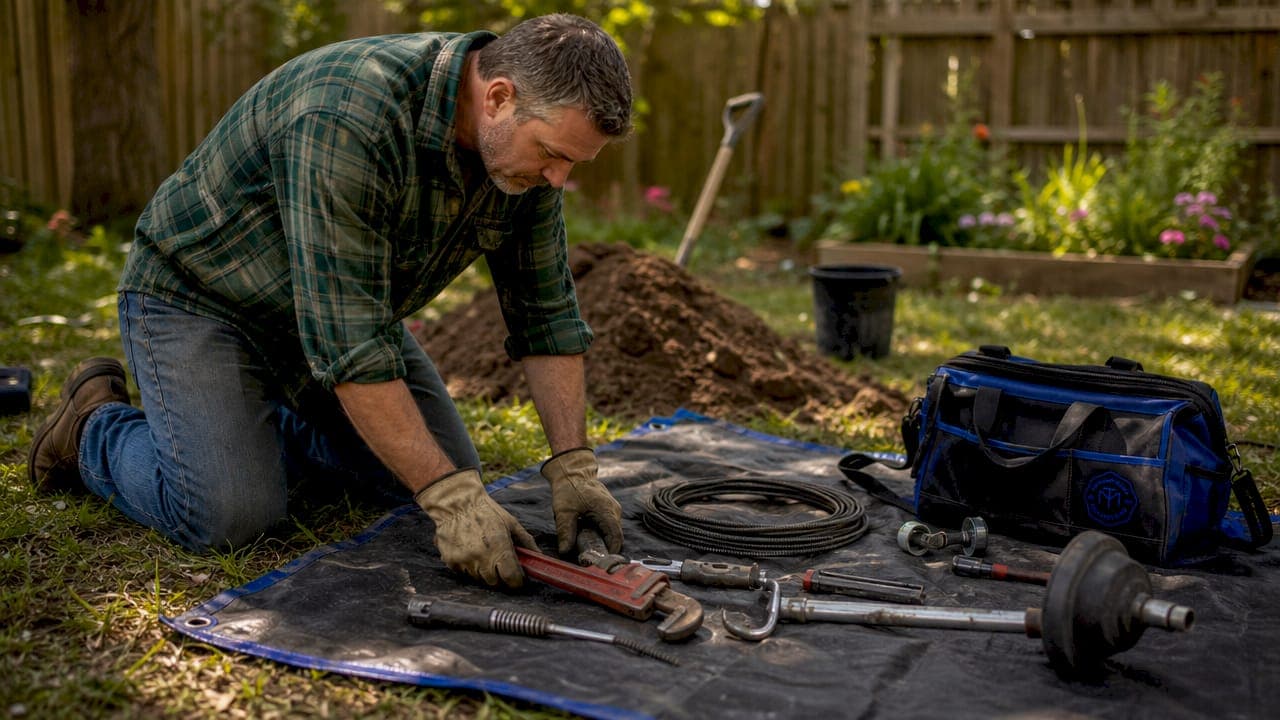
Must-have sewer repair tools are specialized equipment designed to detect, access, and fix sewer line problems without unnecessary excavation or guesswork. Whether you are dealing with a slow kitchen drain, a blocked sewer lateral, or suspected root intrusion, the right tools determine whether you solve the problem in an afternoon or call in an emergency crew. This guide covers the best tools for sewer repair, from basic manual gear to advanced inspection cameras and hydro jetters, so you can tackle projects with confidence and avoid costly mistakes.
1. Must-have sewer repair tools: the manual essentials
Basic essential tools like pipe wrenches, adjustable wrenches, plungers, and tubing cutters handle approximately 80% of daily plumbing maintenance tasks. That figure means most routine sewer repairs you will face as a homeowner are within reach of a well-stocked manual toolkit, without any power equipment at all.
Here are the core manual tools every homeowner and DIYer should have on hand:
- Pipe wrenches (14-inch and 18-inch): These are the workhorses of sewer repair. Use the 14-inch for tight spaces and the 18-inch for main line fittings and larger diameter pipe connections. Always keep two on hand so you can hold one fitting steady while turning another.
- Adjustable wrench: A 10-inch or 12-inch adjustable wrench handles compression fittings, cleanout caps, and supply line connections. It is the most versatile tool in any plumbing kit.
- Basin wrench: This tool reaches up behind sinks and into confined spaces where standard wrenches cannot fit. If you are removing or replacing a drain assembly under a vanity, a basin wrench saves significant time.
- Cup plunger and flange plunger: Using the correct plunger type is critical to avoid damaging the drain and to clear clogs effectively on the first try. The cup plunger works on flat drains like sinks and tubs, while the flange plunger is shaped for toilets with curved trapways.
- Hand auger (drain snake): A 25-foot hand auger with a 3/8-inch cable clears most household drain blockages. For main sewer lines, step up to a 50-foot cable with a 1/2-inch diameter for better torque and reach.
- Tube cutter and plastic pipe cutter: A quality tube cutter from brands like Ridgid or Milwaukee gives you a clean, square cut on copper or steel pipe. A ratcheting plastic pipe cutter handles PVC and ABS cleanly without the burrs that a hacksaw leaves behind.
Pro Tip: Buy pipe wrenches and augers from professional-grade brands like Ridgid or General Wire. Cheap versions strip fittings and break cables mid-job, turning a simple repair into a bigger problem.
2. Advanced sewer inspection cameras
A professional-grade inspection camera is the single most useful upgrade you can make to your sewer repair equipment. Professional-grade inspection cameras feature a minimum 65-foot push cable, an IP68 waterproof rating, and integrated 512Hz transmitters for precise locating of blockages without excavation. That transmitter detail matters: it lets you walk the surface above your yard and pinpoint exactly where a blockage or pipe deformation sits, so you dig only where necessary.
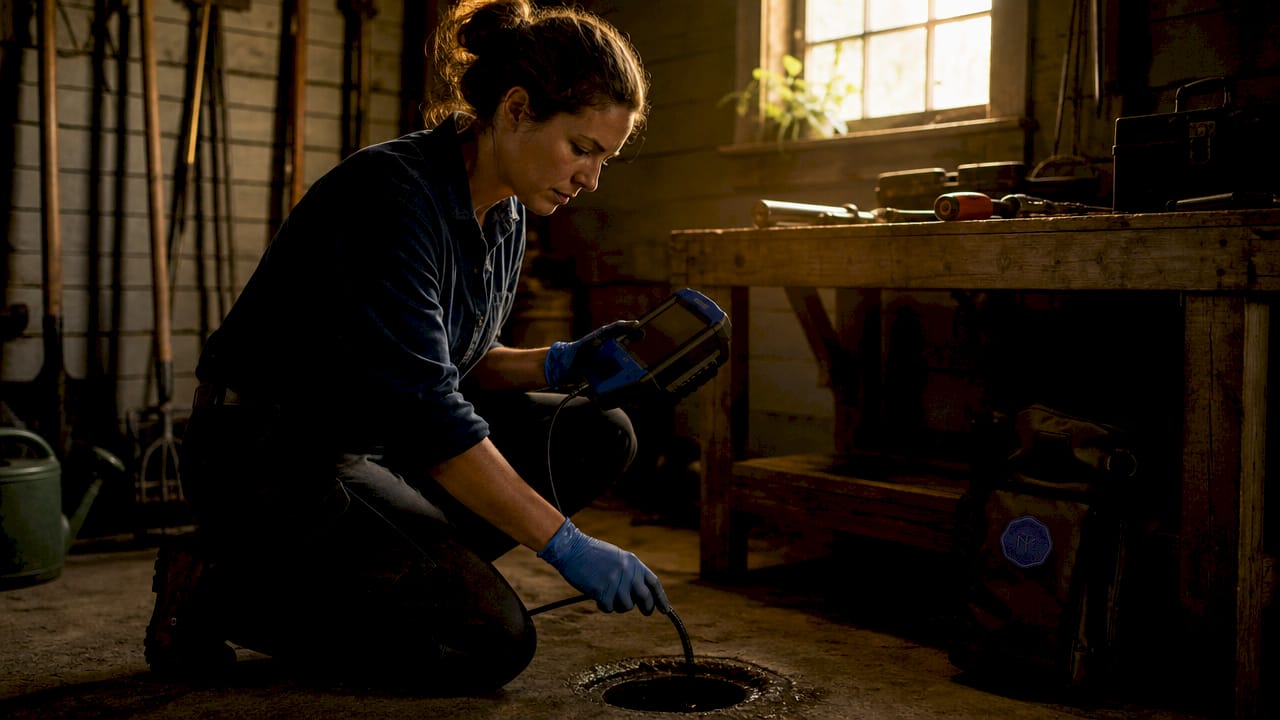
Self-leveling camera heads maintain correct image orientation in sewer lines ranging from 2 to 12 inches in diameter. Without self-leveling, the image rotates as the cable twists, making it nearly impossible to identify cracks, root intrusion, or joint offsets accurately.
Inspection cameras with integrated WiFi and reporting features improve professional workflow and benefit advanced DIYers by simplifying documentation. If you manage rental properties or a commercial building, the ability to export a video report to share with a contractor or insurance adjuster is genuinely useful.
Pro Tip: Standardizing on an 18V cordless system like Milwaukee M18 means your inspection camera, drill, and drain machine all share the same battery platform. That reduces the equipment you carry and keeps your job site organized.
3. Electric drain snakes and power augers
When a hand auger cannot reach or break through a blockage, an electric drain snake is the next step. High-speed flexible-shaft drain cleaning tools spin up to 2,200 RPM, clearing heavy-duty blockages and roots faster and cleaner than sectional machines. That speed advantage is significant when you are dealing with grease buildup or fibrous root intrusion in a 4-inch sewer lateral.
The Flexi-Rooter Jr. is a good example of a field-repairable tool designed for on-site maintenance. Field-repairable sewer tools save significant downtime compared to factory service, which matters when you are managing a repair schedule and cannot wait two weeks for a machine to come back from the shop.
For homeowners, a 1/2-inch electric drain snake with a 50-foot cable handles most main line jobs. Property managers dealing with recurring blockages in larger buildings should consider a 3/4-inch cable machine with interchangeable cutting heads for roots, grease, and scale.
4. Hydro jetting equipment
Hydro jetting uses pressurized water to remove grease, roots, and mineral buildup and is more effective than mechanical snaking for many blockages. A mechanical snake cuts through a clog but leaves residue on pipe walls. A jetter scours the pipe clean, which reduces how quickly the blockage returns.
Here is a comparison of the main options available to homeowners and property managers:
| Equipment type | Pressure range | Best use case | Approximate cost |
|---|---|---|---|
| DIY sewer jetter (electric washer attachment) | 1,500–2,000 PSI | Kitchen lines, grease buildup, slow drains | $100–$700 |
| Portable gas-powered jetter | 2,000–3,500 PSI | Main sewer lines, root intrusion, heavy scale | $800–$3,500 |
| Professional truck-mounted jetter | 4,000+ PSI | Municipal lines, severe blockages, commercial | Rental or service call |
A 50-foot needle-nose sewer jetter paired with an electric pressure washer can clear kitchen and bathroom lines in roughly half the time of conventional methods. At around $700 for a quality DIY setup, it is a cost-effective alternative to repeated professional service calls for slow or grease-filled lines.
Pro Tip: Before using a jetter on older clay or cast iron pipe, run your inspection camera first. High-pressure water can worsen existing cracks or joint offsets in deteriorated pipe, turning a cleaning job into a repair job.
5. Sewer line locators
A sewer line locator is a tool that detects the signal broadcast by your inspection camera's 512Hz sonde transmitter and displays depth and position on a surface receiver. Without one, you are guessing where to dig. With one, you mark the exact spot on your lawn or driveway before breaking ground.
For serious DIYers and property managers, a locator like the Ridgid SeekTech SR-20 or the General Pipe Cleaners Gen-Eye locator pairs directly with compatible inspection cameras. These tools are particularly valuable in Maine, where frozen ground, rocky soil, and aging infrastructure make unnecessary excavation expensive and disruptive.
If you only need a locator occasionally, renting one from a local equipment supplier is a practical option. The rental cost is far less than the cost of digging in the wrong location.
6. Pipe repair clamps and couplings
Once you have diagnosed a crack, joint offset, or small pipe failure, you need the right repair hardware. Fernco flexible couplings and Romac Industries repair clamps are the two most widely used options for emergency sewer line repairs on PVC, ABS, and cast iron pipe.
A Fernco coupling slides over the damaged section and compresses with stainless steel clamps to create a watertight seal. These are available at most hardware stores and require only a pipe cutter and a screwdriver to install. For larger diameter pipes or pressurized lines, a Romac clamp provides a more permanent repair.
Keep a selection of 3-inch and 4-inch Fernco couplings in your toolkit. They are inexpensive, and having them on hand means you can complete a repair the same day you diagnose the problem rather than waiting for a parts order.
7. How to choose the right tools for your project
Selecting the right sewer repair equipment depends on four factors: the complexity of the job, the pipe material and diameter, the severity of the blockage or damage, and your budget. Work through these decision points before purchasing or renting any tool:
- Assess the blockage location. A slow sink drain calls for a hand auger or cup plunger. A backed-up main sewer line requires an electric snake or hydro jetter with at least 50 feet of reach.
- Identify your pipe material. PVC and ABS pipe are forgiving. Cast iron and clay tile are brittle and require lower-pressure jetting and careful auger use to avoid further damage.
- Determine whether you need to locate the line. If you suspect a break or offset rather than a simple blockage, an inspection camera and locator are non-negotiable before any digging.
- Set a realistic budget. Apprentice-level plumbing toolkits require an initial investment of $300 to $500 to cover 80% of routine service tasks. Advanced tools like inspection cameras and electric snakes add $500 to $2,000 depending on quality.
- Decide between DIY and professional service. A DIY jetter attachment at $700 makes sense for recurring grease blockages. Root intrusion in a 6-inch main line is a job for a professional with a gas-powered jetter and a camera system.
8. Maintenance and safety tips for sewer repair tools
Keeping your tools in good condition extends their lifespan and prevents failures mid-job. Follow these practices consistently:
- Clean and dry all tools after every use. Wipe down pipe wrenches and cutters with a dry cloth and apply a light coat of machine oil to prevent rust. Cable augers should be cleaned of debris and coiled loosely to avoid kinking.
- Inspect camera cables before each use. Check for cuts, abrasions, or kinks in the push cable. A damaged cable can short the camera head or get stuck in the pipe.
- Lubricate jetter hoses and nozzles. Rinse jetter hoses with clean water after use and store them coiled without sharp bends. Check nozzle orifices for mineral deposits and clear them with a fine wire.
- Use personal protective equipment (PPE) on every job. Nitrile gloves, safety glasses, and rubber-soled boots are the minimum for any sewer repair work. Sewer gas exposure is a real hazard in enclosed spaces.
- Never force a cable or auger. If a cable stops advancing, pull back and reassess. Forcing a cable around a tight bend or through a collapsed section can break the cable and leave it lodged in the pipe.
- Store tools in a dry, temperature-controlled space. In Maine winters, water left in jetter hoses freezes and cracks the hose. Drain all water-based equipment completely before storing.
Key takeaways
The most effective approach to sewer repair combines manual tools for routine maintenance with advanced inspection cameras and hydro jetters for accurate diagnosis and thorough cleaning.
| Point | Details |
|---|---|
| Manual tools cover most jobs | Pipe wrenches, plungers, and hand augers handle roughly 80% of routine sewer maintenance tasks. |
| Inspection cameras prevent unnecessary digging | A 65-foot push camera with a 512Hz transmitter locates blockages precisely before any excavation. |
| Hydro jetting outperforms snaking | Pressurized water scours pipe walls clean, reducing how quickly blockages return compared to mechanical snaking. |
| Match tools to pipe condition | Always camera-inspect older clay or cast iron pipe before jetting to avoid worsening existing damage. |
| Cordless systems reduce equipment bulk | Standardizing on one battery platform like Milwaukee M18 across tools saves time and reduces what you carry. |
What I've learned after years of watching homeowners tackle sewer repairs
Most homeowners buy a cheap drain snake, use it once, and then call a plumber anyway because the blockage comes back within a week. The problem is not the effort. It is the tool selection. A hand auger punches through a clog. A hydro jetter removes it. That distinction determines whether you are solving the problem or postponing it.
The second mistake I see consistently is skipping the inspection camera. People assume they know what is wrong based on symptoms. Slow drains could mean grease buildup, root intrusion, a joint offset, or a partially collapsed pipe. Each of those requires a different tool and a different approach. Spending $300 to $500 on a basic push camera before you buy any other advanced equipment is the highest-return investment you can make in your sewer repair toolkit.
I also want to address the cordless tool point directly. If you are building out a serious DIY sewer repair setup, pick one battery platform and stay with it. Milwaukee M18 is the most widely supported system for plumbing applications, with compatible drain machines, inspection cameras, and drills all sharing the same batteries. The weight and cost savings over time are real, and you will not find yourself on a job with a dead battery and no compatible charger.
Finally, learn to maintain your tools. Field-service kits for tools like the Flexi-Rooter Jr. exist precisely because professionals know that a tool that breaks on the job costs more in downtime than the repair kit ever would. The same logic applies to you as a homeowner or property manager.
— John
Professional sewer repair services when DIY reaches its limits
Even the best-equipped homeowner encounters sewer problems that go beyond what manual tools and DIY jetters can resolve. Root intrusion in aging clay pipe, pipe deformation from ground movement, and collapsed sewer laterals all require professional-grade equipment and trained technicians.
Trenchlessmaine uses advanced trenchless repair technology including CIPP lining, hydro jetting, and video inspection to fix sewer lines without tearing up your yard. Their hydro jetting service uses high-pressure equipment that goes well beyond what any DIY jetter can deliver, clearing roots, grease, and mineral scale from main lines in a single visit. If you are in Maine and facing a sewer problem that your toolkit cannot solve, Trenchlessmaine offers fast response, clear diagnostics, and repairs backed by warranties up to 50 years.
FAQ
What are the most important sewer repair tools for homeowners?
The most important tools are a pipe wrench set, a flange plunger, a 50-foot hand auger, and a push inspection camera. These four items cover the majority of residential sewer diagnosis and repair tasks without requiring professional equipment.
When should I use a hydro jetter instead of a drain snake?
Use a hydro jetter when a drain snake clears the blockage but it returns quickly, or when grease buildup and mineral scale are the primary cause. Hydro jetting scours pipe walls clean rather than just punching through the obstruction.
How do I locate a sewer blockage without digging?
A push inspection camera with an integrated 512Hz sonde transmitter broadcasts a signal that a surface locator receiver picks up, giving you the exact depth and position of the blockage or pipe damage above ground.
Can I use a sewer jetter on old clay or cast iron pipe?
You can, but inspect the pipe with a camera first. High-pressure water can worsen existing cracks or joint offsets in deteriorated pipe, so start at lower pressure and increase only if the pipe condition allows it.
How much should I budget for a basic DIY sewer repair toolkit?
A functional starter toolkit covering pipe wrenches, plungers, a hand auger, and basic fittings costs $300 to $500. Adding an electric drain snake and a push camera brings the total to $800 to $1,500 depending on the brands and cable lengths you choose.