
Sewer rehabilitation terminology is the standardized technical language used to describe pipe defects, inspection findings, and repair methods in sewer system maintenance. Explaining sewer rehab terminology clearly is what separates a homeowner who approves unnecessary excavation from one who asks the right questions and gets the right repair. The core terms you need to know include NASSCO PACP grading, Cured-In-Place Pipe (CIPP) lining, pipe bursting, root intrusion, offset, belly, and collapse. These are not just contractor shorthand. They are the exact words that appear in your inspection report and repair quote, and understanding them puts you in control of the decision.
What are the most common sewer defects and their terminology?
Sewer defect terminology follows NASSCO standards, which classify damage types so inspectors and contractors speak the same language. Knowing these terms helps you read any inspection report with confidence.
The four defects you will encounter most often are:
- Root intrusion: Tree or shrub roots enter pipe joints or cracks, restricting flow and accelerating structural damage. Root intrusion is one of the most common causes of slow drains in older Maine homes with mature trees nearby.
- Offset: A joint where two pipe sections have shifted out of alignment. Even a small offset creates a ledge that catches debris and causes blockages over time.
- Belly (low sag): A section of pipe that has sunk below the normal grade, creating a low point where water and solids pool. Standing water in a belly accelerates corrosion and sediment buildup.
- Collapse: A section of pipe that has structurally failed and caved in. Collapse is the most severe defect and typically requires immediate action.
NASSCO PACP grading assigns each defect a severity score from 1 to 5, where 5 represents the most critical condition. A high PACP grade tells you the defect is serious. It does not automatically tell you which repair method to use. That decision depends on pipe depth, material, access, and the cost of doing nothing.
Pro Tip: Ask your inspector to read the PACP grade aloud and explain what it means for your specific pipe. A grade 4 root intrusion in a structurally sound clay pipe may call for CIPP lining, while the same grade in a collapsed Orangeburg pipe calls for full replacement.
Repair urgency scales with defect type. A belly with standing water may not need immediate repair if the pipe is otherwise intact. A collapse or a grade 5 offset requires prompt attention because the pipe can no longer function safely. Not all defects require immediate repair; high-grade findings still need evaluation of pipe type, location, and consequence of failure before a repair plan is set.
What are the key sewer rehabilitation methods and their terms?
Sewer rehabilitation aims to restore a pipe's structural integrity, watertightness, and flow capacity while minimizing disruption to your property. The method chosen depends on the type and extent of damage found during inspection.
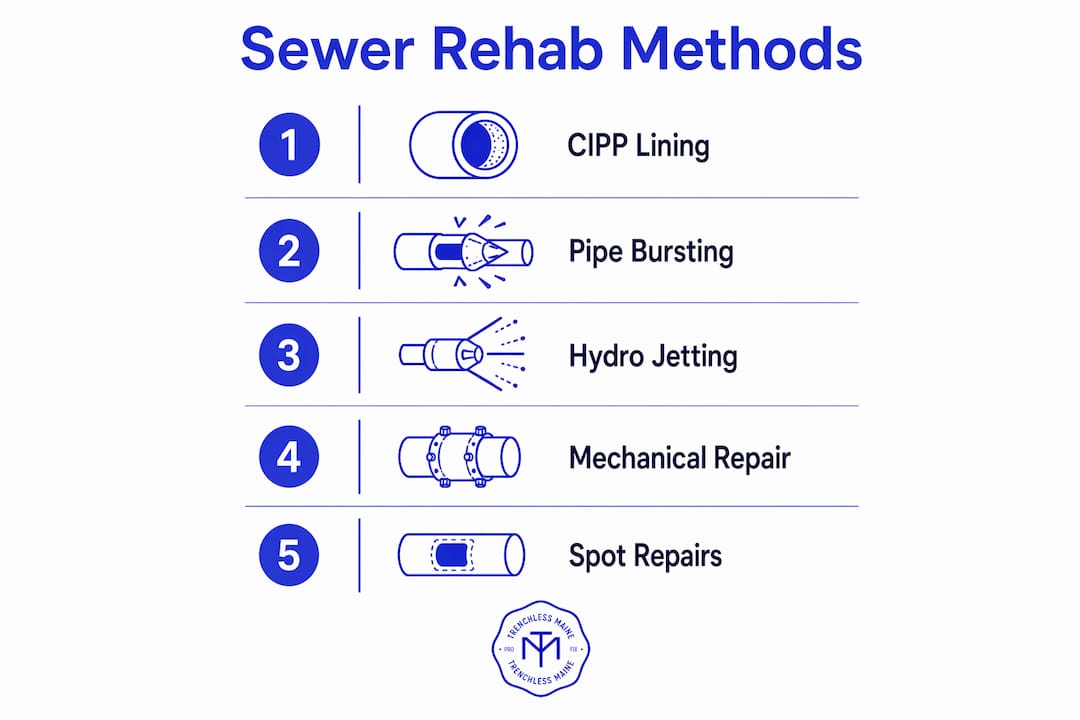
| Method | What it does | Best suited for |
|---|---|---|
| CIPP lining | Cures a resin-saturated liner inside the existing pipe, forming a new structural pipe within the old one | Cracks, root intrusion, minor offsets in structurally sound pipes |
| Pipe bursting | Fractures the old pipe outward while pulling a new pipe through | Fully collapsed pipes or situations where upsizing is needed |
| Spot repair | Excavates and replaces a short section (4–12 ft) of damaged pipe | Isolated defects where the rest of the pipe is in good condition |
| Full trenched replacement | Excavates and replaces the entire pipe run | Widespread damage, Orangeburg pipe, or pipes with multiple severe defects |
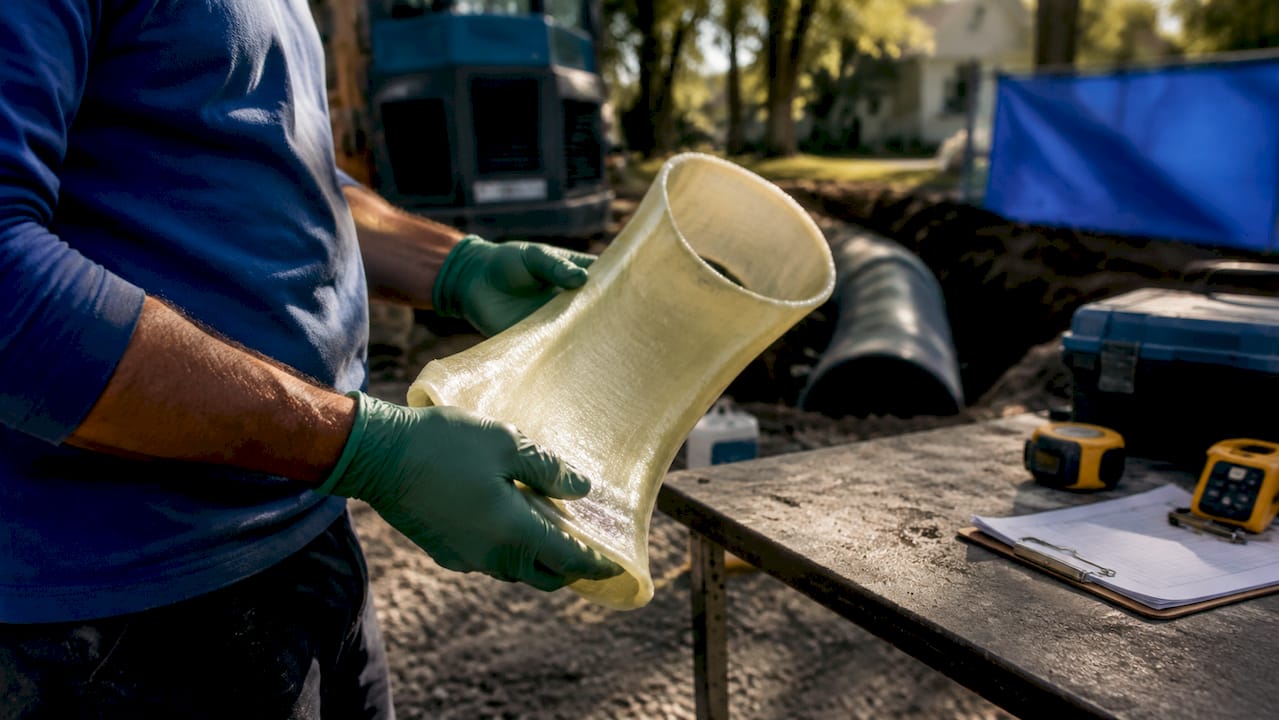
CIPP lining forms a new structural pipe inside the old one and carries a service life of 50 or more years. It is the most common trenchless method because it works for a wide range of defect types without requiring excavation. Pipe bursting is the right choice when the host pipe is too damaged to support a liner. CIPP lining cannot be applied to a fully collapsed or structurally unsound pipe. In those cases, pipe bursting or full replacement is the only viable path.
Pipe material matters significantly. Orangeburg pipe, a fiber-based material used in mid-20th century construction, degrades to the point where it cannot support any liner. Full replacement is the standard recommendation for Orangeburg regardless of defect grade. Clay, PVC, and cast iron pipes are generally good candidates for trenchless methods when the structural damage is not complete.
Trenchless pipe work can cost 10–30% more than open-cut pipe work alone, but total project cost is often lower because you eliminate surface restoration expenses like repaving driveways or replanting landscaping. That cost difference is why trenchless methods are frequently the better financial choice even when the per-foot pipe price is higher.
Pro Tip: When you receive a repair quote, ask the contractor to specify which method they recommend and why. If they recommend full replacement on a pipe that has only localized root intrusion, request a written explanation before approving the work.
How to read and interpret a professional sewer camera inspection report
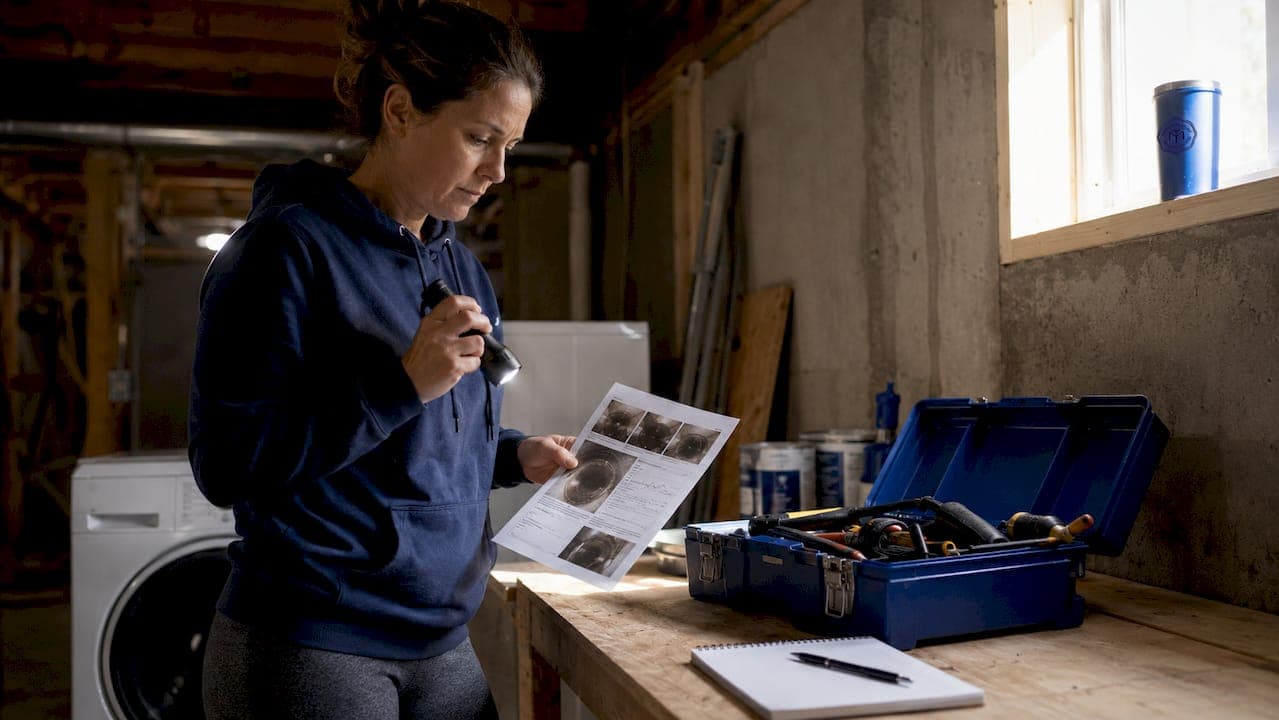
A well-written inspection report specifies defect type, location, severity grade, and recommended next steps in plain English. If you cannot explain the defect details after reading the report, the inspection has not yet given you what you need to make a repair decision.
Here is what to look for in every report:
- Defect type: The report should name the defect using standard terms like root intrusion, offset, or belly. Vague language like "pipe issue" or "blockage" is not sufficient.
- Location: Defects should be identified by distance from the cleanout or access point, measured in feet. This tells you exactly where the problem is and how much pipe is affected.
- Severity grade: The PACP grade (1–5) gives you a standardized measure of how serious the defect is. Ask the inspector to explain what grade was assigned and why.
- Inspection footage: A reputable inspection includes video footage you can review. The footage lets you see the defect yourself and verify the written findings.
- Recommended next steps: The report should state a specific recommendation, such as CIPP lining, spot repair, or further evaluation, not just a list of problems.
PACP-style condition grading helps align homeowners and contractors around consistent, data-driven language. It removes the guesswork from conversations about repair urgency. When both parties use the same grading system, it is much harder for a repair scope to expand without justification.
Watch for ambiguous language in reports. Phrases like "significant deterioration" or "pipe needs attention" without a specific defect type or grade are red flags. A professional report translates camera footage into clear findings you can act on. If your report lacks specifics, ask for a revised summary or request a second inspection before committing to any repair.
What practical steps should homeowners take using sewer rehab knowledge?
Knowing the terminology is only useful if you apply it at the right moments in the repair process. A sewer repair workflow should start with symptom documentation, then camera inspection, then a tailored repair plan. Jumping straight to excavation or replacement without that sequence often leads to over-repairing.
Here is how to put your knowledge to work:
- Document symptoms first. Slow drains, gurgling sounds, sewage odors, or unusually green grass over the sewer line are all clues. Write them down with dates so your inspector has context before running the camera.
- Match symptoms to defect types. Slow drains often point to root intrusion or belly. Gurgling sounds can indicate a partial offset or blockage. Sewage odors near the foundation may signal a collapse or cracked lateral.
- Ask for term definitions on the spot. When an inspector uses a term you do not recognize, ask them to define it before the conversation moves on. You are paying for clarity, not just footage.
- Separate severity grade from repair scope. A grade 4 defect does not automatically mean full replacement. Ask the contractor to explain why the recommended method is the most appropriate for your specific pipe condition.
- Request a second opinion for large repairs. If a contractor recommends full trenched replacement on a pipe with a single localized defect, a second camera inspection is a reasonable step before approving the work.
Pro Tip: Keep a copy of every inspection report and repair quote. If you sell your home, this documentation shows buyers the pipe condition history and can prevent renegotiation at closing.
Understanding sewer repair language also helps you prioritize spending. Not every defect is an emergency. A belly with minor pooling in an otherwise intact pipe may warrant monitoring rather than immediate repair. Evidence-based decisions protect your budget and prevent unnecessary disruption to your property.
Key Takeaways
Sewer rehabilitation terminology gives homeowners and property professionals the shared language needed to interpret inspection findings accurately and choose the right repair method with confidence.
| Point | Details |
|---|---|
| Standard defect terms | Root intrusion, offset, belly, and collapse are NASSCO-classified defects that appear in every professional inspection report. |
| PACP grading guides, not dictates | A severity grade of 1–5 signals urgency but does not prescribe a specific repair method on its own. |
| Method selection depends on pipe condition | CIPP lining suits structurally sound pipes; pipe bursting or full replacement is required for collapsed or Orangeburg pipes. |
| Trenchless methods save total cost | Trenchless pipe work costs 10–30% more per foot but eliminates surface restoration expenses, often reducing total project cost. |
| Clear reports are non-negotiable | A valid inspection report names the defect, gives its location in feet, assigns a PACP grade, and recommends a specific next step. |
What I've learned from years of sewer rehab conversations
The single biggest mistake I see homeowners make is approving a repair scope they do not understand. A contractor says "you have a grade 4 offset at 23 feet with root intrusion" and the homeowner nods along, then signs a quote for full pipe replacement. The terminology sounded serious. The price felt justified. But a grade 4 offset with root intrusion in a structurally intact clay pipe is often a textbook CIPP lining candidate, not a replacement job.
The terminology exists to protect you. NASSCO did not create PACP grading so contractors could scare homeowners with high numbers. They created it so every party in the room is working from the same factual baseline. When you know that a grade 5 means structural failure and a grade 2 means minor surface defect, you can have a real conversation about repair options instead of just accepting the first recommendation.
My honest advice: treat your inspection report like a medical diagnosis. You would not agree to surgery without understanding what the diagnosis means. Apply the same standard to your sewer. Ask questions, request plain-English explanations, and do not approve any repair scope until you can describe the problem in your own words. That one habit will save you money and prevent unnecessary disruption to your property.
— John
Trenchlessmaine: expert sewer rehab guidance for Maine homeowners
Trenchlessmaine specializes in trenchless sewer repair across Maine, with over 50 years of combined expertise in CIPP lining, pipe bursting, and camera inspections. The team communicates findings in plain English so you understand exactly what is wrong and why a specific repair method is recommended.
Before any repair plan is finalized, Trenchlessmaine recommends clearing the line first. Professional hydro jetting services remove root debris and buildup so the camera inspection gives you a clean, accurate picture of actual pipe condition. For routine maintenance or early-stage issues, drain clearing in Maine is a fast first step that often prevents minor problems from becoming major repairs. Trenchlessmaine serves most of Maine's cities and backs its work with warranties up to 50 years.
FAQ
What does CIPP lining mean in a sewer report?
CIPP stands for Cured-In-Place Pipe lining. It is a trenchless method that installs a resin-saturated liner inside the existing pipe, which then cures into a new structural pipe lasting 50 or more years.
What is a PACP grade in a sewer inspection?
PACP grading is a NASSCO standard that assigns a severity score from 1 to 5 to each sewer defect. A grade of 5 indicates structural failure; a grade of 1 indicates a minor surface condition.
Does a high defect grade mean I need full pipe replacement?
Not automatically. A high PACP grade signals that a defect is serious, but the repair method depends on pipe material, depth, access, and the extent of damage. CIPP lining is often appropriate for high-grade defects in structurally sound pipes.
What is root intrusion in sewer terminology?
Root intrusion occurs when tree or shrub roots enter a pipe through joints or cracks, restricting flow and causing structural damage over time. It is one of the most common defects found in older residential sewer lines.
When is pipe bursting used instead of CIPP lining?
Pipe bursting is used when the host pipe is fully collapsed or too structurally compromised to support a liner. It fractures the old pipe outward while simultaneously pulling a new pipe into place.