
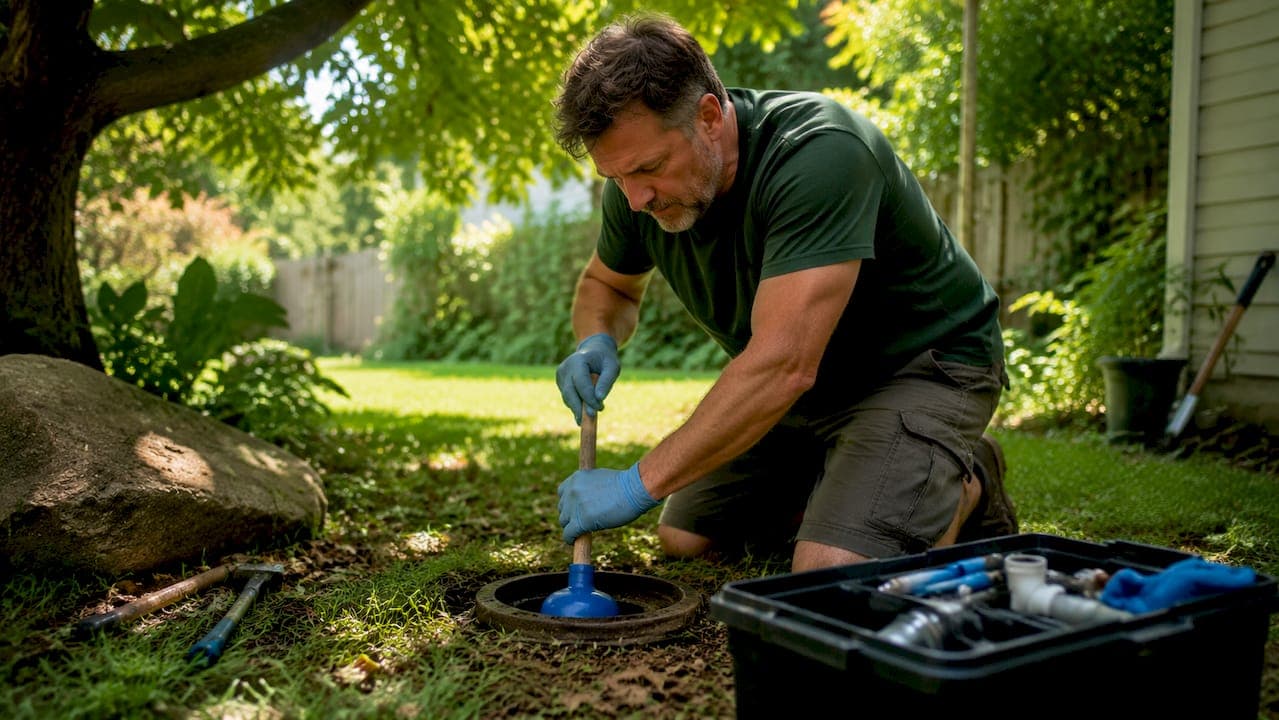
Knowing how to clear blocked drains safely can save you hundreds of dollars and prevent water damage before it starts. Most household blockages fall into two categories: organic buildup like hair and grease, or foreign object obstructions. The good news is that 90% of household drain clogs can be cleared using physical DIY methods in under 10 minutes at zero cost. Tools like a cup plunger, a Zip-It hair remover, baking soda and vinegar, and a hand-crank drain snake handle the vast majority of clogs. Chemical drain cleaners should be your last resort, not your first move.
How to clear blocked drains with physical methods
Physical removal is the fastest and safest way to unclog a drain. It works on the actual blockage rather than trying to dissolve it, which means the clog comes out instead of sitting further down your pipe. Kitchen clogs are usually grease and food buildup near the P-trap, while bathroom clogs are mostly hair and soap scum. Knowing which type you are dealing with tells you exactly which tool to reach for first.
Hot water and dish soap
This method works best on grease-based kitchen clogs. Dish soap cuts through grease, and hot water flushes it out.
- Boil a full kettle of water.
- Add two tablespoons of grease-cutting dish soap directly into the drain.
- Pour half the kettle slowly into the drain, then wait 30 seconds.
- Pour the second half and follow with cold tap water for 60 seconds.
Pro Tip: Pour boiling water in two stages with a short wait between each pour. The pause lets the first wave soften the grease before the second wave flushes it clear.
Using a cup plunger correctly
A plunger is the most effective tool for sink and tub clogs, but most people use it wrong. The most common mistake is not sealing the overflow hole, which causes pressure to escape instead of building up against the clog. Use a cup plunger for sinks and tubs, not a flange plunger, which is designed for toilets.
- Stuff a wet rag into the overflow hole to seal it completely.
- Add enough water to the sink to cover the plunger cup.
- Place the cup directly over the drain and press down firmly to create a seal.
- Push and pull with short, sharp strokes 10–15 times.
- Pull the plunger off sharply on the final stroke to break the clog loose.
Manual hair removal with a zip-it tool
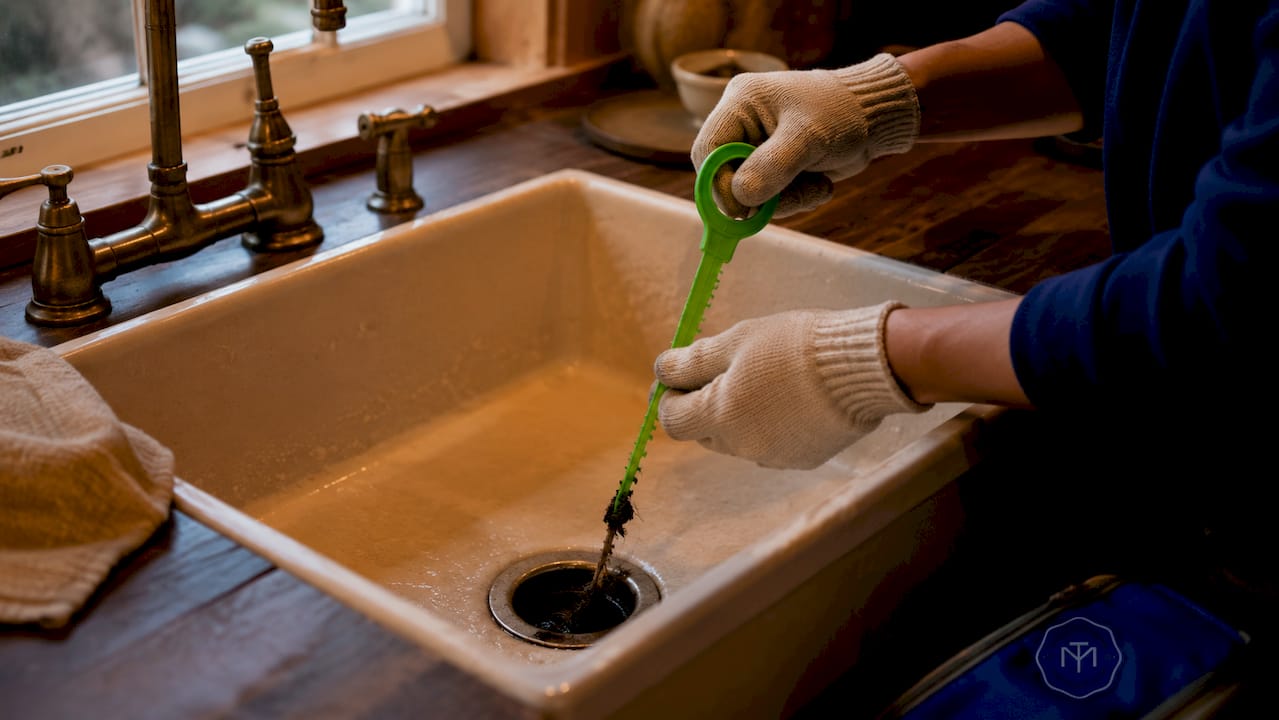
For bathroom sink and shower clogs, a Zip-It barbed plastic hair remover is the right tool. The Zip-It costs $3–$8 and removes hair clogs faster than chemical cleaners, usually in under two minutes. Insert it into the drain, twist slowly, and pull upward. The barbs grab hair and soap scum and pull the mass out in one piece. Repeat two or three times until the drain runs freely.
How does baking soda and vinegar unclog a drain?
Baking soda and vinegar create a fizzing reaction that loosens light organic buildup inside pipes. This method works well on slow drains caused by soap scum or minor grease film, but it will not break up a full blockage caused by compacted hair or a solid obstruction. Think of it as a maintenance flush rather than a heavy-duty fix.
Follow these steps for the best result:
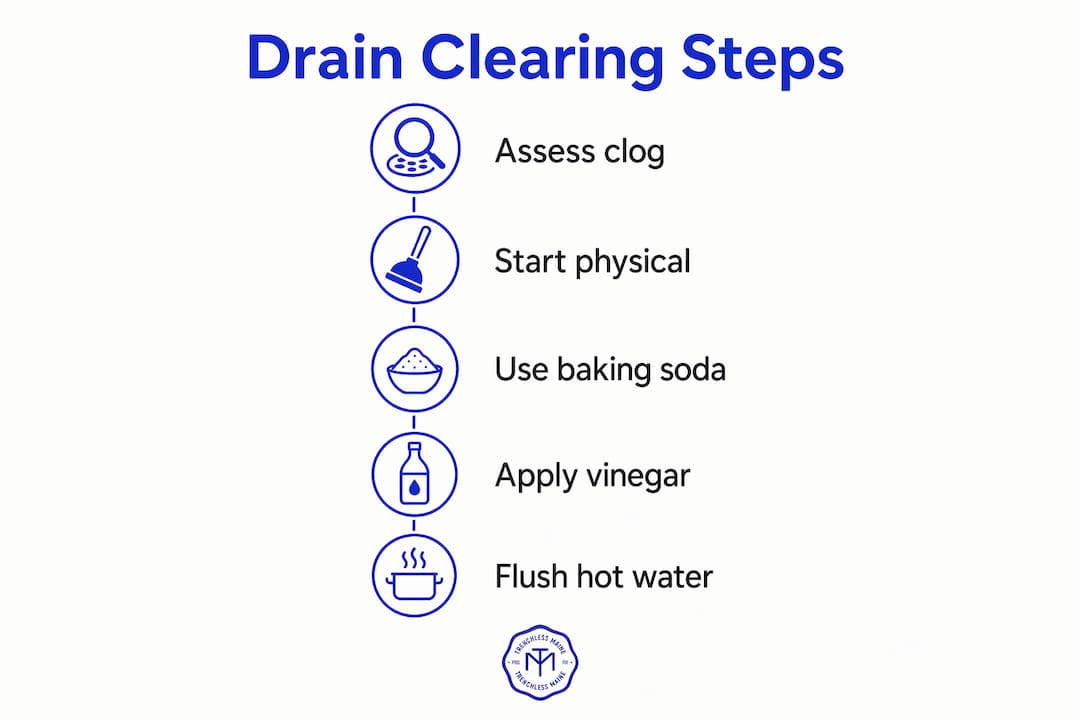
- Pour one cup of baking soda directly into the drain.
- Follow immediately with one cup of white vinegar.
- Cover the drain with a stopper or a small plate to direct the fizzing action downward.
- Wait 15–30 minutes before flushing.
- Flush with hot tap water for 60 seconds to clear the loosened material.
Safety note: Never use this method right after applying a chemical drain cleaner. Mixing household chemicals like bleach with vinegar or ammonia creates toxic gases that can cause serious lung injury. Flush the drain thoroughly and wait at least 24 hours before switching between any chemical products.
This method is safe for metal pipes, PVC pipes, and older cast iron drains. It will not corrode pipe walls or harm septic bacteria, which makes it a better routine option than store-bought chemical cleaners.
What are the best mechanical tools for stubborn clogs?
When hot water, plunging, and baking soda fail, the clog is either deeper in the pipe or more compacted than surface methods can reach. A hand-crank drain snake, also called a drain auger, is the right tool for this situation. You can find one at any hardware store for $20–$40.
How to use a drain snake
- Feed the snake cable into the drain opening slowly, turning the handle clockwise.
- When you feel resistance, you have reached the clog.
- Continue rotating to either break through the blockage or hook into it.
- Pull the cable back slowly, bringing the clog material with it.
- Run hot water for two minutes to flush any remaining debris.
Pro Tip: Wear rubber gloves. The cable picks up bacteria and debris from inside the pipe, and pulling it back without protection is a mess you will not want to repeat.
When to remove the p-trap
The P-trap is the curved pipe section directly under your sink. It catches debris and is often where clogs form. Removing it gives you direct access to the blockage without forcing a snake through tight bends.
Place a bucket under the P-trap, unscrew the slip nuts by hand or with pliers, and slide the curved section off. Clean it out over the bucket, then reattach it firmly. This takes about five minutes and solves a large percentage of stubborn kitchen sink clogs.
Mechanical tool comparison
| Tool | Best For | Clog Location | Skill Level |
|---|---|---|---|
| Zip-It hair remover | Hair and soap scum | Drain opening, 0–6 inches deep | Beginner |
| Cup plunger | Grease, light debris | Drain to P-trap | Beginner |
| Hand-crank drain snake | Compacted debris, deeper clogs | P-trap to 25 feet | Intermediate |
| Drain auger (electric) | Severe or deep blockages | 25+ feet into pipe | Advanced |
What safety precautions apply when clearing blocked drains?
Clearing a drain incorrectly can damage your pipes, create a chemical hazard, or make the blockage worse. These precautions apply to every method you use.
- Avoid boiling water on PVC pipes. PVC softens and warps above 160°F, and boiling water exceeds that threshold. Use very hot tap water instead of a kettle for plastic pipe systems.
- Never use boiling water in a porcelain toilet. Thermal shock can crack the bowl.
- Do not mix chemical products. Bleach combined with ammonia or vinegar produces chloramine and chlorine gas. Both are toxic at low concentrations.
- Wait 24 hours between chemical attempts. Residue from one product reacts with the next, creating unpredictable hazards.
- Protect your septic system. Chemical drain cleaners corrode pipes and kill the beneficial bacteria that break down waste in septic tanks. Physical methods protect both your pipes and your system.
- Use physical methods first. Mechanical extraction removes the actual clog material. Chemical methods often only partially dissolve it, leaving residue that reforms the blockage within days.
Important: If you have already used a chemical cleaner and the drain is still blocked, do not plunge. Splashing caustic chemical residue is a serious skin and eye hazard. Flush the drain with cold water for several minutes before attempting any physical method.
When should you call a professional instead of DIY?
Some blockages are beyond what any homeowner tool can reach. Recognizing the signs early saves you from a bigger repair bill later.
Call a professional drain service when you notice any of the following:
- The same drain clogs repeatedly within a few weeks, even after clearing.
- Multiple fixtures back up at the same time, which points to a main sewer line blockage.
- You smell sewage odors coming from drains or the yard.
- Water backs up into a different fixture when you run the sink or flush the toilet.
- A drain snake hits resistance but cannot break through after several attempts.
These signs often indicate root intrusion, pipe deformation, or a sewer lateral blockage that a hand snake cannot resolve. Professional hydro jetting uses high-pressure water to scour the entire interior wall of a pipe, removing grease, sludge, and mineral buildup that snaking leaves behind. A sewer camera inspection identifies the exact location and cause of the blockage before any work begins, which prevents unnecessary digging or guesswork.
Installing mesh drain screens in every sink, tub, and shower drain is the single most effective step for preventing blocked drains. They catch hair, food particles, and debris before they enter the pipe. Clean them weekly and you will dramatically reduce how often you need to unclog a drain at all.
Key takeaways
The most effective way to clear a blocked drain is to start with physical removal, escalate to baking soda and vinegar for light buildup, and reserve mechanical tools and professional services for deeper or recurring clogs.
| Point | Details |
|---|---|
| Start physical, not chemical | Use a plunger, Zip-It, or hot water first before reaching for any chemical product. |
| Match the tool to the clog | Hair clogs need a Zip-It or snake; grease clogs respond to hot water and dish soap. |
| Safety rules protect your pipes | Never use boiling water on PVC, and never mix chemical drain products. |
| Baking soda and vinegar have limits | This method works on slow drains and light buildup, not compacted or full blockages. |
| Recurring clogs need professional help | Multiple backups or persistent odors signal a deeper issue requiring hydro jetting or camera inspection. |
What i have learned after years of watching homeowners tackle drains
Most homeowners reach for a bottle of chemical drain cleaner the moment water backs up. I understand the instinct. It feels like a fast fix. But in practice, those products dissolve just enough of the clog to restore partial flow, then the residue resets the blockage within a week or two. You end up buying more cleaner, and the pipe walls take the damage each time.
The homeowners who solve drain problems for good are the ones who physically remove the clog. A Zip-It tool or a five-minute P-trap cleaning gets the material out of the pipe entirely. That is a permanent fix, not a temporary one.
The other mistake I see constantly is using the wrong plunger. A flange plunger on a sink drain creates almost no suction. A cup plunger on a toilet does the same. Matching the tool to the fixture is not optional. It is the difference between clearing the clog and just pushing it deeper.
My honest recommendation: keep a cup plunger, a Zip-It, and a hand-crank snake under every sink. Those three tools handle the overwhelming majority of household drain problems. Add a box of baking soda and a bottle of white vinegar for routine maintenance flushes, and you are better equipped than most people who call a plumber for a basic clog.
— John
When DIY is not enough: professional drain clearing in maine
If you have worked through every method above and the drain is still slow or backing up, the problem is likely deeper than household tools can reach.

Trenchlessmaine provides professional drain clearing across Maine using hydro jetting and sewer camera inspection to locate and eliminate blockages that DIY methods cannot touch. Hydro jetting scours the full interior of your pipe, not just the clog point, which means results last far longer than snaking alone. Trenchlessmaine also offers no-dig sewer repair technology for cases where the pipe itself is damaged. Most jobs are completed within 24 hours with no excavation and no disruption to your yard or foundation. Contact Trenchlessmaine today to get a free assessment and find out whether your drain issue needs professional attention.
FAQ
What is the fastest way to unclog a drain at home?
The fastest method is physical removal using a cup plunger or a Zip-It hair remover tool. Most clogs clear in under 10 minutes with no cost.
Is baking soda and vinegar safe for all pipe types?
Yes. Baking soda and vinegar are safe for PVC, metal, and cast iron pipes. They will not corrode pipe walls or harm septic systems, unlike chemical drain cleaners.
Can boiling water damage my pipes?
Boiling water warps PVC pipes, which soften above 160°F, and can crack porcelain toilets through thermal shock. Use very hot tap water instead of a full boil for plastic or porcelain fixtures.
When should i stop DIY and call a plumber?
Call a professional when multiple fixtures back up simultaneously, when the same drain clogs repeatedly within weeks, or when you smell sewage odors. These signs point to a main line or sewer lateral problem beyond the reach of household tools.
Are enzymatic drain cleaners better than chemical ones?
Enzymatic cleaners safely digest organic material like hair and grease without damaging pipes or septic bacteria, but they require up to 8 hours to work and only address shallow buildup. They are a better maintenance option than caustic chemical cleaners, but they will not clear a full blockage.