
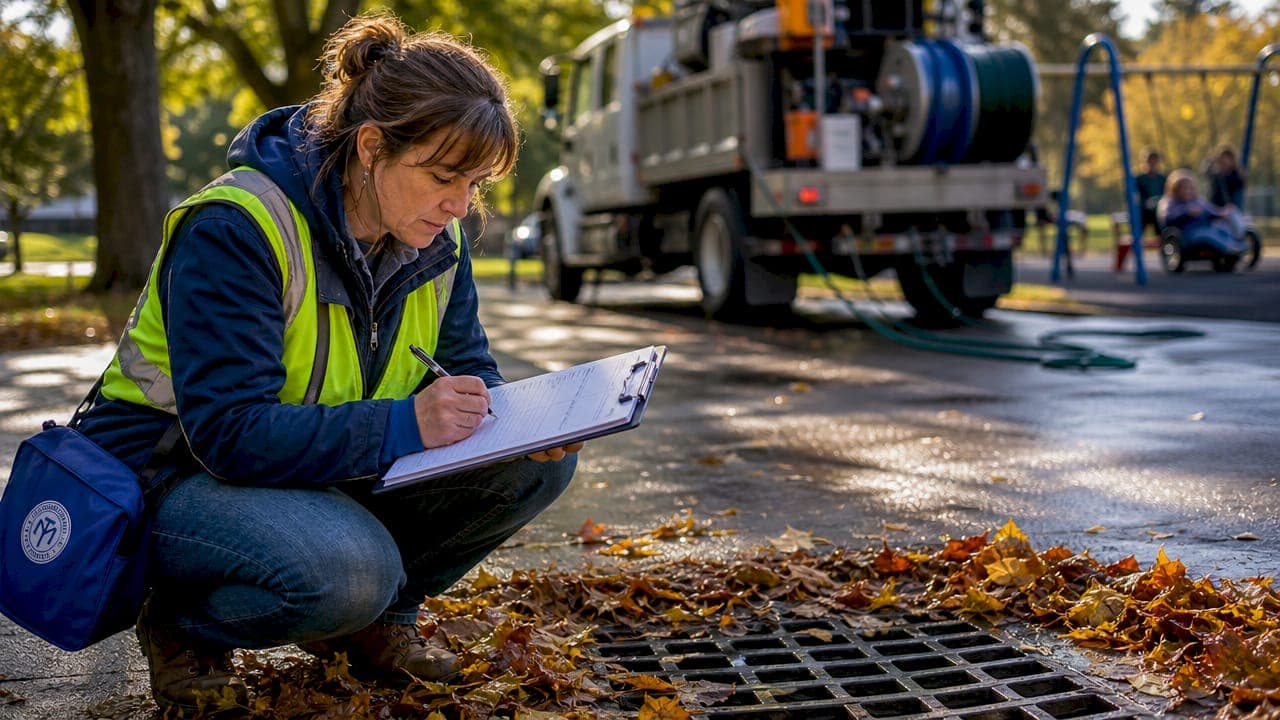
The municipal drain clearing process is a systematic maintenance and cleaning routine designed to keep stormwater infrastructure functional and compliant with environmental regulations. For municipal officials and community leaders across Maine and beyond, understanding this process is not optional. Neglected catch basins and sewer mains cause localized flooding, pollutant discharge into waterways, and costly emergency repairs that dwarf the price of routine maintenance. The core tools driving effective drain clearance are combination jet/vacuum trucks, high-pressure water jetting systems, and CCTV inspection cameras. Getting the process right means fewer flood events, cleaner waterways, and defensible documentation when EPA auditors come calling.
What tools and technologies are essential for the municipal drain clearing process?
Municipalities commonly use combination jet/vacuum trucks as the most efficient equipment for catch basin clearing and sewer main cleaning. These units simultaneously flush debris with high-pressure water and extract it with a vacuum system, cutting the time and crew required compared to running two separate machines. For smaller operations or tight access points, trailer-mounted jetting units and dedicated vacuum trucks serve as practical alternatives.
High-pressure water jetting is the workhorse of drain clearance techniques. Jetting nozzles deliver water at pressures typically ranging from 2,000 to 4,000 PSI, cutting through compacted sediment, grease buildup, and even moderate root intrusion inside pipe walls. This method works across catch basins, culverts, and sewer laterals without requiring excavation.
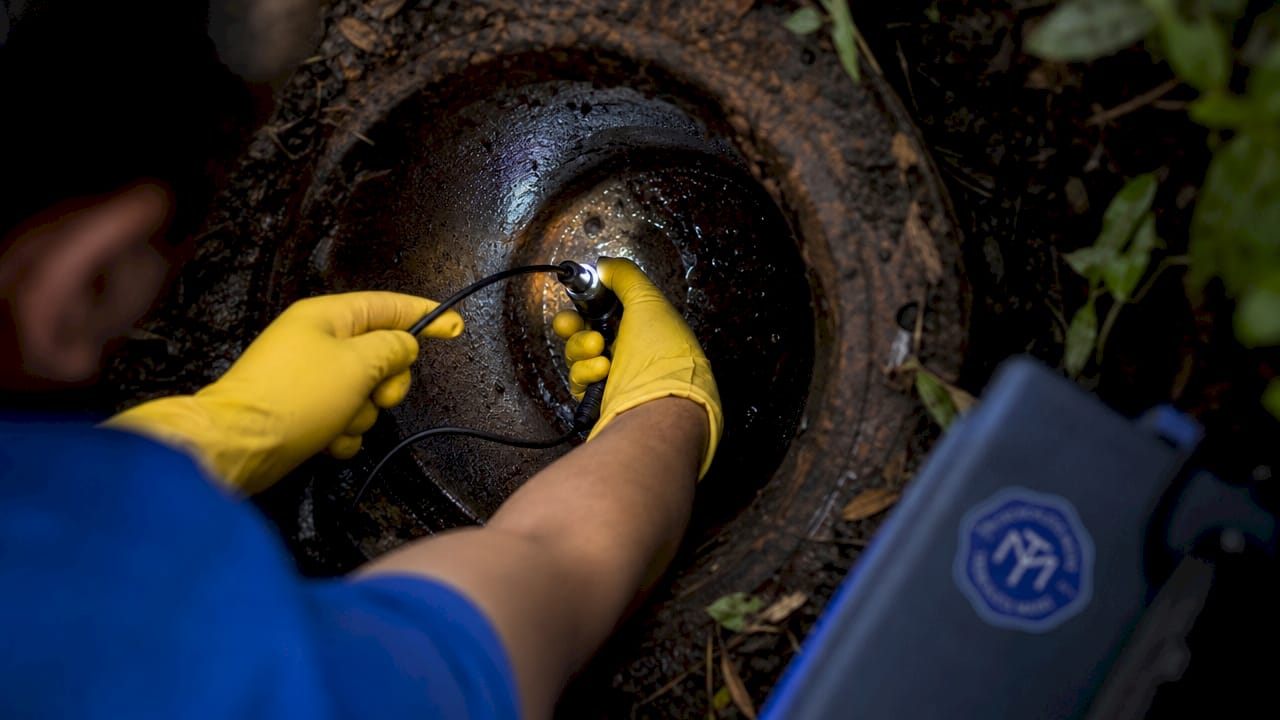
CCTV inspection cameras complete the technology stack. After cleaning, a camera is deployed through the pipe to verify full clearance and identify structural damage such as pipe deformation, joint separation, or root intrusion that cleaning alone cannot resolve. The best sewer inspection cameras for municipal use integrate GPS tagging and video logging directly into the inspection report, which supports both maintenance records and permit compliance.
| Equipment | Best use case | Key advantage |
|---|---|---|
| Combination jet/vacuum truck | Catch basins and sewer mains | Single-pass efficiency |
| Dedicated vacuum truck | Heavy sediment extraction | High debris volume capacity |
| Trailer-mounted jetting unit | Tight access or smaller systems | Mobility and lower cost |
| CCTV inspection camera | Post-cleaning verification | Structural assessment and documentation |
Pro Tip: Schedule CCTV inspection immediately after high-pressure flushing while the pipe is clear. Any structural defects are far easier to identify in a clean pipe than one partially filled with sediment.
How should you plan and schedule municipal drain cleaning?
Scheduling drain clearance based on fixed calendar intervals wastes resources on basins that don't need attention while leaving high-risk locations under-serviced. Condition-based maintenance using sediment loading models and GIS data significantly improves efficiency by targeting basins that actually require cleaning rather than following rigid timelines. This approach lets your team allocate vacuum truck hours where they produce the most flood-prevention impact.
The industry standard for catch basin cleaning triggers when sump capacity reaches 50%. For culverts under 36 inches in diameter, cleaning is required at 20% blockage, a threshold that surprises many officials accustomed to visual inspection alone. High-load zones such as commercial corridors, areas near construction sites, and low-lying flood-prone streets require semi-annual cleaning. Standard residential basins typically need annual service.
A tiered maintenance schedule built around accumulation rates and basin priority is the best practice for MS4 compliance and operational efficiency. Tier 1 basins get semi-annual service, Tier 2 get annual service, and Tier 3 low-risk basins may qualify for extended intervals when sediment loading data supports it.
Post-storm inspections are non-negotiable. Reactive maintenance after major storms costs significantly more than proactive scheduling, and rapid mobilization within 24 to 48 hours after a significant rain event prevents sediment from compacting and blockages from causing localized flooding.
Follow these steps to build a defensible municipal drain cleaning frequency guide:
- Inventory all catch basins, culverts, and sewer mains with GPS coordinates and current condition ratings.
- Classify each asset into risk tiers based on location, historical sediment accumulation, and proximity to flood-sensitive areas.
- Assign cleaning frequencies by tier: semi-annual for Tier 1, annual for Tier 2, and condition-triggered for Tier 3.
- Integrate seasonal factors. Leaf drop, winter sand, and spring runoff each spike sediment loads at predictable times and must be built into your calendar.
- Schedule post-storm rapid response protocols with pre-identified contractor or crew resources.
- Document every cleaning event with GPS location, date, sediment volume, and technician sign-off.
Pro Tip: Connect your maintenance schedule to a Computerized Maintenance Management System (CMMS) platform. Tools like Cartegraph or Cityworks let you track cleaning history by asset, flag overdue basins automatically, and generate audit-ready reports without manual spreadsheet work.
What does a step-by-step drain clearing operation look like?
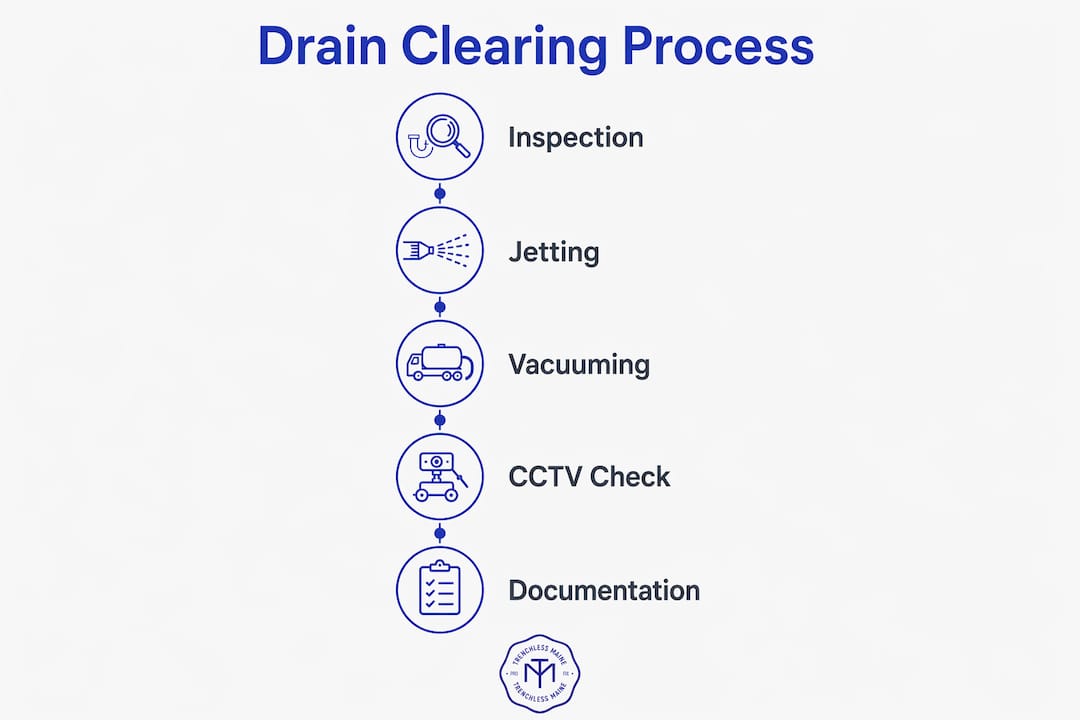
Effective municipal drain cleaning follows a 3-step process: high-pressure water jetting, vacuum extraction to remove debris, and CCTV inspection to verify cleaning effectiveness. Each phase has specific preparation and safety requirements that determine whether the operation meets regulatory standards.
Preparation phase:
- Conduct a pre-operation equipment check on the jet/vacuum truck, including hose integrity, nozzle condition, and vacuum tank capacity.
- Brief all crew members on confined space protocols and traffic control requirements.
- Notify affected residents at least 24 hours in advance. During flushing operations, residents should take precautions to avoid spray-back and odor intrusion inside homes, including closing floor drain covers and basement windows.
- Set up traffic control signage and cones around the work zone.
Cleaning phase:
- Position the combination truck at the upstream end of the section being cleaned.
- Deploy the jetting hose into the catch basin or pipe and begin high-pressure flushing, working the nozzle toward the truck to push debris into the vacuum intake.
- Activate the vacuum system to extract loosened sediment, debris, and water simultaneously.
- Repeat flushing passes until extracted material runs clear, indicating the pipe or basin is free of significant blockage.
- Transfer extracted material to the truck's debris tank for transport to an approved disposal facility.
Post-cleaning phase:
Deploy the CCTV camera through the cleaned section to confirm full clearance and document pipe condition. Compliant municipalities maintain digital logs with GPS locations, photographic before-and-after evidence, sediment volume, and technician sign-off to meet EPA MS4 permit requirements. Extracted sediment classified as hazardous due to heavy metal or hydrocarbon contamination requires disposal at a licensed facility under applicable state and federal regulations.
What are the most common challenges in drain clearance operations?
Tree root intrusion and compacted sediment represent the two hardest obstacles in urban drainage management. Roots infiltrate pipe joints and grow into dense mats that standard jetting pressure cannot fully clear. In these cases, root-cutting nozzles or mechanical augers must precede the flushing pass. Compacted sediment, particularly in basins that have gone beyond the 50% sump threshold, may require multiple jetting passes and extended vacuum extraction time.
Seasonal challenges demand specific responses:
- Fall: Leaf debris accumulates rapidly in catch basins near tree canopy. Increase inspection frequency in October and November and consider adding temporary screens over high-risk inlets.
- Winter: Deicing salts and sand used on Maine roads flush directly into storm drains. Sand accumulation is the leading cause of catch basin sump overflow during spring thaw.
- Spring: Snowmelt combined with rain creates peak runoff loads. This is when under-maintained systems fail most visibly.
Cleaning municipal drains is not just maintenance. It is a vital environmental protection and public safety measure that prevents pollutant migration into waterways and protects communities from flood damage.
Documentation failures are the most frequent reason for MS4 audit findings. A cleaning event that was not recorded is treated as a cleaning event that never happened during an EPA audit. Assign one crew member per operation as the designated documentation lead, responsible for completing digital logs before the truck leaves the site.
Pro Tip: For persistent root intrusion problems, consider scheduling a drain clearing assessment that includes CIPP lining after cleaning. Lining the pipe seals joints against future root entry and extends service life by decades without excavation.
Key takeaways
A structured municipal drain clearing process, grounded in condition-based scheduling, proper equipment selection, and audit-grade documentation, is the most effective way to protect infrastructure, prevent flooding, and maintain EPA MS4 permit compliance.
| Point | Details |
|---|---|
| Use combination trucks | Jet/vacuum combination units deliver the highest single-pass efficiency for catch basin and sewer main cleaning. |
| Apply condition-based scheduling | Sediment loading models and GIS data target resources at high-risk basins instead of wasting them on clean ones. |
| Follow the 50% sump rule | Clean catch basins when sump capacity reaches 50% and culverts under 36 inches at 20% blockage. |
| Document every cleaning event | GPS coordinates, sediment volume, photos, and technician sign-off are required for EPA MS4 audit defense. |
| Plan for seasonal spikes | Leaf drop, winter sand, and spring runoff each require adjusted cleaning frequencies and rapid post-storm response. |
Why data-driven drain management changes everything
After working closely with municipal infrastructure teams across Maine, one pattern stands out clearly. The municipalities that struggle most with flooding and permit compliance are not the ones with the worst infrastructure. They are the ones running fixed-interval cleaning schedules without any data to back them up. They clean every basin on the same annual cycle regardless of whether a basin in a commercial corridor has already hit 80% sump capacity or a residential basin in a low-traffic area is still at 15%.
The shift to condition-based maintenance, informed by sediment loading models and historical cleaning data, is not a technology luxury. It is a budget decision. When you stop cleaning basins that do not need it and redirect those crew hours to basins that are approaching failure thresholds, you get more flood prevention per dollar spent. I have seen municipalities extend cleaning intervals on low-risk Tier 3 basins by 18 months without any increase in blockage incidents, simply because the data showed those basins accumulate sediment slowly.
The documentation piece is equally underestimated. Most officials think of cleaning logs as paperwork. They are actually your legal shield. When an EPA MS4 audit questions whether a specific basin was maintained, a GPS-tagged digital record with before-and-after photos and technician sign-off closes that question immediately. A missing log opens an audit finding that can trigger corrective action plans, fines, and public scrutiny. The spring maintenance checklist approach, where you systematically work through your asset inventory each season, is the simplest way to build that documentation habit into normal operations.
The environmental stakes are also rising. Stormwater pollution control is receiving increased regulatory attention at both the federal and state level. Municipal officials who treat drain clearing as a pure infrastructure task are missing the water quality dimension that regulators increasingly prioritize. Every cleaned basin is a pollutant interception point. That framing matters when you are making the case for maintenance budgets to elected officials.
— John
How Trenchlessmaine supports municipal drain clearing goals
Municipal drain clearing operations produce results that last longer when paired with the right technology partners. Trenchlessmaine provides hydro jetting services designed for high-demand municipal applications, delivering the high-pressure flushing power needed to clear compacted sediment, root intrusion, and grease buildup from catch basins and sewer mains across Maine. For quality assurance after cleaning, Trenchlessmaine's sewer camera inspection service provides the post-cleaning verification and structural assessment that EPA MS4 documentation requires. When inspections reveal pipe damage, Trenchlessmaine's no-dig sewer repair technology restores pipe integrity without excavation, minimizing disruption to roads, residents, and municipal budgets. Contact Trenchlessmaine to discuss a tailored service plan for your municipality's maintenance goals.
FAQ
What is the municipal drain clearing process?
The municipal drain clearing process is a structured maintenance routine that uses high-pressure water jetting, vacuum extraction, and CCTV inspection to remove sediment and debris from catch basins, culverts, and sewer mains. The goal is to maintain stormwater flow capacity and meet EPA MS4 and NPDES permit requirements.
How often should municipal catch basins be cleaned?
Industry standards recommend cleaning catch basins when sump capacity reaches 50%, with high-load zones requiring semi-annual cleaning and standard basins cleaned annually. Culverts under 36 inches in diameter require cleaning at 20% blockage.
What documentation is required for MS4 permit compliance?
Compliant municipalities maintain digital logs that include GPS-tagged locations, cleaning dates, sediment volume removed, before-and-after photographic evidence, and technician sign-off. Documentation failures are the most frequent reason for MS4 audit findings.
What equipment do municipalities use for drain clearing?
Combination jet/vacuum trucks are the standard equipment for municipal drain clearing, offering single-pass efficiency for both flushing and debris extraction. Dedicated vacuum trucks and trailer-mounted jetting units serve as alternatives for specific site conditions or budget constraints.
How does condition-based maintenance differ from fixed-schedule cleaning?
Condition-based maintenance uses sediment loading models and GIS data to clean basins when they actually need it rather than on a fixed calendar. This approach targets resources at high-risk locations, extends service intervals for low-risk basins, and reduces overall operational costs without sacrificing system performance.