
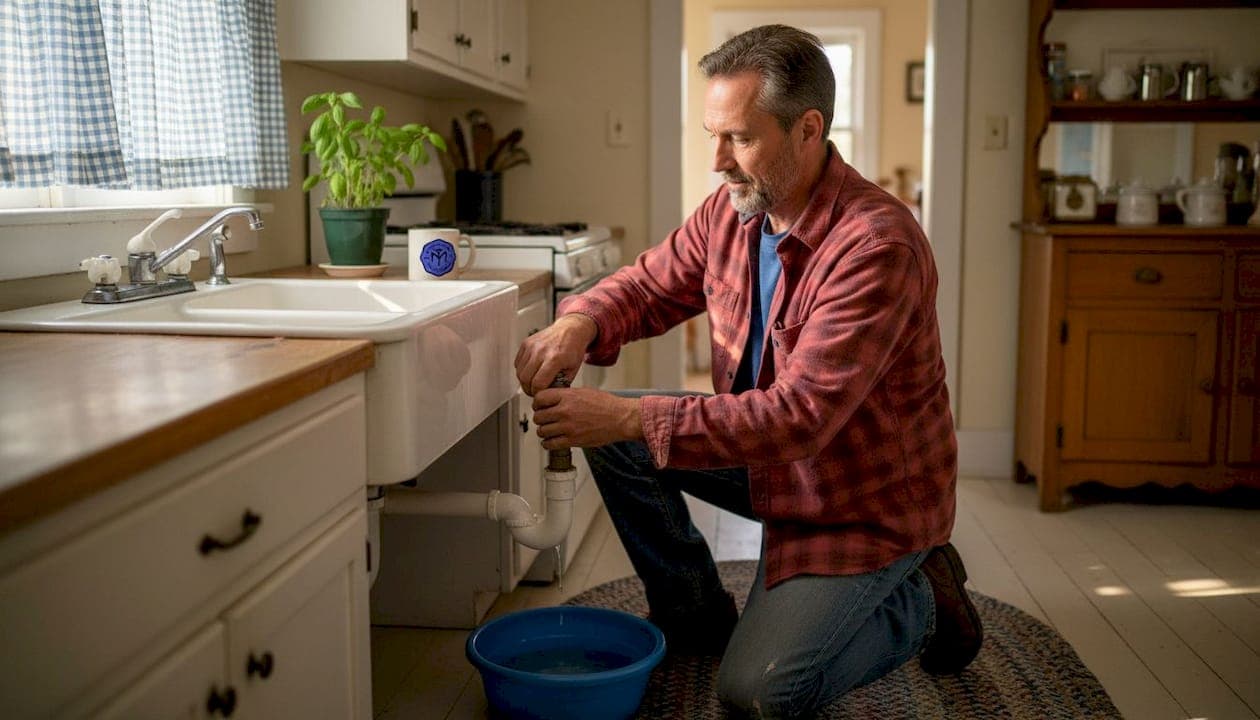
A blocked drain rarely announces itself at a convenient time. One morning you notice slow-draining water in the sink, and by evening you're dealing with backed-up sewage and a plumber's emergency fee. For Maine homeowners and property managers, the stakes are especially high. Older pipes, harsh winters, and local permit requirements add layers of complexity that a generic YouTube tutorial won't cover. This guide gives you a practical, step-by-step workflow for handling drain blockages efficiently and with minimal disruption to your property.
Table of Contents
- Understanding drain cleaning challenges in Maine
- What you need: Tools, supplies, and safety
- The efficient drain cleaning workflow: Step by step
- Verifying results and preventing future blockages
- Our take: What really keeps drains clear in Maine
- Need help with tough blockages? Here's your next step
- Frequently asked questions
Key Takeaways
| Point | Details |
|---|---|
| Maine blockage risks | Local climate and aging infrastructure make proactive drain cleaning essential for Maine homeowners. |
| Stepwise cleaning workflow | Start with safe do-it-yourself measures but escalate to professional hydro-jetting for major blockages. |
| Safety and compliance | Always use proper gear and consult licensed pros to meet local permit rules and avoid unnecessary risks. |
| Maintenance prevents emergencies | Regular enzyme treatments and scheduled checks can dramatically cut down on future sewer problems. |
Understanding drain cleaning challenges in Maine
Before jumping into solutions, it's important to know what makes drainage in Maine uniquely challenging.
Maine's aging housing stock means many properties still rely on clay, Orangeburg, or early cast-iron pipes. These materials crack, shift, and corrode faster than modern PVC, making them more vulnerable to causes of drain overflow issues like root intrusion and sediment buildup. Add in freeze-thaw cycles that stress pipe joints every winter, and you have a recipe for recurring blockages.
The most common culprits behind Maine drain failures include:
- Root intrusion: Tree roots seek out moisture and can penetrate even small pipe cracks, growing into full blockages over months.
- Grease and fat accumulation: Cooking grease solidifies inside pipes, especially in colder months when temperatures drop in the crawl space or basement.
- Seasonal debris: Fall leaves and spring runoff push soil and organic matter into outdoor drains and sewer laterals (the pipe connecting your home to the municipal sewer).
- Pipe deformation: Older materials compress or collapse under soil pressure, narrowing the flow path over time.
Planning matters as much as the tools you use. Building a seasonal sewer maintenance schedule prevents you from reaching crisis mode every time temperatures swing. If you're unsure whether your property is connected to a municipal sewer or a private septic system, review your options with resources on septic vs. sewer systems before starting any work.
There's also a legal dimension worth knowing. In Maine, property owners are responsible for the sewer lateral connecting their home to the municipal line, and permits are required for connections or repairs in many districts. Ignoring this can result in fines or voided insurance claims.
Key takeaway: Maine's climate, pipe age, and regulatory requirements make proactive drain planning essential, not optional. Knowing your system and your legal responsibilities protects your wallet and your property.
What you need: Tools, supplies, and safety
Having defined the challenges, let's make sure you have everything ready for a safe, thorough cleaning.
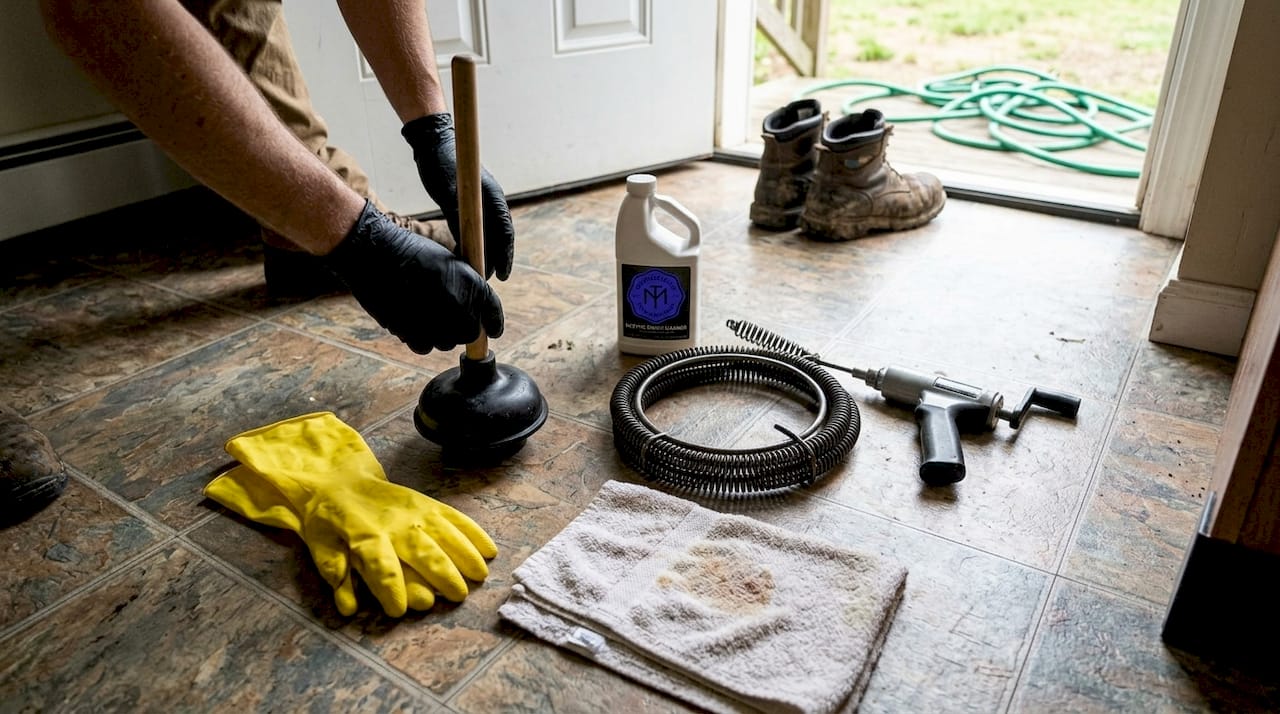
The right equipment makes the difference between a quick fix and a worsening problem. Here's what to gather before you start:
Basic tools and cleaning agents:
| Tool or supply | Best use case | Skill level needed |
|---|---|---|
| Cup plunger | Sink and tub clogs | Beginner |
| Drain snake (hand auger) | Shallow clogs within 25 feet | Beginner to intermediate |
| Baking soda and vinegar | Minor organic buildup | Beginner |
| Enzyme cleaner | Ongoing maintenance | Beginner |
| Pipe wrench | Removing trap under sink | Intermediate |
| Hydro-jetting machine | Stubborn or grease blockages | Professional only |
Safety gear checklist:
- Nitrile gloves (disposable, chemical-resistant)
- Safety goggles
- N95 mask or respirator for sewage odor and bacteria
- Rubber boots for floor-level work
- Old clothes you can wash separately
Never skip the protective gear. Drain water contains bacteria and pathogens that pose genuine health risks, especially if sewage has backed up into your home.
For chemical cleaners, favor enzyme-based or bioremediation products over harsh caustic formulas. Caustic drain cleaners can degrade older pipe materials and create more problems downstream, particularly in the clay or Orangeburg pipes common to Maine homes. You'll also want to keep your local plumber's number handy. If a simple clog turns into a suspected main line backup, attempting to clear it yourself can push the blockage deeper or cause a sewage overflow. Licensed plumbers are recommended for any major cleaning or repair work, and in many municipalities, they're legally required for connection-related repairs.
Finally, if you're dealing with winter pipe issues such as a frozen or partially blocked line in sub-zero temperatures, hold off on mechanical snaking until the line has thawed. Forcing a snake through a frozen pipe risks cracking the material.
Pro Tip: Before running any cleaner or tool through your drain, fill the sink or tub with an inch of water first. Watching how quickly it drains gives you a baseline to compare after cleaning, so you know whether your efforts actually worked.
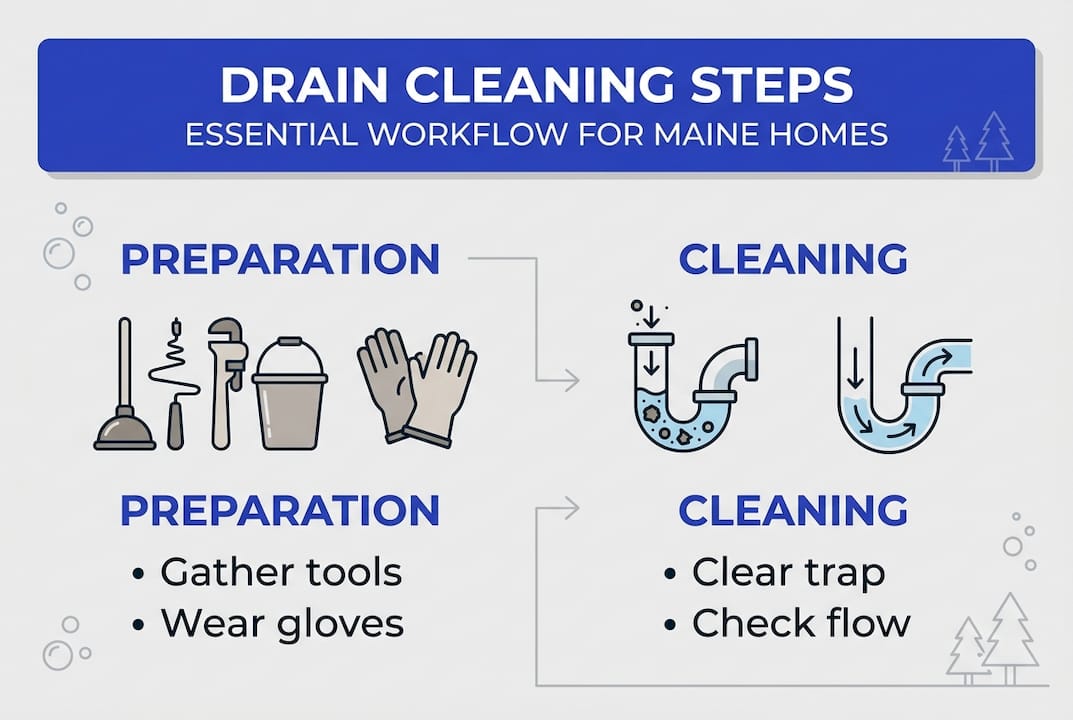
The efficient drain cleaning workflow: Step by step
Now, let's move through the workflow itself, from the simplest fix to advanced, non-invasive solutions.
-
Inspect first. Use a flashlight to check visible portions of the drain and trap under the sink. Look for standing water, visible debris, or foul odor indicating organic buildup.
-
Try the plunger. For sink, tub, or toilet clogs, use a properly sized plunger with a firm seal. Give it 15 to 20 pumps. Homeowners can try a plunger or baking soda first, but should escalate to pros for main line issues to prevent backups.
-
Apply a natural cleaner. If the plunger doesn't clear it, pour half a cup of baking soda followed by half a cup of white vinegar into the drain. Let it fizz for 20 minutes, then flush with hot water. This works well for light organic buildup.
-
Use a hand auger (drain snake). Feed the snake into the drain until you feel resistance, then rotate and push to break up the clog. This works for blockages within 25 feet of the drain opening. Snaking is effective but limited: it punches a hole through the clog without removing the buildup from pipe walls.
-
Escalate to hydro-jetting. When snaking fails, or when grease is the culprit, hydro jetting advantages become clear. Hydro-jetting uses high-pressure water to scour pipe walls clean, removing grease, scale, and root fragments completely. Grease blockages respond poorly to snaking because snaking leaves residue on pipe walls, allowing buildup to return quickly.
-
Call a professional for main line issues. If multiple fixtures back up simultaneously, or if you notice sewage odor from floor drains, stop DIY attempts. This signals a main line blockage that requires professional equipment and likely a permit.
Snaking vs. hydro-jetting at a glance:
| Factor | Drain snaking | Hydro-jetting |
|---|---|---|
| Effective for grease | No, leaves residue | Yes, scours walls clean |
| Removes roots | Partially | Yes, with root cutter nozzle |
| Property disruption | Minimal | Minimal |
| DIY-friendly | Yes (shallow clogs) | No, professional only |
| Cost | Low | Moderate to high |
For more serious clogs or overflow situations, check the overflow response steps recommended by drain specialists before re-attempting on your own.
Pro Tip: If you rent a power auger from a hardware store, use a smaller drum size first. Going too aggressive on older pipes risks scratching or cracking the pipe wall, turning a simple clog into a repair job.
Verifying results and preventing future blockages
After completing your workflow, verification ensures you aren't left with hidden issues, and it helps you stay ahead of future blockages.
Once you've cleared the drain, don't just assume the job is done. Run water for two to three minutes at full pressure and watch for:
- Flow rate: Water should drain immediately with no pooling.
- Odor: A sewage or sulfur smell after flushing indicates residue or a deeper issue.
- Sound: Gurgling from nearby fixtures when you drain water signals a venting problem or partial blockage further down the line.
- Visual check: Look under the sink at the trap and connections for any drips or moisture.
If any of these signs are present, schedule a professional sewer camera inspection. A camera sends a real-time video feed through your pipes, showing cracks, root intrusion, or pipe deformation that no surface-level check will catch.
For ongoing prevention, build a maintenance plan suited to Maine's conditions:
- Monthly: Pour enzyme cleaner down kitchen and bathroom drains. Bioremediation and enzyme treatments work particularly well for ongoing maintenance in homes and commercial properties, breaking down organic matter before it accumulates.
- Seasonally: Inspect outdoor drains and clean debris from yard drains before fall and spring. Stick to a preventive sewer maintenance schedule to stay ahead of seasonal risks.
- Annually: Book a professional hydro-jetting service if your home has older pipes, a history of root intrusion, or high kitchen grease output.
Worth knowing: Most emergency sewer backups don't happen without warning. Slow drains, recurring odors, and gurgling sounds are the early signals that give you time to act before a costly overflow.
Early warning signs of re-blockage include water taking longer than 15 seconds to drain from a full sink, new gurgling sounds from toilets when the shower runs, and wet spots or soft ground near your sewer lateral in the yard.
Our take: What really keeps drains clear in Maine
The workflow above covers the practical steps. But after years of working with Maine properties, we've learned that the real difference between homeowners who rarely face emergencies and those who call us in a panic comes down to one thing: consistency.
DIY methods work fine for minor backups. But we see a pattern where homeowners rely on a drain snake or baking soda for months, masking a grease or root problem that's quietly worsening. By the time they call us, the blockage is severe enough to need excavation or pipe relining.
Hydro-jetting combined with an annual camera inspection is the most reliable long-term strategy, especially for homes with old pipe realities like clay or Orangeburg. These materials don't tolerate repeated mechanical abuse from snaking. They need gentler, more thorough solutions.
Skipping early warning signs is the most expensive decision a property owner can make. A $200 hydro-jetting session today is far less painful than a $4,000 emergency repair in February. Tailor your approach to your pipe material, your home's age, and Maine's climate. There is no single fix that works for every property.
Need help with tough blockages? Here's your next step
For blockages you can't resolve, or want to avoid future stress, expert trenchless support can make all the difference.
If you've worked through this workflow and still have slow drains, recurring odors, or a main line issue you're not comfortable tackling alone, we're here to help.

At Trenchless Maine, our Maine trenchless sewer services are designed to solve the toughest blockages with minimal digging and no damage to your yard or landscaping. We use advanced no-dig repair technology including hydro-jetting, CIPP lining, and camera inspection to diagnose and fix problems the right way. Most jobs are completed within 24 hours. Get your free sewer repair quote today and find out what solution fits your property.
Frequently asked questions
Who is responsible for sewer line cleaning in Maine?
Maine property owners are responsible for the lateral connecting their home to the municipal sewer. Repairs on the municipal main line itself are not the homeowner's responsibility.
What are the most effective drain cleaning methods?
For most blockages, hydro-jetting outperforms snaking because snaking leaves residue on pipe walls, while enzyme treatments support ongoing drain health between professional visits.
Do I need a permit to clean or repair a sewer line in Maine?
Permits are required for connections or repairs in many Maine municipalities. Routine drain cleaning typically does not need a permit, but any structural repair or connection work usually does.
Can I clear a blocked drain myself, or should I call a pro?
Try a plunger or baking soda for minor clogs, but escalate to a pro for main line issues or any backup affecting multiple fixtures to prevent serious and costly damage.
Recommended
- How Hydro Jetting Works: The Complete Guide for Maine Property Owners
- Spring Sewer Maintenance Checklist for Maine Homeowners: Prevent Costly Repairs
- Septic vs. Sewer in Maine: What Homeowners Need to Know Before Buying or Repairing
- Before & After Gallery | Trenchless Sewer Repair Projects | Trenchless Maine
- How to do a step-by-step drain inspection at home
- Sink drain cleaning chemical | J R Cleaning