

Most homeowners assume a clogged drain just needs a quick fix, but the clogs that keep coming back are rarely caused by a single blockage. More often, there is a layer of residue, grease, or root intrusion (tree roots that grow into pipes) coating the pipe walls, and typical DIY clearing tools never fully remove it. Understanding the right drain clearing method for your situation is the difference between a lasting fix and an endless cycle of slow drains, bad odors, and unexpected backups that eventually turn into expensive structural repairs.
Table of Contents
- Understanding drain clearing: What it is and why it matters
- Common drain clearing methods: Snaking vs. hydro jetting
- How to address recurring drain clogs: Step-by-step for Maine homes
- Preventing future drain problems: Smart maintenance and expert help
- What most homeowners in Maine miss about drain clearing
- Efficient drain clearing solutions for Maine homeowners
- Frequently asked questions
Key Takeaways
| Point | Details |
|---|---|
| Snaking vs. hydro jetting | Snaking is fast for minor clogs but hydro jetting provides deeper and longer-lasting clearing. |
| Recurring clogs need escalation | If clogs come back, escalate to hydro jetting and structural inspection to address underlying issues. |
| Maintenance prevents costly repairs | Regular preventive clearing and early professional assessment reduce the risk of expensive sewer problems. |
| Professional help is non-invasive | Expert drain clearing uses efficient, minimally disruptive methods that protect your home's plumbing. |
Understanding drain clearing: What it is and why it matters
Drain clearing is the process of removing blockages and built-up material from your pipes to restore normal water flow. It sounds simple, but the method used matters enormously. Using the wrong approach for your specific type of blockage often means the problem returns within weeks, sometimes within days.
Drain clearing methods fall into two broad categories: mechanical and hydraulic. Mechanical methods physically break or pull out blockages, while hydraulic methods use water pressure to scour the pipe clean. Primary methodologies include snaking and hydro jetting, where snaking involves a rotating cable that breaks up or retrieves clogs, and hydro jetting uses high-pressure water up to 4,000 PSI (pounds per square inch) to blast debris off pipe walls completely.
Why does this matter so much for Maine homeowners? Maine's older housing stock, combined with clay and cast iron pipes common in homes built before the 1980s, creates a perfect environment for recurring blockages. When organic material clings to rough or deteriorating pipe walls, it acts as a trap for everything that passes through afterward.
Common blockage materials include:
- Hair and soap scum accumulating in bathroom drains
- Grease and food particles building up in kitchen lines
- Tree root intrusion pushing through pipe joints and cracks
- Mineral scale from hard water coating the inside of pipes
- Foreign objects such as toys, wipes, or paper products
"A drain that clears and then clogs again within a few weeks almost always has residual build-up on the pipe walls. The original clog was just the visible symptom. The underlying cause is still there."
Proper clearing removes the cause, not just the symptom. When done correctly, it protects your pipes from deterioration and significantly reduces the risk of costly, invasive excavation down the road.
Common drain clearing methods: Snaking vs. hydro jetting
With the basics covered, let's dig deeper into the main methods for clearing drains and when to use them.
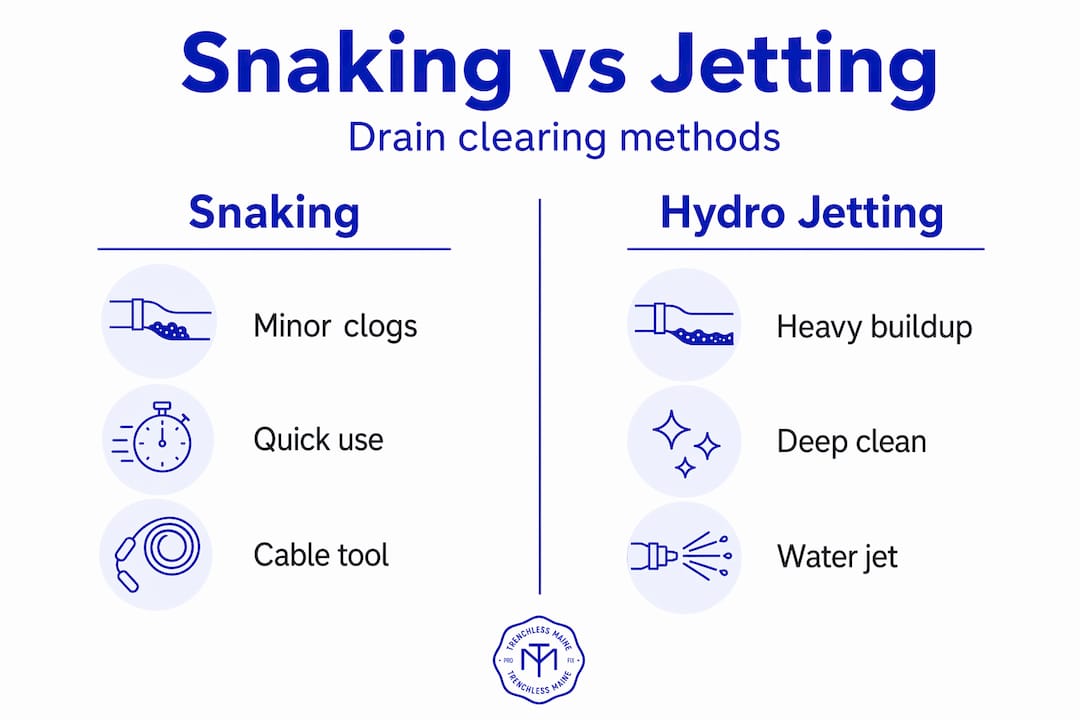
Snaking, also called mechanical augering, involves feeding a long, flexible metal cable into your drain and rotating it to either break up a clog or hook and pull it out. It is fast, relatively affordable, and works well for simple, localized blockages. If your child dropped a toy into the toilet or your bathroom drain is backed up from hair, snaking is often the right first call. A standard snaking job takes between 30 and 60 minutes and gets you back to normal quickly.
The limitation of snaking is that it punches a hole through the clog rather than fully clearing the pipe. Snaking suits minor, localized clogs like hair or small foreign objects, but it leaves a layer of residue on the pipe walls that leads to quick recurrence. Grease, sludge, and root material cling back to the walls almost immediately.
Hydro jetting works differently. A specialized nozzle is inserted into the pipe and releases water at pressures between 1,500 and 4,000 PSI in multiple directions at once, including backward to propel the nozzle forward. This high-pressure water breaks apart grease, root material, and mineral scale, then flushes all of it downstream and out of your system completely. The result is a pipe that looks and functions almost like new.
Here is a side-by-side comparison:
| Feature | Snaking | Hydro jetting |
|---|---|---|
| Best use case | Hair, small objects, minor clogs | Grease, roots, sludge, scale, recurring clogs |
| Time to complete | 30 to 60 minutes | 1 to 2 hours |
| Results duration | Weeks to months | 2 to 3 years on average |
| Pipe residue removed | Partial | Complete scour |
| Equipment needed | Mechanical auger | High-pressure water system |
| Recommended for | First-time, minor blockages | Persistent or recurring blockages |
Pro Tip: If your kitchen drain has been backing up repeatedly despite previous clearing, that is a strong indicator that grease is coating the pipe walls. A hydro jetting guide can help you understand what the process looks like and whether your pipes are ready for it.
Choosing between these two methods does not need to be complicated. If you have had the same drain cleared more than once in a 12-month period, snaking is probably not solving the root problem. That pattern is your signal to escalate to high pressure drain cleaning, which scours the full diameter of the pipe rather than just punching through the blockage.
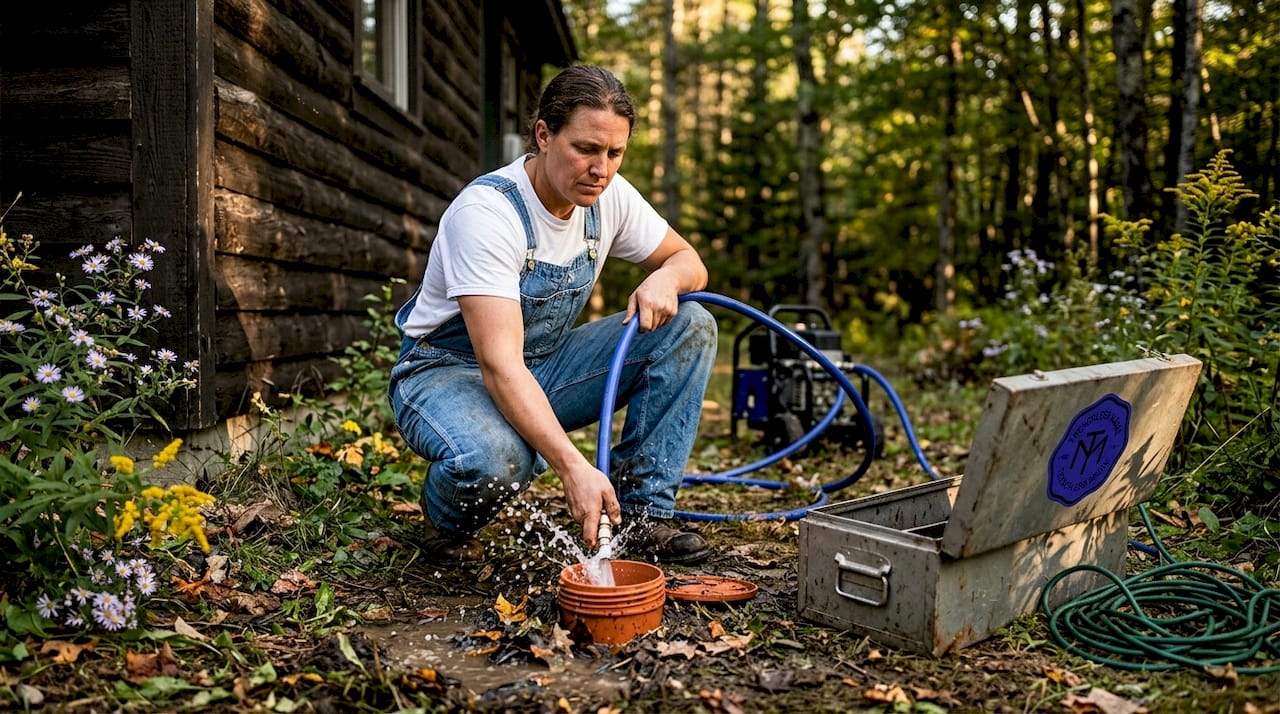
It is also worth knowing that hydro jetting is environmentally friendly. No chemicals are used, just water. For homeowners who care about what goes into their plumbing system and eventually into Maine's groundwater, that matters. You can read more about safe sewer solutions and how this approach compares to chemical treatments that can actually corrode aging pipes over time.
How to address recurring drain clogs: Step-by-step for Maine homes
Once you have chosen a method, here is how to address repeated clogs using an evidence-backed approach that escalates intelligently rather than throwing the same fix at the same problem.
-
First occurrence: Start with maintenance and snaking. For a first-time clog, basic drain maintenance and mechanical snaking are appropriate. This clears the immediate blockage and gives you a baseline. Note the location, the suspected cause, and how long it took for the drain to return to normal flow after clearing.
-
Second occurrence: Escalate to hydro jetting with an inspection. If the same drain clogs again within 6 to 12 months, it is time to step up. Schedule drain cleaning steps that include both hydro jetting and a pre-jetting camera inspection. The camera inspection gives your technician a live view inside the pipe to identify grease layers, root intrusion, cracks, or pipe deformation (warping or misalignment) before jetting begins.
-
Third occurrence or ongoing recurrence: Order a CCTV camera inspection for structural diagnosis. According to a recurring clog framework, for recurring clogs, a first incident calls for standard maintenance, the second should involve hydro jetting plus inspection, and a third or more should trigger a full CCTV (closed-circuit television) camera inspection to check for structural issues like bellied pipes (sections that have sagged and collect standing water). This step is critical because it separates a maintenance issue from a structural one.
-
Act on the findings. If the CCTV inspection reveals a bellied pipe, offset joint, or significant root intrusion, clearing alone will not provide a lasting fix. You will need a structural repair. The good news is that non-invasive options like CIPP lining (cured-in-place pipe lining) mean you can often fix the issue without digging up your yard or floors.
Here is a quick reference table for decision-making:
| Clog frequency | Recommended action | Purpose |
|---|---|---|
| First time | Snaking or maintenance | Clear immediate blockage |
| Second time within 12 months | Hydro jetting plus camera inspection | Remove residue, identify build-up |
| Three or more times | CCTV structural inspection | Diagnose pipe damage |
| Ongoing after inspection | Structural repair (e.g., CIPP lining) | Fix root cause permanently |
Sewer scope inspections are one of the most valuable tools available to Maine homeowners facing chronic drain problems. A camera inspection costs a fraction of what emergency excavation costs, and it gives you concrete, visual evidence of what is happening inside your pipes before the situation becomes urgent.
Pro Tip: Always ask for the camera footage from your inspection. A reputable technician will record the inspection and walk you through what they found. That footage is your documentation if you ever need a warranty claim or want a second opinion. Understanding pipe inspection methods helps you ask the right questions and get more out of your service appointment.
Preventing future drain problems: Smart maintenance and expert help
Resolving today's issues is just the start. Keeping your drains clear long-term requires a consistent approach that combines good habits at home with periodic professional service.
Snaking takes 30 to 60 minutes and works for localized clogs, while hydro jetting takes 1 to 2 hours and provides results that last 2 to 3 years. That difference in longevity is significant when you factor in the cost of repeated service calls. Scheduling hydro jetting every 2 to 3 years as a preventive measure often costs less over time than responding to emergencies.
Here are practical steps you can take right now to reduce your risk of future blockages:
- Use drain screens in every sink, tub, and shower to catch hair and debris before it enters the pipe.
- Never pour grease down the drain. Let it cool, solidify, and dispose of it in the trash. Even small amounts accumulate over time.
- Flush only toilet paper. "Flushable" wipes, paper towels, and hygiene products are among the most common causes of severe sewer lateral (the pipe running from your home to the main sewer line) blockages.
- Run hot water for 30 seconds after washing dishes to help push food particles and grease further down and out of your system.
- Schedule professional service before symptoms become severe. Slow drains are the first warning sign, not an emergency yet. Acting at that stage costs far less than waiting for a backup.
- Watch for early sewer repair warning signs including gurgling sounds from drains, foul odors from multiple fixtures at once, and unusually lush patches of grass over your sewer line.
Foul odors from multiple drains simultaneously are especially important to take seriously. A single slow drain is usually a localized clog. Multiple sluggish drains, gurgling toilets, and a sulfur smell together indicate a problem further down the sewer lateral or in the main line itself.
What most homeowners in Maine miss about drain clearing
Here is the perspective most drain clearing guides leave out: clearing a clog and fixing a drain problem are not the same thing. The plumbing industry often treats them interchangeably, but for homeowners in Maine dealing with older pipes and seasonal ground movement, that distinction can mean the difference between a $150 service call and a $15,000 excavation.
When you call for drain clearing and a technician snakes the line and leaves, you have cleared the symptom. But if your pipe has a hairline crack, a root growing through a joint, or a section that has sagged from soil movement during Maine's freeze-thaw cycles, that pipe will fail again. It may take three weeks or three months, but it will fail. And each time it backs up, the structural issue gets slightly worse.
The homeowners who come out ahead are the ones who treat the second clog as a diagnostic signal, not just an inconvenience. Getting a sewer camera guide and understanding what a camera inspection reveals gives you leverage. You know what you are dealing with. You can make a real decision about repair versus clearing versus prevention.
The uncomfortable truth is that many recurring drain problems in Maine homes are structural issues wearing the mask of clogs. Non-invasive clearing is essential, and hydro jetting provides outstanding results for pipes in reasonable condition. But if there is underlying pipe damage, no amount of clearing will stop the recurrence. Investing in a camera inspection early is not an upsell. It is the only way to know whether you are solving the real problem.
We have seen homeowners spend hundreds of dollars on repeated service calls over two or three years when a single camera inspection early on would have revealed a bellied pipe that could be lined without excavation for a fraction of what those repeat visits added up to. Act earlier, ask for the inspection, and treat your drain system as the infrastructure it actually is.
Efficient drain clearing solutions for Maine homeowners
If you have been dealing with slow drains, repeat clogs, or the frustration of fixing the same problem twice, you do not have to keep guessing. Non-invasive professional clearing can resolve most recurring issues without tearing up your yard or your floors.

At Trenchless Maine, we specialize in local drain clearing that addresses the actual cause of your problem, not just the symptom. Our team uses camera inspections, hydro jetting, and CIPP lining to provide lasting results across most of Maine's cities. Whether you need a single clearing or a full diagnostic assessment, we can complete most jobs within 24 hours with minimal disruption to your property. Explore our hydro jetting service to see how high-pressure clearing can provide 2 to 3 years of clean, free-flowing drains backed by our team's combined 50-plus years of experience. Get a free quote today and stop paying for the same problem repeatedly.
Frequently asked questions
What is the difference between snaking and hydro jetting?
Snaking clears localized clogs quickly using a rotating cable but often leaves residue on pipe walls, leading to fast recurrence; hydro jetting uses high-pressure water to fully scour the pipe and delivers results that last significantly longer.
How often should I have my drains cleared?
For persistent or grease-prone clogs, hydro jetting lasts 2 to 3 years, so scheduling service on that cycle as a preventive measure is a cost-effective approach for most Maine homeowners.
What are signs I need professional drain clearing?
Slow drains that do not respond to basic cleaning, foul odors coming from multiple fixtures, frequent backups in the same drain, and gurgling sounds from your toilet all signal that it is time for professional assessment and clearing.
Is hydro jetting safe for old pipes?
Hydro jetting can be safe for older pipes, but it requires expert evaluation first; a camera inspection identifies any cracks, deformation, or weakened sections that would need to be addressed before high-pressure jetting is applied.