
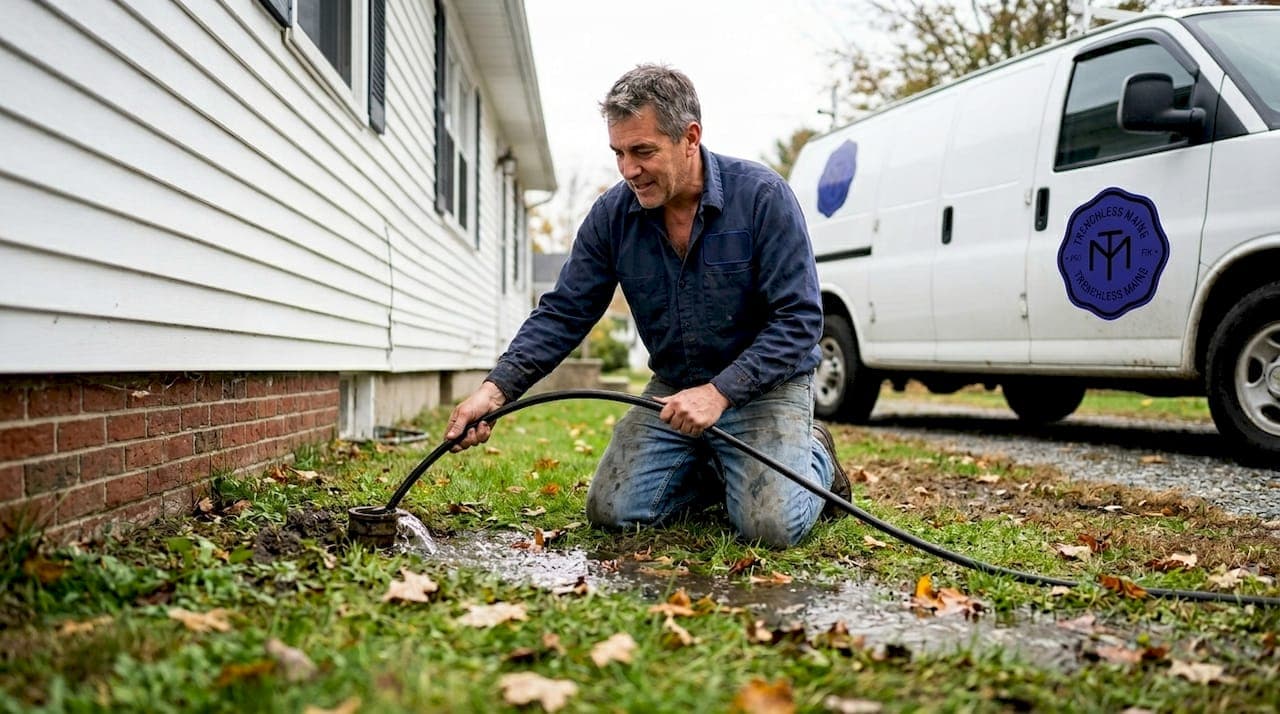
When a sewer line backs up, most homeowners brace for the worst: heavy equipment rolling across the yard, trenches cutting through landscaping, and a bill that can run into the thousands. What most Maine homeowners don't realize is that a non-invasive option called hydro jetting can clear the majority of blockages without digging a single hole. It uses nothing but highly pressurized water to scour your pipes clean from the inside. This guide covers what hydro jetting is, how it works, when it makes sense for your home, and what to expect from start to finish.
Table of Contents
- What is hydro jetting and how does it work?
- When is hydro jetting the best sewer solution in Maine?
- What does the hydro jetting process look like for your home?
- Costs, benefits, and common myths about hydro jetting
- Why hydro jetting is the overlooked hero for Maine homeowners
- Explore trenchless and hydro jetting solutions for your Maine home
- Frequently asked questions
Key Takeaways
| Point | Details |
|---|---|
| Hydro jetting defined | Hydro jetting uses high-pressure water to safely clear drains and sewer lines without excavation. |
| Ideal situations | Hydro jetting is perfect for routine maintenance, stubborn clogs, and homes aiming to avoid disruption. |
| Limitations | Hydro jetting cannot fix collapsed or severely damaged pipes and requires a professional assessment. |
| Cost and value | Hydro jetting is usually less disruptive and more cost-effective than traditional sewer excavation. |
| Homeowner action | A camera inspection before hydro jetting ensures the right solution and guarantees safety for your pipes. |
What is hydro jetting and how does it work?
Hydro jetting is a professional drain and sewer cleaning method that uses a specialized high-pressure hose fitted with a multi-directional nozzle. Water is pushed through the line at pressures typically ranging from 3,000 to 4,000 PSI, though some systems reach up to 5,000 PSI for severe buildup. That force is strong enough to cut through grease layers, dissolve mineral scale, and flush debris completely out of the pipe.
Compare that to traditional drain snaking, which physically pokes a hole through a clog but often leaves residue coating the pipe walls. Chemical drain cleaners are even less reliable: they can corrode older pipes and rarely solve the root cause of a recurring clog. Hydro jetting addresses the entire interior surface of the pipe, not just the blockage itself.
| Factor | Hydro jetting | Traditional snaking | Chemical cleaning |
|---|---|---|---|
| Speed | 1 to 4 hours | 30 to 90 minutes | Minutes (reoccurs fast) |
| Cost (typical) | $300 to $600 | $100 to $250 | $20 to $60 |
| Yard disruption | None | None | None |
| Lasting results | High | Low to medium | Low |
| Eco-friendly | Yes | Yes | No |
A typical hydro jetting service follows these key steps:
- Camera inspection: A technician runs a video camera through the sewer lateral to check for damage and locate the clog.
- Access point setup: The hose is inserted through a cleanout access point.
- Pressurized flushing: Water is pushed forward and backward through the line to break up and remove buildup.
- Final camera check: A second pass confirms the pipe is fully clear.
Important:
, severe root intrusion, or structural damage. A professional assessment is required before any jetting begins.
Our hydro jetting guide goes even deeper on equipment specs and nozzle types if you want more technical detail. Maine's freeze-thaw cycles also create unique seasonal stress on pipes, which is why spring sewer maintenance often starts with a jetting service.
Pro Tip: Before booking hydro jetting, always ask your service provider if a camera inspection is included. Skipping this step risks blasting water into a pipe with hidden cracks, which can make damage worse.
When is hydro jetting the best sewer solution in Maine?
With an understanding of what hydro jetting does, let's pinpoint its ideal uses and its limits in Maine's tough climate.
Hydro jetting performs best in specific situations. Maine's older housing stock, cold winters, and heavy clay soils all create conditions that accelerate buildup inside sewer lines. The method excels at clearing:
- Grease and fat accumulation from kitchen drains
- Mineral scale and sediment buildup
- Minor root intrusion (fine feeder roots, not major root masses)
- Recurring slow drains that snaking temporarily fixes
- Routine preventive maintenance on aging pipes
Not sure if jetting is right for your situation? Work through these questions:
- Have you had the same clog more than twice? If snaking keeps coming back as a short-term fix, the pipe walls likely have stubborn buildup that only jetting can remove.
- Are your drains slow throughout the house, not just one fixture? Widespread sluggishness usually points to the main sewer lateral, not a localized clog.
- Is your home more than 25 years old? Older cast iron or clay pipes in Maine homes accumulate scale and grease rapidly.
- Has a professional recommended it after camera review? A visual inspection is the most reliable indicator.
Hydro jetting can extend pipe longevity significantly by removing corrosive buildup that accelerates pipe deformation over time. Many Maine homeowners report their lines staying clear for two or more years after a professional jetting service.
| Blockage type | Hydro jetting effectiveness | Traditional snaking effectiveness |
|---|---|---|
| Grease/fat buildup | Excellent | Poor |
| Mineral scale | Excellent | Fair |
| Fine root intrusion | Good | Fair |
| Solid debris | Good | Good |
| Collapsed pipe | Not applicable | Not applicable |
| Major root mass | Limited | Fair |
If you're already noticing warning signs, review the signs you need sewer repair before calling a technician so you can describe your situation accurately. Homeowners with private septic systems should also check the septic vs. sewer comparison since hydro jetting protocols differ by system type.
Pro Tip: Always request a sewer camera inspection before agreeing to jetting. This single step tells you whether jetting is safe, sufficient, or whether a structural repair is actually needed first.
What does the hydro jetting process look like for your home?
If you're considering hydro jetting, here's exactly what the service involves from start to finish.
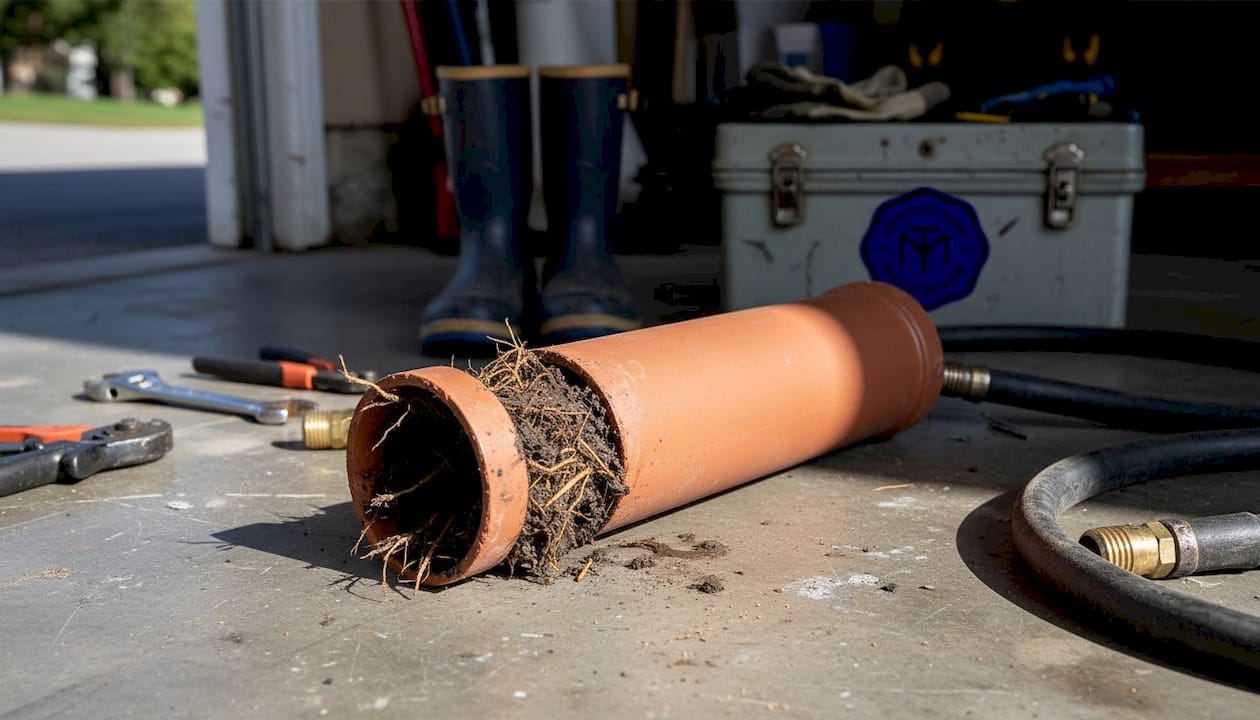
Most homeowners are surprised by how fast and clean the process is. A full residential hydro jetting service typically takes between one and four hours, depending on line length and severity of buildup. No excavation is involved, and the technicians leave your property looking exactly as they found it.
Here is the step-by-step sequence you can expect:
- Initial camera inspection: A waterproof camera is fed into the sewer line through a cleanout access point. This reveals exactly what is causing the problem and confirms the pipe is structurally sound enough for jetting.
- Equipment setup: The technician connects the high-pressure jetting unit to a water source, usually a truck-mounted tank, and threads the nozzle hose into the cleanout.
- Forward jetting pass: Water is forced forward through the pipe at high pressure, breaking up blockages and pushing debris toward the main sewer connection.
- Reverse flushing pass: The nozzle is pulled back slowly, spraying water at rear-facing angles to scrub the pipe walls clean and flush remaining material out.
- Post-jetting camera check: A second camera run confirms the pipe is clear and that no damage occurred during the process.
- Site cleanup and report: The technician removes equipment, clears the access area, and provides a summary of findings.
Before the crew arrives, here is what you should have ready:
- Clear access to the cleanout: Remove any furniture, landscaping items, or storage blocking the outdoor cleanout cap.
- Mark the access point: If you know where the cleanout is, flag it so the team can get started immediately.
- Avoid using water: Try not to run sinks, toilets, or appliances for an hour before the appointment.
- Inform household members: Let everyone in the home know water use will be temporarily interrupted.
Most Maine homes require a camera check first because not suitable for damaged lines is a real risk with older clay or cast iron pipe construction. You can explore the full range of Maine trenchless services available, and see repair before and after photos to understand what results look like in practice.
Pro Tip: If your cleanout cap is buried or painted over, ask the technician to locate it during a pre-appointment call. Spending 15 minutes locating a cleanout can add unexpected cost to your visit.
Costs, benefits, and common myths about hydro jetting
Knowing the process, it's time to weigh practical benefits and clear up popular misconceptions.
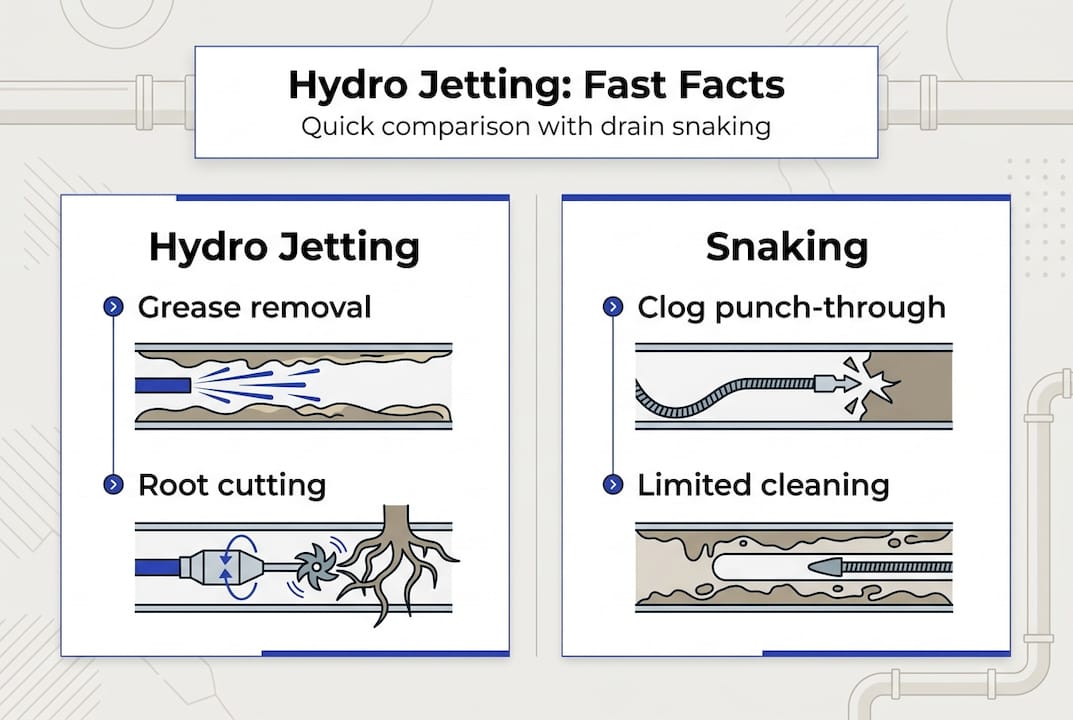
Hydro jetting typically costs between $300 and $600 for a residential service in Maine. That's more than a basic snake job, but the results last dramatically longer and often prevent the need for emergency repairs. Compare that to the cost of excavation-based sewer work:
| Service | Typical cost range | Yard disruption | Lasting results |
|---|---|---|---|
| Hydro jetting | $300 to $600 | None | 1 to 3 years |
| Sewer snaking | $100 to $250 | None | Weeks to months |
| Partial sewer excavation | $1,500 to $4,000 | Significant | Permanent (if replaced) |
| Full sewer line replacement | $5,000 to $15,000+ | Major | Permanent |
The benefits of choosing hydro jetting over more invasive methods include:
- No digging: Your lawn, driveway, and garden beds stay intact.
- Eco-friendly: Only water is used. No chemicals enter the soil or groundwater.
- Thorough cleaning: Removes 100% of the pipe interior coating, not just the clog itself.
- Faster results: Most jobs are done in a single visit.
- Reduced future blockages: A clean pipe resists new buildup far longer than a snaked pipe.
Myth vs. reality: Many homeowners believe hydro jetting will crack or damage their pipes. In reality, professional assessment prevents damage: a qualified technician inspects the pipe first and would never apply high pressure to a structurally compromised line. When used correctly, jetting is safer than repeated snaking, which can scratch and weaken pipe interiors over time.
Another common myth is that hydro jetting is only for commercial properties. Residential lines in Maine benefit just as much, especially homes near tree-lined streets where minor root intrusion is a constant concern. Winter brings its own challenges too: frozen pipe issues in Maine often leave behind scale and sediment once lines thaw, making spring jetting a practical investment.
Why hydro jetting is the overlooked hero for Maine homeowners
Most Maine homeowners still associate sewer problems with an inevitable, expensive dig. That assumption costs them more money than the repair itself.
In our experience, hydro jetting combined with a camera inspection is almost always the smartest first move before any structural repair is considered. Time and again, homes that were quoted for partial sewer replacement turned out to need nothing more than a thorough jetting service. The pipe was sound. The buildup was the problem.
Here's the part that doesn't get said enough: some contractors skip jetting entirely because the margin on excavation work is higher. That's not a knock on the industry, just a reality you should be aware of as a homeowner. A trustworthy provider will always offer the least invasive option that solves the problem. If someone jumps to a full dig without suggesting a camera and jetting first, ask why.
Read our in-depth hydro jetting guide if you want a deeper look at how the technology works and when it transitions from maintenance to full repair territory. Structural issues absolutely still require expert evaluation, but jetting is often the step that reveals whether a structural fix is truly needed at all.
Explore trenchless and hydro jetting solutions for your Maine home
If your drains are running slow, you've had recurring clogs, or you just want to get ahead of a potential sewer issue, hydro jetting may be exactly what your home needs. And the best part: it won't leave a trench across your yard.

At Trenchless Maine, we specialize in non-invasive sewer solutions backed by over 50 years of combined expertise. From camera inspections to full hydro jetting services, our team helps Maine homeowners solve sewer problems without unnecessary disruption or expense. Most jobs are completed within 24 hours. Get a free quote today and find out whether hydro jetting is the right first step for your home.
Frequently asked questions
Is hydro jetting safe for old pipes in Maine homes?
Hydro jetting is generally safe for structurally sound pipes, but not for severely damaged lines. A professional camera inspection before jetting is essential, especially in older Maine homes with clay or cast iron pipes.
How often should I schedule hydro jetting for my sewer?
Most Maine homeowners benefit from hydro jetting every one to two years, though homes with heavy kitchen use or mature trees nearby may need it more frequently based on pipe condition.
Will hydro jetting damage my landscaping or driveway?
No. Hydro jetting is entirely non-invasive and requires no digging, so your lawn, garden beds, and hardscapes remain completely untouched throughout the service.
What blockages can hydro jetting remove?
Hydro jetting excels at removing grease, sludge, mineral scale, and fine root intrusion, but not collapsed pipes or lines with major structural damage, which require a different repair approach.
Do I need a camera inspection before hydro jetting?
Yes. A camera inspection confirms the pipe is structurally sound for jetting and identifies the exact cause of the problem, preventing unnecessary complications during the service.