
Most homeowners don't think about their sewer line until the toilet starts backing up or the yard smells like a problem they can't ignore. The importance of sewer line maintenance becomes obvious only after damage is done, and by then, repairs can run anywhere from $3,000 to well over $15,000. The trouble is, sewer line problems develop slowly underground, completely invisible until they've already compromised your pipes. Understanding sewer line upkeep before an emergency happens is what separates a $300 inspection from a $15,000 replacement.
Table of Contents
- Key Takeaways
- Understanding your sewer system and what you're responsible for
- Warning signs and common causes of sewer problems
- Maintenance methods and best practices
- Financial and environmental benefits of regular upkeep
- Practical steps to take starting now
- My perspective on sewer maintenance after years in the field
- How Trenchlessmaine can help you stay ahead of sewer problems
- FAQ
Key Takeaways
| Point | Details |
|---|---|
| You own the sewer lateral | Homeowners are responsible for maintaining the pipe from their home to the city main, not the municipality. |
| Early signs get missed | Slow drains, gurgling sounds, and green patches in the yard appear long before a full backup occurs. |
| Inspections are inexpensive | A camera inspection costs $150 to $450 and can reveal hidden damage before it becomes a major repair. |
| Maintenance protects property value | Documented sewer condition reports make your home more attractive to buyers and reduce negotiation risk. |
| Trenchless repairs minimize disruption | Modern methods like CIPP lining fix damaged pipes without tearing up your yard or driveway. |
Understanding your sewer system and what you're responsible for
Your home connects to the city's main sewer line through a pipe called the sewer lateral (sometimes called the side sewer). This pipe runs from your home's foundation, across your property, and connects to the public main line, typically located beneath the street. What most homeowners don't realize is that sewer lateral maintenance is entirely their responsibility, not the city's.
The city handles the main line. Everything from your foundation to that connection point falls on you. That includes labor costs, permits, and any property restoration after repairs. Depending on where you live in Maine, the exact boundary of your responsibility can shift. Lateral responsibility boundaries vary by jurisdiction, sometimes splitting between an upper lateral (your property) and a lower lateral (the section under the street), each with different ownership rules.
Here's what makes the sewer lateral especially vulnerable:
- It runs underground, often through tree roots and shifting soil
- Older homes in Maine frequently have clay or cast iron pipes that crack and corrode over time
- Seasonal freeze and thaw cycles put additional stress on pipe joints
- Grease, debris, and mineral buildup gradually restrict flow year after year
Pro Tip: If your home was built before 1980, there's a good chance your sewer lateral is made from clay or cast iron. Both materials are significantly more prone to cracks, root intrusion, and corrosion than modern PVC pipe. Scheduling a camera inspection is especially wise for older properties.
Why does knowing this matter? Because when something goes wrong, you'll need to act quickly, pull permits, and hire a licensed contractor. Homeowners who understand their system in advance make faster, smarter decisions and avoid being taken advantage of in an emergency.
Warning signs and common causes of sewer problems
Sewer line damage doesn't announce itself. It builds quietly underground over months or years before you see any symptom inside your home. Knowing the common causes of sewer failure gives you the knowledge to catch problems early.
The most frequent culprits include root intrusion (tree and shrub roots that crack pipe walls and grow inside), grease and debris buildup, pipe deformation, offset pipe joints from soil settling, and simple old age. Each of these develops gradually, which is exactly why they're so easy to miss.
The signs of sewer problems worth watching for, ordered from early to severe:
- Slow drains throughout the house. One slow drain might be a local clog. Multiple slow drains at once point to a problem in the main sewer line.
- Gurgling sounds from toilets or floor drains. Air trapped in the line from a partial blockage causes this noise. Don't ignore it.
- Sewage odors indoors or outdoors. A healthy sewer line is airtight. Smells mean cracks or gaps are present somewhere in the system.
- A strip of unusually green, lush grass across your yard. Sewage leaking underground acts as a fertilizer. If one section of your lawn is thriving while the rest isn't, that's a red flag.
- Water backing up in a floor drain or bathtub when you flush the toilet. This is a clear indicator of a serious blockage or collapsed section.
Pro Tip: Don't wait for multiple symptoms before calling for an inspection. A single gurgling sound or recurring slow drain after snaking is worth a camera inspection. Catching a problem at stage one or two is dramatically cheaper than addressing it at stage four or five.
Sewer problems develop slowly and remain invisible until they're severe. That's precisely why regular inspections are worth scheduling before symptoms appear at all.
Maintenance methods and best practices
Knowing about the importance of plumbing maintenance only helps when you understand what that maintenance actually looks like. The core tools for keeping a sewer line healthy are camera inspections, hydro jetting, and documented service records.
Camera inspections
A sewer scope inspection sends a high resolution camera through your pipe and shows your technician exactly what's inside. Cracks, root intrusion, grease buildup, collapsed sections, and offset joints are all clearly visible. The video feed is recorded, giving you documentation you can use for future comparisons, insurance claims, or real estate negotiations.
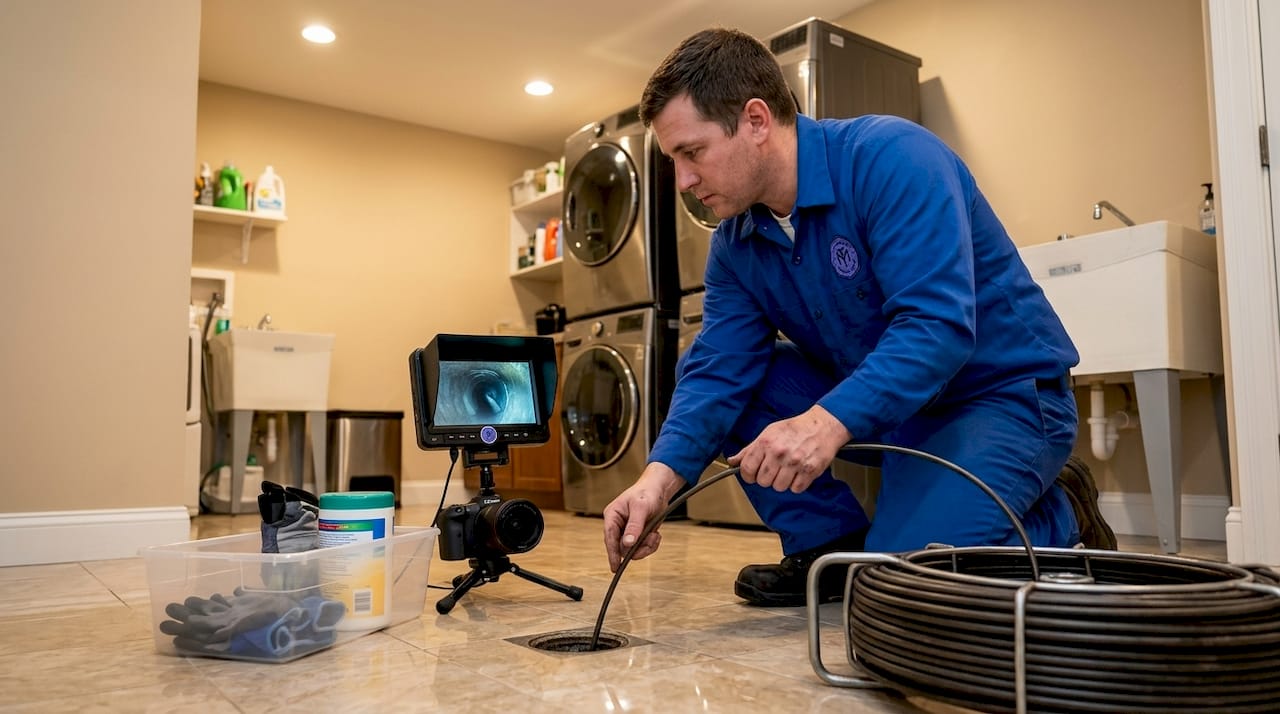
Camera inspections reveal specific pipe conditions that determine the right course of action. A lightly grease coated pipe needs cleaning. A pipe with moderate root intrusion might need hydro jetting plus a lining. A collapsed pipe needs replacement. Without a camera, you're guessing.
Hydro jetting
Hydro jetting pushes water at extremely high pressure through the pipe, breaking up grease, mineral deposits, and root masses. It's thorough and effective for pipes in structurally sound condition. But here's the detail most homeowners never hear: hydro jetting isn't appropriate for pipes that are already fragile, cracked, or partially collapsed. Forcing high pressure water through a compromised pipe can cause further damage. This is why a camera inspection always comes first.
Maintenance comparison at a glance
| Method | Best for | Frequency | Average cost |
|---|---|---|---|
| Camera inspection | All pipe conditions | Every 2 to 3 years | $150 to $450 |
| Hydro jetting | Grease and root removal | As needed / every 2 years | $300 to $600 |
| CIPP pipe lining | Cracked or deteriorating pipes | Once, lasting 50+ years | $80 to $250 per foot |
| Pipe replacement | Collapsed or severely damaged | As needed | $3,000 to $15,000+ |
Pro Tip: Keep a digital folder with your sewer inspection videos and service records. When you sell your home, this documentation signals to buyers that the system has been maintained. It can also help you avoid paying out of pocket for repairs a buyer requests after a home inspection.
Financial and environmental benefits of regular upkeep
The benefits of sewer maintenance go beyond keeping your drains flowing. Regular sewer system care has real financial and environmental consequences that most homeowners don't consider until it's too late.
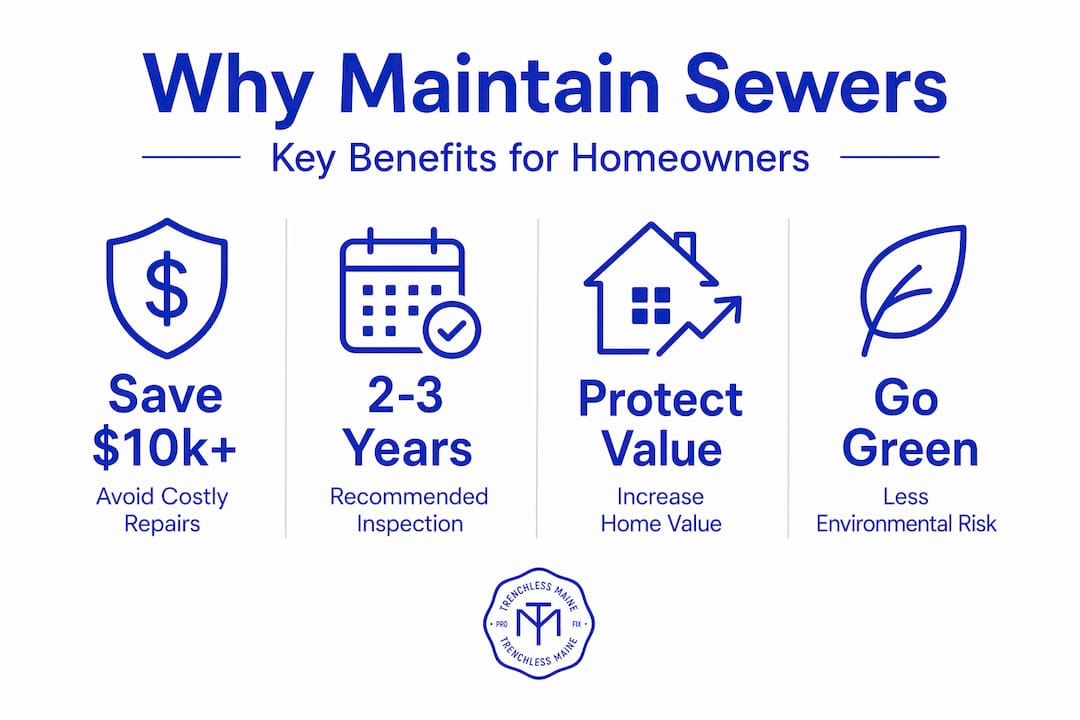
On the financial side, sewer line replacement costs can reach $15,000 or more, while a routine inspection runs just $150 to $450. Sewer scope inspections catch hidden problems in nearly 49% of homes examined. For homebuyers, skipping that inspection before purchase is one of the most expensive gambles you can take with a property.
On the environmental side, a cracked or leaking sewer lateral isn't just a plumbing problem. It's a contamination problem. Untreated sewage leaking into soil and groundwater creates public health risks for your neighborhood, not just your property. The scale of the issue is large enough that the EPA has committed $80 million in grants to help municipalities address sewer overflows and waterway contamination. That level of investment reflects just how seriously regulators view private sewer failures.
Neglecting your sewer lateral doesn't just risk your home. It contributes to broader contamination of local waterways and public health infrastructure. Maintenance is both a personal and civic responsibility.
From a property value perspective, a documented, well maintained sewer line makes your home easier to sell and harder to undervalue. Buyers and their inspectors look specifically at sewer condition. A clean inspection report removes one of the most common leverage points used to negotiate your price down.
Practical steps to take starting now
Understanding the cost of sewer repairs and why maintenance matters is only useful if you act on it. Here are concrete steps you can take as a homeowner to put this knowledge to work.
- Schedule a camera inspection if you haven't had one in the last two to three years. This is the most direct way to know your current pipe condition. Don't wait for symptoms. Many serious issues are caught in pipes that showed no signs at all.
- Find out your jurisdiction's sewer lateral responsibility boundary. Call your local municipality or check your city's website. Some jurisdictions offer cost sharing programs or subsidized inspections for private laterals.
- If you're buying a home, require a sewer scope before closing. Negotiate a repair credit before purchase if the inspection reveals damage. This is standard practice in informed real estate transactions.
- Document everything. Store your inspection videos, service invoices, and technician reports in a dedicated folder. If you have a repair done, note the method used, the pipe length affected, and the warranty terms.
- Ask about trenchless repair options if damage is found. Methods like CIPP lining repair compromised pipes from the inside without digging up your yard or driveway. For most homeowners in Maine, this means far less disruption and faster completion.
- Avoid planting trees or large shrubs near your sewer lateral route. Root intrusion is one of the most common causes of pipe failure. Knowing where your lateral runs and planting away from it is free preventative maintenance.
These steps apply whether your home is two years old or a century old. Sewer line upkeep doesn't require constant attention. It requires periodic, scheduled attention and good records.
My perspective on sewer maintenance after years in the field
I've worked with homeowners across Maine long enough to notice a clear pattern. The ones who end up paying the most are almost never dealing with new problems. They're dealing with old ones that went unnoticed for years.
I've seen pipes in homes sold without a sewer scope that had active root intrusion going back a decade. The new owners had no idea. They had no leverage when they found out. And they paid full replacement cost that could have been a simple lining job if caught sooner.
What I've learned from this work is that sewer maintenance isn't glamorous, but it's one of the smartest investments you make in a home. The homeowners who fare best are the ones who treat their sewer line condition the same way they treat their roof or HVAC. They schedule checks, they keep records, and they address small issues before they become structural failures.
The environmental piece matters to me personally. When a sewer lateral cracks and leaks for years, that sewage goes somewhere. In Maine, "somewhere" often means near a stream, a wetland, or a neighbor's well. Responsible homeownership includes what happens underground on your property.
My practical advice: treat your first sewer camera inspection as a baseline. Whatever condition it finds, you now have a starting point. Work forward from there. That mindset change, from reactive to proactive, is what actually prevents the $15,000 emergency.
— John
How Trenchlessmaine can help you stay ahead of sewer problems
If this article has made one thing clear, it's that acting before a backup occurs is always the smarter move. Trenchlessmaine specializes in exactly the services that protect Maine homeowners from unexpected sewer emergencies.

From sewer camera inspections that give you a clear picture of your pipe's condition, to hydro jetting services that clear stubborn grease and root buildup, to trenchless repair technology that fixes damaged pipes without digging up your yard, Trenchlessmaine covers every stage of sewer care. With over 50 years of combined expertise and warranties lasting up to 50 years, the team is built for homeowners who want lasting results without unnecessary disruption. Don't wait for the backup. Get ahead of it.
FAQ
What is the importance of sewer line maintenance for homeowners?
Regular sewer line maintenance prevents costly backups, protects property value, and stops untreated sewage from contaminating your soil and nearby waterways. A $150 to $450 inspection can prevent a $3,000 to $15,000 repair.
How often should you have your sewer line inspected?
Most plumbing professionals recommend a camera inspection every two to three years for average homes and annually for older homes with clay or cast iron pipes.
What are the early warning signs of sewer problems?
Slow drains throughout the house, gurgling toilets, sewage odors, and unusually lush patches of grass over your sewer line are all early indicators worth investigating before a backup occurs.
Who is responsible for maintaining the sewer lateral?
In most jurisdictions, the homeowner is responsible for the sewer lateral running from their foundation to the city main. Exact boundaries vary by location, so checking with your municipality is recommended.
Can sewer lines be repaired without digging up the yard?
Yes. Trenchless methods like CIPP pipe lining repair cracked or deteriorating pipes from the inside, with no excavation required in most cases and project completion often within 24 hours.