
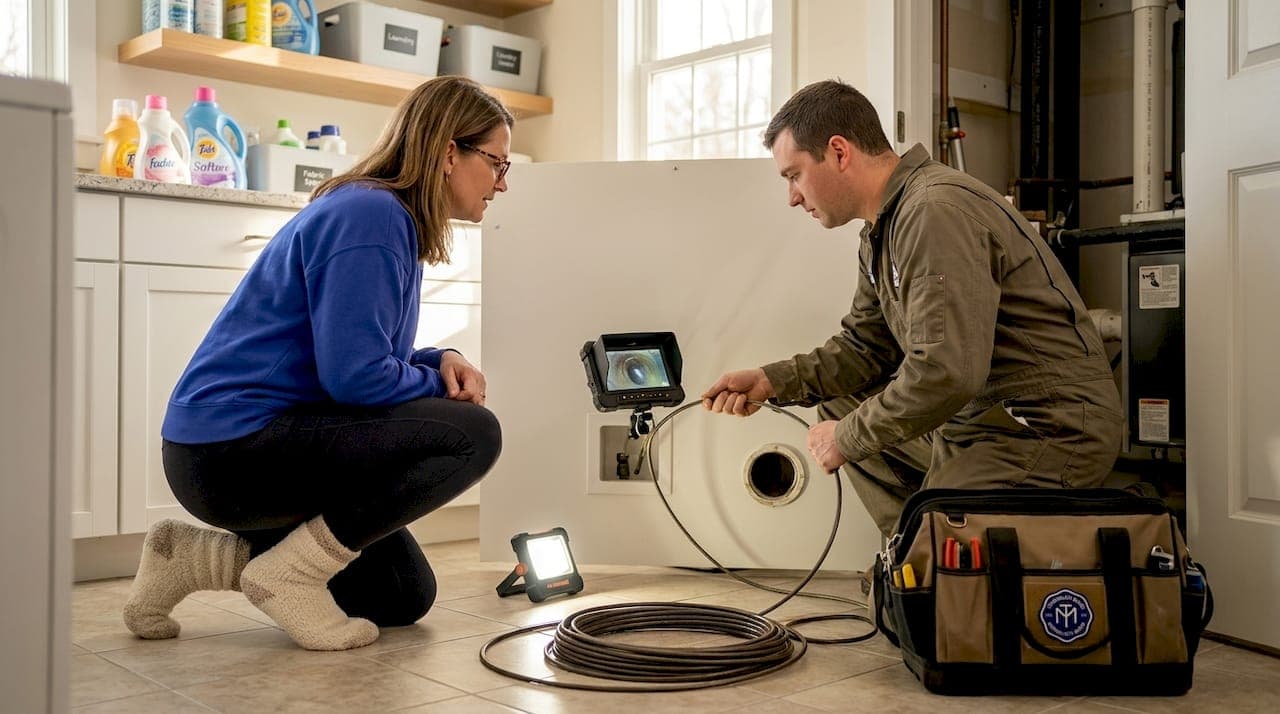
You have a slow drain, a recurring backup, or a faint sewage smell you can't trace. You call a plumber, and suddenly someone is talking about digging up your yard or cutting into your walls. The role of video pipe inspection is to make that scenario unnecessary. Instead of guesswork, you get a clear picture of exactly what's inside your pipes, where the problem is, and what it takes to fix it, without destroying your property in the process. This article covers what the technology is, how it works, and what it means for your home's plumbing health.
Table of Contents
- Key takeaways
- The role of video pipe inspection: what it is and how it works
- Key benefits and practical roles for homeowners and property managers
- Video inspection vs. traditional pipe diagnostic methods
- When to schedule a video pipe inspection
- My honest take on video pipe inspections
- See what's inside your pipes before problems decide for you
- FAQ
Key takeaways
| Point | Details |
|---|---|
| Real-time visual diagnosis | Video inspection shows blockages, cracks, and root intrusion inside your pipes without digging. |
| Targeted, not destructive | Precise location tools mean repairs only happen where they're actually needed, saving money. |
| Prevention beats reaction | Scheduling regular inspections catches small problems before they turn into expensive failures. |
| Standardized reports matter | Professional reports using industry coding help contractors and insurers understand findings clearly. |
| Pairs well with trenchless repair | Inspection footage directly guides non-invasive repair methods like CIPP lining and hydro jetting. |
The role of video pipe inspection: what it is and how it works
Video pipe inspection is a non-invasive method that uses a waterproof, high-resolution camera mounted on a flexible cable. A technician feeds the cable into your pipes through an existing entry point, usually a cleanout, drain, or access port. The camera streams live footage to a monitor above ground while the technician records everything for documentation and analysis.
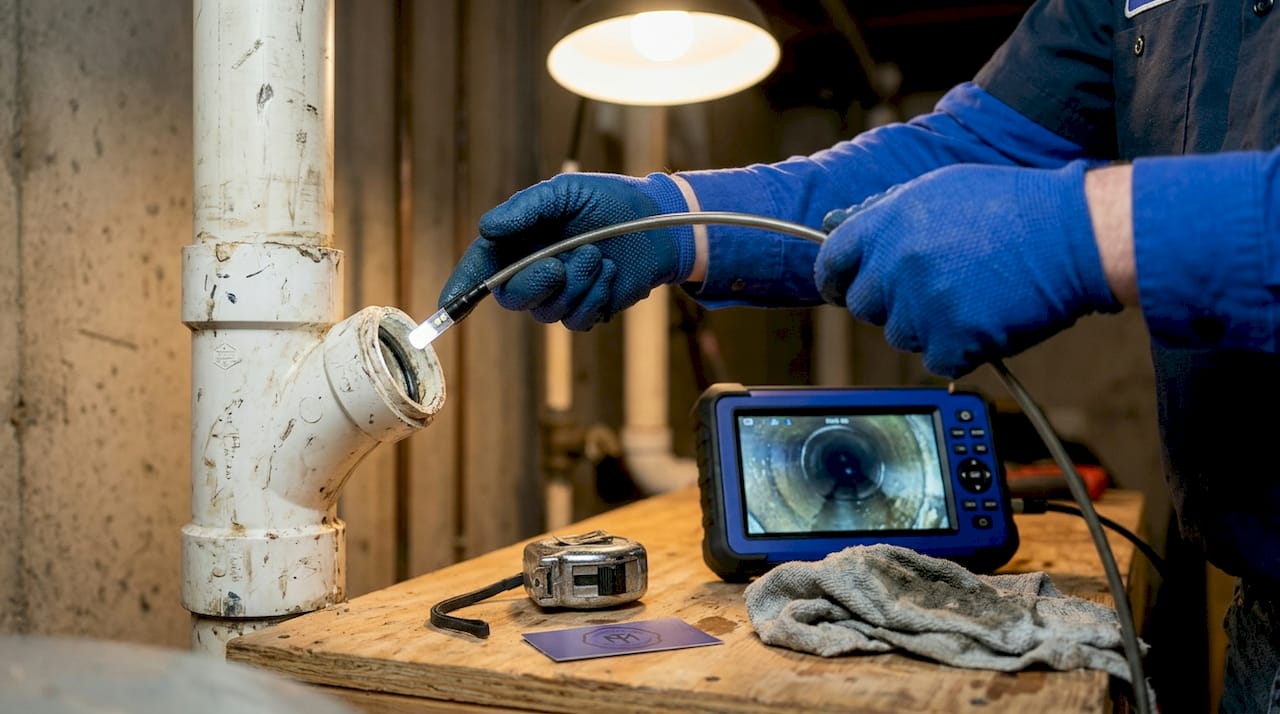
The system works across sewer laterals, drain lines, and storm drains. Standard push-rod cameras handle most residential pipes up to 12 inches in diameter within 300 feet. Larger mains or complex commercial systems sometimes require crawler units or sonar profiling to get an accurate read.
A key piece of the technology that often goes unnoticed is the sonde, a small locator transmitter built near the camera head. Modern inspection systems include a 512Hz sonde that allows a technician above ground to pinpoint the camera's exact location using a handheld receiver. This means if a crack is found 47 feet into your sewer lateral at a depth of 4 feet, the technician can mark that spot on your lawn precisely without guessing.
LED lighting built into the camera head illuminates pipe walls that would otherwise be completely dark. Distance counters track how far the camera has traveled, giving technicians exact measurements for every finding. The recorded footage becomes a permanent record you can share with contractors, insurers, or future buyers.
There are real limitations to know about. Video inspection cannot confirm active leaks outside the pipe walls. It shows what's happening on the interior surface, not what's happening in the soil around it. If you need to confirm water loss or soil voids, additional testing like pressure testing or ground-penetrating radar fills that gap.
Pro Tip: Ask your inspector to provide timestamped video footage along with a written report. Having both gives you solid documentation for contractor quotes and insurance conversations.
Key benefits and practical roles for homeowners and property managers
The biggest shift video inspection creates is moving you from guessing to knowing. That changes everything about how you approach plumbing problems and maintenance decisions.
Here is what video inspection actually does for you in practice:
- Accurate problem identification. The camera distinguishes between a grease buildup, a root intrusion, a cracked joint, pipe corrosion, and a misaligned section. Each problem has a different fix. Knowing which one you're dealing with prevents you from paying for the wrong solution.
- Avoidance of unnecessary excavation. Without camera confirmation, contractors sometimes dig first and ask questions later. Precise location measurement via distance counters means excavation happens only where it's actually needed, which is far less expensive and far less disruptive to your yard and landscaping.
- Early detection of developing problems. Video inspection transitions repair from reactive to proactive by catching early-stage root intrusion or hairline cracks before they become full collapses or backups that flood your basement.
- Environmental benefit. Less digging means less soil disruption, less waste removal, and less property damage overall. For homeowners in Maine with mature landscaping or older construction, this matters significantly.
- Real estate transactions. Buyers and sellers both benefit. A clean inspection report increases buyer confidence. An inspection before listing lets sellers address issues proactively rather than negotiating price reductions after a buyer's inspection uncovers problems.
- Planning trenchless repairs. When the footage identifies a crack or joint failure, that same footage guides the repair method. You can review your non-invasive pipe repair options and make an informed decision rather than accepting whatever a contractor recommends without evidence.
What homeowners often miss is this: a video inspection doesn't just diagnose your current problem. It shows you the overall condition of your entire pipe run, so you know what's fine, what needs monitoring, and what needs fixing now. That full picture is what turns a reactive repair call into a managed maintenance plan.
Video inspection vs. traditional pipe diagnostic methods
Before video technology was standard, diagnosing a pipe problem meant one of three things. You either guessed based on symptoms, manually probed accessible sections, or started digging until you found the problem. Each approach was expensive, time-consuming, and often inconclusive.
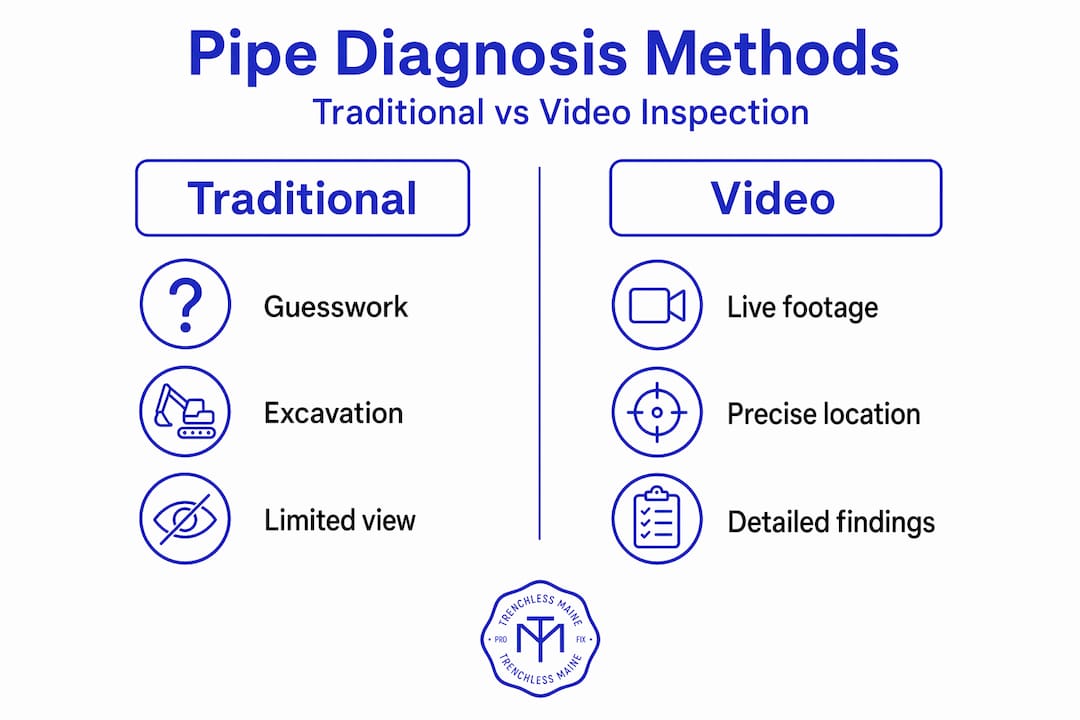
Here's how the two approaches compare directly:
| Factor | Traditional methods | Video pipe inspection |
|---|---|---|
| Accuracy | Low to moderate, symptom-based guessing | High, direct visual confirmation of defects |
| Cost | High if excavation is needed | Lower upfront, prevents unnecessary digging |
| Property disruption | Significant with excavation | Minimal, uses existing access points |
| Time to diagnosis | Days to weeks | Same-day results |
| Documentation | None or basic notes | Video recording with measurements |
| Risk of damage | High if walls or yards are opened | Very low |
The advantages of video inspection over traditional methods are clear in most scenarios. But the technology has its own boundaries. Standing water and heavy debris inside pipes can block the camera's view, making a pre-inspection cleaning necessary to get full diagnostic value. A pipe clogged with grease or saturated with standing water may need hydro jetting first before the camera can see clearly.
Professional interpretation also matters more than the camera itself. Anyone can push a cable into a pipe. Getting value from the footage requires a trained eye that recognizes the difference between normal wear and a structurally compromised section. Look for inspectors who use standardized NASSCO PACP coding in their reports. This standardized system ensures findings are documented consistently, communicated clearly to contractors, and usable for insurance or municipal compliance purposes.
Pro Tip: If a provider cannot offer a NASSCO PACP-coded report or written documentation with the video, consider that a red flag. A verbal description of what they saw is not enough to plan or price a repair.
When to schedule a video pipe inspection
Timing matters. Video inspection works best when used at the right moments rather than only when something has already failed.
- Recurring backups or slow drains. If your drains back up more than once without a clear cause, something is building up or blocking flow deeper in the line. A single camera pass tells you whether it's grease, debris, root intrusion, or structural damage.
- Before buying or selling a home. Sewer lines are one of the most expensive systems to repair in a house, yet they're rarely included in standard home inspections. Scheduling a sewer scope before closing can save you from buying an expensive surprise.
- After major landscaping or construction work. Tree removal, new plantings, or ground excavation near your sewer line can shift pipe alignment or introduce new root pressure. An inspection confirms whether any damage occurred.
- Every 18 to 24 months for proactive maintenance. Experts recommend shifting to scheduled inspections rather than waiting for problems to surface. For older homes in Maine where clay or cast-iron pipes are still common, this interval keeps you ahead of deterioration.
- Before authorizing any major repair. If a contractor recommends excavation, pipe replacement, or significant work, request a video inspection first. The footage either confirms the recommendation or reveals that a less invasive fix will do the job.
When you're choosing an inspector, ask specifically about the type of camera system used, whether they provide written documentation, and whether their reporting uses industry-standard coding. Also ask what the cost of a sewer line inspection is in your area, because understanding the inspection cost in Maine helps you evaluate whether a quote is reasonable before you commit.
The footage from a professional inspection also tells you what repair method is appropriate. A small crack in a structurally sound pipe may be a candidate for CIPP lining. Heavy root intrusion combined with pipe deformation may require spot repair or hydro jetting first. The video gives you and your contractor a shared starting point instead of competing assumptions.
My honest take on video pipe inspections
I've seen what happens when homeowners skip the inspection and go straight to repair. In my experience, it almost always costs more. Not because contractors are taking advantage of anyone, but because without footage, the scope of work is genuinely hard to define. I've watched properties where a "small blockage" turned out to be a 20-foot section of collapsed pipe nobody anticipated until they were already mid-project.
What changed my thinking wasn't a single dramatic case. It was the accumulation of smaller moments. Seeing how a standardized inspection report, coded to NASSCO PACP standards, makes contractor communication faster and cleaner. Watching a property manager schedule annual inspections across a portfolio of rental homes and consistently avoid the emergency repair calls that used to define her winters.
The footage also keeps everyone honest. When you have a recorded video of your pipe's condition before and after a repair, there's no ambiguity about what was done, and no dispute about whether the work was necessary. That documentation has real value, especially when you're dealing with older pipes or properties that change hands.
My advice is straightforward. Treat video inspection as a maintenance tool, not just an emergency diagnostic. You change your furnace filters and service your HVAC system on a schedule. Your sewer line deserves the same approach. And if you haven't had one done in the past two years, schedule it before a problem gives you no choice.
— John
See what's inside your pipes before problems decide for you
If you own a home or manage a property in Maine, the best time to get a video pipe inspection is before something goes wrong. Trenchlessmaine combines professional-grade sewer scope inspection services with in-house trenchless repair and hydro jetting capabilities, so when the camera finds something, you don't have to start the process over with a different contractor.
The team at Trenchlessmaine brings over 50 years of combined experience to every inspection, uses industry-standard documentation, and covers most of Maine's cities. Whether you're buying a home, dealing with a recurring drain problem, or simply overdue for a maintenance check, the full range of trenchless services is built to give you answers fast and repairs that last. View the before and after gallery to see real inspection and repair outcomes from properties across Maine.
FAQ
What does a video pipe inspection actually show?
A video pipe inspection shows the interior condition of your pipes in real time, identifying blockages, cracks, root intrusion, corrosion, misaligned joints, and pipe deformation. It provides recorded footage with distance measurements so defects can be precisely located.
How often should homeowners schedule a pipe inspection?
Most plumbing professionals recommend scheduling a video pipe inspection every 18 to 24 months for proactive maintenance, especially in homes with older clay or cast-iron pipes. Properties with recurring drainage issues or mature trees near the sewer line may benefit from more frequent checks.
Can video inspection detect a water leak?
Video inspection is a visual tool that cannot confirm active leaks outside the pipe walls. It can identify cracks or holes that may be causing leaks, but confirming water loss in the surrounding soil requires additional diagnostic methods.
Is a video inspection necessary before buying a home?
Yes, a sewer scope inspection before closing is one of the most practical steps a buyer can take. Standard home inspections rarely cover the sewer line, and pipe repairs can cost thousands of dollars if problems are discovered after purchase.
What is the difference between a push-rod camera and a crawler unit?
A push-rod camera is used for most residential pipes up to 12 inches in diameter. A crawler unit is a motorized camera system used for larger diameter pipes, typically over 18 inches, where a push-rod cannot travel effectively or maintain proper orientation.