
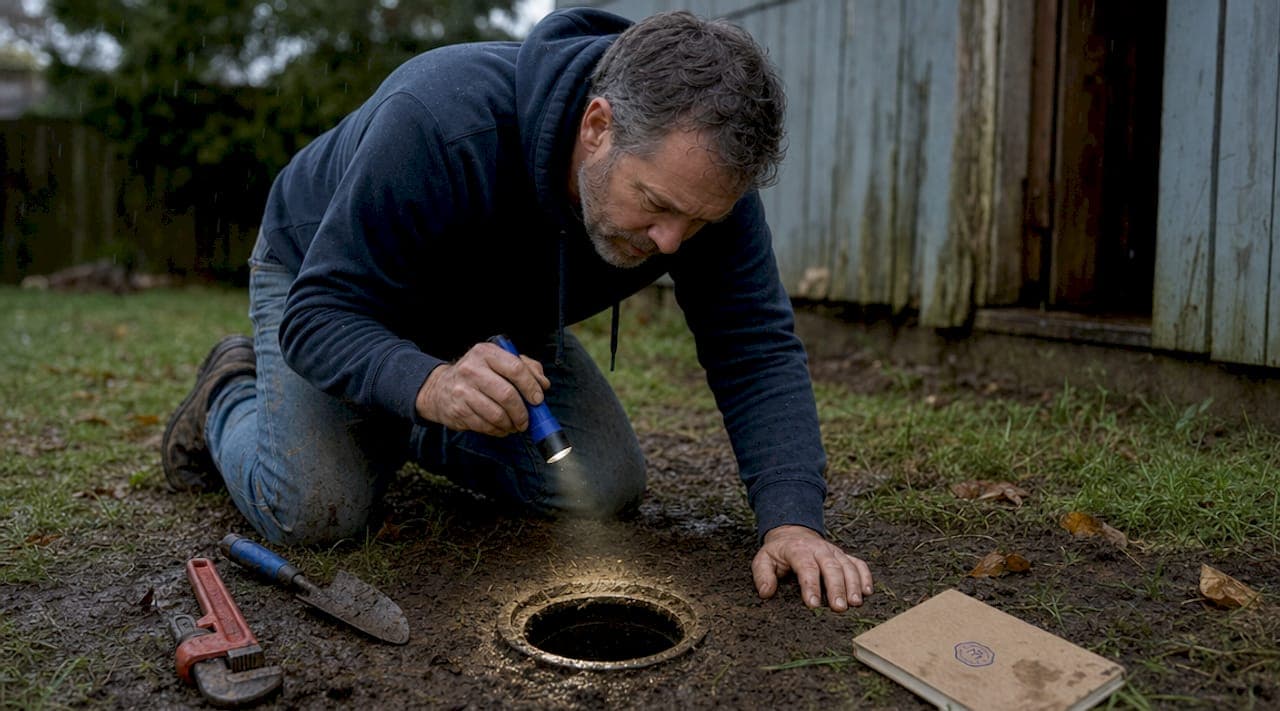
Pipe lining, known in the industry as cured-in-place pipe (CIPP) lining, is a trenchless sewer repair method that restores damaged pipes from the inside without excavating your yard. The signs you need pipe lining are specific and recognizable: slow drains across multiple fixtures, recurring sewage backups, foul odors near drains, gurgling sounds, wet patches in your yard, and cracks forming near your foundation. Catching these pipe lining indicators early is the difference between a straightforward repair and a costly structural emergency. This guide walks you through every symptom, what causes it, and how professionals confirm whether CIPP lining is the right fix for your property.
What are the most common signs you need pipe lining?
Seven core warning signs consistently point to pipe deterioration that warrants a professional sewer camera inspection. Recognizing them early keeps a manageable repair from turning into a full excavation project.
-
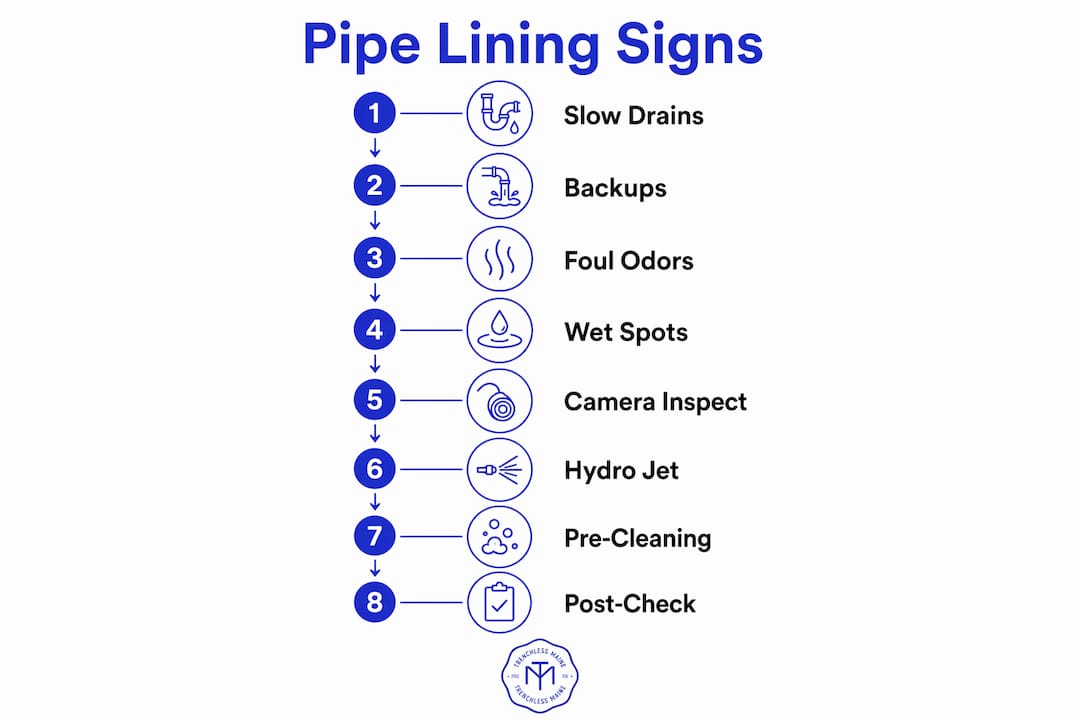
Slow drains across multiple fixtures. When one sink drains slowly, the clog is usually local. When your kitchen sink, bathroom sink, and tub all drain slowly at the same time, the problem sits in the main sewer lateral. Slow drains and odors are early indicators of blockages, mineral buildup, or leaks that will worsen without intervention.
-
Recurring backups after snaking. A drain snake clears surface obstructions. If backups return within days or weeks of snaking, the underlying pipe wall is compromised. Repeated emergency repairs suggest widespread deterioration where lining can restore system integrity far more effectively than repeated spot fixes.
-
Persistent foul odors near drains or in your yard. Sewage gas escaping through cracks in your pipe is a direct health concern. The smell is unmistakable and does not go away with cleaning products because the source is structural, not surface-level.
-
Gurgling sounds from toilets and drains. Gurgling indicates air trapped in the line, which means water is struggling to pass a partial blockage or a section of pipe with compromised flow. You will often hear this sound after flushing a toilet or running a washing machine.
-
Wet or unusually lush green patches in your yard. A strip of noticeably greener, thicker grass running across your lawn is a reliable visual clue. Underground pipe leaks saturate the surrounding soil with nutrient-rich wastewater, acting as a continuous fertilizer while quietly eroding the ground beneath.
-
Cracks in your foundation or flooring near pipe runs. Leaking sewer lines erode the soil that supports your foundation. Foundation cracks near pipes signal that water has been undermining structural support long enough to cause visible movement. This is the most urgent symptom on this list.
-
Increased pest activity. Rats and cockroaches enter homes through cracked sewer lines. A sudden increase in pest sightings, particularly in basements or near floor drains, often traces back to a breach in the sewer lateral.
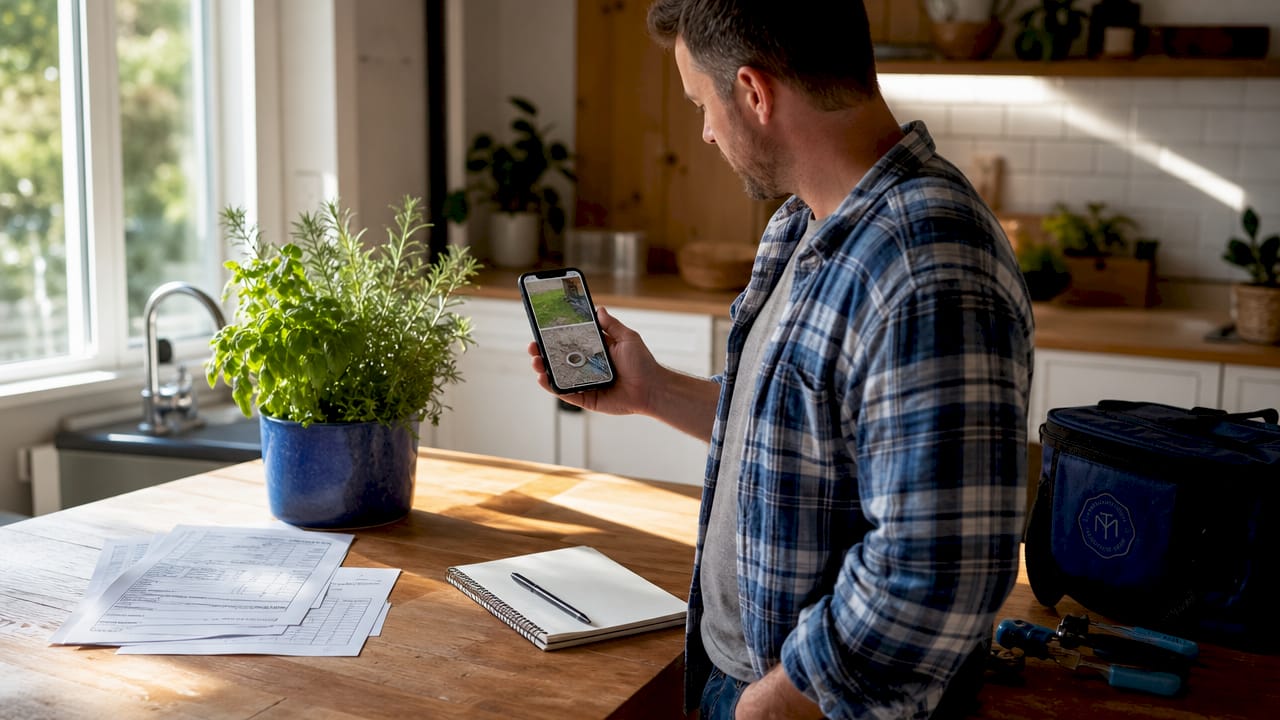
Pro Tip: Document each symptom with a date and photo. When you call a plumber, this record helps them prioritize which diagnostic test to run first and can speed up the inspection process significantly.
How do these symptoms connect to actual pipe damage?
Understanding what is happening inside the pipe explains why these symptoms appear and why they escalate without treatment.
-
Mineral buildup and grease accumulation. Over years of use, calcium deposits and grease coat the interior pipe wall, narrowing the flow channel. This is the most common cause of slow drains in older Maine homes with hard water. The restriction grows gradually, which is why the symptom appears slowly before becoming severe.
-
Root intrusion. Tree and shrub roots seek moisture and naturally migrate toward sewer lines. Once a root finds a small crack or joint gap, it grows inside the pipe, creating a net that catches toilet paper, grease, and debris. Root intrusion is the leading cause of recurring backups in properties with mature landscaping.
-
Pipe corrosion and cracking. Cast iron pipes, common in homes built before 1980, corrode from the inside out. Clay pipes, used widely in mid-century construction, become brittle and crack under soil movement or freeze-thaw cycles. Both conditions allow groundwater to infiltrate the pipe and sewage to leak out, producing the odors and yard saturation described above.
-
Bellied or sagging pipe sections. When soil shifts beneath a pipe, a section can sag downward, creating a low point where waste pools instead of flowing toward the main sewer. A bellied pipe produces chronic backups and odors. This condition is critical to identify before lining because, as experts confirm, pipe lining cannot correct slope. A sagging section requires excavation and re-grading, not lining.
-
Pipe deformation and partial collapse. Severe corrosion or external soil pressure can deform a pipe's circular cross-section into an oval or cause a partial collapse. Flow is severely restricted, and the structural integrity of the pipe wall is too compromised for a liner to bond correctly. A camera inspection distinguishes deformation from simple cracking, which is why skipping that step leads to failed repairs.
What inspection methods confirm the need for pipe lining?
Symptoms tell you something is wrong. A professional inspection tells you exactly what is wrong and whether lining is the right solution.
-
Sewer camera inspection (CCTV). A waterproof camera mounted on a flexible cable is fed through a cleanout or drain access point. Camera inspections reveal cracks, blockages, corrosion, root intrusion, and misalignments without any digging. The footage is recorded so the technician can review pipe slope, material type, and damage extent before recommending a repair method.
-
Pressure and smoke testing. Pressure testing introduces air or water into a sealed pipe section to locate leaks by pressure drop. Smoke testing pumps non-toxic smoke into the line; smoke emerging from the ground or inside the building pinpoints breach locations. Both methods complement camera inspections when the camera alone cannot confirm a suspected leak point.
-
Electronic pipe locating. A transmitter inserted into the pipe sends a signal that a surface receiver tracks. This maps the exact underground route of your sewer lateral, identifies depth, and locates any sections that have shifted from their original position.
| Inspection method | What it detects | When it is used |
|---|---|---|
| CCTV camera inspection | Cracks, roots, corrosion, bellies, blockages | First step for any symptom investigation |
| Pressure testing | Active leaks, weak joints | Confirms suspected leaks after camera review |
| Smoke testing | Breach locations, cross-connections | Multi-unit buildings or complex pipe networks |
| Electronic locating | Pipe route, depth, displacement | Pre-repair planning and permit applications |
Pre-lining and post-lining inspections are not optional steps. Failure to inspect before lining allows defects like wrinkles or dimples to form during installation, which trap debris and roots and cause the same backups the repair was meant to solve. A reputable contractor runs a camera before and after every lining job.
When is pipe lining the right choice versus excavation?
Pipe lining works well for a defined set of conditions. Knowing those boundaries prevents you from paying for a repair that will not hold.
CIPP lining is appropriate when the pipe retains its basic circular shape, maintains adequate slope toward the main sewer, and has damage limited to cracks, corrosion, or root intrusion without full collapse. The liner bonds to the existing pipe wall and cures into a smooth, jointless tube that resists future root intrusion and corrosion. For these conditions, trenchless lining costs significantly less than excavation, preserves your landscaping and driveway, and is typically completed within 24 hours.
Excavation is necessary when the pipe has collapsed or severely sagged, when the pipe material has deteriorated beyond the point where a liner can bond, or when the pipe route needs to be re-graded to restore proper slope. Attempting to line a bellied or collapsed pipe produces a short-lived repair that fails within months.
| Factor | Pipe lining (CIPP) | Excavation and replacement |
|---|---|---|
| Pipe condition | Cracked, corroded, root-intruded | Collapsed, severely bellied, fully deteriorated |
| Property disruption | Minimal, no digging required | Significant, yard and hardscape removal |
| Project timeline | Often completed in 24 hours | Several days to weeks |
| Lifespan of repair | Up to 50 years with proper installation | 25 to 50 years depending on material |
| Cost relative to excavation | Lower in most residential cases | Higher due to labor and restoration |
| Slope correction | Not possible | Possible with re-grading |
Pro Tip: Ask your contractor to show you the pre-lining camera footage and explain their cleaning process. Aggressive pipe cleaning before lining, using hydro jetting to remove grease, scale, and roots, is what separates a 50-year repair from one that fails in five.
Viewing pipe lining as a preventive maintenance measure rather than a last resort extends your sewer system's lifespan and prevents the kind of emergency that forces rushed decisions. Properties where lining is scheduled after the first confirmed signs of deterioration consistently avoid the foundation damage and structural costs that come from delayed action.
Key takeaways
Catching the signs of pipe damage early and confirming them with a camera inspection is the single most effective way to avoid excavation and foundation repair costs.
| Point | Details |
|---|---|
| Seven core warning signs | Slow drains, backups, odors, gurgling, yard wet spots, pests, and foundation cracks all signal pipe deterioration. |
| Camera inspection is non-negotiable | CCTV inspection confirms damage type and pipe suitability before any lining decision is made. |
| Lining has clear limits | Collapsed or severely bellied pipes require excavation; lining cannot correct slope or bond to fully deteriorated walls. |
| Pre-lining cleaning determines longevity | Hydro jetting before CIPP installation removes grease and roots that would otherwise cause the liner to fail prematurely. |
| Early action saves money | Scheduling lining at the first confirmed signs of deterioration consistently prevents costly structural and foundation damage. |
What I've learned from watching homeowners delay this decision
I have seen the same pattern repeat itself more times than I can count. A homeowner notices slow drains in the fall, assumes it is seasonal buildup, and waits until spring. By spring, the gurgling has turned into a backup, the yard has a soggy patch the size of a parking space, and a hairline crack has appeared along the basement floor. What would have been a straightforward CIPP lining job in October has become a conversation about foundation repair estimates.
The mistake is not ignoring the problem entirely. Most homeowners do not do that. The mistake is treating each symptom as an isolated event rather than reading them as a sequence. Slow drains plus odors plus gurgling is not three separate minor issues. It is one deteriorating pipe expressing itself in three ways simultaneously.
The other pattern I see is homeowners who get a quote from a contractor who skips the camera inspection and goes straight to recommending lining. That is a red flag. Without knowing whether the pipe has a belly or a partial collapse, you cannot know if lining is even appropriate. A contractor who will not show you camera footage before quoting a repair is not a contractor worth hiring.
The cost-effective pipe lining guide Trenchlessmaine published in 2026 makes this point clearly: the inspection is not an upsell. It is the foundation of a repair that actually holds.
— John
See how Trenchlessmaine handles pipe lining in Maine
If you are seeing any of the warning signs described in this article, the next step is a professional sewer camera inspection, not a guess. Trenchlessmaine specializes in CIPP pipe lining across Maine, using no-dig methods that protect your property while delivering repairs backed by warranties up to 50 years. With over 50 years of combined expertise, the team runs a full camera inspection before every job and provides footage so you understand exactly what is being repaired and why.

Trenchlessmaine also offers hydro jetting as part of the pre-lining preparation process, the critical cleaning step that determines how long your liner lasts. Explore the full range of no-dig sewer solutions or request a free quote to find out if your property qualifies for trenchless repair.
FAQ
What are the first signs you need pipe lining?
The earliest signs are slow drains across multiple fixtures and persistent foul odors near floor drains or in the yard. These symptoms indicate partial blockages or small pipe cracks that worsen without treatment.
Can pipe lining fix a collapsed sewer pipe?
No. CIPP lining requires the pipe to retain its basic shape and proper slope. A collapsed or severely bellied pipe requires excavation and replacement before lining can be considered.
How does a sewer camera inspection work?
A waterproof camera on a flexible cable is inserted through a drain access point and transmits live footage of the pipe interior. It reveals cracks, root intrusion, corrosion, and slope issues without any digging.
How long does pipe lining last?
A properly installed CIPP liner, with thorough pre-lining cleaning and post-installation inspection, can last up to 50 years. Skipping the cleaning step or failing to inspect for wrinkles after installation significantly reduces that lifespan.
Is pipe lining less disruptive than traditional sewer repair?
Yes. Trenchless pipe lining requires no excavation of your yard, driveway, or landscaping and is typically completed within 24 hours. Traditional excavation involves removing soil and hardscape and takes several days to weeks to complete.