

A contractor warranty on trenchless sewer repair shifts the cost and liability of covered pipe failures from you to the contractor or manufacturer for the stated term. For Maine homeowners, property managers, and municipal buyers, that protection is the difference between a $0 callback repair and a four-figure out-of-pocket emergency.
Here is what warranty coverage for trenchless CIPP (cured-in-place pipe) lining typically includes:
- Materials: The liner product itself, backed by the manufacturer against defects. CIPP systems are engineered for multi-decade service lives and often carry written material warranties ranging from 10 to 50 years depending on product, liner thickness, and host pipe condition. Residential workmanship warranties typically run 1–2 years; commercial contracts may offer 2–5 years.
- Covered segment: Only the specific pipe run defined in your contract, typically from the cleanout to the city connection.
Common exclusions you need to know before signing: tree root intrusion, ground movement, natural disasters, and owner misuse are almost universally excluded. Spot repairs cover only the repaired segment — surrounding pipe that fails later due to pre-existing conditions is not covered.
Pro Tip: At job closeout, collect the signed warranty document, final inspection video, post-install camera run footage, material specifications (resin/liner datasheet), invoices, and permit records. Absence of this documentation is the most common reason valid claims get denied.
Trenchlessmaine provides all of this documentation as part of its standard CIPP lining process, including a warranty packet and lookup tool for every qualifying installation.
Table of Contents
- What happens when a warranty claim is denied?
- How a transferable warranty affects your home's resale value
- Key Takeaways
- Why documentation and long warranties signal contractor confidence
- Warranty-backed CIPP lining across Maine, done right
- The warranty is only as good as the contractor behind it
What happens when a warranty claim is denied?
If a contractor rejects your claim, the process typically moves through three stages: informal negotiation, then a formal written dispute, then third-party arbitration or small claims court.
Start by submitting a written claim with your full documentation package (inspection video, camera footage, material specs, signed warranty, invoices). A contractor who disputes the claim must explain in writing which exclusion or condition applies. If that response is unsatisfactory, request mediation through your state's contractor licensing board. In Maine, the Office of Professional and Occupational Regulation handles complaints against licensed contractors and can apply disciplinary pressure that often resolves disputes without litigation.
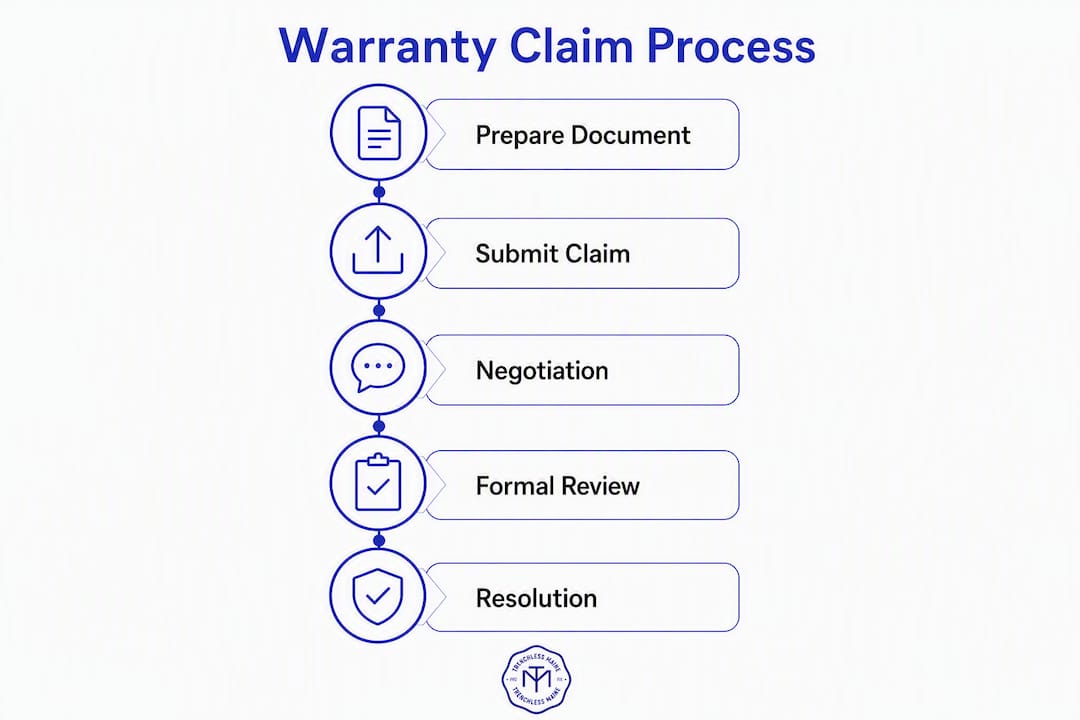
One critical point: work performed without required permits can void workmanship warranties entirely and exposes the contractor to licensing board action. Always confirm permits and municipal inspections are in place before the job closes.
For larger commercial or municipal contracts, arbitration clauses are common. Read your contract's dispute-resolution language before signing, not after a problem surfaces.
How a transferable warranty affects your home's resale value
A written, transferable sewer warranty is a concrete selling point. Buyers and their inspectors increasingly ask about sewer line condition, and a documented CIPP reline with a remaining material warranty addresses that question before it becomes a negotiation issue.
Trenchless pipelining's durability and minimal disruption directly boost property value by removing a known liability from the transaction. A transferable warranty converts that benefit into a documented asset the next owner can verify. Ask your contractor explicitly whether the warranty transfers at sale and whether any assignment fee or re-inspection applies.
Key Takeaways
A contractor warranty on CIPP lining protects you by assigning covered repair costs to the contractor or manufacturer for the stated term, provided you hold the required documentation.
| Point | Details |
|---|---|
| Warranty types | Workmanship and material/CIPP warranties cover different risks. |
| Engineered life vs. written term | CIPP is engineered for a multi-decade lifespan; the written warranty is a separate commercial commitment. |
| Documentation is your claim | Keep the signed warranty, inspection video, camera footage, material specs, and invoices. |
| Transferability adds resale value | A transferable warranty reduces buyer risk and supports a stronger asking price. |
| Trenchlessmaine | Offers long-term warranties on qualifying CIPP installations with full post-job documentation. |
Before signing any contract, run this checklist:
- Verify written warranty terms cover both materials and workmanship.
- Ask whether the warranty is transferable and what the transfer process requires.
- Request post-job documentation: inspection video, camera footage, material datasheet, and permit records.
- Confirm permits and municipal inspections are planned. See the pipe lining warranty checklist for a full pre-hire reference.
- Check the contractor's experience and track record on warranty fulfillment specifically.
Why documentation and long warranties signal contractor confidence
Warranties exist because installation quality directly determines whether a CIPP liner performs as engineered. A contractor who issues a long workmanship warranty is staking real money on their own work. A short workmanship term — or a verbal-only guarantee — tells you something different.
Manufacturers evaluate CIPP liner performance against ASTM F1216, the industry benchmark for structural lining. When a manufacturer backs a liner for 50 years, it is because the product meets that standard under correct installation. Install outside those specs, and the manufacturer warranty is void. That is why the contractor's workmanship warranty and the manufacturer's material warranty are two separate documents you need both of.
The minimum evidence package that proves a covered failure: final inspection video, post-install camera run, signed warranty document, material specifications, invoices, and permit records. Homeowners who collect all of these at job closeout resolve warranty claims far more often than those who do not.
Questions to ask any contractor before signing:
- Who issues the material warranty — you or the liner manufacturer?
- Is the warranty transferable to a future buyer?
- Are periodic inspections required to keep the warranty valid?
- What is your response time once a claim is submitted?
- Will you provide a full documentation packet at job closeout?
For sewer repair services in Pittsburgh or elsewhere, these same questions apply — the documentation standard is consistent across reputable trenchless contractors nationwide.
Trenchlessmaine documents every CIPP job with a final camera inspection, provides a complete warranty packet at closeout, and backs qualifying installations with material warranties up to 50 years and workmanship warranties matching industry norms. That documentation practice is not just paperwork — it is the evidence layer that makes a warranty enforceable when you need it.
Warranty-backed CIPP lining across Maine, done right
Maine property owners who want long-term protection without tearing up their yard have a direct path: trenchless sewer repair with a written, documented warranty behind it.

Trenchlessmaine offers CIPP lining, HD camera inspection, hydro jetting, pipe bursting, and drain clearing across Maine, with qualifying CIPP installations backed by material warranties up to 50 years. Every job includes a full documentation packet and access to the warranty lookup tool so you can verify coverage at any time.
Schedule your camera inspection, request written warranty terms before signing, or check your service area now at Trenchlessmaine.com.
The warranty is only as good as the contractor behind it
Most homeowners focus on price when hiring a sewer contractor. The smarter question is: what happens if something goes wrong in year three?
A 50-year material warranty backed by ASTM F1216-compliant liner means nothing if the contractor who installed it is out of business or disputes every claim on a technicality. The written warranty term is a starting point. The real signal is whether the contractor documents the job thoroughly, pulls the required permits, and has a clear, written claims procedure. Those three things together tell you whether the warranty will actually function when you need it.
Long workmanship terms — five years or more — are rare in residential work for a reason. They represent real financial exposure for the contractor. When you see one offered with full documentation and a transferable clause, that is a contractor betting on their own installation quality. That bet is worth more than the paper the warranty is printed on.