
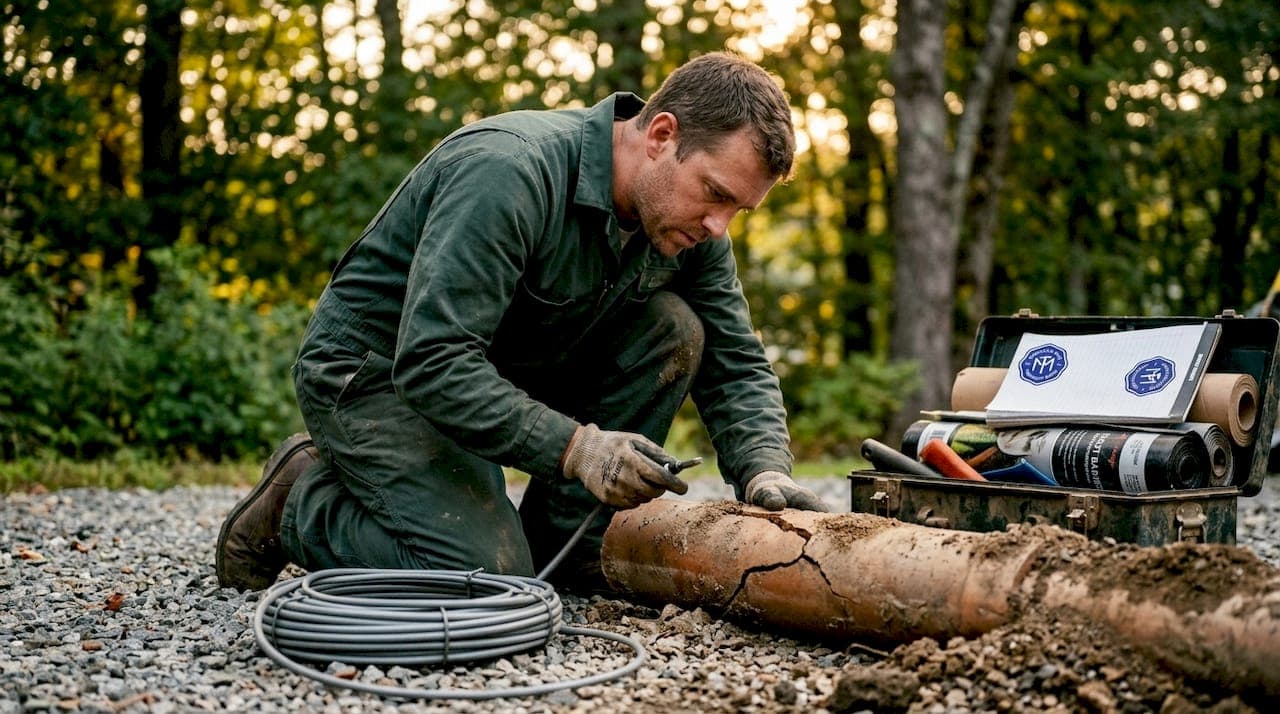
Root intrusion is defined as the process by which tree roots penetrate sewer pipes through cracks, loose joints, or deteriorating seals, causing blockages, pipe deformation, and costly repairs. To protect sewer line roots from causing serious damage, homeowners need a combination of smart tree placement, physical root barriers, routine inspections, and modern pipe repair technology. Plumbing professionals recommend sewer camera inspections every 1–3 years, with properties near mature trees requiring checks every 1–2 years. Skipping these steps turns a manageable maintenance issue into a full pipe replacement project.
How do tree roots get into sewer lines?
Tree roots do not create cracks in pipes. They exploit damage that already exists. Roots seek moisture and nutrients, and a leaking sewer pipe offers both in abundance. Even a hairline crack releases warm, nutrient-rich vapor that draws roots directly toward the pipe wall.
Once roots find an entry point, they grow inside the pipe and expand over time. A root that enters as a thin tendril can thicken into a mass that fills the entire pipe diameter. The result is slow drains, sewage backups, and eventually pipe collapse if left untreated.
Several factors determine how quickly roots invade:
- Pipe material: Older clay, cast iron, and concrete pipes are far more vulnerable than modern PVC, which uses glued, seamless joints that leave almost no entry points for roots.
- Pipe condition: Cracked or offset joints from ground settling, freeze-thaw cycles, or age create open invitations for root growth.
- Tree species: Willows, silver maples, and poplars produce aggressive, fast-spreading root systems that actively seek water sources.
- Soil type: Clay soils force roots deeper, while sandy soils allow roots to spread laterally and cover more ground around your sewer lateral.
- Moisture levels: Dry conditions push roots farther from the tree in search of water, increasing the risk of sewer line contact.
Understanding these factors tells you exactly where your risk is highest. A 30-year-old clay pipe running beneath a silver maple is a near-certain problem waiting to happen.
Smart tree placement to prevent root intrusion
The most cost-effective sewer line root prevention strategy is keeping aggressive trees away from your pipes before you plant them. Replanting a mature tree is not practical. Getting the placement right from the start saves thousands of dollars.
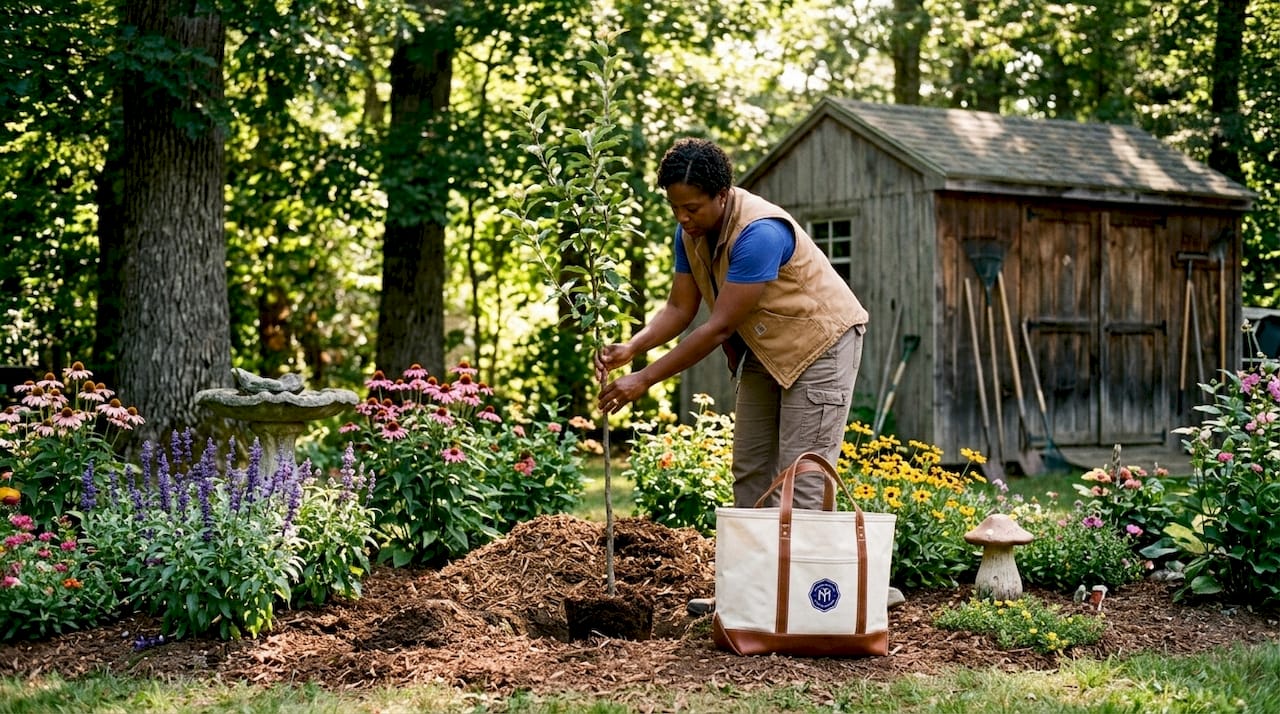
Large trees require a minimum of 10 feet of clearance from sewer lines. Aggressive species such as willows, silver maples, and poplars need at least 20 feet. These distances account for the mature root spread of the tree, not just its current size.
Before planting anything near your yard's perimeter, locate your sewer lateral. Your local municipality or a licensed plumber can provide a map of underground utility lines. Many Maine homeowners discover their sewer lateral runs directly through the area they planned to landscape.
When choosing trees for areas near sewer lines, favor slower-growing species with less invasive root systems:
- Japanese maple: Compact root system, grows slowly, and stays well within a manageable radius.
- Eastern redbud: A native species with non-aggressive roots and moderate mature height.
- Dogwood: Shallow, non-invasive roots that rarely threaten underground infrastructure.
- Ornamental pear: Upright growth habit with roots that stay close to the trunk.
Pro Tip: Map your sewer lateral with a camera inspection before any major landscaping project. Knowing exactly where your pipe runs lets you plan tree placement with confidence and avoid costly mistakes later.
Root barrier installation and chemical treatments for existing trees
If trees are already growing near your sewer line, root barriers and chemical treatments are your two main defenses. Neither method works well in isolation. The best results come from using both together.
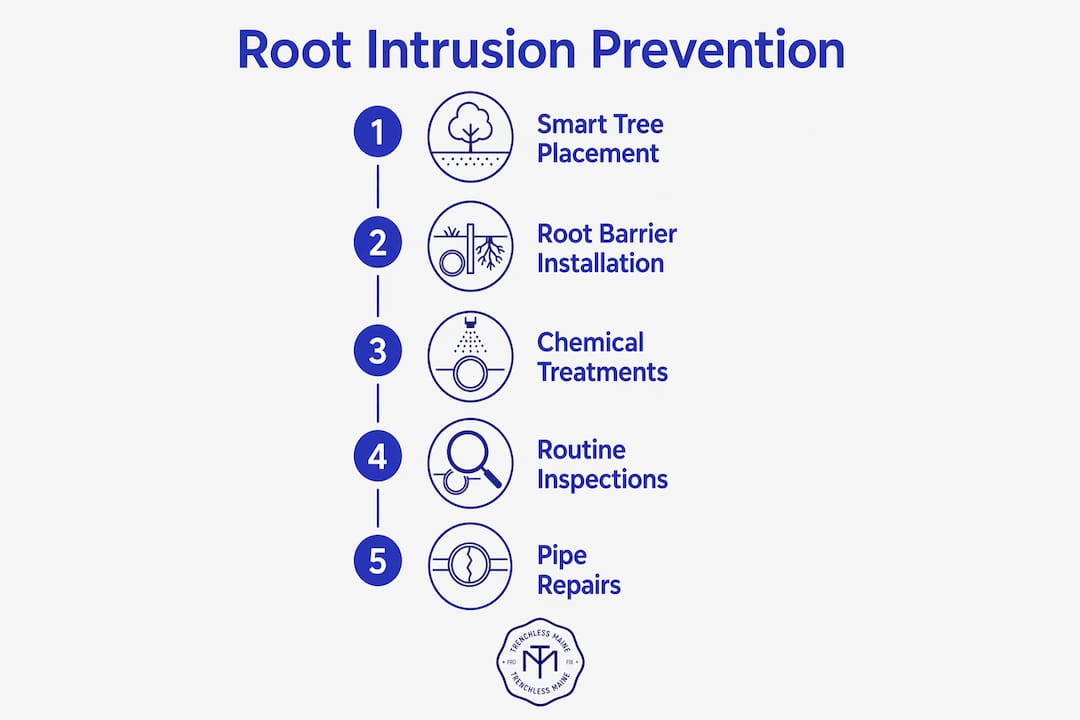
How root barriers work
Root barriers are physical walls, typically made from plastic sheeting, metal panels, or compressed stone, installed vertically in the soil between a tree and your sewer pipe. They redirect root growth downward or away from the pipe. Proper installation requires burying barriers at least 300mm deeper than the anticipated root plate. A barrier that does not reach below the root zone simply funnels roots underneath it and directly toward your pipe.
Soil type matters here. Clay soils drive roots deeper, so barriers in clay need to go deeper than those in sandy soil, where roots spread laterally near the surface.
Steps for effective root barrier installation
- Locate the sewer lateral precisely. Use a camera inspection to confirm pipe depth and position before digging.
- Dig a trench between the tree and the pipe, running parallel to the sewer line.
- Select the right barrier material. High-density polyethylene (HDPE) sheeting is the most common choice for residential use.
- Install at the correct depth. The barrier must extend at least 300mm below the deepest expected root growth for your soil type.
- Seal all seams and edges. Gaps in the barrier are the most common installation failure point. Roots find any opening.
- Backfill carefully to avoid shifting the barrier out of alignment.
Root barrier installation costs range from $800 to $1,500 for a single tree. Comprehensive systems covering multiple trees or larger properties run from $3,000 to $8,000. That investment is still far less than a full pipe replacement.
Chemical root killers as a maintenance supplement
Copper sulfate-based root killers destroy roots inside pipes without harming the tree above ground. Applied every 6–12 months, they kill the fine root tips that enter the pipe while leaving the main root structure intact. Chemical treatments work best as a maintenance tool after mechanical removal, not as a standalone fix.
Pro Tip: Avoid chemical drain cleaners entirely. These caustic products degrade pipe walls over time, creating new cracks that attract more roots. Stick to copper sulfate-based products specifically formulated for sewer line use.
Inspections, cleaning methods, and pipe repair for long-term protection
Routine maintenance is the backbone of any sewer line root prevention plan. Catching root intrusion early costs a fraction of what emergency repairs demand.
Inspection and cleaning options compared
| Method | What it does | Limitation |
|---|---|---|
| Camera inspection | Reveals root location, pipe condition, and crack severity | Does not remove roots |
| Mechanical root cutting | Cuts roots inside the pipe using a rotating blade | Roots regrow within months |
| Hydro jetting | Uses high-pressure water to flush roots and debris | Temporary relief, does not seal cracks |
| CIPP pipe lining | Installs a resin-coated liner inside the pipe, sealing all cracks | Requires professional installation |
| Pipe replacement | Removes and replaces the damaged section | Most disruptive and expensive option |
Mechanical root cutting and hydro jetting provide temporary relief. They remove roots but do not address the cracks that let roots in. Roots regrow, and the cycle repeats. Hydro jetting cleans more thoroughly than cutting and extends the time before regrowth, but it is still a short-term measure.
Cured-in-place pipe lining, known as CIPP, is the permanent solution. A resin-saturated liner is inserted into the existing pipe and cured in place, creating a new pipe wall inside the old one. This seals every crack and joint, eliminating root entry points entirely. Trenchlessmaine specializes in CIPP pipe lining and completes most jobs without digging up your yard. Maintaining leak-free pipes is the foundational prevention method, because roots follow moisture. Seal the pipe, and you remove the attraction.
What to do if roots are already in your sewer line
Roots already inside your pipe require a clear, step-by-step response. Acting quickly limits the damage and reduces your total repair cost.
- Watch for warning signs. Slow drains, gurgling sounds from toilets, foul odors near floor drains, and patches of unusually green, lush grass running across your yard all indicate root intrusion in the sewer lateral below.
- Schedule a camera inspection immediately. A professional sewer inspection confirms whether roots are present, shows their location, and reveals the condition of the pipe walls. This step determines every decision that follows.
- Choose the right removal method. For minor intrusions in otherwise sound pipes, hydro jetting or mechanical cutting buys time. For pipes with significant cracking or offset joints, CIPP lining is the correct long-term fix.
- Assess pipe condition honestly. If the pipe has collapsed sections or severe deformation, full replacement may be unavoidable. A camera inspection gives you this information before you commit to a repair method.
- Apply a follow-up chemical treatment. After mechanical removal or hydro jetting, apply a copper sulfate-based root killer to slow regrowth while you plan a permanent repair.
- Schedule a follow-up inspection. Confirm the repair held and that no new root growth has started. Set a recurring inspection schedule based on your tree proximity and pipe material.
Combining root removal with trenchless pipe lining gives homeowners a long-term solution that stops the cycle of repeated emergency calls. Proactive removal prevents the kind of repeated, costly emergencies that catch homeowners off guard.
Key Takeaways
Protecting your sewer line from root intrusion requires combining strategic tree placement, physical barriers, routine inspections, and permanent pipe repair to stop the problem at its source.
| Point | Details |
|---|---|
| Plant trees at safe distances | Keep large trees 10 feet from sewer lines; aggressive species need at least 20 feet. |
| Install root barriers correctly | Barriers must extend 300mm below the root plate or they funnel roots toward the pipe. |
| Schedule regular inspections | Inspect every 1–2 years near mature trees to catch intrusion before it causes major damage. |
| Use CIPP lining for permanent protection | Trenchless pipe lining seals cracks and eliminates root entry points without excavation. |
| Combine methods for best results | Chemical treatments, barriers, and pipe lining together outperform any single approach. |
What I've learned after years of watching homeowners handle this wrong
Most homeowners treat root intrusion as an emergency to react to rather than a condition to manage. That mindset is expensive. By the time slow drains become sewage backups, roots have often been growing inside the pipe for years.
The most common mistake I see is relying on hydro jetting alone. Homeowners get the drain cleared, feel relieved, and assume the problem is solved. It is not. The cracks that let roots in are still there. Roots return, often faster the second time because the pipe wall is already compromised. The correct move after jetting is to line the pipe. That seals the entry points permanently.
Physical root barriers are worth the investment, but only when installed by someone who understands soil behavior and root depth. A barrier installed too shallow is worse than no barrier at all. It redirects roots downward and concentrates them directly at the pipe. I have seen this exact scenario create faster, more severe intrusions than the homeowner would have faced without the barrier.
The combination that actually works is this: map your sewer lateral, install barriers at the correct depth, maintain a copper sulfate treatment schedule, and line the pipe if it shows any cracking. That approach stops root intrusion before it starts and eliminates it permanently when it has already begun. Partnering with a qualified professional for both the inspection and the lining is not optional. It is what makes the difference between a one-time fix and a recurring problem.
— John
Trenchlessmaine's sewer protection services for Maine homeowners
Root intrusion is a manageable problem when you have the right team behind you. Trenchlessmaine provides trenchless pipe lining and hydro jetting services across Maine, restoring damaged sewer lines without tearing up your yard or landscaping.
Most jobs are completed within 24 hours, and pipe lining results are backed by warranties up to 50 years. Whether you need a camera inspection to assess current root activity or a full CIPP lining to seal your pipe permanently, Trenchlessmaine has the equipment and experience to handle it. Contact Trenchlessmaine to schedule your inspection and get a clear picture of your sewer line's condition before a small problem becomes a major repair.
FAQ
How often should I inspect my sewer line for roots?
Inspect every 1–3 years for most properties, and every 1–2 years if mature trees grow near your sewer lateral. Early detection prevents minor root growth from becoming a full blockage.
What is the best method to stop roots from entering sewer pipes?
CIPP pipe lining is the most permanent solution. It seals all cracks and joints inside the existing pipe, removing every entry point that roots would otherwise exploit.
How far should trees be planted from sewer lines?
Large trees need at least 10 feet of clearance, and aggressive species like willows and silver maples require a minimum of 20 feet to prevent root contact with sewer pipes.
Do root barriers actually work?
Root barriers work when installed correctly. The barrier must extend at least 300mm below the anticipated root plate, and all seams must be sealed. A poorly installed barrier can redirect roots directly toward your pipe.
Can I use chemical root killers without professional help?
Copper sulfate-based products are available for homeowner use and are safe for pipes when applied as directed. Use them every 6–12 months as a maintenance supplement, not as a replacement for mechanical removal or pipe repair.