
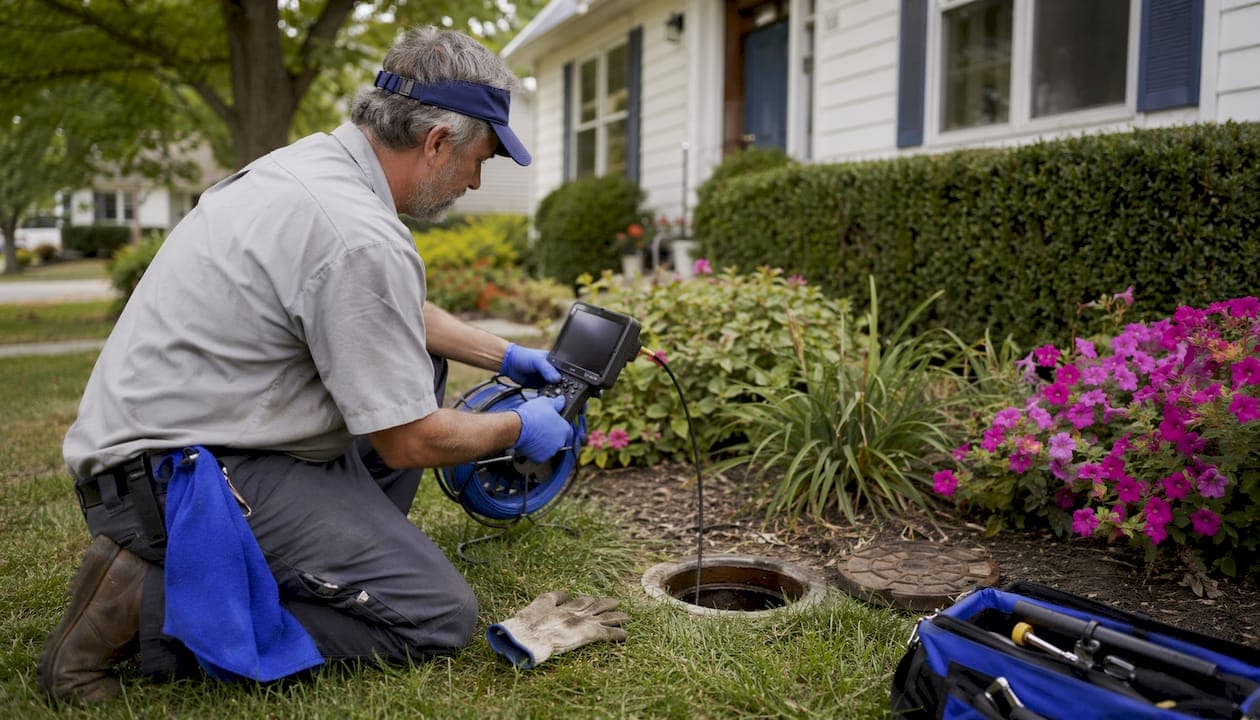
A pre-listing sewer scope inspection is defined as a professional camera examination of your home's underground sewer lateral before you put the property on the market. Standard home inspections, as defined by ASHI and InterNACHI, exclude underground sewer laterals from their scope entirely. That gap creates real risk for sellers. A selling home sewer inspection fills that gap by documenting the condition of your pipes before buyers discover problems on their own. Getting ahead of this process protects your asking price, satisfies legal disclosure requirements, and prevents deals from collapsing at the worst possible moment.
Why selling home sewer inspection matters before you list
A sewer scope inspection costs $125–$400 as an add-on to a standard home inspection, or $175–$750 as a standalone service. That cost is modest compared to what it protects. Proactive sewer lateral repair around $6,000 can preserve $6,000–$12,000 in sale proceeds by removing buyer negotiation leverage. When buyers discover a sewer problem during their own due diligence, they demand price reductions that almost always exceed the actual repair cost.
Sewer defects qualify as material defects requiring disclosure under state property laws. Failing to disclose a known sewer problem exposes you to legal claims including repair costs, legal fees, damages, and even sale rescission. A professional inspection report gives you the documentation you need to disclose accurately and confidently.
When should you schedule a sewer inspection before selling?
Timing matters. Scheduling your inspection 6–12 months before listing gives you time to address any findings without pressure. That window lets you obtain repair estimates, complete work if needed, and present buyers with a clean report.
Sewer inspections are strongly recommended for homes that meet any of these criteria:
- Age: The home is 25–30 years old or older
- Pipe material: The system contains clay, Orangeburg, or cast iron pipes
- Tree proximity: Mature trees grow near the sewer line path
- Drain history: The home has a history of slow drains or backups
- Municipal rules: Your city or town has a point-of-sale sewer inspection ordinance
Some municipalities in Maine and across the country require a sewer lateral inspection before a sale closes or a remodel permit is issued. Check with your local public works department before listing.
Pro Tip: If you cannot schedule an inspection before listing, request that the buyer's inspection contingency period include a sewer scope. This gives both parties time to assess the line without rushing into a price dispute.
How to prepare for a sewer inspection
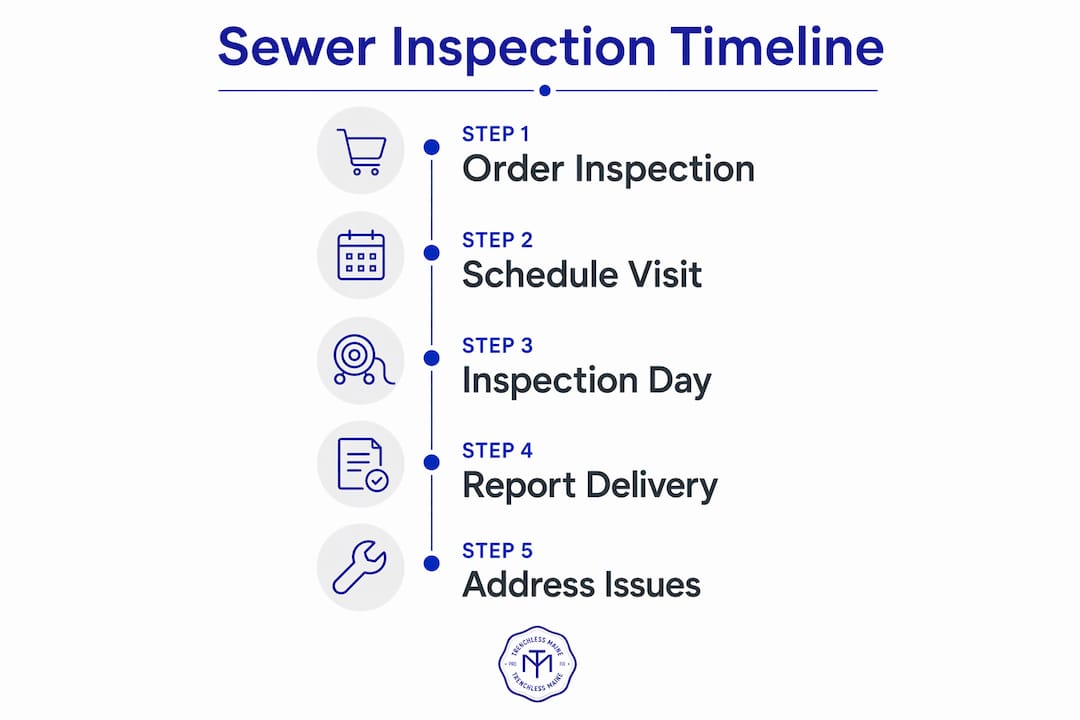
Preparation takes less than an hour and makes the inspection faster and more accurate. A professional technician inserts a small, waterproof push-rod camera into your sewer line through an access point. The camera transmits live video to a monitor, recording the entire run from your home to the municipal connection.
Here is what to do before the technician arrives:
- Locate your cleanout: Find the sewer cleanout cap, usually a white or black PVC cap near the foundation or in the yard. Clear any debris or landscaping blocking it.
- Clear the area: Remove stored items from around floor drains or basement cleanouts.
- Run water beforehand: Run water through sinks, toilets, and showers for a few minutes. This helps the camera identify flow issues and confirms the line is active.
- Gather records: Pull any past plumbing invoices, repair records, or previous inspection reports. These give the technician useful context.
- Note problem areas: Write down any drains that have been slow or backed up, and which fixtures are affected.
If no cleanout exists, the technician may need to remove a toilet to access the line. This adds time but does not damage the toilet when done correctly. The home sewer inspection process typically takes 30–60 minutes from setup to completion.
Pro Tip: Ask your inspector whether they integrate the sewer scope report into the main home inspection report. A combined document is easier to share with buyers and their agents during negotiations.
What does a sewer inspection find?
A professional sewer camera reveals conditions that no surface examination can detect. The technician records the video, notes defect locations by distance from the access point, and produces a written report.
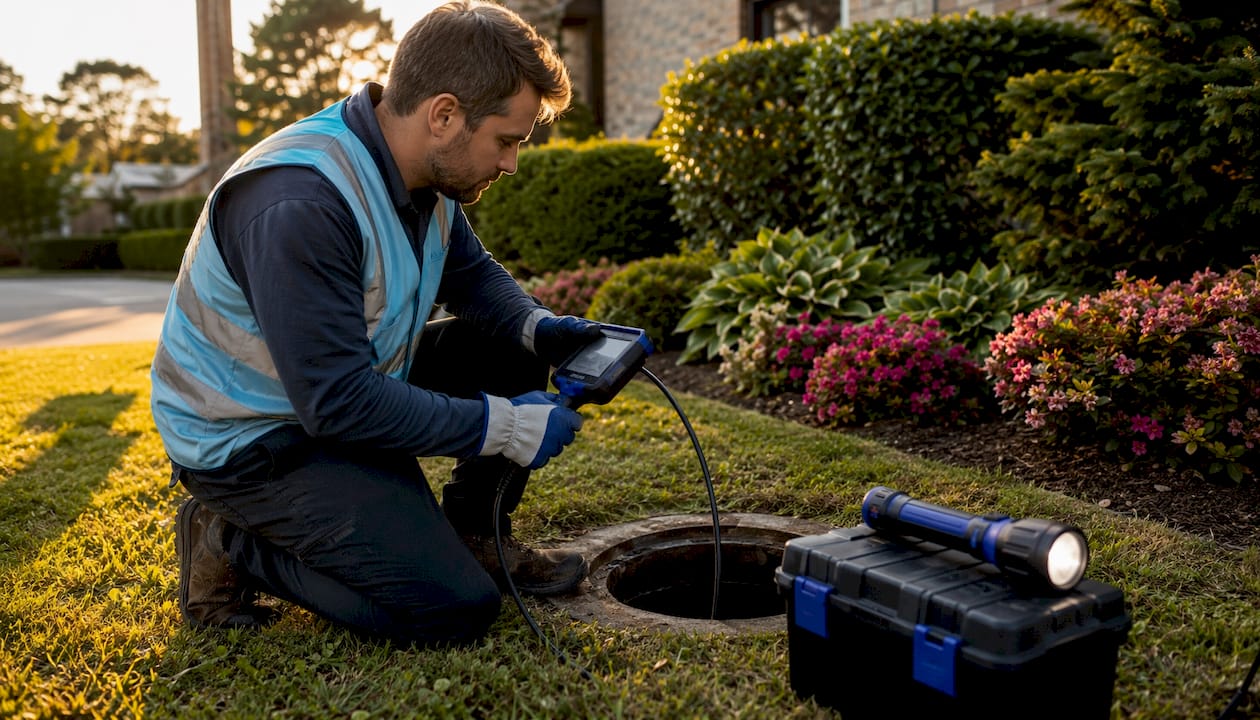
Common problems found during a professional sewer inspection include root intrusion, cracked pipes, pipe bellies, offsets, corrosion, and grease buildup. Each problem carries a different repair cost and urgency level.
| Problem | Typical repair cost | Severity |
|---|---|---|
| Grease buildup | $100–$600 (hydro jetting) | Low |
| Root intrusion | $500–$3,000 | Moderate |
| Pipe belly or sag | $1,500–$5,000 | Moderate to high |
| Cracked or offset pipe | $2,000–$8,000 | High |
| Full line replacement | $10,000–$25,000+ | Critical |
Sewer repairs range from simple drain cleanings at $100–$600 to full replacements exceeding $25,000, depending on problem severity and pipe depth. Knowing exactly where a defect sits in the line, measured in feet from the access point, determines whether a spot repair or full replacement is the right call.
Sewer inspection videos must document exact defect distances and types to hold up in negotiations and avoid deal collapse. Vague reports with no distance markers carry little weight when a buyer's attorney gets involved.
Pro Tip: Ask for a timestamped video file along with the written report. Video evidence of a clean line is one of the strongest tools you have to justify your asking price.
How to handle sewer inspection results when selling
Your options after receiving the report depend on what the camera found. You have three realistic paths: repair before listing, disclose and price accordingly, or disclose and offer a credit at closing.
Sellers who disclose sewer issues upfront with detailed camera reports reduce hostile negotiations and build buyer trust. Buyers who discover problems on their own almost always assume the worst and demand more than the repair is worth.
"Failing to disclose sewer problems until a buyer finds them leads to hostile negotiations. Proactive disclosure with camera reports and contractor estimates shifts the conversation from fear to facts, giving sellers control over the outcome."
Here is how to handle each scenario:
- Pre-sale repair: Fix the issue before listing. Obtain at least two written estimates from licensed contractors. A clean post-repair scope confirms the work is done and gives buyers confidence.
- Disclose and price down: Adjust your asking price to reflect the repair cost. Attach the inspection report and contractor estimates to your seller's disclosure form.
- Offer a closing credit: Keep your price and offer the buyer a credit equal to the repair cost. This approach works well when the defect is minor and well-documented.
- Sell as-is: Disclose the issue fully and price accordingly. Buyers who accept as-is terms take on the repair responsibility, but your price must reflect that reality.
Documentation precision, including exact defect distance, type, and video evidence, is critical to successful negotiation outcomes. A clean scope report paired with itemized repair estimates from reputable contractors gives you factual footing that subjective buyer concerns cannot easily challenge.
A sewer inspection adds value to listings by providing transparency, reducing buyer inspection contingencies, and accelerating sales. Clean camera reports boost buyer confidence and support your asking price.
Common mistakes to avoid during the sewer inspection process
Most sellers make at least one of these errors. Each one costs time, money, or both.
- Assuming the home inspection covers sewer lines. Standard home inspections exclude underground laterals. You must request a sewer scope separately or as an add-on.
- Using a DIY borescope for the main line. DIY borescopes work for traps and short runs but are inadequate for main sewer diagnostics in real estate transactions. They lack the reach, resolution, and documentation format that buyers and attorneys require.
- Waiting until you are under contract. Scheduling an inspection after you accept an offer puts you under time pressure. Rushed inspections lead to rushed decisions and weak negotiating positions.
- Skipping repair estimates. A scope report without contractor estimates is incomplete. Buyers will fill that gap with their own numbers, which are almost always higher.
- Ignoring municipal requirements. Some cities require a passing sewer inspection before a sale closes. Missing this requirement can delay or void your closing.
Pro Tip: Keep a dedicated folder with your sewer scope video, written report, contractor estimates, and any repair invoices. Organized records signal to buyers that you have managed the property responsibly. That perception has real value at the negotiating table.
Key Takeaways
A pre-listing sewer scope inspection is the single most effective step a seller can take to protect their asking price, satisfy disclosure law, and prevent a deal from falling apart.
| Point | Details |
|---|---|
| Schedule early | Order your sewer scope 6–12 months before listing to allow time for repairs. |
| Know the cost range | Professional inspections run $125–$750 depending on access and scope. |
| Document precisely | Reports must include defect distances and video to hold weight in negotiations. |
| Disclose proactively | Upfront disclosure with camera evidence reduces hostile buyer demands. |
| Repair vs. credit | Pre-sale repair or a documented closing credit both outperform selling without disclosure. |
Why I think most sellers get this backwards
I have seen sellers spend thousands on staging, landscaping, and fresh paint, then balk at a $300 sewer scope. The logic is backwards. A staged living room does not kill a deal. A surprise sewer collapse discovered during buyer due diligence absolutely does.
The sellers who come out ahead are the ones who treat the sewer inspection as insurance, not an expense. When you walk into negotiations with a clean scope report or a documented repair estimate, you control the conversation. The buyer cannot invent a number because you already have the real one in writing.
What I have observed repeatedly is that buyers behave very differently depending on how a problem is presented. A seller who discloses a pipe belly with a $2,500 repair estimate attached gets a $2,500 concession request. A seller whose buyer discovers the same belly during their own inspection gets a $6,000 demand and a threatened walkout. The defect is identical. The documentation makes all the difference.
Proactive inspection is not about being perfect. It is about being prepared. Buyers respect sellers who know their property. That respect translates directly into smoother negotiations and faster closings.
— John
Trenchlessmaine sewer inspection and repair services for Maine sellers
Trenchlessmaine provides professional sewer scope inspections in Maine with detailed written reports and video documentation built for real estate transactions. If the camera finds a problem, Trenchlessmaine offers trenchless repair solutions including CIPP pipe lining and hydro jetting that resolve most sewer line issues without excavating your yard. That means faster turnaround, lower cost, and no landscape damage before your listing goes live.
Trenchlessmaine serves most of Maine's cities and towns, backed by over 50 years of combined expertise and warranties up to 50 years on pipe lining work. If you are preparing to sell and want a clear picture of your sewer line's condition, Trenchlessmaine can schedule your inspection and deliver the documentation you need to sell with confidence. Check your service area coverage and request a quote today.
FAQ
Does a standard home inspection cover the sewer line?
No. Standard home inspections as defined by ASHI and InterNACHI exclude underground sewer laterals. You must request a sewer scope inspection separately or as an add-on service.
How much does a pre-listing sewer inspection cost?
A sewer scope inspection costs $125–$400 as an add-on to a home inspection, or $175–$750 as a standalone service, depending on access difficulty and line length.
Do I have to disclose sewer problems when selling my home?
Yes. Sewer defects qualify as material defects under state property disclosure laws. Failing to disclose known issues risks legal claims including repair costs, damages, and sale rescission.
Can I use a DIY borescope instead of hiring a professional?
DIY borescopes work for short runs and traps but are inadequate for main sewer line diagnostics in real estate transactions. They lack the reach, resolution, and documentation format required by buyers and attorneys.
When is the best time to schedule a sewer inspection before selling?
Schedule your inspection 6–12 months before listing. That timeline gives you room to address findings, obtain repair estimates, and present buyers with complete documentation without time pressure.